
- Quick Answer
- The Accounting: What a Cleanse's "Weight Loss" Is Made Of
- The "10 Pounds of Toxic Waste" Myth, Measured
- Why the Before-and-After Photos Look So Dramatic
- Water, Contents or Fat? How to Tell What You Lost
- Will a Colon Cleanse Lose Belly Fat, Specifically?
- Bloating: Split the Causes Before Choosing a Fix
- Why Bloating Can Get Worse After a Cleanse
- Do Detox Drinks Help You Lose Weight or Clear Your System?
- What About the Product on This Site?
- What Actually Works for Lasting Weight and a Calmer Stomach
- Frequently Asked Questions
- Can a colon cleanse help you lose weight?
- Will a colon cleanse lose belly fat?
- Does a cleanse reduce bloating?
- How long does cleanse weight loss last?
- Read This Next
Disclosure: This article contains affiliate links. If you buy through them, we may earn a commission at no extra cost to you. It never changes our conclusions.
Quick Answer
A colon cleanse reliably produces a temporary scale drop of roughly 2–6 lb — and essentially none of it is fat. The drop is an emptied bowel (contents), lost water, and reduced gas and distension. All three reverse within days of normal eating.
For bloating, a cleanse can ease the contents-and-gas kind briefly, but bloating has several distinct causes, and the most common ones (fermentation of certain foods, swallowed air, constipation, IBS-type sensitivity) are better matched by targeted fixes. Including, for the meal-related kind, the digestive-enzyme support covered at the end.
If lasting weight or a reliably calmer stomach is the goal, this article ends with the unglamorous routes that actually deliver both.
Our Recommendation — Detoxyn
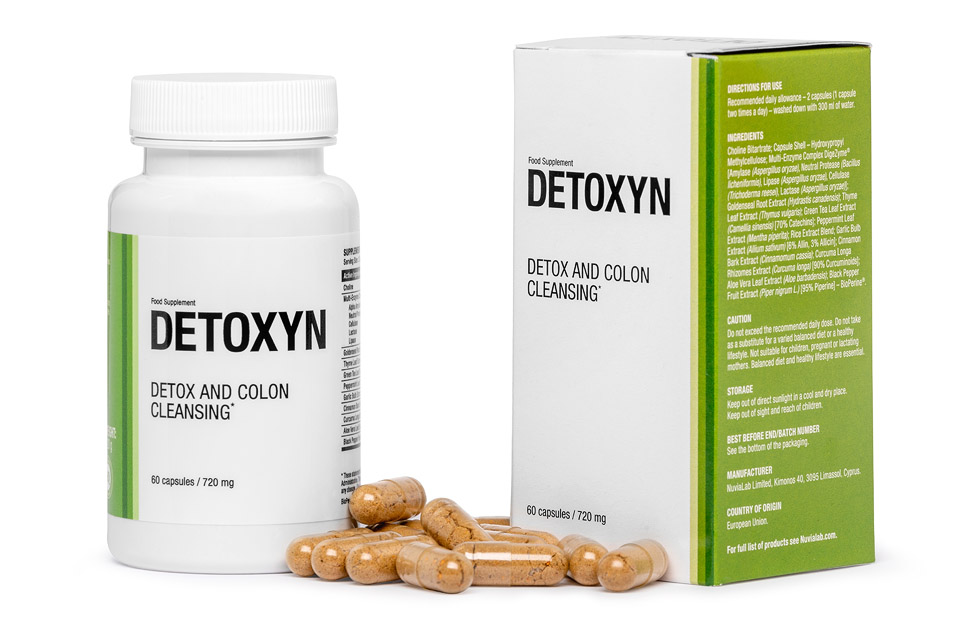
Score: 5.9/10 · Best for: meal-related digestive discomfort — its DigeZyme® enzyme complex is delivered at exactly the 150 mg a day used in the functional-dyspepsia trial, and every ingredient amount is printed. Main caution: it does not detox anything — no capsule does; goldenseal can affect how the liver processes medicines, so anyone on prescription medication should check with a pharmacist first. Fair trial: 4–8 weeks of daily use judged on meal comfort — one bottle (one month) is $59.99, and the maker publishes no money-back guarantee, so a failed trial is not refundable.
The Accounting: What a Cleanse's "Weight Loss" Is Made Of
| Component | Typical size | How fast it returns | Is it fat loss? |
|---|---|---|---|
| Bowel contents (food in transit, water, bacteria, shed cells) | ~1–4 lb in an average adult; the 2–6 lb figure in cleanse marketing comes from full medical bowel preparation measurements | 24–72 hours of normal eating | No |
| Fluid loss (osmotic/stimulant effects, sweating out a "cleanse diet") | ~1–3 lb | Within a day or two of normal drinking and eating | No |
| Glycogen + its stored water (if the cleanse week is low-carb/low-food) | ~2–4 lb in larger people | Days, as carbohydrates are reintroduced | No |
| Actual body fat | Only from the calorie deficit of eating less that week — at most ~0.5–1 lb in a strict week, usually less | Stays off only if the deficit continues | Yes — the only row that is |
Read the table once and the entire marketing genre collapses: brands photograph the total of rows one to three and invoice it as row four.
The most honest clinic page we found in this space says it in one line — the scale loss "isn't body fat… [it is] stool and gas release, reduced distension, fluid shifts" — and that sentence should be printed on every cleanse box sold. None of this makes the lighter feeling fake.
An empty bowel genuinely feels different, and a flatter-looking stomach for an event is a real (rented) outcome. It makes the framing fake: temporary emptying sold as fat loss and detoxification. Fat is lost the way it was gained — slowly, through sustained energy balance — and no week of purging has ever changed that arithmetic.
The "10 Pounds of Toxic Waste" Myth, Measured
The most repeated number in cleanse marketing — that the average colon holds 5, 10, even 20 lb of impacted waste — has a traceable origin and no measurable basis. It descends from the autointoxication era described in our evidence overview, when the colon was imagined as a sewer pipe accreting layers.
What modern medicine can do is weigh the reality: colonoscopy preparation studies and the clinical use of whole-gut irrigation put the entire contents of a normal adult colon at roughly 1–4 lb, varying with body size, diet and time since the last meal — and it is in transit, not impacted: the colon turns over its contents daily, which is what bowel movements are.
Post-mortems and imaging of even severely constipated patients do not find decades-old layers. They find a backed-up queue of recent contents, which is a motility problem with medical causes and treatments.
The marketing number survives because it is load-bearing: if you believe you carry 10 lb of poison, a product that "removes" it is worth almost any price, and its 2–6 lb scale result — the real contents-plus-fluid figure from the table. Feels like partial proof.
The correct reading of that scale result is the boring one: you have weighed your lunch, your water and your gas, and called the total a detox.
Why the Before-and-After Photos Look So Dramatic
The genre's signature image — a visibly flatter stomach after a cleanse weekend — is honest photography of a dishonest implication. Five ordinary effects stack in the "after" shot: the bowel is empty rather than holding a day of food. Intestinal gas is reduced; the subject is mildly dehydrated, which tightens how the midsection looks.
The photo is taken in the morning, fasted, when every stomach is at its flattest (compare your own mirror at 7 a.m. and after dinner — the daily swing is larger than most cleanse claims). And posture and lighting do their usual work.
None of those effects is fat, and the entire stack unwinds within roughly 48 hours of eating and drinking normally. Which is why the genre never publishes day-seven photos. None of this means the flatter day is worthless to the person who wanted it for an event.
It means it should be bought, if at all, at its real description: a day of emptiness, achievable almost free with a light-eating day, and priced by cleanse brands as though it were physiology transformed.
Water, Contents or Fat? How to Tell What You Lost
A simple self-test separates the rows of the accounting table in your own case. Speed: fat cannot leave faster than roughly 0.5–1% of body weight per week even under a strict deficit, so any loss quicker than that is definitionally not fat. Return speed: water and contents return within one to three days of normal eating.
If the "loss" fully reverses by Thursday, it was rows one to three. Waist versus weight: fat loss shows as a slow, steady waist reduction sustained across weeks. Emptying shows as a waist that swings by time of day. The morning-after check: weigh under identical conditions (morning, fasted, after the bathroom) across two weeks.
The trend line, not any single day, is the only number fat answers to. Run that test on any cleanse result and the genre's claims grade themselves, without needing to take this article's word for anything.
Will a Colon Cleanse Lose Belly Fat, Specifically?
No — and this version of the claim deserves its own answer because it is the one most often searched. Belly fat is of two kinds: subcutaneous fat under the skin and visceral fat around the organs.
Neither sits in the colon, neither can be reached by anything that passes through the bowel, and neither can be spot-reduced by any means short of procedures — not by cleanses, not by teas, not by targeted exercises.
What a cleanse can change is the third thing that determines how a stomach looks: how much is inside the gut pushing outward. An emptied, less-gassy bowel sits flatter, photographs flatter, and fits trousers more kindly for a day or three. That is distension change, not fat change. Worth having for a wedding, worthless as a weight strategy.
The distinction matters beyond honesty: people who rent the flat stomach monthly via purges while believing they are losing fat are spending money and bowel health to avoid the one change (sustained intake) that would actually move the fat row of the table.
Bloating: Split the Causes Before Choosing a Fix
"Bloating" is at least four different experiences sharing a word, and a cleanse only touches one of them. Contents bloating — a full, slow bowel — is the one emptying helps, briefly. The durable fix is the fibre-water-movement routine in the natural-methods guide.
Fermentation bloating — gas produced when gut bacteria ferment FODMAP sugars (beans, onions, certain fruits, lactose in the intolerant) — is a food-matching problem: smaller portions of triggers, lactose-free dairy or lactase if dairy is the trigger, and enzyme support for meals are the proportionate tools. We grade those in the enzyme guide.
Swallowed-air bloating — fizzy drinks, eating fast, chewing gum — is behavioural. And sensitivity bloating — the IBS pattern, where normal amounts of gas feel painful — is a medical conversation, not a product category.
A cleanse indiscriminately purges all four situations identically, helps one temporarily, and for the fermentation and sensitivity types can make the following week worse by disturbing the microbial community that was mid-adaptation. Matching the fix to the cause is the entire skill here — and it is free.
Why Bloating Can Get Worse After a Cleanse
A common and rarely explained experience: the cleanse weekend delivers the flat stomach, and the following week delivers bloating worse than the original complaint. Three mechanisms stack up. The microbial community, temporarily stripped and starved by the purge, recolonises unevenly — and a recolonising gut fermenting a sudden return to normal food produces more gas, not less, for some days.
Fibre reintroduced abruptly after empty days hits a system with reduced fermentation capacity, the exact ramp error described in the natural-methods guide. And the psychological rebound matters: after days of restriction, meals tend to be larger and faster — more food, more swallowed air, more distension.
The pattern is worth knowing in advance, because it powers the category's repeat-purchase loop: the post-cleanse bloat is interpreted as "the toxins are back", and the remedy sold is another cleanse. Read correctly, it is the opposite signal.
The bowel dislikes being purged, and the stable fix is the unglamorous routine that never empties it by force in the first place.
Do Detox Drinks Help You Lose Weight or Clear Your System?
No to both halves, for the reasons in the accounting table: drinks change water and contents, not fat, and "clearing your system" names a process your liver and kidneys run continuously without assistance. The one honest use of drinks in this space is hydration itself — stool softness is water content. Which plain water performs without a label.
We graded the popular drinks individually in the natural-methods guide. The short version is that the effective ones are boring and the marketed ones are laxatives or theatre.
What About the Product on This Site?
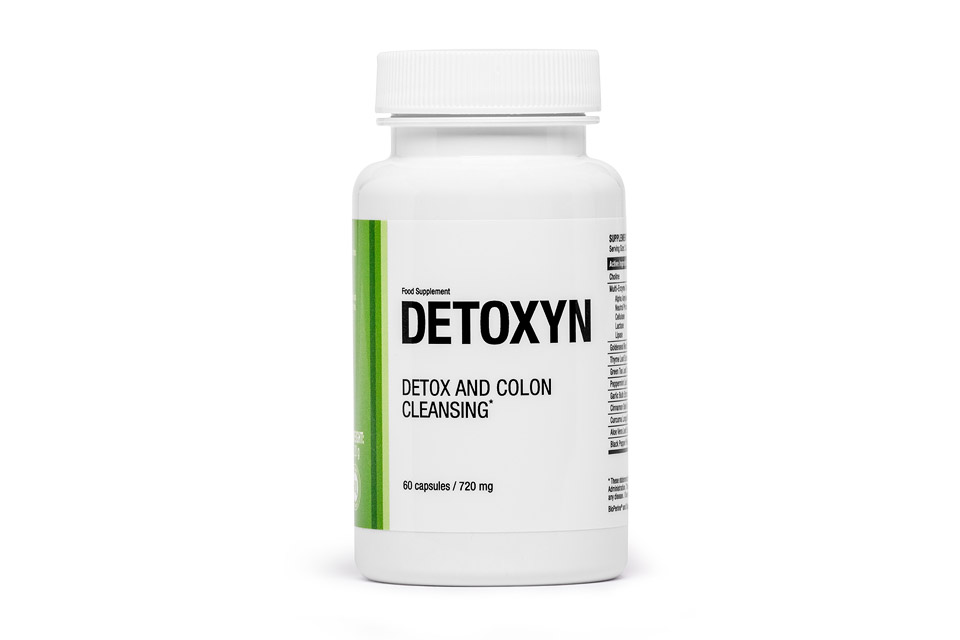
Consistency requires grading our own reviewed product by the same table. Detoxyn is not a purge: nothing in it empties the bowel by force, so it produces no 2–6 lb weekend — and any seller implying a Detoxyn "before and after" would be borrowing the purge's numbers for a capsule that cannot generate them.
What its formula targets is the fermentation/comfort side of this article: a DigeZyme® enzyme complex (with small-trial support in functional dyspepsia) plus botanicals, for meal-related digestive comfort — the bloating type where enzyme support is a proportionate tool.
That is a modest, real category of benefit, and it is exactly why we scored the product 5.9/10: a defensible digestive formula wearing a detox costume, at a price ($59.99) with no money-back guarantee behind it. Buy it, if at all, for the comfort claim — never for weight.
What Actually Works for Lasting Weight and a Calmer Stomach
The two goals share most of their real solution set, which is why conflating them with cleanses wastes twice. For weight: a modest, sustained calorie deficit you can live inside. Protein and fibre high enough to make that deficit tolerable. Resistance training to defend muscle while fat leaves; sleep, because short sleep measurably raises next-day intake.
Expect roughly 0.5–1% of body weight per week at the honest top end. Slower than a cleanse weekend, and permanent in a way the weekend is not.
For the stomach: the fibre ramp and hydration from the natural-methods guide, food-trigger matching for the fermentation type, eating speed and fizzy-drink habits for the air type, and medical review for the sensitivity pattern or any red-flag symptoms. None of it photographs like a purge. All of it is still working in month three.
Our Recommendation — Detoxyn
Score: 5.9/10 · Best for: meal-related digestive discomfort — its DigeZyme® enzyme complex is delivered at exactly the 150 mg a day used in the functional-dyspepsia trial, and every ingredient amount is printed. Main caution: it does not detox anything — no capsule does; goldenseal can affect how the liver processes medicines, so anyone on prescription medication should check with a pharmacist first. Fair trial: 4–8 weeks of daily use judged on meal comfort — one bottle (one month) is $59.99, and the maker publishes no money-back guarantee, so a failed trial is not refundable.
Frequently Asked Questions
Can a colon cleanse help you lose weight?
It can lower the scale by ~2–6 lb for a few days — contents, water and gas, not fat. Fat loss requires a sustained calorie deficit. A cleanse contributes none beyond the eating-less of its protocol week.
Will a colon cleanse lose belly fat?
No. Belly fat is not in the colon and cannot be reached through it. A cleanse can reduce distension briefly, which looks flatter — a different thing, honestly labelled.
Does a cleanse reduce bloating?
Briefly, for the contents-and-gas type, by emptying. For fermentation, air-swallowing and IBS-type bloating it is the wrong tool. Match the cause instead (see the split above).
How long does cleanse weight loss last?
One to three days — the time normal eating takes to refill the bowel and restore fluid and glycogen. Timelines for every method are in the timeline guide.
Last reviewed: October 2026. This article is educational and is not medical advice.
