
- Quick Answer
- First, What "Detox" Actually Means in Medicine
- The Claim vs the Evidence
- Three Different Things Are Called a "Cleanse"
- Where the "Toxic Colon" Story Came From
- What Actually Happens in Your Body During a Cleanse
- The Sub-Claims, Examined One by One
- Does the Body Need Help Detoxifying?
- Are There Proven Benefits of Colon Cleansing?
- What About "Liver Detox" Drinks and Cleanses?
- The Enzyme Exception: What Small Trials Actually Show
- Why Does the Category Sell So Well, Then?
- How to Evaluate Any Detox Product in Two Minutes
- Frequently Asked Questions
- Do detox pills work?
- Can a liver detox prevent liver damage?
- Is cleaning out your colon good for you?
- Colon cleansing: is it helpful or harmful?
- Do detox drinks help you lose weight or clear your system?
- How long does a cleanse take to "work"?
- Read This Next
Disclosure: This article contains affiliate links. If you buy through them, we may earn a commission at no extra cost to you. It never changes our conclusions.
Quick Answer
For the headline promise — removing "toxins" and accumulated sludge from your colon — the answer from every major medical authority is the same: there is no evidence it works, because the premise is wrong. Your colon does not store layers of toxic waste, and your liver and kidneys already perform detoxification continuously.
What colon cleanses do reliably is empty the bowel, which produces a temporary lighter feeling and a temporary scale drop. Not detoxification. The one corner of this category with real, if modest, human data is digestive-enzyme supplementation for digestive discomfort, which is a different and narrower claim.
This article separates the three things the word "detox" gets used for, because they have three different answers.
Our Recommendation — Detoxyn
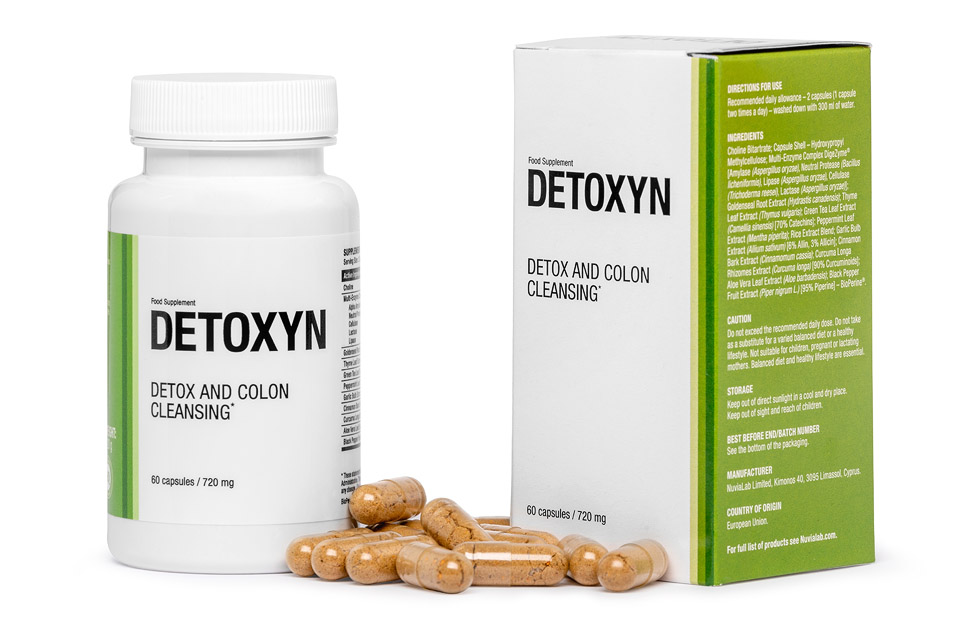
Score: 5.9/10 · Best for: meal-related digestive discomfort — its DigeZyme® enzyme complex is delivered at exactly the 150 mg a day used in the functional-dyspepsia trial, and every ingredient amount is printed. Main caution: it does not detox anything — no capsule does; goldenseal can affect how the liver processes medicines, so anyone on prescription medication should check with a pharmacist first. Fair trial: 4–8 weeks of daily use judged on meal comfort — one bottle (one month) is $59.99, and the maker publishes no money-back guarantee, so a failed trial is not refundable.
First, What "Detox" Actually Means in Medicine
In medicine, detoxification is a specific, continuous set of processes: the liver chemically neutralises substances (alcohol, medications, metabolic waste), and the kidneys filter blood and excrete waste in urine. Medical detox is also the name of supervised withdrawal treatment for alcohol and drug dependence — a different topic entirely, and one no supplement addresses.
When a supplement label says "detox", it is borrowing the credibility of those processes without performing them. No capsule has been shown to increase the liver's clearance of any named toxin in healthy people. That gap — between the word and the mechanism — is where this whole category lives.
The Claim vs the Evidence
| Claim | What the evidence and authorities say | Status |
|---|---|---|
| "Waste builds up on the colon wall and poisons you" | Harvard's review calls this rationale fundamentally mistaken: faecal matter sits in the open interior of the colon, not in adherent layers; the "ropes" in cleanse marketing photos are typically the cleanse kit's own fibre, gelled | Refuted premise |
| "A cleanse removes toxins" | Mayo Clinic: cleansing is not recommended or needed for any medical condition; no trial shows removal of any named toxin | Unsupported |
| "Cleansing improves overall health" | UT Physicians (gastroenterology): no randomised controlled trials support colon cleanses, and harm is documented | Unsupported |
| "It helps you lose weight" | Scale weight drops from emptied bowel contents and fluid — not fat; see our weight-loss breakdown | Misleading |
| "Digestive enzymes can ease digestive discomfort" | Small human trials exist for enzyme complexes in functional dyspepsia (details below) | Modest support, narrow claim |
| "Herbal cleanse ingredients are gentle and safe by default" | Documented harms include electrolyte disturbances and herbal liver injury; safety is ingredient-specific — see our safety guide | Not guaranteed |
Three Different Things Are Called a "Cleanse"
Colonic irrigation (hydrotherapy) — a procedure flushing the colon with water, sometimes coffee. This is where the most serious harms cluster: dehydration, electrolyte imbalance, infection, bowel perforation, and deaths linked to coffee enemas. Nothing in this article should be read as softening that: the procedure has documented risks and no documented benefit.
Laxative-based cleanse kits — fibre, magnesium salts or stimulant herbs taken over days. These empty the bowel, sometimes aggressively. The "results" people photograph are the predictable output of laxatives plus the kit's own bulking fibre.
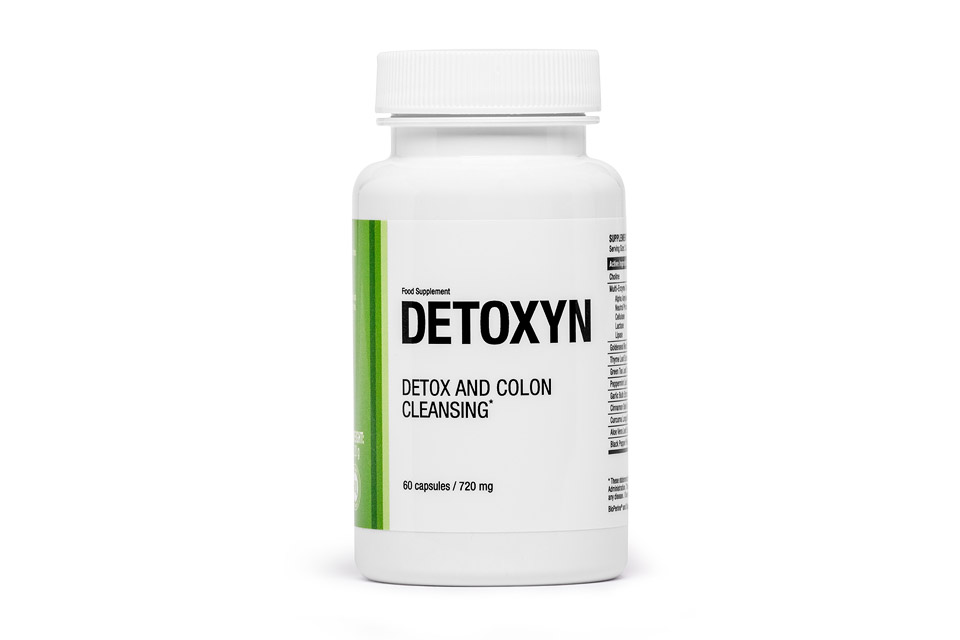
Digestive-support capsules — enzyme complexes and botanicals positioned for digestion and regularity rather than flushing. This is the category of the product this site reviews, Detoxyn (DigeZyme® enzymes, choline and botanicals. Our score 5.9/10). Judged as a "detox", it inherits the category's empty promise.
Judged as a digestive-comfort formula, it can be assessed on narrower, testable claims — which is the only honest way to assess it.
Where the "Toxic Colon" Story Came From
The idea that the colon poisons the body has a name — autointoxication — and a history. It was a mainstream medical theory in the late 19th and early 20th centuries, promoted by prominent physicians of the era, and it drove everything from yogurt cures to surgical removal of colons.
It was abandoned a century ago, not because of fashion but because the evidence never materialised: researchers could not find the supposed toxins, the supposed adherent waste layer, or the diseases it was blamed for. Modern imaging and colonoscopy — which let doctors look directly at the colon wall in millions of patients.
Settled the question visually: there is no encrusted layer of ancient waste in a healthy colon. The theory survives only in marketing, where it is too useful to retire: it converts a vague feeling ("I feel sluggish and heavy") into a mechanical problem ("you are full of toxins") with a purchasable solution ("flush them out").
Understanding that the story is a century-old discarded hypothesis, not a suppressed truth, is the single best defence against the category's pricing.
What Actually Happens in Your Body During a Cleanse
It is worth walking through the physiology, because the sensations are real and deserve a real explanation. A laxative-based cleanse works through one of three mechanisms: osmotic agents (such as magnesium salts) draw water into the bowel. Stimulant herbs (senna and relatives) trigger intestinal contractions; and bulking fibres absorb water and swell.
The combined result over one to several days: frequent, urgent bowel movements. The evacuation of the colon's normal contents — roughly a day or two of digesting food, water, bacteria and shed cells. Some net fluid loss; and, frequently, cramping and urgency.
Afterwards the scale shows less (contents and water, replaced within days of normal eating), the abdomen feels flatter (an empty, less distended colon), and many people feel "clearer" — an effect familiar from any gastroenteritis or pre-colonoscopy preparation, and attributable to the same emptying. Nothing in that sequence involves the liver, the kidneys, or the removal of stored toxins.
Enzyme-and-botanical capsules like Detoxyn are gentler and work differently — enzymes act on the meal in front of them, and any effect is about digestion of food, not evacuation of the colon. Which is precisely why conflating the two product types under one "cleanse" label misleads buyers in both directions.
The Sub-Claims, Examined One by One
"More energy." No trial of a cleanse product shows improved energy in healthy people. The plausible drivers of reported energy are the cleanse ritual itself — several days of lighter eating, no alcohol, more water, earlier nights — all of which are available free, without the product, and are covered in the natural-methods guide.
"Clearer skin." Skin is not a toxin overflow valve, and no cleanse trial measures skin outcomes. Breakouts fluctuate with hormones, diet and stress — including the stress of a cleanse.
"Stronger immunity." The marketing version leans on the true fact that much of the immune system sits in and around the gut. But "gut-associated immunity exists" does not entail "emptying the gut strengthens it" — and disrupting the gut's bacterial community with aggressive laxatives is at least as plausible a harm as a benefit.
No immune outcome has been demonstrated for any cleanse product.
"A flatter stomach." This one is real — and fully explained by an emptied, less gas-filled bowel. It is temporary, it is not fat loss, and we do the full accounting in the weight and bloating article.
Does the Body Need Help Detoxifying?
This is the question underneath all the others, and the answer from hepatology is no — not in a healthy person. The liver's enzyme systems do not get "clogged" or need rinsing. The kidneys filter roughly 180 litres of fluid a day without assistance.
The genuine ways people impair this system are unglamorous: heavy alcohol use, certain medications, hepatitis, and metabolic disease. Correspondingly, the genuine ways to support it are equally unglamorous — alcohol moderation, weight management, and treating actual disease.
We set out the food-and-habit version of that in how to cleanse your colon naturally — a title we use knowing the honest content is "support normal function", not "flush".
Are There Proven Benefits of Colon Cleansing?
For medical bowel preparation before colonoscopy — yes, obviously, but that is a prescribed procedure with prescribed preparations, not a wellness cleanse. For wellness cleansing in healthy people, systematic reviews find no proven benefit for any of the marketed outcomes: not energy, not skin, not immunity, not weight. The perceived benefits people report — lightness, a flatter stomach, a "reset" feeling.
Are real sensations with mundane explanations: an emptied bowel, a few days of eating lightly during the cleanse, and the motivational effect of starting a ritual. Those sensations are not worthless. They are just not detoxification, and they do not require a cleanse to obtain.
What About "Liver Detox" Drinks and Cleanses?
The liver version of the category deserves its own paragraph, because the liver is where real detoxification happens — which makes it the most borrowed credibility of all. Liver-detox drinks and cleanses (lemon-and-cayenne fasts, juice protocols, milk-thistle-led kits) claim to flush or repair the organ.
The liver does not store toxins in a way that can be flushed. It transforms fat-soluble compounds into water-soluble ones for excretion, continuously, at a rate no drink has been shown to increase. Can a liver detox prevent liver damage? There is no evidence any product does.
The documented causes of preventable liver damage are alcohol, viral hepatitis, and fatty liver driven by metabolic disease — and the evidence-based responses are vaccination and treatment for hepatitis, alcohol reduction, and weight and blood-sugar management for fatty liver.
The sharpest irony in the category: herbal "liver cleanse" ingredients appear in the case literature as causes of liver injury — concentrated green-tea extract and multi-botanical blends are recurring entries in drug-induced liver injury registries.
A healthy scepticism rule follows: the more aggressively a product markets itself as cleansing the liver, the more carefully its own liver safety deserves checking. None of this is an argument against ordinary digestive support. It is an argument for calling things by their right names, which is the standard we apply to every product on this site, Detoxyn included.
The Enzyme Exception: What Small Trials Actually Show
Digestive enzymes are the one ingredient class here with direct human trials behind a specific product complex.
DigeZyme®, the multi-enzyme complex in Detoxyn, has two small published randomised trials from its manufacturer group: one in functional dyspepsia (40 people, 50 mg three times daily for 60 days) reporting significant improvement across dyspepsia symptom scales versus placebo, and one small study on exercise-related muscle soreness. Both trials were small and manufacturer-linked.
The right reading is "promising, narrow, unconfirmed by independent replication", not "proven". Notice, though, what the claim is: relief of digestive discomfort. Not toxin removal. We evaluate the enzyme question fully in digestive enzymes: do you need them?
Why Does the Category Sell So Well, Then?
Because it names a real feeling — sluggish, bloated, heavy — and offers a mechanical story for it (dirt inside, flush it out) with a ritual attached. The feeling is real. The story is not. Products at the honest end of this category, Detoxyn included, sell digestive support under a detox flag because that is the word buyers search for.
Our job on this site is to price that honestly: if you buy a product like this, buy it for enzyme-and-botanical digestive support at a fair price with eyes open — our Detoxyn review shows the label, the studied enzyme dose (150 mg/day, matching the dyspepsia trial), and the missing money-back guarantee that keeps its score at 5.9.
How to Evaluate Any Detox Product in Two Minutes
If you are going to spend money in this category at all, spend it with the category's weaknesses priced in. Five checks separate the honest end from the rest.
One: does the label print every ingredient amount? (Detoxyn does — including its enzyme complex at 150 mg per serving, the exact dose used in the dyspepsia trial.) Two: is the claim digestive support — plausible — or toxin removal, fat loss or organ "repair" — not plausible? Three: does it rely on stimulant laxatives for its visible "effect"?
If the drama is diarrhoea, you are paying for a laxative. Four: is there a money-back guarantee? Detoxyn's maker publishes none, which we count against its score. Five: are the safety exclusions printed. Pregnancy, medication use, existing gut conditions? A product page that hides its exclusions is telling you how it will treat your problems later.
Our Detoxyn review runs all five checks against the actual label.
Our Recommendation — Detoxyn
Score: 5.9/10 · Best for: meal-related digestive discomfort — its DigeZyme® enzyme complex is delivered at exactly the 150 mg a day used in the functional-dyspepsia trial, and every ingredient amount is printed. Main caution: it does not detox anything — no capsule does; goldenseal can affect how the liver processes medicines, so anyone on prescription medication should check with a pharmacist first. Fair trial: 4–8 weeks of daily use judged on meal comfort — one bottle (one month) is $59.99, and the maker publishes no money-back guarantee, so a failed trial is not refundable.
Frequently Asked Questions
Do detox pills work?
Not for detoxification — no pill has been shown to remove toxins or enhance liver clearance in healthy people. Enzyme-containing pills may help digestive discomfort. That is a separate, narrower claim with modest trial support.
Can a liver detox prevent liver damage?
No supplement has been shown to prevent liver damage. What prevents liver damage is avoiding the causes: alcohol excess, unmanaged hepatitis, and metabolic disease — plus not adding unregulated herbal products, some of which have themselves caused liver injury.
Is cleaning out your colon good for you?
Emptying the bowel is harmless for most healthy people occasionally (and medically necessary before some procedures), but it confers no proven health benefit, and aggressive methods carry real risks — see are colon cleanses safe?
Colon cleansing: is it helpful or harmful?
Mayo Clinic's summary is the fairest one-liner available: there is no proven benefit, and there are documented risks — which makes the balance harmful-leaning for aggressive methods and neutral-at-best for gentle ones. The method decides: a fibre-and-water routine is a different risk proposition from colonic irrigation or stimulant-laxative protocols.
Do detox drinks help you lose weight or clear your system?
They help you lose water and bowel contents, briefly, and they clear nothing from your "system" that your liver and kidneys were not already clearing. Any drink-based weight change reverses within days of normal eating, because no fat was involved — the full accounting is in our weight-loss breakdown.
How long does a cleanse take to "work"?
Laxative-based products act within hours to days — that speed is bowel emptying, not detox. Timelines by method are covered in our timeline guide.
Last reviewed: October 2026. This article is educational and is not medical advice.
