
- Quick Answer
- Adults Only: The Frame This Article Runs On
- The Only Question That Matters: How Long Until the Exam?
- Lane One — Twelve Weeks or More: The Semester-Start Plan
- Lane Two — The Final Two to Six Weeks: Discipline, Not New Ingredients
- Lane Three — Exam Week and Exam Day: The Protocol
- The "Too Late to Start" Table — Verdicts by Countdown
- Stacking for Studying: What Combines, What Collides
- Prescription "Study Drugs": The Section Every Honest Guide Owes You
- Under-18s: Why This Article Is Not for School Students
- The Learning Science No Capsule Replaces
- Energy Drinks, Coffee, Tea and Capsules: The Student's Caffeine Sources Compared
- Memory Is Two Jobs: Encoding and Recall
- Exam Anxiety: The Stimulant Trap
- A Worked Example: The Final Ten Days, Scheduled
- Professional and Licensing Exams: The Working Adult's Variant
- Where Brain Actives Fits a Study Plan — and Where It Does Not
- Who Should Buy Brain Actives — and Who Should Skip It
- Frequently Asked Questions
- What is the best nootropic for studying?
- Can I start bacopa two weeks before my exam and expect it to help?
- How much caffeine is too much while studying?
- Are study supplements safe for teenagers?
- What should I take on the morning of the exam?
- Do "study drugs" actually improve grades?
- My exam is tomorrow morning. Is there anything worth doing?
- Should I take Brain Actives every day through the exam period?
- Read This Next
Disclosure: This article contains affiliate links. If you buy through them, we may earn a commission at no extra cost to you. It never changes our conclusions.
Quick Answer
What a supplement can do for your exams depends almost entirely on how much time is left — and most "study nootropic" pages hide that, because the honest answer for a late start is "very little".
With twelve weeks to go, one ingredient has a real claim: bacopa, at about 300 mg a day, improved memory recall in trials that ran exactly that long (and showed nothing at five weeks).
With twelve days to go, no botanical can start working in time; what remains is caffeine discipline — using the stimulant you already know, timed properly, without wrecking the sleep that consolidates memory. On exam day itself, the protocol is caffeine 45–60 minutes before the paper, at a dose you have already tested on an ordinary study day.
This article is written for adult students: the product featured here contains 150 mg of caffeine per serving and its maker states it is not for children. Best for: adult students and professionals facing exams who want a plan matched to their actual countdown — not a shopping list that pretends every timeline is the same.
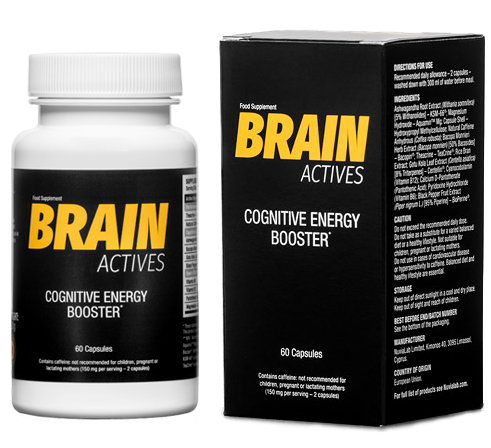
Our Recommendation — Brain Actives
Score: 5.5/10 · Best for: adults who want same-day focus from a transparent stimulant pairing, treating the memory ingredients as a slow, secondary experiment. Main caution: one serving's vitamin B6 (14 mg) exceeds EFSA's 12 mg/day upper level, the bacopa is underdosed, and no money-back guarantee is published. Fair trial: one bottle — a month is enough to judge the stimulant effect honestly, and no guarantee protects a bigger first order.
Adults Only: The Frame This Article Runs On
Most studying content on the internet is written as if its reader were seventeen. This article's reader is not. It is written for adult students — university and postgraduate students, professional-qualification candidates, adults retraining or sitting licensing exams — because the products discussed are formulated, dosed and labelled for adults.
The featured product, Brain Actives, contains 150 mg of caffeine per serving — comparable to a strong coffee — plus a second stimulant-system ingredient, and its maker states plainly that it is not suitable for children; caffeine authorities set far lower frames for adolescents, and no part of this article should be read as guidance for school-age revision.
There is a fuller under-18 section below, because the question deserves more than a disclaimer line, but the frame starts here: adult physiology, adult doses, adult responsibility for the sleep and caffeine arithmetic that follows.
If you are a parent researching for a teenager, the honest summary of everything below is short — the botanicals are too slow and too adult-dosed, the stimulants are inappropriate as a study strategy for minors, and the interventions with real evidence for young students are sleep, spaced practice and a clinician's input where attention problems are suspected. This article will not sell you a workaround to that sentence.
The Only Question That Matters: How Long Until the Exam?
Supplement timelines are pharmacological facts, not marketing choices, and they sort every study aid into three lanes. The slow lane — ingredients whose evidence is measured in weeks to months: bacopa (12 weeks in every positive trial), creatine (weeks to saturate), deficiency correction (as long as repletion takes).
The discipline lane — interventions that are really about managing what you already use: caffeine timing and totals, sleep scheduling, theanine for smoothing a caffeine dose you already take. The acute lane — what can be felt within the hour: caffeine, and subjectively theacrine, essentially nothing else that is legal and over-the-counter.
Every honest study plan is a matter of matching your countdown to the lanes that can still arrive.
Every dishonest one sells the slow lane to readers in the acute lane's situation — a capsule of bacopa bought nine days before finals is the category's purest example, a product whose own evidence base guarantees it cannot do the thing it was bought for.
The sections that follow take the countdown lane by lane, and a summary table collects the verdicts, including the ones no seller prints: what it is simply too late to start.
Lane One — Twelve Weeks or More: The Semester-Start Plan
If your exam is a full term away, you own the only timeline in which supplements beyond stimulants can plausibly matter — and even here, the plan is mostly not supplements.
The foundation is the boring machinery with the largest effect sizes in the learning literature: spaced retrieval practice, sleep that includes the nights after study days (memory consolidation is sleep-dependent; the all-nighter is a tax on exactly the process you are revising for), and exercise. Onto that foundation, exactly one botanical has earned a place in this article.
Bacopa monnieri, at around 300 mg of extract a day, improved memory free recall across the trials gathered by Pase et al. (2012) — six randomised trials, all twelve weeks — with a small additional attention-speed signal in the meta-analysis by Kongkeaw et al. (2014).
The timeline discipline is unforgiving and comes from the foundational trial itself: in Stough et al. (2001), 300 mg a day produced measurable improvements at twelve weeks and none at five weeks — bacopa does not ramp; it arrives, late, or not at all.
The population caveat belongs here too: the positive trials concentrated in older adults (healthy over-55s in Morgan & Stevens 2010; over-65s in Calabrese et al. 2008), so a young student's benefit is an extrapolation, and a 2025 trial at the standard dose (Lopresti & Smith 2025) found no cognitive benefit in adults with memory complaints.
Our bacopa article reads the full record. The honest semester-start verdict: bacopa at a full studied dose is a reasonable, modest-probability bet for memory support across a term — taken with food (its bacosides are fat-soluble and stomach upset is its commonest side effect), started in week one, and never mistaken for the revision itself.
Two supporting entries complete the long lane. Creatine monohydrate (~5 g/day) needs weeks to saturate and carries a preliminary cognitive file strongest under sleep loss and stress — a plausible background choice for a hard term, cheap and well-studied for safety, though nobody should expect to feel it.
And the deficiency check: a term is long enough to fix the reversible causes of poor concentration — iron, B12, vitamin D, thyroid — that no supplement stack outruns. If focus has been poor for months rather than days, a blood panel in week one is the highest-yield "study supplement" available, and it is not a supplement at all.
What does not belong in the twelve-week lane: daily high-dose caffeine escalation (tolerance converts it into a maintenance drug by mid-term), and any product — including Brain Actives — bought for its bacopa at below the studied dose.
Brain Actives provides 187.5 mg of bacopa, which is 62.5% of the trial standard; as a semester plan, that is the right ingredient at the wrong dose, and this article grades it as such rather than letting the formula borrow the lane.
Lane Two — The Final Two to Six Weeks: Discipline, Not New Ingredients
Inside six weeks, the slow lane is closed: bacopa started now will reach its five-week assessment point — the one at which Stough found nothing — around exam day. What remains is genuinely useful, and it is mostly the management of stimulants and sleep. Caffeine discipline means three things.
First, stabilise the dose: pick the amount that reliably wakes you (for most adults somewhere in the 75–200 mg range) and stop escalating it, because the tolerance curve means the student who doubles caffeine in the final fortnight arrives at the exam with a higher baseline, worse sleep, and the same net alertness.
Second, move the dose earlier and make the cut-off sacred — the evidence-based practice is no substantial caffeine within about eight hours of bedtime, anchored in the finding (Drake et al. 2013) that 400 mg a full six hours before bed still cut measured sleep by over an hour; in exam season, sleep is not recovery from studying, it is part of studying.
Third, if you use caffeine, consider the form with the best focus evidence: caffeine paired with L-theanine improved attention-task performance in Haskell et al. (2008) (150 mg + 250 mg) and Giesbrecht et al. (2010) (40 mg + 97 mg).
This is the lane where Brain Actives legitimately enters — as a pre-formulated caffeine product whose theacrine pairing offers a longer subjective arc — with its exact limits stated in its own section below, and with the theanine alternative linked rather than hidden: our stress cluster's L-theanine article covers the stack ingredient this formula does not contain.
The other half of the final-weeks lane is sleep protection treated as an exam technique.
Caffeine's half-life averages about four hours but ranges widely (roughly two to eight) between individuals; the practical translation is a personal cut-off — if you are a slow metaboliser or a light sleeper, your last caffeine belongs before noon regardless of what any article's table says.
Guard the last three nights before the exam above all: the consolidation value of those nights exceeds any same-day stimulant effect, and the classic error — borrowing against them with late caffeine to fund extra revision — spends the asset the revision was for.
If anxiety, rather than alertness, is the binding constraint in the final weeks, that is also a solvable problem, but not with stimulants: it belongs to the stress cluster's territory (and, where it is severe or persistent, to a clinician), and adding alertness chemistry to an arousal problem reliably makes the wrong thing stronger.
Lane Three — Exam Week and Exam Day: The Protocol
On the day, the pharmacology available to you is the acute lane and nothing else, so the protocol is about executing it cleanly. The test-it-before rule governs everything: nothing enters your body for the first time on exam morning — not a new product, not a new dose, not a new combination.
Every element below should have been rehearsed on an ordinary study day at least once, ideally twice, because individual responses to caffeine (and to theacrine's long tail) vary enough that the exam is the worst possible laboratory. The doses assume a morning exam; shift the clock, not the intervals, for an afternoon paper.
| When | Protocol | Why |
|---|---|---|
| Night before | No caffeine after your personal cut-off (≈8 h before bed); normal bedtime, not an heroic early one; materials laid out | The last night's sleep is the highest-yield performance drug available to you; an unfamiliar 21:00 bedtime usually produces lying awake, not extra sleep |
| Wake | Light, water, a normal breakfast you have eaten before | Dehydration and an experimental breakfast are unforced errors; today is for rehearsed routines |
| 45–60 min before the paper | Your tested caffeine dose (typically 100–200 mg total). If using Brain Actives: one serving = 150 mg caffeine + 125 mg theacrine — and that is the morning's caffeine, not an addition to coffee | Caffeine's effect begins within ~15–30 minutes and peaks inside the first hours, covering the paper; stacking coffee on top pushes the total past the single-dose comfort frame for no proven gain |
| During | Water; no new substances at the break | Mid-exam dosing chases a peak that will land after the paper ends and bills the afternoon |
| After | No celebratory caffeine after midday if another exam follows tomorrow; eat, walk, protect the night | Multi-exam weeks are won on the nights between papers, not the mornings of them |
Afternoon exams need one adjustment: the caffeine dose moves to 45–60 minutes before the paper, which for a 14:00 start means early afternoon — acceptable for that day, provided the previous day's cut-off kept the morning dose honest and the following night is allowed to start late rather than being forced.
What never changes: rehearsed doses only, caffeine counted across the whole day (a morning coffee plus a pre-exam supplement is a combined dose whether you intended it or not), and theacrine-containing products taken early — theacrine's half-life, in the small pharmacokinetic literature, runs to the high-teens or mid-20s of hours, so a theacrine product is a morning tool by construction.
Our theacrine-versus-caffeine comparison has the full half-life and tolerance record for readers who want the audit behind this protocol.
The "Too Late to Start" Table — Verdicts by Countdown
| Time remaining | Can still genuinely help | Cannot help in time (whatever the label says) |
|---|---|---|
| 12+ weeks | Bacopa at ~300 mg/day (modest, extrapolated to young adults); creatine saturation; deficiency correction; sleep system | Nothing is "too late" — but stimulant escalation started now becomes tolerance by exam week |
| 4–6 weeks | Caffeine discipline and timing; theanine pairing if caffeine is used; sleep protection | Bacopa (its own trial found nothing at 5 weeks); any slow botanical started today |
| 1–2 weeks | Rehearsing the exam-day protocol; stabilising caffeine; defending the final nights' sleep | All botanicals; any new product whose response you cannot rehearse |
| 24–72 hours | Sleep, hydration, one rehearsed caffeine dose on the day | Everything else — including, especially, untested "cramming stacks" |
Read the right-hand column as the article's thesis. The supplement industry's study-season marketing is overwhelmingly addressed to readers in the bottom two rows, selling ingredients from the top row.
A site that grades evidence has to say the quiet part in a table: for most students who arrive at this page in the final fortnight, the most valuable sentence we can write is that the capsule cannot do what the calendar forbids — and the second most valuable is the protocol above, which can.
Stacking for Studying: What Combines, What Collides
Adult students rarely take one thing; they run a small system of coffee, energy drinks, supplements and habits, and the interactions that matter are almost all caffeine accounting. The table below states the combinations honestly, with doses, so the day's total can be planned rather than discovered.
| Combination | Doses involved | Verdict |
|---|---|---|
| Caffeine + L-theanine | 150 + 250 mg (Haskell); 40 + 97 mg (Giesbrecht) | The best-evidenced focus pairing; smooths caffeine's edge for many users. Not contained in Brain Actives — take as separate ingredients if this is your stack |
| Caffeine + theacrine (Brain Actives) | 150 + 125 mg per serving | Pharmacologically coherent (caffeine raises theacrine exposure — He et al. 2017); subjective-duration bet, objective cognition unproven; morning only |
| Brain Actives + coffee | 150 mg + ~90–140 mg per mug | A combined 240–290 mg morning — inside the daily frame, past single-dose comfort if simultaneous. Substitute, don't stack |
| Bacopa + stimulants | 300 mg/day + session caffeine | No documented collision; they operate in different lanes (weeks vs hours). Bacopa with food; stimulants by the clock |
| Multiple caffeinated products (supplement + energy drink + pre-workout) | 150 + ~80 + 200 mg typical | The commonest real-world overdose pattern: ~430 mg before any coffee, with sleep as the payment. Audit the day, not the product |
The governing frame is the European Food Safety Authority's caffeine opinion: single doses up to 200 mg and habitual totals up to 400 mg a day raise no safety concern for healthy adults — and exam season is when otherwise careful people drift past both without noticing, because each product in the stack looks moderate alone.
Write the day's caffeine on one line before the exam period starts. It is the cheapest performance intervention in this entire article.
Prescription "Study Drugs": The Section Every Honest Guide Owes You
No article about studying aids is complete, or honest, without addressing the non-prescribed use of ADHD medication and modafinil — not to provide any guidance for it (this site provides none: no sourcing, no dosing, no harm-reduction protocol) but to correct the mythology that sustains it. The research picture is less flattering than the folklore.
Studies of non-prescribed stimulant use by students consistently find that users overestimate the cognitive benefit; in healthy, rested users the objective gains are small and inconsistent, concentrated in vigilance and wakefulness rather than learning or grades, and offset by suppressed sleep — the consolidation stage the learning depended on — plus appetite suppression, cardiovascular strain and, for a meaningful minority, a pattern of escalating use that outlasts the exam period.
There are also the unglamorous risks: legal consequences (these are controlled medicines in most jurisdictions, and sharing them is an offence, not a favour), academic-integrity consequences at many institutions, and the medical fact that an undiagnosed heart condition plus a stimulant plus exam stress is a genuinely dangerous combination that a prescriber's screening exists to catch.
The deepest irony in the data is motivational: non-prescribed use correlates with lower academic outcomes at cohort level, because it clusters with the cramming-and-shortcut pattern rather than causing success.
If concentration difficulty is persistent enough that prescription drugs look attractive, that is itself diagnostic information — the route is assessment (ADHD is real, underdiagnosed in adults, and treatable), not a classmate's medication. This article's lanes are less exciting. They are also the ones the evidence supports.
Under-18s: Why This Article Is Not for School Students
Because study-aid searches are heavily made by and for teenagers, this section states the position in full rather than in a footnote. Stimulant supplements are the wrong tool for minors.
The featured product's maker excludes children outright; its 150 mg caffeine serving is calibrated to adult frames — the European Food Safety Authority could not derive a firm safe caffeine level for children and adolescents from the available data and worked from a body-weight basis (around 3 mg/kg/day) far below an adult serving for most school-age bodies.
Adolescent sleep is both more needed and more fragile than adult sleep, caffeine's interference with it is the opposite of what a developing student's memory requires, and anxiety — common in exam-age teenagers — is a condition stimulants reliably worsen.
The botanicals are no workaround: bacopa's trials are adult trials, its paediatric literature is a separate, clinical one that belongs to doctors, and no focus formula has been tested for safety or effect in under-18s. What the evidence supports for a school student is unglamorous and effective: protected sleep (including a caffeine cut-off that, for this age group, should be read as "essentially none"), spaced practice, and — where attention problems are marked, longstanding or impairing — assessment by a clinician, arranged by a parent, rather than supplementation arranged by marketing. If you are a student under 18 reading this: nothing here is dosed for you, and the adult who would benefit from hearing that most may be the one who sent you the link.
The Learning Science No Capsule Replaces
It would be a failure of this article's own standard to grade supplements for studying without stating where they sit in the effect-size hierarchy of studying itself — because the honest answer is: below the study techniques, by a wide margin. The learning-science literature is unusually consistent about what works.
Retrieval practice — testing yourself rather than re-reading — produces large, replicable gains in retention.
Spaced repetition — distributing the same material across days and weeks instead of massing it — is among the most robust findings in all of cognitive psychology, and it is the real reason the twelve-week lane matters more than the twelve-day one: time is not just the supplements' constraint, it is the learning mechanism itself.
Sleep is a learning intervention: memory consolidation happens disproportionately during sleep, which is why material studied before a normal night is retained better than the same hours traded against the night. Exercise has modest but real acute and chronic associations with the attention and memory systems exams tax.
Against that backdrop, the supplements in this article are, at their evidenced best, a few percent of help at the margins: caffeine keeps a tired brain at baseline for the session, theanine takes its edge off, bacopa may add a small recall advantage across a term.
No one fails an exam for lack of a capsule, and no one passes for possession of one.
We state this in a supplement article because the students most vulnerable to study-product marketing are the ones whose technique is weakest and whose countdown is shortest — precisely the readers for whom the capsule is the worst purchase on the page and the timetable is the best one. If you take one instruction from this article, take the order of operations: technique first, sleep second, stimulant discipline third, supplements last and least.
Energy Drinks, Coffee, Tea and Capsules: The Student's Caffeine Sources Compared
Most students do not buy "caffeine"; they buy a format, and the formats differ in dose control more than in effect.
Coffee is variable — a mug can carry anywhere from roughly 60 mg to well over 150 mg depending on beans, method and size — but it is familiar, cheap, and its personal dose-response is the one most adults have already calibrated, which matters under the test-it-before rule.
Energy drinks typically deliver about 80 mg per standard can (some large-format products two to three times that), packaged with sugar or sweeteners and marketing aimed squarely at the all-nighter pattern this article argues against; their real risk is stacking — the can beside the coffee beside the supplement.
Tea sits at roughly 40–60 mg a cup and arrives with theanine naturally in the leaf — the original version of the category's best stack, at gentle doses.
Caffeine capsules and labelled supplements (Brain Actives' 150 mg among them) offer the one thing beverages cannot: a known dose, printed, identical every morning — which is why the exam-day protocol in this article is built on a measured dose rather than "a big coffee".
The lesson of the comparison is not that one source is virtuous; it is that exam season punishes unmeasured caffeine and rewards boring consistency. Whichever source you use, the protocol cares about three numbers only — how much, how early, and when it stops.
Memory Is Two Jobs: Encoding and Recall
Students describe "memory" as one thing; the brain treats it as two, and the distinction decides which supplement, if any, is even relevant. Encoding is the act of getting material in and organised — the studying itself. Recall is the act of retrieving it under exam conditions — the performance itself.
Bacopa's evidence, such as it is, is an encoding story: a slow improvement in free recall after weeks of use, most plausibly because the material was better learned in the first place.
Caffeine's evidence is a recall-and-attention story: a tired brain retrieves what it knows less reliably, and stimulants restore access to what was already encoded, which is why they work on the day and cannot rescue the unstudied.
The split explains a common disappointment: the student who takes a memory supplement the week before the exam is buying an encoding intervention for a recall problem, on a timescale too short for either.
It also explains the one scenario in which the two lanes genuinely combine: bacopa through the term for encoding, disciplined caffeine on the day for retrieval — the two timelines in different lanes, as this article's architecture has them.
Practically, if you have limited time, encoding wins: retrieval practice during study is recall training, and it beats any acute intervention at retrieving material that was never properly encoded.
Test anxiety is the exception that swallows the recall lane — and the stimulant trap is where well-intentioned advice goes wrong for exactly the students who most need help.
Exam Anxiety: The Stimulant Trap
For students whose binding constraint is anxiety rather than sleepiness, stimulants are not merely unhelpful; they are a trap with two jaws. Anxiety already activates the arousal systems caffeine amplifies: tremor, palpitations, stomach upset and the racing thoughts that block retrieval are all listed effects of excess caffeine, and they are indistinguishable, in the exam room, from the panic the student was trying to fix.
The trap's second jaw is the avoidance loop: the worse the anxiety, the more appealing the "something that will get me through it" purchase, and the more the purchase postpones the actual treatment — skills training, exposure, counselling or, where clinically appropriate, medication prescribed for the condition rather than borrowed for the exam.
For this population, the evidence points the other way: theanine's modest anxiolytic record is one of its two honest claims (the other being its smoothing of caffeine), sleep protection matters more than stimulation, and any caffeine used should be at the lowest effective dose, taken early, and rehearsed — not increased in the exam week.
If exam anxiety is persistent, severe, or worsening, that is a reason to seek support through a clinician or counsellor, not to add a stimulant. This article's protocol is written for the alertness problem; it is not a treatment for anxiety, and a student whose problem is anxiety should read its caffeine advice as a ceiling, not a target.
A Worked Example: The Final Ten Days, Scheduled
Abstract advice is easy to nod at and hard to execute; so here is the protocol applied to a concrete case — a final-year adult student with a single written exam ten days away, currently drinking three coffees a day at scattered times, sleeping badly.
Day 10–8 (three days): stabilise. Fix caffeine at two measured doses — morning coffee (the usual mug) plus nothing after midday; set the cut-off and protect the night's sleep; convert the revision into retrieval practice (past papers, closed-book recall) rather than re-reading notes.
Day 7–3 (five days): rehearse. On two study days, take the planned exam-morning dose (the tested amount, for example the morning coffee plus a caffeine–theanine supplement if that is the chosen format) 45–60 minutes before a timed practice paper, and note the subjective effect; do not change the dose after the second rehearsal.
Day 2–1: defend. Normal food, no new substances, caffeine cut-off honoured, the evening before spent on light review and an early bed — not a cram session powered by an energy drink at midnight.
Exam morning: the rehearsed dose at the rehearsed time, water, a familiar breakfast, arrival with time to spare.
After the paper: no celebratory caffeine if another exam follows; a meal, a walk, and the same cut-off. Nothing in this schedule is a purchase: the supplement, if used at all, is one line in a plan whose real machinery is dose stability, rehearsal and sleep. That is the honest size of the supplement's role, and the schedule is the point.
Professional and Licensing Exams: The Working Adult's Variant
The adult-student frame deserves its own section, because the exam population that most needs this article is not the undergraduate — it is the working adult preparing for a licensing, certification or professional exam while employed full-time.
The constraints differ. Study time is evenings and weekends, not daytime blocks; sleep is already compressed by work; the "exam" may be a multi-day or computer-based assessment with a morning start that collides with a commute; and the caffeine baseline is often already high (the working adult's two or three coffees are a job requirement as much as a habit).
The same lanes apply, with two adjustments. First, the long lane is harder to reach: a term of bacopa requires a term of lead time that a working adult may not have, so the realistic long-lane play is often the deficiency check and creatine saturation if those fit — plus, above all, sleep protection against the double load.
Second, the exam-day protocol matters more, because the working adult's exam day starts with a commute, a venue's rules (water bottles, breaks, permitted items) and a fatigue baseline the undergraduate does not carry.
The rehearsal rule becomes the single most valuable instruction in this article for this reader: practise the full morning — wake time, dose, food, travel — on a weekend study day before the real one, because the exam morning is the worst possible time to discover that the dose makes you jittery on a train.
And the anxiety section applies with a different accent: for a professional whose licence or promotion rides on the result, performance anxiety is common and treatable, and the stimulant trap (more caffeine to outrun the nerves) is the pattern to watch in oneself.
The worked example above, shifted to evenings and weekends, is the template; the product, again, is one line in it.
Where Brain Actives Fits a Study Plan — and Where It Does Not
By this point in the article the product's honest place should be obvious, and stating it plainly is the test of whether the grading was real. Brain Actives fits a study plan in exactly one lane: the acute one, on exam mornings, for adult students who already use caffeine and want it in a measured, pre-formulated dose with theanine and theacrine alongside.
Its 150 mg of caffeine is a real exam-day dose (inside the 100–200 mg window this protocol uses, and countable against the 400 mg daily frame); its theanine pairing is the category's best-evidenced focus combination; its theacrine is a pharmacologically interesting understudy whose human evidence is thinner than its marketing; and its 187.5 mg of bacopa is, as the semester-start section showed, roughly three-fifths of the dose the foundational trial used — a rounding error on a study timeline, not a memory intervention.
Where it does not fit: as a semester-start memory builder (the bacopa dose and the twelve-week claim do not survive the trial record); as a replacement for sleep, technique or rehearsal; as a product for anyone under 18; as a daily stimulant habit (tolerance converts the acute tool into a dependency); or as an answer to anxiety (the stimulant trap applies to this product exactly as it applies to coffee).
That is a narrow, honest place — and it is the place the 5.5/10 score in the introduction already priced in. A product can be a decent exam-morning tool and a poor study product at the same time, because "studying" is not one job.
The reader who buys it for the exam morning, having rehearsed the dose and counted the day's caffeine, is using it well. The reader who buys it twelve weeks out expecting a smarter term is buying the wrong lane — and this article has said so, repeatedly, on purpose.
Who Should Buy Brain Actives — and Who Should Skip It
Buy (for exam mornings, as one line in a plan): adult students and working professionals who already tolerate caffeine, want a measured 150 mg dose with theanine, and will rehearse it before the exam and count it against the day's total. Skip: anyone under 18; anyone whose problem is anxiety rather than sleepiness; anyone expecting a memory supplement (the bacopa dose is too low and the timeline too short for that job — a standalone bacopa product at ~300 mg/day over a term is the honest alternative); anyone already at their caffeine ceiling from coffee and energy drinks; and anyone looking for a shortcut around technique, sleep or assessment of a real attention problem.
That split is the article's bottom line in one paragraph, and it is the paragraph to re-read before any purchase.
Our Recommendation — Brain Actives
Score: 5.5/10 · Best for: adults who want same-day focus from a transparent stimulant pairing, treating the memory ingredients as a slow, secondary experiment. Main caution: one serving's vitamin B6 (14 mg) exceeds EFSA's 12 mg/day upper level, the bacopa is underdosed, and no money-back guarantee is published. Fair trial: one bottle — a month is enough to judge the stimulant effect honestly, and no guarantee protects a bigger first order.
Frequently Asked Questions
What is the best nootropic for studying?
There is no single answer, because studying is not one job. For exam-day alertness, caffeine (ideally paired with theanine) has the strongest evidence. For a term-long memory project, bacopa at ~300 mg/day over twelve weeks has the best — still modest — record. For everything else, the technique and sleep sections of this article will outperform any capsule.
Can I start bacopa two weeks before my exam and expect it to help?
Honestly, no. The foundational trial assessed bacopa at five and twelve weeks, with the clearest effect at twelve; a two-week start has no trial support and should not be purchased as an exam intervention. Two weeks is the discipline lane's territory: stabilise caffeine, protect sleep, rehearse the protocol.
How much caffeine is too much while studying?
The European Food Safety Authority's frame is up to 400 mg/day for healthy adults, with single doses up to 200 mg. The more useful student rule is narrower: one tested dose, taken early, counted across the whole day (coffee + supplements + energy drinks), with a hard cut-off roughly eight hours before bed.
Are study supplements safe for teenagers?
No product in this article is dosed for under-18s, and the featured product's maker excludes children. Adolescent caffeine guidance works from body weight (around 3 mg/kg/day in the EFSA analysis), adolescent sleep is more vulnerable to caffeine, and bacopa's evidence is adult evidence. The under-18 section above states the full position.
What should I take on the morning of the exam?
Nothing new. Take the dose you rehearsed on ordinary study days — typically a measured caffeine dose (100–200 mg total, ideally with theanine) 45–60 minutes before the paper — with a familiar breakfast and water. Exam morning is for execution, not experimentation.
Do "study drugs" actually improve grades?
Not in the way the folklore claims. Non-prescribed stimulant use in healthy students shows small, inconsistent gains in vigilance rather than learning, offset by sleep suppression and other costs, and correlates at cohort level with lower outcomes (because it clusters with cramming). Persistent concentration difficulty deserves assessment, not a classmate's medication.
My exam is tomorrow morning. Is there anything worth doing?
Yes — and none of it is a purchase. Sleep tonight (with a caffeine cut-off honoured), a normal breakfast, the rehearsed dose if you have one, water, and arrival with time to spare. A single night of protected sleep will do more for tomorrow's recall than any product bought today, because consolidation is where yesterday's studying becomes tomorrow's answers.
Should I take Brain Actives every day through the exam period?
Not on this article's evidence. Daily stimulant use builds tolerance (the dose stops working and the baseline drops), which is the opposite of an exam-day tool.
The honest pattern is occasional, rehearsed use on exam mornings and high-value study days, with caffeine-free days in between — and the bacopa in the formula is too low-dosed to justify daily use as a memory intervention in any case.
If you want a daily term-long ingredient, that is a standalone bacopa product at ~300 mg/day, started twelve weeks out — a different purchase for a different lane.
