
- Quick Answer
- What Theanine Is and How It Works
- Could You Just Drink Tea? The Cup Maths
- Exams, Presentations and Performance Stress
- Forms on the Label: Suntheanine, Generic and 'Tea Extract'
- The Evidence for Stress, Study by Study
- The Placebo Problem, Taken Seriously (Because It Applies to You)
- Theanine for Sleep: the Second Benefit
- Theanine vs Melatonin
- The Caffeine Pairing: Calm Focus, and Its Evidence Grade
- Dose Reality Check: What Products Actually Deliver
- Combinations People Actually Use
- A Note on Children and 'Calm' Gummies
- Safety
- Frequently Asked Questions
- How long does L-theanine take to work for stress?
- What is the right theanine dose?
- Does theanine make you sleepy?
- Is theanine better than melatonin for sleep?
- If a trial showed placebo matched it, why take it?
- Read This Next
Disclosure: This article contains affiliate links. If you buy through them, we may earn a commission at no extra cost to you. It never changes our conclusions.
Quick Answer
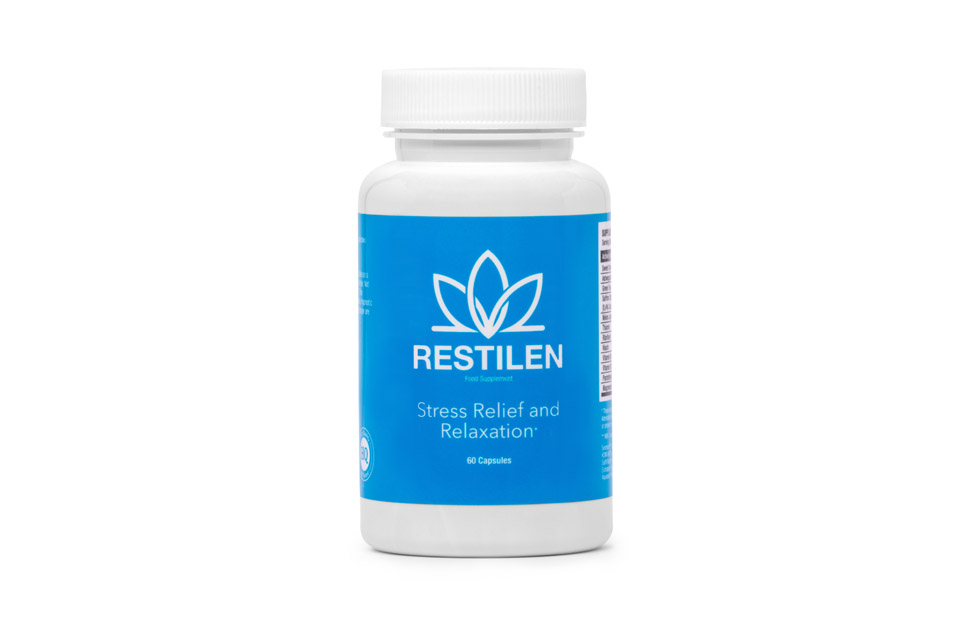
L-Theanine — the amino acid that gives tea its calm-without-sedation character — is the fastest-acting ingredient in the stress category: at100–200 mg, studies show increased alpha-brain-wave activity and subjective calm within30–60 minutes, without drowsiness at normal doses. Its daily-use trial base (200 mg/day over 4 weeks in stressed adults) shows modest improvements in stress symptoms and sleep quality. It also carries the category's most instructive embarrassment: a 2024 randomised trial of a branded theanine (AlphaWave, 400 mg) where perceived stress fell ~18% on theanineand ~17.9% on placebo, with no cortisol difference — a result we print in full below, because the honest version of theanine is "a mild, fast, pleasant nudge that expectancy can mimic", and at the right price that is still worth having. Dose honesty matters here too: formulas delivering ~50 mg (includingRestilen'stheanine content) sit well below the studied range.
What Theanine Is and How It Works
Theanine is an amino acid found almost uniquely in tea (Camellia sinensis), structurally similar to the neurotransmitter glutamate. Its best-documented acute effect is on brain-wave patterns: within the hour after a 200 mg dose, alpha-band activity — the EEG signature of relaxed wakefulness — increases, which matches the subjective report users give with unusual consistency: alert, but unbothered. Proposed mechanisms include gentle modulation of glutamate signalling, and downstream effects on GABA, serotonin and dopamine tone; the exact receptor story is not settled, and we grade the mechanism "plausible, partially mapped". What is not in doubt is the phenomenological difference from sedatives: theanine does not impair cognition at studied doses in the way benzodiazepines or sedating antihistamines do, does not produce tolerance or dependency in the literature, and wears off over hours. It is, in short, the only ingredient in this set whose promise issmall, fast and specificrather than large, slow and systemic — and its evidence should be judged against that promise, not against drug-sized expectations.
Could You Just Drink Tea? The Cup Maths
The natural-source question deserves arithmetic. A typical cup of tea contains on the order of 10–25 mg of theanine — the commonly cited range across tea types, with shade-grown green teas (matcha, gyokuro) at the top — alongside 30–50 mg of caffeine in the pairing this article discusses below. The studied supplemental dose is 100–200 mg: somewhere between five and fifteen ordinary cups, consumed as a single dose, without the fluid and with considerably more caffeine than the pairing ratios intend. Tea drinking is therefore best understood as thelow-dose, ritualisedversion of the theanine intervention — which may be exactly why its reputation is gentle, and why the expectancy machinery of the tea break (warmth, pause, daylight, a screen left behind) does so much of the experienced work. None of this argues against tea; it argues that "I drink green tea" and "I take the studied dose" are different interventions, and that the supplement is, for once, the honest way to reach the number the trials used — at a quality label that prints the milligrams.
Exams, Presentations and Performance Stress
The acute profile makes theanine a natural candidate for performance situations, and the small literature obliges: studies in students and test-anxiety paradigms report calmer subjective states and, in some, steadier attention under pressure at 200 mg-class doses taken before the event. This is also the use-case where the placebo discipline matters most gracefully: performance anxiety is exceptionally expectancy-sensitive, which means the ritual of taking somethingworks, measurably, through belief as well as chemistry — and for a one-off, low-stakes event, a user is entitled to take the combined effect at face value. The honest boundaries: no evidence theanine improves the performance itself (grades, scores) as opposed to the felt experience of performing; no role in clinical anxiety disorders; and a pre-exam dose is a poor substitute for the preparation that actually moves outcomes. Positioned as "feel steadier while you do the work", it is the category's most proportionate promise.
Forms on the Label: Suntheanine, Generic and 'Tea Extract'
Three label presentations recur.Branded L-theanine(Suntheanine is the established name — produced by enzymatic synthesis to the pure L-form) carries the advantage of identity: you know the compound and the dose.Generic L-theanineis chemically the same molecule when honestly made; the variable is manufacturing trust, which is a seller-selection problem rather than a chemistry one."Green tea extract (98% L-theanine)"— Restilen's form — is functionally a theanine ingredient wearing its source on its sleeve; the number that matters is the resulting theanine milligrams, which in that product total ~49 mg/day (see the dose audit below). A fourth label pattern, plain "green tea extract" without a theanine standardisation, may contain very little theanine at all — green tea's headline compound is usually EGCG — and should never be credited as a theanine dose. The reading rule is identical across this site: milligrams of the named active, or it didn't happen.
The Evidence for Stress, Study by Study
| Study / design | Dose & duration | Finding | Honest flag |
|---|---|---|---|
| Acute stress-protocol crossover RCT | Single 200 mg dose | Reduced salivary cortisol response and subjective stress after a stress task | Single-dose, lab stressor — real but narrow |
| Hidese 2019 (stressed healthy adults) | 200 mg/day × 4 weeks | Stress-related symptoms and sleep-quality scores improved vs placebo | Small sample; questionnaire outcomes |
| Higher-dose daily trial (stress-related conditions) | 400 mg/day × 8 weeks | Sleep-quality improvements reported | Population had existing conditions; sleep-led |
| AlphaWave RCT 2024 | 400 mg, branded theanine | Perceived Stress Scale −18% on theanine,−17.9% on placebo; cortisol no different | The placebo-match: expectancy did the measured work in this trial |
| Alpha-wave EEG studies | 200 mg single doses | Increased alpha activity within 30–60 min | A brain-wave change is a mechanism signal, not a clinical outcome |
Read as a whole: theanine reliably doessomethingmeasurable in the brain within the hour, reliably feels calming to most users, improves stress and sleep scores in small daily-use trials — and, in its best-controlled recent test, could not beat a placebo that produced an identical improvement. Those four clauses are all true at once, and together they describe a large fraction of the entire supplement landscape in miniature. The rational conclusion is not "theanine is fake" — placebos do not change EEG alpha — but "theanine's clinical effect size, beyond expectancy, is small and not yet cleanly isolated". Price and expectations should follow from that sentence.
The Placebo Problem, Taken Seriously (Because It Applies to You)
The AlphaWave result deserves a section rather than a footnote, because it teaches the reader the most transferable skill in this article. When a stressed adult enrols in a trial — or buys a product — several non-ingredient forces begin working immediately: the expectation of improvement, the ritual of doing something, the attention paid to symptoms (which changes how they are scored), and the natural regression of a stress level that was at a personal peak when they signed up. In this trial those forces summed to a 17.9% improvement on the primary scale. Theanine added nothing measurable on top. Two correct responses follow. Forscience: the ingredient's acute EEG and cortisol findings keep it interesting, but its clinical stress claim must be graded "unproven at the effect size people hope for". Foryou: if a theanine product makes your afternoons calmer, the calm is real even if the attribution is mixed — expectancy is a genuine neurobiological event, not an insult — but you should refuse to pay drug prices for a ritual effect, and you should know that the free version (a tea break, taken properly) recruits much of the same machinery. This is the framing no competitor's theanine page will give you, and it is why ours leads with stress rather than sleep: the acute, expectancy-adjacent use is the honest one.
Theanine for Sleep: the Second Benefit
The sleep evidence is real but must be labelled precisely: it rests onquestionnaires, not sleep-lab (polysomnography) trials— no large study has measured theanine's effect on sleep architecture. What exists: the 200 mg/day stressed-adult trial improved sleep-quality scores; a 400 mg/day trial in stress-related conditions improved sleep measures over 8 weeks; and the subjective logic is coherent (an ingredient that lowers pre-sleep rumination should help sleep onset feel easier without forcing sedation). Practical positioning follows: theanine is awind-downaid, taken 30–60 minutes before bed in the 200–400 mg range in sleep-focused products — not a hypnotic, and not a treatment for insomnia, which has its own evidence-based therapy (CBT-I) that outperforms every supplement in this set. If your sleep problem is severe or chronic,the safety guide's closing sectionis the correct next page, not a stronger capsule.
Theanine vs Melatonin
| L-Theanine | Melatonin | |
|---|---|---|
| What it is | Tea amino acid; calm-without-sedation | The body's own timing hormone, supplemented |
| Best use | Pre-sleep rumination; daytime acute calm | Timing problems: jet lag, shifted schedules, delayed sleep phase |
| Onset | 30–60 minutes | 30–60 minutes (for sleep timing) |
| Sedation | Minimal at studied doses | Mildly sedating; grogginess in some users |
| Dependency/tolerance | None reported | No classic dependency; long-term paediatric and hormonal questions remain open |
| Evidence shape | Small trials + EEG data; one placebo-match | Strong for jet lag/circadian uses; weak as a general insomnia pill |
| Dose discipline | 100–200 mg (stress) to 200–400 mg (sleep) | Low doses (0.5–1 mg) often match or beat the 5–10 mg shelf standard |
The comparison clarifies both: melatonin is aclockdrug mis-sold as a sleeping pill; theanine is avolume knobfor pre-sleep mental noise. They answer different problems, combine without known drama (though combination products inherit the untested-combination caveat), and neither treats a sleep disorder.
The Caffeine Pairing: Calm Focus, and Its Evidence Grade
Theanine's most popular real-world use is neither stress scales nor sleep scores: it is the pairing with caffeine — in tea naturally, and in nootropic stacks deliberately — to take the jitter off caffeine's alertness. The practice ratios commonly used run from 1:1 to 2:1 theanine-to-caffeine (e.g. 100–200 mg theanine with 100 mg caffeine), and small acute studies of the combination show smoother attention profiles than caffeine alone on some measures. Our grading discipline requires the caveat in the same paragraph: the pairing literature is small, acute and task-based — it supports "feels smoother, performs comparably" more than any clinical outcome — and it is apractice, not a trialled protocol. Within those limits it is the most defensible use in this article, precisely because its claim is modest and immediately testable by the user: your 3 p.m. focus either feels cleaner or it doesn't, within the hour, at known doses.
Dose Reality Check: What Products Actually Deliver
The studied stress dose is 100–200 mg of theanine itself. Now audit the shelf with that ruler. Dedicated theanine products typically deliver 100–200 mg per capsule — on-spec. Green-tea-derived inclusion in formulas is where the arithmetic slips:Restilencontains 50 mg of a green-tea extract standardised to 98% L-theanine — i.e. roughly 49 mg of theanine per daily serving, a quarter to a half of the lowest studied dose. We note this in Restilen's review and inthe set's audit table; it is one of the deductions inside its 6.6/10. The general lesson outlives the example: in this category, "contains L-theanine" and "contains a studied dose of L-theanine" are different products at the same price, and the label — read for milligrams of the named compound, not of its carrier extract — is the only place the difference is visible.
Combinations People Actually Use
Theanine + caffeineis covered above — the evidence-backed pairing, such as it is.Theanine + magnesiumis the evening stack of the moment: mechanistically non-overlapping (acute calm plus the deficiency-correction angle), no known interaction, and both ingredients sit at the category's gentle end; the caveat is the usual one — the combination itself is untested, and magnesium's dose in most stacks is as theatrical as theanine's.Theanine + ashwagandhapairs an acute agent with a chronic one, a rational structure on paper (now + later) that no trial has examined; ashwagandha's interaction file, not theanine's, governs the stack's caution level. The meta-rule fromthe safety guideapplies: a combination is a new, untested product whose risk is the union of its parts — build stacks one ingredient at a time, weeks apart, or you will never know which part did what.
A Note on Children and 'Calm' Gummies
Theanine is marketed into children's "calm" and focus products, and parents deserve the direct sentence: the paediatric evidence is minimal — small, short studies in specific contexts (including some sleep work in boys with ADHD) that do not establish general efficacy or long-term safety for routine use in children. The adult trial record cannot be borrowed downward by age any more than it can be borrowed across conditions
A child's stress or sleep problem has its own differential and its own first-line responses (sleep hygiene, routine, clinical assessment where indicated), and a gummy is not a shortcut past them. This site's stress coverage is written for adults, and this ingredient — gentle as it is — is where we most often see the adult label quietly re-aimed at children. We decline to help it aim.
Safety
Theanine's safety profile is the cleanest in this set: occasional headache or drowsiness at higher doses; no dependency, tolerance or withdrawal reported; cautions are theoretical (additive calm with sedatives; possible mild blood-pressure lowering) rather than documented. Pharmacist-grade interaction references list no reported problems with antidepressants beyond a theoretical serotonergic note. Pregnancy data does not exist at supplemental doses (tea drinking is a separate, dietary exposure). The full category context is inthe safety guide.
Frequently Asked Questions
How long does L-theanine take to work for stress?
Acute effects are reported within 30–60 minutes of a 100–200 mg dose. Daily-use trials ran 4–8 weeks for stress-symptom scores.
What is the right theanine dose?
100–200 mg for acute/daytime use; 200–400 mg in sleep-focused protocols. Products delivering ~50 mg are below the studied range.
Does theanine make you sleepy?
At studied doses it promotes calm without significant sedation for most users — that distinction is its entire appeal. High doses can cause drowsiness in some.
Is theanine better than melatonin for sleep?
Different tools: melatonin retimes sleep (jet lag, shifted phase); theanine quiets pre-sleep rumination. Neither treats insomnia; see the comparison table.
If a trial showed placebo matched it, why take it?
Because the acute EEG/cortisol data show a real physiological nudge, the safety profile is excellent, and the cost of a fair personal trial is low — provided the price reflects "mild and expectancy-adjacent", which is the honest label this article gives it.
Last reviewed: October 2026. This article is educational and is not medical advice.
