
- Quick Answer
- What "Nootropic" Actually Means — and Why the Word Does So Much Work
- The Test That Explains Most "It Works!" Stories: Restore vs Enhance
- The Evidence Table: Every Common Ingredient, Graded
- Caffeine: The One That Clearly Works — and What "Works" Means
- Bacopa: Real Evidence, One Domain, Twelve Weeks
- Theacrine: The Honesty Box
- Gotu Kola: The Null Result Nobody Prints
- Prescription "Smart Drugs": A Boundary, Not a Shopping List
- The Label Audit: Brain Actives Against Its Own Category's Evidence
- How to Read Any Nootropic Label: The Five-Minute Protocol
- Who Should Buy Brain Actives — and Who Should Skip It
- A Stronger Alternative in This Category
- Frequently Asked Questions
- Do nootropics work for healthy people, or only if you're tired or deficient?
- What is the single best-evidenced nootropic?
- Are nootropics safe to take every day?
- Do nootropics work immediately?
- Is Brain Actives legit?
- Can supplements replace sleep, exercise and the basics?
- Read This Next
Disclosure: This article contains affiliate links. If you buy through them, we may earn a commission at no extra cost to you. It never changes our conclusions.
Quick Answer
Some nootropics work, in narrow and specific ways — and the honest answer depends entirely on which ingredient, at which dose, measured how. Caffeine reliably restores alertness and attention, mainly by removing fatigue rather than adding capacity. Bacopa has genuine trial support for one thing — memory recall — after about 12 weeks at roughly 300 mg a day.
Theacrine, the ingredient most often sold as "caffeine without the downsides", rests on a handful of small, mostly industry-linked studies measuring how people felt, not how they performed. Gotu kola, a fixture of focus formulas, failed to beat placebo in any cognitive domain in its meta-analysis.
And no finished nootropic product we are aware of — including the one this site reviews — has been tested as a finished product in a published trial. Best for: buyers who will read a label ingredient by ingredient and match each dose against the trials, rather than buying a category's reputation. If an ingredient's evidence is thin, this article says so — including for the product linked below.
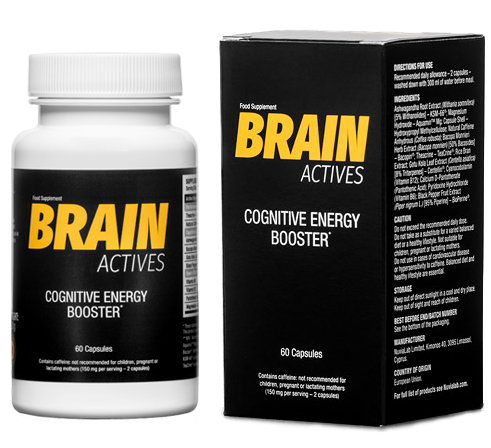
Our Recommendation — Brain Actives
Score: 5.5/10 · Best for: adults who want same-day focus from a transparent stimulant pairing, treating the memory ingredients as a slow, secondary experiment. Main caution: one serving's vitamin B6 (14 mg) exceeds EFSA's 12 mg/day upper level, the bacopa is underdosed, and no money-back guarantee is published. Fair trial: one bottle — a month is enough to judge the stimulant effect honestly, and no guarantee protects a bigger first order.
What "Nootropic" Actually Means — and Why the Word Does So Much Work
The word was coined in the 1970s by Corneliu Giurgea, the chemist behind piracetam, and his definition was strict: a true nootropic should enhance learning and memory, protect the brain, and be essentially non-toxic with very few side effects. Almost nothing sold under the word today is measured against that definition.
In current marketing, "nootropic" covers at least four different things that have almost nothing in common: ordinary stimulants (caffeine above all), traditional herbal extracts with slow and narrow trial records (bacopa, rhodiola, gotu kola), nutrients whose cognitive relevance is correcting a deficiency (vitamin B12, magnesium), and prescription medicines (modafinil, ADHD stimulants) that are not supplements at all and appear in this article only as a boundary.
Lumping them under one word is not an accident — it lets the strongest member of the category lend credibility to the weakest. Caffeine's very real effect makes the whole shelf look proven; a herb with one small positive trial inherits the glow.
So the question "do nootropics work?" has no single answer, and any page that gives it one is selling you the category rather than informing you about the ingredients. The answer has to be built ingredient by ingredient, and it has to ask four questions of each one: Was it tested in humans, against placebo?
At what dose, and for how long? On what outcome — an objective test, or a rating of how alert someone felt? And in whom — because a result in healthy 70-year-olds does not automatically describe a healthy 25-year-old.
The rest of this article runs the ingredients you will actually meet in focus and memory formulas through exactly those questions, grades them on one consistent scale, and finishes by auditing a real product label — Brain Actives, the formula this site sells — against the same standard.
The grades are: Strong (multiple human trials or regulator-reviewed consensus, consistent direction), Moderate (real human trials, narrow outcome or population), Preliminary (small, short or subjective-only human data), and Null (tested properly and did not beat placebo).
The Test That Explains Most "It Works!" Stories: Restore vs Enhance
Before the ingredients, one distinction explains more positive nootropic experiences than any other: the difference between restoring performance that fatigue took away and enhancing performance above a rested baseline. Most cognitive ingredients that "work" in trials are doing the first. Caffeine is the clearest case.
In study after study, its most reliable effects appear in people who are tired, sleep-restricted or in caffeine withdrawal — it brings vigilance, reaction time and attention back toward normal. In well-rested people at their peak, the same dose adds much less, and on complex reasoning it may add nothing at all.
This is not a criticism of caffeine; restoring a tired brain to baseline is genuinely valuable, and most adults spend much of the working week below baseline. But it reframes the promise. A supplement that reliably un-tires you is a useful tool. It is not making you smarter than you are, and the difference matters for what you should pay and what you should expect.
The restore-versus-enhance test also explains the placebo-shaped hole in this category.
Expectation is powerful for subjective states: if you take a capsule sold for focus, sit down intending to focus, and rate your focus an hour later, the rating tends to rise whether or not the capsule did anything — which is why this site weights objective test results above "felt focused" ratings wherever both exist, and why some of the grades below are lower than the same ingredients receive elsewhere.
Apply the test as you read: for each ingredient, ask whether the trials show a rested person getting better, or a tired person getting back to normal. Both are worth something. Only one of them is enhancement.
The Evidence Table: Every Common Ingredient, Graded
Here is the whole category on one table — the ingredients that dominate focus and memory formulas, the doses the human research actually used, and what that research found. The sections after the table read the important rows in full.
| Ingredient | Studied dose & duration | What the human evidence shows | Grade |
|---|---|---|---|
| Caffeine | ~40–300 mg, single doses and habitual use | Improves alertness, vigilance, attention and reaction time — mainly by removing fatigue; the most replicated finding in the category | Strong (for alertness) |
| Caffeine + L-theanine | 150 mg + 250 mg (Haskell et al. 2008); 40 mg + 97 mg (Giesbrecht et al. 2010) | The combination improved some attention measures and self-rated alertness beyond caffeine alone in small crossover trials | Moderate |
| Bacopa monnieri | 300–450 mg/day for 12 weeks | Improved memory free recall across trials; attention-speed effects in meta-analysis; nothing convincing in other domains; one 2025 trial found no benefit | Moderate (memory only) |
| Theacrine | 200–300 mg/day, up to 8 weeks | Subjective energy/focus ratings rose in small industry-linked pilots; objective cognition not significantly improved where measured | Preliminary |
| Gotu kola (Centella asiatica) | Various, mostly hundreds of mg | No significant benefit over placebo in any of nine cognitive domains in meta-analysis | Null |
| Rhodiola | 200–600 mg/day, weeks | Fatigue-context findings covered in our stress cluster; not a focus ingredient in its own right here | Moderate (fatigue only) |
| Creatine | ~5 g/day (monohydrate) | A 2018 review of six trials (281 people) suggested possible short-term memory/intelligence benefits, strongest under stress or sleep loss — a restorer's profile again | Preliminary–Moderate |
| Vitamin B12 / B-vitamins | Deficiency-correction doses | Clear benefit when deficiency is corrected; no demonstrated cognitive benefit in people whose levels are already adequate | Strong in deficiency; Null when replete |
| Magnesium | ~200–400 mg/day supplemental ranges in stress literature | Plausible support when intake is low; no direct "focus" trial record; form matters and data do not transfer between forms | Preliminary |
Read the table's pattern, because the pattern is the answer to this article's title. The strongest row is a cheap stimulant available in coffee. The best botanical row is narrow (one memory outcome), slow (12 weeks), and dose-specific (around 300 mg). One fashionable row is preliminary and subjective. One traditional row is null.
And the nutrient rows are deficiency stories wearing enhancement clothing. That is the real shape of "nootropics" in 2026 — a category with genuine contents and a reputation roughly three sizes too big for them.
Caffeine: The One That Clearly Works — and What "Works" Means
Caffeine is the evidentiary spine of this entire category, and the only ingredient in most formulas whose effect you can reliably feel within the hour. Its mechanism is understood: it blocks adenosine receptors, and adenosine is one of the brain's accumulating sleepiness signals, so blocking it removes a brake rather than pressing an accelerator. The trial record matches the mechanism.
Across many studies, doses in the region of 40–300 mg improve vigilance, sustained attention and reaction time, with the largest and most consistent gains in people who are fatigued.
The regulator's summary of the whole literature, the European Food Safety Authority's 2015 caffeine opinion, concluded that single doses up to 200 mg and habitual intakes up to 400 mg a day raise no safety concern for healthy adults — a safety statement, note, not an efficacy medal, but it reflects how thoroughly this compound has been studied compared with everything else on the shelf.
Caffeine also anchors the category's best combination finding. In Haskell et al. (2008), a crossover trial, 150 mg of caffeine combined with 250 mg of L-theanine — the amino acid from tea — improved some attention and reaction-time measures and self-rated alertness in ways caffeine alone did not, while theanine alone actually increased headache ratings in the same trial.
Giesbrecht et al. (2010) found attention-task benefits at lower doses (40 mg caffeine with 97 mg theanine). This caffeine-plus-theanine pairing is, on current evidence, the best-supported acute "focus stack" in the supplement world — a fact that matters later in this article, because the product this site sells does not contain theanine, and we will not pretend otherwise.
Caffeine's limits are as well documented as its benefits: tolerance to several of its effects develops within days to a couple of weeks of daily use; it has a real withdrawal syndrome (headache, fatigue, irritability, typically peaking a day or two after stopping); and it taxes sleep in proportion to dose and lateness — in one home-monitor trial, 400 mg taken even six hours before bed cut objectively measured sleep by more than an hour.
Our theacrine-versus-caffeine comparison carries the full timing and dose record. Caffeine works. It works by un-tiring you, it stops working as well when you use it daily, and it bills you in sleep if you take it late. Every other ingredient below should be judged against that complete picture — not against the slogan version.
Bacopa: Real Evidence, One Domain, Twelve Weeks
Bacopa monnieri is the strongest botanical in the category, and its record is a model of how narrow a genuine supplement effect can be.
The systematic review by Pase et al. (2012) gathered the randomised, placebo-controlled human trials — six of them, all running 12 weeks, at 300–450 mg of extract a day — and found that bacopa improved performance on 9 of 17 tests in exactly one cognitive domain: memory free recall, the ability to bring back information you were not prompted for.
For reasoning, language, and most other domains, the review found little or no evidence. The meta-analysis by Kongkeaw et al. (2014), pooling nine trials and 518 participants, added a second, smaller signal: speed of attention improved by milliseconds on timed tasks. That is the bacopa record at its honest best — a real memory-recall effect and a small attention-speed effect, after three months of daily use, at around 300 mg a day.
Three qualifiers keep that record honest. First, the populations: the positive trials concentrated in older adults — Calabrese et al. (2008) studied healthy people over 65, Morgan and Stevens (2010) people over 55 — so transfer to young students and professionals is an assumption, not a finding.
Second, the timeline: in Stough et al. (2001), the foundational trial, improvements were present at 12 weeks and absent at five weeks; bacopa is structurally incapable of helping with next week's exam.
Third, the record is not unanimous: a 2025 randomised trial in 101 adults with memory complaints (Lopresti and Smith, Clinical Drug Investigation) found no cognitive benefit over placebo at the standard 300 mg dose.
A category that quotes only the positive trials is advertising; the graded version is "moderate evidence for memory recall in older adults over 12 weeks", and our dedicated bacopa article reads every one of these trials in full.
Note, too, what this means for products: a formula providing bacopa at well under 300 mg — as the audited product below does, at 187.5 mg — is selling a dose at which none of the above was demonstrated. The ingredient works, in its lane. Whether a given capsule is in that lane is a separate question, and it is the buyer's question.
Theacrine: The Honesty Box
Theacrine is the ingredient whose marketing has travelled furthest from its data, so it gets a box of its own. It is a caffeine-relative from kucha tea, sold in branded form (TeaCrine®, and KuchaCore® in the product audited below) with a four-part promise: caffeine-like energy, without tolerance, without jitters, without a crash, and without disturbing sleep. Here is that promise against the human record, claim by claim.
| Marketing claim | What the human trials actually show | Verdict |
|---|---|---|
| "Improves focus and cognition" | In Kuhman et al. (2015) (n=20, crossover), a theacrine-containing supplement produced no significant effect on objective cognitive tests (Trail Making, Digit Symbol Substitution, reaction time) — and neither did caffeine alone in that trial. Subjective ratings (attentive, alert, focused) favoured the theacrine combination. The positive pilots (Ziegenfuss et al. 2017, n=9 open-label plus n=15 crossover; Habowski et al. 2014, an n=15 conference pilot) measured subjective ratings only | Subjective effects only; objective cognition unproven |
| "Doesn't build tolerance" | Taylor et al. (2016) (n=60, 200–300 mg/day for 8 weeks) was a safety trial: clinical markers stayed normal and pre-dose baseline self-ratings stayed stable — no habituation signal in morning baseline ratings. It never re-measured the acute effect size week by week against a caffeine control, and no human tolerance data exist beyond 8 weeks | Narrowly supported, for 8 weeks, on baseline ratings only |
| "No jitters" | Trials up to 300 mg/day report no significant heart-rate or blood-pressure changes and low adverse-event rates; no trial was designed to measure jitters as an outcome | Consistent with the safety data; unproven as an endpoint |
| "No crash" | No trial has measured a post-effect crash for theacrine or compared rebound fatigue against caffeine. The claim is inferred from theacrine's long half-life | An inference, not a finding |
| "Won't disturb sleep" | Theacrine's half-life is substantially longer than caffeine's — small pharmacokinetic studies put it roughly in the high-teens to mid-20s of hours, unsettled. A morning dose is therefore still substantially present at bedtime; the sleep claim sits awkwardly next to the half-life claim | Rejected as stated; morning-only dosing is the defensible advice |
None of this makes theacrine worthless. The subjective energy and fatigue findings are consistent across the small pilots, the 8-week safety data at up to 300 mg are genuinely reassuring as far as they go, and the rodent work behind the tolerance idea (Feduccia et al. 2012 found no locomotor tolerance after repeated dosing in rats) is a legitimate reason the hypothesis exists.
There is also one elegant piece of formulation science: in He et al. (2017), a tiny pharmacokinetic study (n=8), caffeine increased theacrine exposure while theacrine did not alter caffeine's handling — the two are partners pharmacologically, which is exactly how the audited formula uses them.
But the distance between "small subjective-effect pilots plus one 8-week safety trial" and "caffeine without the downsides" is the distance this box exists to mark. Our theacrine-versus-caffeine article audits every one of these trials in full, including the later negative ones most pages omit.
Gotu Kola: The Null Result Nobody Prints
If theacrine is the category's over-claimed ingredient, gotu kola is its unexamined one. It appears in focus and memory formulas worldwide, usually justified by its long traditional use in Ayurvedic medicine. Tradition, however, is a reason to run trials — and gotu kola's trials have been run.
The systematic review and meta-analysis by Puttarak et al. (2017, Scientific Reports) pooled five trials of Centella asiatica alone and six of Centella-containing products, covering 27 analysable tests across nine cognitive domains — overall cognition, attention, executive function, working memory, processing speed, language, verbal and visual memory, visuospatial ability.
The result was a clean sweep in the wrong direction: no significant difference from placebo in any cognitive domain. The only significant pooled findings were mood ratings one hour after a dose — a higher alert score and lower anger — which are acute subjective states, not cognition, and not what the ingredient is sold for.
We include gotu kola at this length for a reason beyond completeness: it is the cleanest demonstration in the category that "has been used for centuries and appears in many formulas" is not an evidence statement. A buyer reading labels will meet gotu kola constantly, almost always presented as a cognitive ingredient.
On the current record it is a null ingredient for cognition — present in formulas, one suspects, because it was present in earlier formulas. It appears in the audited product below at 50 mg a day, far below even the doses that failed in the meta-analysis, and our bacopa article carries the folded-in verdict in full.
When a formula's label lists an ingredient whose best evidence is a null meta-analysis, the correct response is not outrage — the dose is harmless enough — but arithmetic: that line of the label is contributing tradition, not effect, and the price should be judged on the lines that remain.
Prescription "Smart Drugs": A Boundary, Not a Shopping List
Any honest answer to "do nootropics work?" has to deal with the category's shadow: prescription stimulants and wakefulness drugs — modafinil, methylphenidate, amphetamine salts — which do have real, measurable effects on alertness and some cognitive measures in sleep-deprived people, and which is precisely why they are prescription medicines.
They carry dependence potential, cardiovascular and psychiatric risks, and legal consequences when used without prescription; the research literature on non-prescribed use by students shows the performance benefit is consistently overestimated by users, and this site will not provide sourcing, dosing or "how to use them safely" content. They are mentioned here for one reason: supplement marketing borrows their aura.
When a capsule is described in the language of pharmaceutical enhancement — "limitless", "smart drug", "the closest thing to…" — it is spending prescription-drug credibility on a supplement-grade evidence base. The correct reading of that language is as a warning about the seller, not a promise about the product. Everything graded in this article is a legal, over-the-counter ingredient, graded on its own record.
The Label Audit: Brain Actives Against Its Own Category's Evidence
Everything above was the category in the abstract. This is the same standard applied to one real formula — Brain Actives, the product this site reviews and sells, scored 5.5/10 in our full review. The audit is the point of the article: if the grading above cannot survive contact with a product we earn a commission on, it is decoration.
| Ingredient (per 2 capsules) | Formula dose | Studied dose | Audit verdict |
|---|---|---|---|
| Caffeine | 150 mg | ~40–300 mg acute | At a studied dose. The alertness effect is real and will be felt on day one — and it is a restoration effect, with caffeine's tolerance and sleep arithmetic attached |
| Theacrine (KuchaCore®) | 125 mg | 200–300 mg in the subjective-effect pilots | Below the piloted range; the pairing with caffeine is pharmacologically sensible (He et al. 2017), but the evidence is preliminary and subjective at any dose |
| Bacopa (Bacopin®) | 187.5 mg | 300–450 mg/day for 12 weeks | 62.5% of the standard trial dose. The memory evidence describes 300 mg over 12 weeks, not this capsule; no trial has tested 187.5 mg |
| Gotu kola (Centellin®) | 50 mg | Hundreds of mg in trials — which were null | A null ingredient at a fraction of the null dose. Contributes label length, not expected effect |
| Rhodiola (Rhodiolife®) | 100 mg | 200–600 mg/day in the fatigue literature | Below the fatigue range; a supporting line at best. Our stress cluster covers rhodiola's actual record |
| Magnesium (Aquamin™) | 75 mg | ~200–400 mg supplemental ranges in stress literature | A modest top-up for low intake, in a marine mineral form; no focus evidence, and no borrowing of other magnesium forms' data |
| Vitamin B6 | 14 mg | — | The audit's red flag: 14 mg exceeds the European Food Safety Authority's tolerable upper intake level of 12 mg/day (set in 2023 on peripheral-neuropathy evidence), while sitting far below the US upper limit of 100 mg/day. Both numbers, always: the total from food plus all supplements is what counts |
| Vitamin B12 | 25 µg | Deficiency-correction relevance | Sensible as insurance against low intake; not a focus ingredient in anyone with adequate levels, and 25 µg is not a deficiency-treatment regimen |
Add the commercial facts, because they are part of the audit too: the panel is fully printed with branded ingredients and exact amounts — genuinely better than the proprietary-blend norm in this category — the price is $59.99 for a one-month bottle ($39.99 a bottle on the three-bottle pack, $29.99 on the six-bottle pack, plus $12 shipping), and the maker publishes no money-back guarantee.
The 5.5/10 is what this arithmetic looks like as a score: a formula whose day-one effect is real and honestly dosed at the stimulant line, whose long-term ingredient is underdosed, which carries one null ingredient and one over-the-European-limit vitamin, sold without a guarantee. Pages that review this product at 9/10 exist. They are not auditing it; they are decorating it.
How to Read Any Nootropic Label: The Five-Minute Protocol
The demand question behind this article — "which nootropic brands are reliable?" — is better answered with a method than with a list, because lists age and commissions bend them. Run any formula through these checks. One: is every dose printed? A proprietary blend that hides amounts cannot be audited, and unauditable is the point of hiding them.
Two: pick the ingredient carrying the headline claim and compare its dose with the trial dose. If the memory claim rests on bacopa, the trial dose is ~300 mg for 12 weeks; if the label says 100 mg inside a blend, the claim is borrowed. Three: separate the fast lane from the slow lane.
Stimulants act in an hour; botanicals with evidence act in weeks to months. Any product promising both from one ingredient is misdescribing at least one lane. Four: check what the subjective-objective split is. "Clinically shown to increase focus" should resolve, when you find the study, into either a test score or a feeling rating; price them differently.
Five: run the safety arithmetic nobody does for you — total caffeine across your whole day against the 200 mg single-dose / 400 mg daily frame, and total B6 against both upper limits (EFSA 12 mg, US 100 mg) if the formula carries B-vitamins. A brand that survives these five checks with its claims intact has earned the word reliable far more than any roundup can confer it.
One more check deserves emphasis because it is this category's signature trick: the finished product is almost never the thing that was trialled. Trials test ingredients — one extract, one dose, one population. Products combine ten ingredients at assorted doses and inherit each ingredient's best trial by association.
Combination can change the picture in either direction (caffeine genuinely raises theacrine exposure; other pairings are untested entirely), but the default assumption should be that a formula's evidence is the sum of its audited parts, no more. When a seller says "clinically proven formula" and the clinical proof is an ingredient trial at twice the label dose, you are looking at the category's standard sleight of hand, and the audit table above is the counter-move.
Who Should Buy Brain Actives — and Who Should Skip It
Buy it if you want same-day alertness and focus from a fully labelled stimulant pairing — caffeine plus theacrine rather than caffeine alone — you do not already stack B-vitamin supplements, and you are buying the day-one effect with your eyes open about the rest: the memory ingredient is a slow, underdosed secondary play, and there is no guarantee if it disappoints you.
Judge the focus effect on day one; judge anything else over months, if at all.
Skip it if what you actually want is the best-evidenced focus stack — that is caffeine with L-theanine, which this formula does not contain (our focus ranking and our stress cluster's theanine article cover it properly) — or a stimulant-free memory product, or if you are caffeine-sensitive, pregnant or breastfeeding, have cardiovascular disease, or already take a multivitamin carrying meaningful B6.
Skip the whole category, for now, if your "brain fog" is new, worsening or unexplained: that is a medical question first, and our brain-fog article lays out the causes-first workup before any supplement is worth discussing.
A Stronger Alternative in This Category
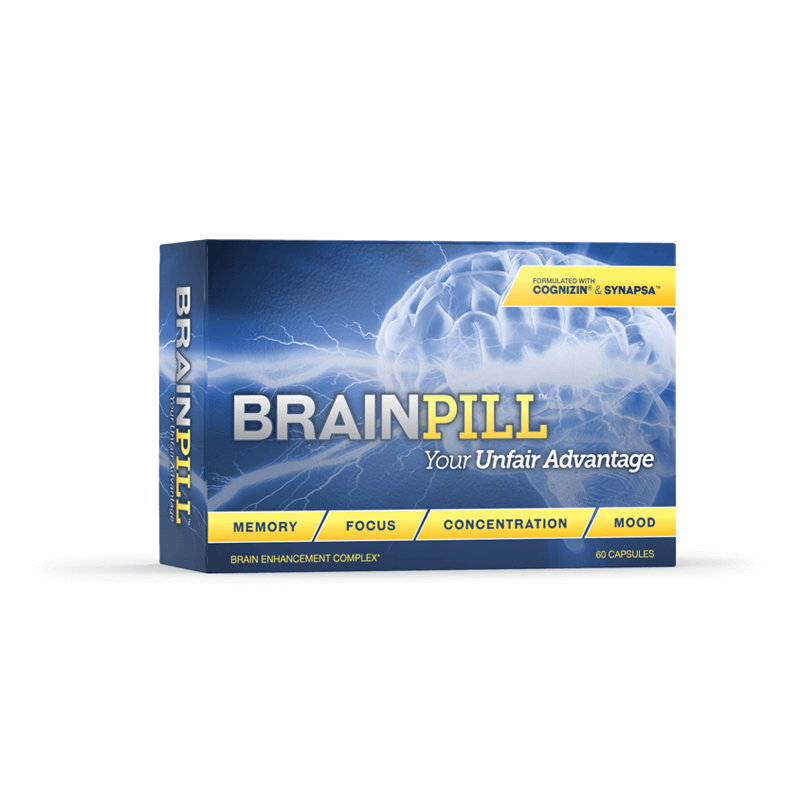
The stronger alternative: BrainPill · 6.5/10The higher-scored nootropic in our catalogue: a caffeine-free formula whose maker ran a registered, placebo-controlled trial of the finished product — though at twice the daily dose a bottle implies, and with no amounts published.
Our Recommendation — Brain Actives
Score: 5.5/10 · Best for: adults who want same-day focus from a transparent stimulant pairing, treating the memory ingredients as a slow, secondary experiment. Main caution: one serving's vitamin B6 (14 mg) exceeds EFSA's 12 mg/day upper level, the bacopa is underdosed, and no money-back guarantee is published. Fair trial: one bottle — a month is enough to judge the stimulant effect honestly, and no guarantee protects a bigger first order.
Frequently Asked Questions
Do nootropics work for healthy people, or only if you're tired or deficient?
Mostly the second, on current evidence. Caffeine's clearest effects are restoring alertness lost to fatigue; B-vitamins help cognition when a deficiency is corrected; creatine's possible benefits look strongest under sleep loss or stress. Demonstrated enhancement above a rested, well-nourished baseline is rare and small — which is why this article grades ingredients on what their trials actually measured, not on the category's promise.
What is the single best-evidenced nootropic?
Caffeine, by a wide margin — decades of trials, a regulator-reviewed safety frame, and reliable acute effects on vigilance and attention at roughly 40–300 mg. Its honest caveats are tolerance within days to weeks, a genuine withdrawal syndrome, and a measurable cost to sleep when dosed late. The best-evidenced combination for focus is caffeine with L-theanine; the best-evidenced botanical, for memory recall specifically, is bacopa at ~300 mg a day for 12 weeks.
Are nootropics safe to take every day?
It depends on the ingredient, and the durations differ enormously — caffeine has decades of habitual-use data, bacopa's trials run to about 12 weeks, and theacrine's human record stops at eight weeks. Our long-term safety article goes ingredient by ingredient, including the dependence and cycling questions and the B6 arithmetic that daily users of formulas like Brain Actives need to do.
Do nootropics work immediately?
The stimulant lane does — caffeine is felt within the hour, and theacrine's subjective effects were measured over the first hours in its pilots. The botanical lane does not: bacopa showed nothing at five weeks in its foundational trial and effects at twelve. Any product or page promising a same-day memory effect from bacopa is misdescribing the record.
Is Brain Actives legit?
It is a real product from a named maker (NuviaLab), with a fully printed panel of branded ingredients — which already separates it from blend-hiding competitors.
The audit above is the fuller answer: caffeine at a studied dose, theacrine below its piloted range, bacopa at 62.5% of its trial dose, a null gotu kola line, B6 above EFSA's upper level, and no published money-back guarantee. We score it 5.5/10: legitimate, transparent, and weaker than its shelf-mates' marketing — a combination this category rarely admits to.
Can supplements replace sleep, exercise and the basics?
No — and the restore-versus-enhance frame explains why the basics outperform the shelf. Sleep loss is the commonest cause of the fog these products are bought for, and caffeine at best rents back part of what a short night took. A supplement budget spent before sleep, exercise and a deficiency check is spent in the wrong order; our brain-fog article sequences the causes properly.
So, do nootropics actually work?
The graded answer: one ingredient works acutely and provably (caffeine, mostly by restoring what fatigue removed); one stack improves on it modestly (caffeine plus theanine); one botanical works slowly and narrowly at a specific dose (bacopa, memory recall, 300 mg, 12 weeks); one fashionable ingredient is promising and unproven (theacrine); one traditional ingredient has been tested and found null (gotu kola); and the nutrients work when — and only when — they are filling a gap. That is a less exciting answer than the category advertises, and a more useful one, because it converts directly into buying behaviour: pay for the lines of the label that carry evidence at the printed dose, discount the rest to decoration, and never let a strong ingredient's reputation cosign for a weak one's dose. The sellers who deserve your money are the ones whose labels survive that arithmetic — and the reviews that deserve your trust are the ones, like the audit in this article, willing to run it on products they profit from.
Last reviewed: October 2026. This article is educational and is not medical advice.
