
- Quick Answer
- What Bacopa Is — and the Standardisation Trap
- The Trial Record, Read One Study at a Time
- The 12-Week Timeline: Why Week Five Tells You Nothing
- Who the Trials Studied: The Population Honesty Box
- Dose: 300 mg Is the Story — and the Audit of 187.5 mg
- How to Take It: The Food Question, Answered Carefully
- The Folded-In Verdict: Gotu Kola, Bacopa's Formula-Mate
- Bacopa and ADHD: Medical Territory, Answered Plainly
- Buying Bacopa Well: The Short Label Checklist
- Who Should Buy Brain Actives — and Who Should Skip It
- Frequently Asked Questions
- How long does bacopa take to work?
- What is the right bacopa dose?
- Should bacopa be taken with food?
- Does bacopa help students and young adults?
- What are bacopa's side effects?
- Is bacopa better than gotu kola for memory?
- Read This Next
Disclosure: This article contains affiliate links. If you buy through them, we may earn a commission at no extra cost to you. It never changes our conclusions.
Quick Answer
Bacopa monnieri is the rare supplement herb with a genuine human trial record for memory — and the record is precise about its limits. Across randomised trials, about 300 mg of extract a day for 12 weeks improved memory free recall, mostly in healthy older adults; a meta-analysis added a small attention-speed effect.
Nothing was measurable at five weeks in the foundational trial, several cognitive domains showed no benefit at all, and a well-sized 2025 trial found no cognitive improvement over placebo. Bacopa is also not a same-day ingredient: single doses do essentially nothing you can use.
The product this site sells provides bacopa at 187.5 mg a day — 62.5% of the studied dose — so its memory claim is an extrapolation, and this article treats it as one throughout. Best for: patient adults — realistically, older adults — who will take a full studied dose daily for a full twelve weeks and judge it then, not before.
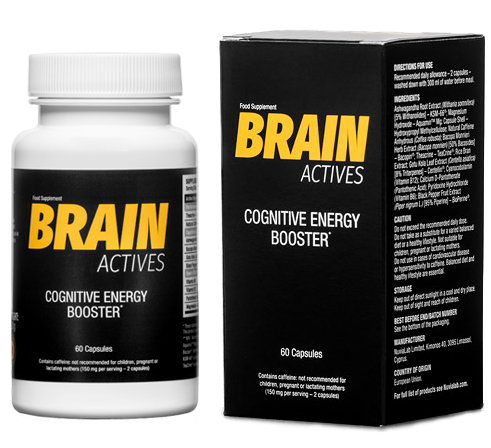
Our Recommendation — Brain Actives
Score: 5.5/10 · Best for: adults who want same-day focus from a transparent stimulant pairing, treating the memory ingredients as a slow, secondary experiment. Main caution: one serving's vitamin B6 (14 mg) exceeds EFSA's 12 mg/day upper level, the bacopa is underdosed, and no money-back guarantee is published. Fair trial: one bottle — a month is enough to judge the stimulant effect honestly, and no guarantee protects a bigger first order.
What Bacopa Is — and the Standardisation Trap
Bacopa monnieri (brahmi) is a creeping wetland herb with centuries of Ayurvedic use for memory and cognition. Its studied constituents are the bacosides, a family of saponins, and commercial extracts are standardised to a bacoside percentage — which is where the first trap waits.
Percentages are not comparable across brands, because the assay methods differ (ultraviolet and HPLC methods return different numbers for the same material), so a label boasting a higher percentage than a trial extract's has told you almost nothing.
The trials themselves used named, standardised extracts at a total daily amount of extract — most often 300 mg — and it is that total-extract dose, sustained for twelve weeks, that the evidence attaches to. Two rules follow for buyers.
Judge a bacopa product first on milligrams of extract per day against the 300 mg trial standard, and only second on any percentage claim.
And treat any percentage printed inconsistently — including, we note because our own product's maker does it, a maker's page that states two different standardisations for the same extract in two places — as a credibility flag about the seller's paperwork, quite apart from the herb. For that reason this site prints Brain Actives' bacopa amount (187.5 mg) and declines to print its contested percentage at all.
The Trial Record, Read One Study at a Time
| Study | Who & design | Dose & duration | What it found |
|---|---|---|---|
| Stough et al. 2001 | 46 healthy adults, 18–60; double-blind, placebo-controlled | 300 mg/day (KeenMind®), 12 weeks, tested at weeks 5 and 12 | Improved speed of visual information processing, learning rate and memory consolidation, and reduced state anxiety — at 12 weeks; absent at 5 weeks |
| Calabrese et al. 2008 | 54 healthy elderly (≥65); randomised, double-blind, placebo-controlled | 300 mg/day, 12 weeks | Delayed recall improved vs placebo; anxiety/depression scores fell; no effect on divided attention or immediate working memory; side effects similar to placebo, mainly stomach upset |
| Morgan & Stevens 2010 | 98 healthy adults over 55; randomised, double-blind, placebo-controlled | 300 mg/day, 12 weeks | Memory acquisition and retention improved; no significant change in visual memory or attention; gastrointestinal side effects noted |
| Pase et al. 2012 (systematic review) | 6 RCTs meeting criteria | 300–450 mg/day, all 12 weeks | Improvement on 9 of 17 tests in one domain — memory free recall; little or no evidence in other domains |
| Kongkeaw et al. 2014 (meta-analysis) | 9 RCTs, 518 participants | Standardised extract, ≥12 weeks | Pooled benefit for speed of attention (Trail Making B −17.9 ms; choice reaction time −10.6 ms); authors note only a large head-to-head trial vs a medication would be definitive |
| Lopresti & Smith 2025 | 101 adults aged 40–70 with self-reported memory complaints; randomised, double-blind, placebo-controlled | 300 mg/day, 12 weeks | No cognitive benefit vs placebo on learning, attention or working memory; reduced stress reactivity only |
Read the table as a whole and three facts organise themselves. First, the dose never moves: every row sits at 300 mg (or the 300–450 mg band in the review) — there is no lower-dose success story anywhere in this record for a smaller capsule to borrow.
Second, the duration never shortens: twelve weeks is not a recommendation layered on top of the evidence; it is the only duration at which the evidence was gathered.
Third, the wins are specific — delayed recall, memory acquisition and retention, milliseconds of attention speed — while whole domains (divided attention, working memory, visual memory, reasoning) come back null in trial after trial. A herb that improves some memory measures, in some populations, at one dose, after three months is a real finding.
It is also a much smaller thing than "clinically proven memory enhancer", and the distance between those two sentences is where bacopa marketing lives.
The 12-Week Timeline: Why Week Five Tells You Nothing
The single most useful artefact in the bacopa literature is a non-result: Stough 2001's five-week testing point. Participants on 300 mg a day were tested at baseline, at five weeks and at twelve weeks; at five weeks, the bacopa group was not meaningfully separated from placebo, and by twelve weeks the processing-speed, learning-rate and memory-consolidation advantages had appeared.
Every practical rule in this article descends from that shape. Do not judge bacopa before twelve weeks — a verdict at week three or six is a verdict on an experiment the trials themselves show is still running.
Do not buy bacopa for a deadline inside twelve weeks — our studying article builds its whole countdown on this, because an ingredient whose own foundational trial is null at the halfway point cannot be rescued by optimism.
Do not cycle bacopa in the folk pattern (a few weeks on, a break, repeat) if the goal is the trial outcome: the trials dosed continuously, and a break at week six restarts a clock nobody has measured.
And do not expect a daily feeling: bacopa has no acute signature — single-dose studies at even 320–640 mg found at most narrow task effects (Nathan et al. 2001 found no acute effect at two hours) — so the absence of a day-one sensation is not evidence the product is inert, any more than a day-one sensation would be evidence it works.
Bacopa is judged the way a training programme is judged: by the twelve-week test, or not at all.
Who the Trials Studied: The Population Honesty Box
Scroll the table's first column of populations once more: healthy elderly adults (Calabrese, mean age over 70), healthy adults over 55 (Morgan & Stevens), middle-aged and older adults with memory complaints (Lopresti & Smith — the negative trial), and one younger mixed sample (Stough, 18–60). The bacopa record is, in the main, an older-adult record.
That is scientifically sensible — memory recall is the faculty that age erodes first, leaving the most room for measurable support — but it has a marketing consequence that this article refuses to participate in: the results are routinely quoted, without the ages attached, to students and young professionals whose baseline recall is at its lifetime peak and in whom no bacopa trial has demonstrated anything.
The transfer may happen; younger brains are not exempt from the mechanisms proposed for bacosides. But it is an assumption, and page after page presents it as a finding.
The honest sentence — "shown to support recall in older adults over twelve weeks; untested in people like you" — fits awkwardly on a bottle aimed at 25-year-olds, which is why you will not find it there, and why you find it here.
Older readers, conversely, are entitled to the record at full strength: this is one of the few supplement ingredients whose trials actually studied people in their age group, at the dose on the label's better products, for the faculty they are shopping for.
Dose: 300 mg Is the Story — and the Audit of 187.5 mg
Bacopa dosing advice online ranges from 150 mg to 600 mg, usually without a source. The trial record supports a much narrower statement: the positive randomised trials used 300 mg/day of standardised extract (some up to 450 mg), for twelve weeks, and no randomised trial has established a benefit at 150–200 mg.
Safety summaries regard up to about 600 mg/day for up to twelve weeks as the boundary of the studied zone; beyond twelve weeks, even at 300 mg, the human record thins quickly — one reason our long-term safety article treats bacopa's file as "twelve weeks deep" and everything past it as honest uncertainty.
Now the audit this site owes on its own product. Brain Actives provides Bacopin® bacopa at 187.5 mg per daily serving — 62.5% of the 300 mg standard.
No trial has tested 187.5 mg; the extract is a branded, standardised one (a point in its favour over anonymous powder), and the dose gap is a fact about arithmetic, not about the maker's honesty — the amount is printed on the label for anyone to compare, which is how we are comparing it.
The consequence for a buyer whose goal is bacopa itself is straightforward: buy a standalone bacopa at the studied dose and run the twelve weeks properly, or buy Brain Actives for its stimulant pairing and count its bacopa as a possible bonus at an unproven dose.
What the evidence does not support is the middle position — paying for this formula as a bacopa product and expecting the trial outcome. That sentence, applied across the category, would retire a large fraction of bacopa marketing, including some attached to products with bigger advertising budgets than this one's maker.
How to Take It: The Food Question, Answered Carefully
Bacopa has one practical instruction with evidence-adjacent logic behind it: take it with food. The bacosides are fat-soluble, which argues for taking the extract alongside a meal containing some fat; and bacopa's commonest side effects are gastrointestinal — increased stool frequency, abdominal cramps, nausea — reported across the trials (they were the main adverse events in Calabrese 2008 and Morgan & Stevens 2010) and consistently worse on an empty stomach, especially in the first fortnight.
Here an honesty wrinkle specific to our product must be flagged rather than smoothed over: Brain Actives' maker directs the product as a whole to be taken before a meal — a direction written for a stimulant-led formula, which sits in visible tension with the with-food practice bacopa itself prefers.
The practical resolution, and our advice: follow the product's label (it governs the formula you bought), take it with the 300 ml of water specified, and if stomach upset appears — bacopa's signature complaint — taking the serving with or immediately alongside breakfast instead is the reasonable adjustment the evidence supports; persistent or severe symptoms are a stop-and-reassess signal, not a push-through one.
Morning dosing is the sane default for any formula that also contains caffeine, for reasons our focus ranking's timing table sets out. Beyond that, the taking protocol is the timeline protocol: same time daily, no judgement before twelve weeks, and a simple baseline noted before you start (a word-list recall task or an everyday proxy — names, lists, where things are) so the twelve-week verdict rests on something sturdier than mood.
The Folded-In Verdict: Gotu Kola, Bacopa's Formula-Mate
Bacopa rarely travels alone, and its commonest companion — including in Brain Actives, at 50 mg as Centellin® — is gotu kola (Centella asiatica), another Ayurvedic herb with a cognitive reputation. Because the two are so often blended and confused, their records belong on the same page, and they could not differ more sharply.
Where bacopa has a narrow positive record, gotu kola has a thorough null one: the systematic review and meta-analysis by Puttarak et al. (2017) pooled eleven randomised trials and found no significant benefit over placebo in any of nine cognitive domains — overall cognition, attention, executive function, working memory, processing speed, language, verbal memory, visuospatial and visual memory all null — with the only significant findings being one-hour mood ratings (a higher alert score, lower anger), which are not cognition and not what the herb is sold for. The doses in those (already null) trials ran to several hundred milligrams, against the 50 mg in the formula under audit: a double gap of dose and of evidence. We give gotu kola a section here rather than an article — there is no honest standalone article to write about a null result at irrelevant doses — and a line in every audit where it appears: it contributes tradition to a label, and buyers should price it at exactly that.
Bacopa and ADHD: Medical Territory, Answered Plainly
One demand question trails bacopa everywhere, and the blueprint for this article fixes its handling in advance: does bacopa help ADHD? The answer has three parts.
There is a small paediatric literature — a few studies of bacopa preparations in children, including some with ADHD symptoms — conducted as clinical research on specific preparations, not as validation of adult focus formulas. ADHD itself is a diagnosed condition with established, monitored treatments, in children and in adults.
And no bacopa product — certainly not a caffeine-containing adult formula like Brain Actives, whose maker excludes children — is an ADHD treatment or a substitute for assessment.
If the question behind the search is a child who cannot concentrate, or an adult who suspects the condition in themselves, the useful next step is a clinician, who can distinguish ADHD from its long list of imitators (sleep disorders, anxiety, thyroid problems, ordinary overload). This site will not attach a product recommendation to that question, here or anywhere.
Bacopa's genuine record — memory recall, older adults, twelve weeks — needs no borrowed territory to be worth an article.
Buying Bacopa Well: The Short Label Checklist
If the audit above persuades you that standalone bacopa is the honest purchase, four checks separate a serious product from a label decoration. Milligrams first: the serving should deliver ~300 mg of extract per day in total — count capsules per serving, not per bottle photograph.
A named, standardised extract: branded extracts used in or modelled on the trial literature (the KeenMind® and Bacopin® families among them) at least declare a standardisation, even though percentages cannot be compared across assay methods; an unstandardised "bacopa powder" at 300 mg is not the trial material.
A twelve-week supply priced honestly: the trial course is roughly ninety servings; a bottle containing twenty is a sample wearing a course's clothing, and the per-course cost — not the per-bottle price — is the number to compare across brands.
Internally consistent paperwork: if a maker's own page states the standardisation two different ways — the discrepancy we flagged on the audited product's maker — treat it as you would a bank that prints two balances: the herb may be fine, but the quality system behind the label has told you something about itself. Run those four checks and most of the bacopa shelf eliminates itself, which is what a checklist is for.
Who Should Buy Brain Actives — and Who Should Skip It
Buy it if you want its stimulant pairing for same-day focus and regard its bacopa as a secondary, possibly-underdosed bonus — the framing our full review scores at 5.5/10.
Skip it if bacopa is your actual goal: at 187.5 mg against a 300 mg trial standard, the honest bacopa purchase is a standalone extract at the studied dose, taken with food for twelve continuous weeks, and judged at the end of them.
Skip bacopa generally if you need an effect inside twelve weeks, if gastrointestinal side effects are a hard constraint for you, if you take multiple medicines (bacopa shows enzyme-interaction signals in the pharmacology literature — clear it with your clinician or pharmacist first), or if the memory concern is new, rapidly worsening or accompanied by other symptoms — that is a medical workup, not a supplement trial, whatever your age.
Our Recommendation — Brain Actives
Score: 5.5/10 · Best for: adults who want same-day focus from a transparent stimulant pairing, treating the memory ingredients as a slow, secondary experiment. Main caution: one serving's vitamin B6 (14 mg) exceeds EFSA's 12 mg/day upper level, the bacopa is underdosed, and no money-back guarantee is published. Fair trial: one bottle — a month is enough to judge the stimulant effect honestly, and no guarantee protects a bigger first order.
Frequently Asked Questions
How long does bacopa take to work?
Twelve weeks is the only honest answer the trials support. In Stough et al. 2001, benefits were present at twelve weeks and absent at five; every positive trial in the systematic reviews dosed for about twelve weeks. Judge nothing before then, and do not buy it for any deadline shorter than a full term.
What is the right bacopa dose?
The randomised trials used about 300 mg/day of standardised extract (some up to 450 mg). No trial has established a benefit at the 100–200 mg doses common in blends — Brain Actives, for reference, provides 187.5 mg, which is 62.5% of the standard trial dose and untested as such. Percentages of bacosides are not comparable across assay methods; total milligrams of extract is the number to compare.
Should bacopa be taken with food?
The evidence-adjacent practice is yes: the active saponins are fat-soluble, and bacopa's commonest side effects are gastrointestinal, worst on an empty stomach. Note that Brain Actives' maker directs that (caffeine-led) product before a meal; if stomach upset appears, taking the serving with or just after breakfast is the reasonable, evidence-consistent adjustment.
Does bacopa help students and young adults?
It has not been shown to: the positive trials concentrated in healthy adults over 55, and a 2025 trial even in middle-aged adults with memory complaints was negative. Transfer to young students is an assumption, not a finding — and the twelve-week timeline disqualifies it as an exam-season tool regardless of age.
What are bacopa's side effects?
Mainly gastrointestinal: increased stool frequency, cramps and nausea, most often in the first weeks and more likely on an empty stomach. Trial adverse-event rates were otherwise similar to placebo over twelve weeks. Bacopa also shows signals of interacting with drug-metabolising enzymes, so anyone on regular medication should clear it with a clinician or pharmacist first.
Is bacopa better than gotu kola for memory?
On the record, bacopa has a narrow positive file and gotu kola has a null one: Puttarak et al. 2017 found no benefit for gotu kola in any cognitive domain across eleven trials. "Better" here means "has evidence at all" — bacopa at 300 mg for twelve weeks, in the populations studied — not that the effect is large.
Last reviewed: October 2026. This article is educational and is not medical advice.
