
- Quick Answer
- Our Findings
- What we like
- What gives us pause
- Why You Should Trust This Review
- Our Verdict
- How We Scored It
- What Is Brain Actives?
- The Ingredients — What Each One Is Doing Here
- What Is Missing — and Two Form Checks
- The Dose Audit: What the Research Used vs What the Capsule Delivers
- The Evidence, Read Properly
- Caffeine (150 mg): Solid Alertness, Fenced Memory
- Bacopa (187.5 mg): The 12-Week File and the Null 2025 Trial
- Theacrine (125 mg), Rhodiola (100 mg), and Gotu Kola (50 mg)
- How Long Does Brain Actives Take to Work?
- Day 1: the stimulant clock
- Week 2: the tolerance check
- Months 2–3: the bacopa clock
- Is Brain Actives Safe?
- When a Supplement Is the Wrong Route
- Is Brain Actives a Scam?
- Price — and the Guarantee That Isn't There
- Purchase Options
- How It Compares
- A Stronger Alternative in This Category
- Who Should Buy Brain Actives — and Who Should Skip It
- Who should buy it
- Who should skip it
- Frequently Asked Questions
- Does Brain Actives actually work?
- How long does Brain Actives take to work?
- Is there a money-back guarantee?
- Why is the vitamin B6 a problem?
- Can I take Brain Actives with my morning coffee?
- Is Brain Actives suitable for teenagers or students under 18?
- How do I take Brain Actives?
- Where can I buy authentic Brain Actives?
- Can I take Brain Actives every day?
- Does Brain Actives contain L-theanine?
- Will Brain Actives improve my memory?
- Can I take Brain Actives in the afternoon?
- Who should not take Brain Actives?
- Does Brain Actives need to be cycled?
- Is Brain Actives good value?
- Does theacrine in Brain Actives build tolerance like caffeine?
- Can I take Brain Actives with prescription medication?
- How does Brain Actives compare to BrainPill, NooCube, and Mind Lab Pro?
- Sources & Method
- Read This Next
Disclosure: This article contains affiliate links. If you buy through them, we may earn a commission at no extra cost to you. It never changes our scores or conclusions.
Quick Answer
We score Brain Actives 5.5/10. Made in the European Union by a named company (NuviaLab), it is a stimulant-led focus supplement built around a sensible morning pairing: 150 mg of caffeine anhydrous and 125 mg of KuchaCore® theacrine. Every one of its ten ingredients is a branded raw material with its exact milligram weight printed on the label, so you will feel a real alertness lift on day one. Three findings hold the score back: its memory herb, Bacopin® bacopa (187.5 mg), sits well below the roughly 300 mg/day tested in 12-week human memory trials; one serving's vitamin B6 (14 mg) exceeds the European Food Safety Authority (EFSA) 12 mg/day upper safety level for adults; and NuviaLab publishes no money-back guarantee.
Best for: adults who want same-day focus from a transparent stimulant pairing, treating the memory ingredients as a slow, secondary experiment — not for buyers seeking a dedicated memory supplement, and not for anyone already stacking B-vitamin products.
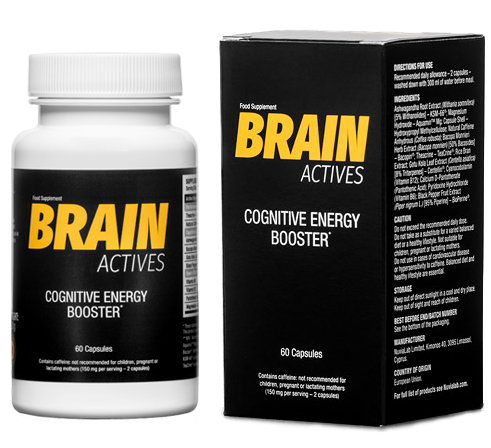
Brain Actives — Our Score: 5.5/10
Score: 5.5/10
Best for: adults who want same-day focus from a transparent stimulant pairing, treating the memory ingredients as a slow, secondary experiment
Main caution: one serving's vitamin B6 (14 mg) exceeds EFSA's 12 mg/day upper level, the bacopa is underdosed, and no money-back guarantee is published
Fair trial: one bottle — a month is enough to judge the stimulant effect honestly, and no guarantee protects a bigger first order.
Our Findings
Brain Actives puts an unusually clean label on an uneven formula. Unlike many supplements in the brain category, NuviaLab hides nothing behind a proprietary blend: all ten ingredients are branded extracts or vitamins with every milligram amount printed clearly. When we compare those label doses against published human trials, however, the formula splits into a properly dosed morning stimulant pair and an underdosed slower herbal set.
What we like
- Full label transparency: all ten ingredients are individually dosed with zero proprietary blends, using named raw materials throughout (Bacopin®, KuchaCore®, Rhodiolife®, Centellin®, Aquamin™ Mg and BioPerine®).
- Sensible stimulant pairing: rather than pushing caffeine to an aggressive dose, the formula pairs 150 mg of caffeine anhydrous with 125 mg of KuchaCore® theacrine, a longer-acting chemical relative from kucha tea leaf.
- Alertness dosed where the evidence lives: at 150 mg per two-capsule serving, the caffeine sits squarely inside the human range where sharper vigilance and mental energy are well documented.
- Clear contraindications printed: to NuviaLab's credit, the official page prints its full caffeine exclusions up front for cardiovascular conditions, caffeine sensitivity, children and pregnancy.
What gives us pause
- No trial on the finished product: the complete ten-ingredient Brain Actives capsule has never been tested in a human clinical trial.
- Underdosed memory botanical: Bacopin® bacopa (187.5 mg) provides roughly five-eighths of the 300 mg/day dose used in 12-week memory studies, and the maker's own page states two different extract standardisations.
- Vitamin B6 sits above the European ceiling: one serving supplies 14 mg of vitamin B6, exceeding EFSA's 12 mg/day adult upper level before you count food or other supplements.
- Thin human file on theacrine: human studies on theacrine are small, short-term, mostly based on self-rated questionnaires, and partly linked to ingredient suppliers.
- No money-back guarantee: at $59.99 for a single bottle, NuviaLab publishes no refund policy on its sales or order pages.
What about user reviews? We do not publish customer testimonials we cannot independently verify, and the named reviews circulating on third-party sites carry no proof of purchase we can audit. The complaints reported elsewhere — mild headaches, or feeling no change in memory — match the label arithmetic: you are taking a 150 mg caffeine supplement sold alongside a memory herb dosed below its clinical trial record.
Why You Should Trust This Review
To build this review, we audited NuviaLab's official Brain Actives sales and order pages, checked all ten branded ingredient lines on the published label against seven primary PubMed records and regulatory safety opinions, and documented the parts that complicate the sales story — including the conflicting bacopa standardisation figures on the maker's own page and the 14 mg vitamin B6 dose above the European daily limit. Every product we review is graded on one fixed five-part rubric whose weights never move for a brand; when verified facts or new trials change the evidence picture, we update our scores and explain why. We earn a commission through our links and are never paid to place or praise any product.
Our Verdict
We score Brain Actives 5.5/10. It is a transparently labelled focus supplement whose most reliable ingredient (150 mg of caffeine) is also its cheapest, whose headline memory herb (187.5 mg of bacopa) is underdosed against its clinical trials, and whose vitamin panel includes an avoidable 14 mg vitamin B6 excess.
Bought for what it actually is — a same-day morning alertness tool for demanding desk work, taken in place of your morning coffee rather than stacked on top of it — Brain Actives is a defensible purchase. Bought as a long-term memory supplement, it is the wrong tool for the job. You can check the compact audit and bundle summary on our Brain Actives product page.
Brain Actives is sold via the official website, where the fair trial is one bottle at $59.99, or $71.99 in total with shipping — with no money-back guarantee to protect a larger first order, and with a 14 mg vitamin B6 dose that means you should not stack it with a daily multivitamin or B-complex.
How We Scored It
Every product on SuppChecked is graded on one fixed five-part rubric so you can compare scores directly across our catalogue.
| Criterion | Weight | Score | Why |
|---|---|---|---|
| Ingredients | 30% | 6.0 | All-branded panel and a sensible stimulant pairing; bacopa underdosed for its evidence base |
| Evidence | 25% | 5.0 | Caffeine's alertness effect is solid and bacopa has real memory trials at ~300 mg/day; theacrine's human data is thin; no trial of the finished product |
| Safety | 15% | 5.0 | B6 at 14 mg exceeds EFSA's 12 mg/day upper level; caffeine contraindications are, to the maker's credit, printed in full |
| Value | 10% | 5.0 | $59.99/month for a caffeine-led formula whose long-term ingredient is underdosed; bundles to $29.99; no guarantee published |
Maker Credibility accounts for the remaining 20% of our rubric and scores 6.0/10. NuviaLab is a named company, manufactures Brain Actives in the EU, and publishes a complete, non-proprietary panel — conduct well above this category's floor. It loses marks because the same product page states two different bacoside standardisations for its bacopa extract between the supplement facts table and the ingredients list, and because no money-back guarantee is published. Combining the five weighted scores (1.80 + 1.25 + 1.20 + 0.75 + 0.50 = 5.50) produces our overall score of 5.5/10.
What Is Brain Actives?
Brain Actives is a daily stimulant-led nootropic (a supplement taken to support focus, memory, mental energy, and resistance to mental fatigue) made in the EU by NuviaLab and sold via the official website. One bottle contains 60 capsules, covering 30 days when you follow the maker's published timing instruction: 2 capsules a day, before a meal, with 300 ml of water. Because both caffeine and theacrine stay active for hours, morning use is the only sensible pattern.
Structurally, Brain Actives puts two different clocks inside one capsule. The ingredient you feel on day one (150 mg of caffeine paired with 125 mg of theacrine) works within the first hour. The botanicals you are asked to wait months for are dosed only in part, making the product a morning focus supplement with a secondary memory garnish.
| Field | Details |
|---|---|
| Our score | 5.5/10 |
| Brand | Brain Actives |
| Company | NuviaLab (named maker; product made in the EU) |
| Product type | nootropic focus supplement capsules (60 per bottle) |
| Primary purpose | same-day focus and alertness; memory support secondary |
| Formula | 10 ingredients, all branded, every amount published |
| Clinical research | none for the finished product; caffeine's alertness effect is well documented and bacopa has memory trials at ~300 mg/day |
| Research limitation | bacopa at 187.5 mg against ~300 mg trialled; theacrine's human data thin and partly supplier-linked |
| Recommended use | 2 capsules a day before a meal, with 300 ml of water; morning use |
| Money-back guarantee | none published |
These statements have not been evaluated by the Food and Drug Administration. This product is not intended to diagnose, treat, cure, or prevent any disease.
The Ingredients — What Each One Is Doing Here
Each daily serving of two capsules discloses ten ingredients in full. Below is the complete panel in the exact order NuviaLab prints it on the product page, along with each ingredient's job in the capsule.
| Ingredient | Amount per 2 Capsules | Role / Evidence note |
|---|---|---|
| 1. Bacopa monnieri herb extract (Bacopin®) | 187.5 mg | The memory ingredient. Because the maker's own page states the extract's bacoside standardisation (the guaranteed percentage of active plant compounds) two different ways between its facts table and its ingredients list, we print the 187.5 mg weight only and never state either percentage as fact. Sits below the ~300 mg/day used in 12-week memory trials. |
| 2. Caffeine anhydrous | 150 mg | The primary alertness driver (anhydrous simply means dehydrated caffeine powder). Roughly equal to a strong cup of coffee and dosed squarely where acute focus and vigilance effects are documented. |
| 3. Theacrine (KuchaCore®, from kucha tea leaf) | 125 mg | Caffeine's longer-acting chemical relative in a branded form, included to extend mental energy without piling on more caffeine; human cognitive trials are small and thin. |
| 4. Rhodiola rosea root extract (Rhodiolife®) | 100 mg | An adaptogen (an herb marketed to help the body handle stress and fatigue) standardised to 5% rosavins; the 100 mg weight matches early student fatigue research, but this is not the trialled SHR-5 extract. |
| 5. Magnesium (Aquamin™ Mg) | 75 mg | Marine-derived magnesium providing roughly a fifth of the daily adult reference intake; a modest dietary top-up, and not the magnesium L-threonate form marketed for brain levels. |
| 6. Gotu kola leaf extract (Centellin®) | 50 mg | Standardised to 8% triterpenes; included on traditional reputation, though pooled human cognitive trial data shows no significant benefit. |
| 7. Pantothenic acid (Vitamin B5) | 15 mg | Supplies a full day's nutritional requirement; deficiency is rare in adults eating a normal diet, and extra B5 does not sharpen focus. |
| 8. Vitamin B6 | 14 mg | Included for normal nervous-system metabolism, but 14 mg in one serving exceeds EFSA's 12 mg/day adult upper safety level (the US upper limit is 100 mg). |
| 9. Vitamin B12 | 25 µg | Supplies many times the daily adult requirement; corrects low B12 intake but does not boost cognition when levels are already normal. |
| 10. Black pepper fruit extract (BioPerine®) | 2 mg | Standardised to 95% piperine; included to support ingredient absorption, and requires a check if you take regular prescription medicines. |
What Is Missing — and Two Form Checks
First, Brain Actives contains no L-theanine. In human focus research, pairing caffeine with the green-tea amino acid L-theanine is the category's best-evidenced stack for smooth attention with fewer jitters (we review those trials in our guide to the best nootropics for focus). This formula skips L-theanine and bets on KuchaCore® theacrine instead — a fair, printable absence you should know before buying. Second, there is no proprietary blend anywhere on the label, which is a genuine strength.
Be careful with two ingredient forms as well. Rhodiolife® (5% rosavins) is not the specific SHR-5 rhodiola extract tested in student fatigue trials, and Aquamin™ Mg is basic mineral magnesium — it is not magnesium L-threonate and borrows none of that compound's data.
The Dose Audit: What the Research Used vs What the Capsule Delivers
Listing an ingredient on a box is easy; dosing it at the level used in human trials is where most multi-ingredient brain supplements fall short. The Dose Audit table below compares the six core active lines in Brain Actives against the doses tested in human research and regulatory safety reviews.
| Ingredient | In the Research / Regulatory Standard | In Brain Actives (2 Capsules) | The Gap (Verdict) |
|---|---|---|---|
| Caffeine anhydrous | 40–300 mg single doses document alertness; EFSA 2015 sets up to 200 mg single / 400 mg daily as no-concern for healthy adults | 150 mg | None — dosed right where its alertness evidence lives |
| Bacopa monnieri (Bacopin®) | ~300 mg/day for 12 weeks in positive older-adult memory trials (and in the null 2025 trial) | 187.5 mg | Shortfall — about five-eighths of the trialled amount, with no trial of this dose |
| Theacrine (KuchaCore®) | 200–400 mg in the small, short human studies that exist | 125 mg | Shortfall — below even the modest doses of a thin literature |
| Rhodiola rosea (Rhodiolife®) | 100 mg/day of the SHR-5 extract in a 40-student exam-stress trial (Spasov 2000) | 100 mg (5% rosavins) | Extract mismatch — amount comparable, but the extract is not the trialled SHR-5 |
| Magnesium (Aquamin™ Mg) | Daily reference intake is roughly five times higher | 75 mg | Top-up only — a fifth of daily intake, not a deficiency correction dose |
| Vitamin B6 | EFSA 2023 adult upper level is 12 mg/day from all sources (US limit 100 mg/day) | 14 mg | OVER — an excess, not a shortfall |
The takeaway from the table is straightforward. Only caffeine (150 mg) is dosed where its human evidence lives. Bacopa sits at five-eighths (62.5%) of the ~300 mg/day dose used in 12-week clinical trials, with an unmapped dose-response curve — and as our evidence review below shows, even the full 300 mg/day bacopa dose has a mixed, unsettled record after a null 2025 trial.
The Evidence, Read Properly
No clinical trial has been conducted on the finished Brain Actives product. Every scientific argument for the capsule rests on studies of its individual ingredients, which we grade across the category in our guide on whether nootropics actually work.
Caffeine (150 mg): Solid Alertness, Fenced Memory
Caffeine across 40 to 300 mg reliably improves vigilance, reaction speed, and sustained attention, primarily by removing fatigue rather than creating net-new cognitive ability. EFSA's 2015 scientific opinion concludes that single doses up to 200 mg and daily intakes up to 400 mg raise no safety concerns for healthy non-pregnant adults.
Some review sites also claim caffeine improves long-term memory, pointing to a 2014 Nature Neuroscience study by Borota and colleagues (PMID 24413697). In that small trial, 200 mg of caffeine given after a study session to caffeine-naive volunteers improved 24-hour visual memory discrimination. However, a subsequent replication attempt failed, and researchers have noted that relief from subtle caffeine withdrawal may explain the result. The paper is suggestive and unsettled — never a memory claim this product can borrow.
Bacopa (187.5 mg): The 12-Week File and the Null 2025 Trial
Older double-blind, placebo-controlled trials (studies in which neither the participants nor the investigators know who receives the active herb or a dummy capsule) tested ~300 mg/day of Bacopa monnieri for 12 weeks, mostly in older adults. In Stough et al. 2001 (PMID 11498727), 300 mg/day for 12 weeks improved speed of visual information processing, learning rate, and memory consolidation compared with placebo, with the largest effects at week 12 and very little at week 5. A systematic review by Pase et al. 2012 (PMID 22747190) found memory free-recall signals worth taking seriously while noting the evidence was not yet conclusive. A meta-analysis (a statistical pooling of multiple studies) by Kongkeaw et al. 2014 (PMID 24252493) across 9 trials of at least 12 weeks (518 participants) found improved speed of attention, concluding that only a large, well-designed trial would be definitive (see our bacopa for memory guide).
That newer trial arrived in Lopresti & Smith 2025 (PMID 41091332), a 12-week double-blind, placebo-controlled trial (ACTRN12623000475640) testing the full 300 mg/day dose (Bacumen® extract) in 101 adults aged 40 to 70 with self-reported memory or attention problems (87 completed). The trial found no significant difference between bacopa and placebo on any primary cognitive outcome — verbal learning (p = 0.391), attention (p = 0.713), or working memory (p = 0.610) — with only secondary self-reported stress and fatigue signals and more mild adverse reactions (digestive complaints and headaches) in the bacopa arm. One null trial does not erase the older record, but it makes the 300 mg/day evidence mixed and unsettled — and Brain Actives sits below that dose at 187.5 mg either way.
Theacrine (125 mg), Rhodiola (100 mg), and Gotu Kola (50 mg)
Theacrine is a purine alkaloid (a plant compound structurally related to caffeine). Its human evidence is small, short, mostly self-rated on subjective mood scales, and partly supplier-linked: Ziegenfuss 2017 ran a two-part study (n = 9 open-label dose week plus n = 15 single-dose crossover), while Kuhman 2015's theacrine arm also contained 150 mg of caffeine and found no objective cognition benefit. Marketing claims that theacrine is "proven not to build tolerance" rest on a rodent movement study (Feduccia 2012) and the title of Taylor 2016 — an 8-week, 60-person human safety trial of TeaCrine® that measured stable pre-dose baselines rather than testing the acute stimulant effect against a caffeine control. Accurately stated, theacrine is not yet shown to habituate in animals, untested in humans (detailed in our theacrine vs caffeine comparison). Human pharmacokinetic data (how the body absorbs and clears a compound; He 2017) also shows that caffeine raises theacrine exposure in the bloodstream.
Finally, Spasov 2000 tested 100 mg/day of the SHR-5 rhodiola extract in 40 exam-stressed students and reported less mental fatigue, though several objective tests were null, a co-author was from the extract's institute, and early rhodiola data was later questioned in Planta Medica. For gotu kola, a meta-analysis by Puttarak 2017 found no significant benefit in any cognitive domain.
How Long Does Brain Actives Take to Work?
Because Brain Actives puts an hour-one stimulant and a slow botanical in the same capsule, the only fair way to test it is to judge each clock separately. Before you open the bottle, keep brief baseline notes for three to four days on your morning focus and how well you sleep at night.
Day 1: the stimulant clock
Take your 2 capsules in the morning before a meal with 300 ml of water — and take them instead of your morning coffee, not alongside it. You should feel the 150 mg of caffeine and 125 mg of KuchaCore® theacrine within 30 to 60 minutes. Judge that effect during demanding morning work or adult study (adult learners can compare options in our guide to nootropics for studying and exams). Be honest about what you are feeling: day-one sharpness is stimulant alertness, not a change in memory.
Week 2: the tolerance check
Judge the product a second time at Day 14 against your baseline notes. With daily use, caffeine tolerance builds within days to roughly two weeks. Day 1 is the initial stimulant peak; Day 14 is the tolerance-settled steady state that shows what daily use actually feels like.
Months 2–3: the bacopa clock
In positive bacopa trials (Stough 2001), memory effects appeared at week 12 with little effect at week 5 — at 300 mg/day. Make your decision at the end of one bottle (Day 30). Because Brain Actives supplies an untrialled 187.5 mg dose, because Lopresti & Smith 2025 was null even at 300 mg/day, and because no guarantee protects a bulk order, do not extend into a multi-bottle bacopa experiment if the month-one focus effect has not won you over.
Is Brain Actives Safe?
For a healthy adult who replaces morning coffee with the capsules and takes no other B-vitamin supplements, Brain Actives is generally well tolerated in the short term. However, our audit flags five specific safety checks you must run before starting.
First is vitamin B6 stacking. One daily serving contains 14 mg of vitamin B6, which exceeds EFSA's 2023 tolerable upper intake level (the maximum daily intake unlikely to cause harm) of 12 mg/day for adults from all sources combined (EFSA 2023, PMID 37207271). EFSA set that limit because chronic excess B6 can cause peripheral neuropathy — nerve damage that shows up as tingling, numbness, or burning in the hands and feet. While the US upper limit is 100 mg/day, that is context, not comfort: food, a multivitamin, a B-complex, or an energy drink all add more. If you notice tingling, numbness, or burning in your hands or feet, stop taking the product and see a doctor.
Second is caffeine substitution and sleep. The maker warns against combining Brain Actives with other caffeine products. Use substitution (the capsules are your morning caffeine) and take them in the morning only. In Drake et al. 2013 (PMID 24235903), 400 mg of caffeine taken 6 hours before bedtime cut objectively measured sleep by more than an hour. Brain Actives contains less caffeine (150 mg), but pairs it with 125 mg of theacrine, which persists in the body far longer than caffeine (see our guide on whether nootropics are safe long-term).
Third, respect the maker's exclusions (cardiovascular disease, caffeine hypersensitivity, children, and pregnant or breastfeeding women), watch for mild digestive complaints or headaches from bacopa (Lopresti & Smith 2025), and check BioPerine® (2 mg) with a clinician or pharmacist if you take regular prescription medicines.
| Safety Check | Label Fact | Your Action Rule |
|---|---|---|
| 1. B6 stacking count | 14 mg vitamin B6 per serving exceeds EFSA's 12 mg/day upper level from all sources. | Do not combine with a multivitamin, B-complex, or energy drink; stop and see a doctor if tingling, numbness, or burning appears in hands or feet. |
| 2. Caffeine substitution, not stacking | 150 mg caffeine plus 125 mg theacrine; maker warns against combining with other caffeine products. | Take the capsules instead of morning coffee, never on top of it. |
| 3. Morning-only / sleep | Late caffeine cuts sleep (Drake 2013) and theacrine persists far longer than caffeine. | Take before a morning meal only; avoid afternoon use so you do not tax that night's sleep. |
| 4. Maker's exclusions + under-18s | Excludes cardiovascular disease, caffeine hypersensitivity, children, pregnancy, and breastfeeding. | Skip if any exclusion applies; nothing in the formula has been tested in under-18s. |
| 5. BioPerine® + regular medication | 2 mg black pepper extract (95% piperine) can alter how the body handles some medicines. | Clear the label with your prescribing doctor or pharmacist before starting. |
When a Supplement Is the Wrong Route
Concentration problems that are new, worsening, or arrive alongside brain fog, poor sleep, or low mood belong to a medical workup first — sleep debt, low vitamin B12, iron deficiency, thyroid disorders, and chronic stress are the common treatable causes (we explain what to check first in our brain fog causes and supplements guide). Persistent attention problems require a clinician's assessment, not a supplement trial. Never use a stimulant to mask chronic sleep debt or delay a medical assessment, and never stop or swap prescribed medication for a supplement.
Is Brain Actives a Scam?
No, Brain Actives is not a scam. In a category crowded with anonymous proprietary blends and hidden auto-ship traps, NuviaLab is a named European company, publishes every milligram weight across ten branded ingredients, sells on a one-time checkout, and delivers a genuine day-one focus effect from 150 mg of caffeine.
Where the product loses marks is on paperwork care and buyer risk. On its own official page, NuviaLab states the bacoside standardisation of its Bacopin® bacopa extract two different ways between the supplement facts table and the ingredients list, and it publishes no money-back guarantee.
You should also fence off three exaggerated claims that affiliate blogs make when promoting Brain Actives:
- "Theacrine is caffeine without tolerance, jitters, crash, or sleep impact": competitor sites present this marketing slogan as settled pharmacology while simultaneously quoting unsourced 16-to-33-hour half-lives — ignoring the obvious contradiction that a compound persisting in your body all day is still active at bedtime.
- Citing Kuhman 2015 as a pure-theacrine cognition trial: review blogs quote subjective energy scores from Kuhman 2015 as proof for theacrine, omitting that the study's theacrine arm also contained 150 mg of caffeine and found no objective cognitive benefit.
- Selling bacopa as a guaranteed memory enhancer: affiliate pages routinely drop the 12-week onset, the older-adult study populations, the ~300 mg/day dose requirement, and the negative 2025 RCT (Lopresti & Smith 2025).
Price — and the Guarantee That Isn't There
Brain Actives is sold in three bundle tiers on a one-time purchase structure (free-bottle bundles), with no recurring subscription and a flat $12 shipping charge per order.
| Pack | Price | Per bottle | Total with shipping | Covers |
|---|---|---|---|---|
| 1 bottle | $59.99 | $59.99 | $71.99 | 30 days |
| 3 bottles (Buy 2, Get 1 Free) | $119.98 | $39.99 | $131.98 | 90 days |
| 6 bottles (Buy 3, Get 3 Free) | $179.97 | $29.99 | $191.97 | 180 days |
NuviaLab publishes no money-back guarantee on its sales or order pages. The statutory withdrawal rights in the terms and conditions apply only to unopened goods returned within the legal cooling-off window — they are not a money-back satisfaction guarantee, and we never present them as one.
That missing guarantee is why our fair-trial recommendation for Brain Actives is one bottle ($59.99, or $71.99 in total with shipping), deliberately breaking the three-bottle pattern that makes sense for slower supplements backed by a refund policy. One month is enough to judge the morning stimulant effect honestly, including past the first two-week tolerance settling. Without a guarantee, a bigger first order puts the entire cost of a failed experiment on you; the six-bottle pack ($29.99 per bottle) becomes rational only after a successful first month.
Purchase Options
Brain Actives is sold via the official website as a one-time order with no auto-ship subscription. If you want to test the 150 mg caffeine and 125 mg KuchaCore® theacrine pairing in place of your morning coffee, start with a single bottle ($59.99, or $71.99 in total with shipping) so you can judge your day-one alertness and week-two steady state before committing to a multi-bottle bundle.
How It Compares
- Versus your morning coffee (the real rivalry): a strong cup of coffee delivers roughly the same 150 mg of caffeine for a fraction of the price. Brain Actives only earns its keep if you want capsule convenience paired with 125 mg of KuchaCore® theacrine and secondary botanicals.
- Versus the caffeine + L-theanine stack: caffeine paired with L-theanine is the category's best-evidenced focus combination, and Brain Actives contains no L-theanine.
- Versus BrainPill (6.5/10): our higher-scored catalogue nootropic is caffeine-free, and its maker ran a registered, placebo-controlled trial on the finished product — though at twice the daily dose a bottle implies, and with no ingredient amounts published on the label.
- Versus Restilen (6.6/10): built for the stress and tension side of poor concentration rather than acute stimulant alertness, and scored higher at 6.6/10 without this formula's vitamin B6 excess.
- Versus Nutrigo Lab Strength (6.1/10): designed for physical pre-workout performance rather than desk work. Do not stack them: taking both on the same day doubles up on stimulants and vitamin B6.
- Versus NooCube and Mind Lab Pro: both are caffeine-free market rivals (NooCube sells at $64.99 for one bottle, $129.99 for three, and $194.99 for five). Neither has been audited under our rubric, so we publish no score for either rival.
A Stronger Alternative in This Category
If you want the higher-scored nootropic in our catalogue — a caffeine-free formula with a finished-product trial behind it — BrainPill is our pick in this category:
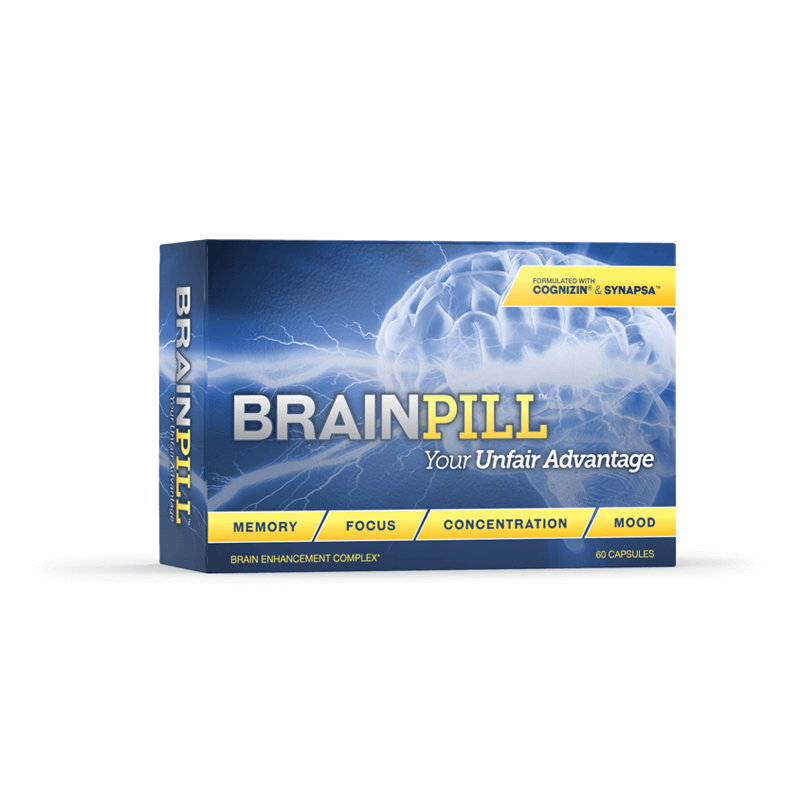
The stronger alternative: BrainPill · 6.5/10
The higher-scored nootropic in our catalogue: a caffeine-free formula whose maker ran a registered, placebo-controlled trial of the finished product — though at twice the daily dose a bottle implies, and with no amounts published.
Who Should Buy Brain Actives — and Who Should Skip It
Who should buy it
- Adults who want same-day morning focus and alertness from a fully disclosed stimulant pairing (150 mg caffeine plus 125 mg KuchaCore® theacrine) and will take the capsules instead of morning coffee.
- Buyers who are not taking any other supplement containing vitamin B6.
- Practical testers happy to start with one bottle ($59.99, or $71.99 in total) for 30 days while treating the 187.5 mg bacopa dose as a slow, secondary experiment.
Who should skip it
- Buyers looking primarily for a caffeine-free memory supplement (see BrainPill instead) or a classic caffeine-plus-L-theanine stack.
- Anyone already taking a multivitamin, B-complex, or energy drink containing vitamin B6, since one serving's 14 mg exceeds EFSA's 12 mg/day upper level.
- Anyone with cardiovascular disease or caffeine hypersensitivity, pregnant or breastfeeding women, anyone under 18, anyone on regular prescription medication who has not cleared BioPerine® with a clinician, or anyone who requires a money-back guarantee.
Frequently Asked Questions
Does Brain Actives actually work?
Yes for same-day morning alertness and focus: its 150 mg caffeine dose sits squarely inside the well-documented alertness range. Its long-term memory pitch is much weaker: bacopa is underdosed at 187.5 mg against the ~300 mg/day used in 12-week trials (and Lopresti & Smith 2025 found no primary cognitive benefit even at 300 mg/day), theacrine's human data is thin, and gotu kola's meta-analysis (Puttarak 2017) is null.
How long does Brain Actives take to work?
It runs on two separate clocks. The 150 mg of caffeine and 125 mg of KuchaCore® theacrine work on the first morning within about an hour, delivering alertness rather than memory improvement. Caffeine tolerance settles over days to roughly two weeks, while positive bacopa memory trials ran for 12 weeks at ~300 mg/day (Stough 2001) — above this label's 187.5 mg dose.
Is there a money-back guarantee?
No. NuviaLab publishes no money-back guarantee on its sales or order pages, and the statutory withdrawal rights in its terms of sale apply only to unopened bottles. Because no refund policy protects a bulk order, one bottle ($59.99, or $71.99 in total with shipping) is the only sensible first test.
Why is the vitamin B6 a problem?
One two-capsule serving supplies 14 mg of vitamin B6, which sits below the US limit (100 mg/day) but exceeds EFSA's 12 mg/day adult tolerable upper intake level from all sources combined (EFSA 2023, PMID 37207271). Chronic excess B6 can cause peripheral neuropathy; if you feel tingling, numbness, or burning in your hands or feet, stop use and see a doctor.
Can I take Brain Actives with my morning coffee?
No — do not stack them. Two capsules already deliver 150 mg of caffeine (roughly a strong cup of coffee) plus 125 mg of theacrine, and NuviaLab's own cautions warn against combining the product with other caffeine sources. Use substitution: let the capsules replace your morning coffee.
Is Brain Actives suitable for teenagers or students under 18?
No. NuviaLab explicitly excludes children on the label, nothing in the formula has been tested in under-18s, and 150 mg of caffeine is an adult serving. Adult university and professional learners can review age-appropriate evidence in our nootropics for studying and exams guide.
How do I take Brain Actives?
Take 2 capsules a day, before a meal, with 300 ml of water. One bottle of 60 capsules lasts 30 days. Always take the serving in the morning so the caffeine and longer-persisting theacrine do not interfere with your sleep that night.
Where can I buy authentic Brain Actives?
Brain Actives is sold via the official website through the Buy from Official Website buttons on this page. Ordering directly from the official order page ensures authentic EU-made stock and access to NuviaLab's bundle pricing ($59.99 for one bottle, $119.98 for three, or $179.97 for six, plus $12 shipping).
Can I take Brain Actives every day?
It is formulated as a daily supplement for healthy adults, but two things matter with daily use: caffeine tolerance builds within days to about two weeks (moderating the day-one buzz into a steadier effect), and the daily 14 mg vitamin B6 dose exceeds EFSA's 12 mg/day upper level before counting food or other supplements.
Does Brain Actives contain L-theanine?
No. Although caffeine paired with L-theanine is the category's best-evidenced focus stack, NuviaLab leaves L-theanine out of Brain Actives and pairs its 150 mg of caffeine with 125 mg of KuchaCore® theacrine instead.
Will Brain Actives improve my memory?
Buy and judge Brain Actives as a same-day focus supplement, not a memory product. Its memory herb, Bacopin® bacopa, is dosed at 187.5 mg/day — roughly five-eighths of the ~300 mg/day tested for 12 weeks in positive memory trials (Kongkeaw 2014) — and even at the full 300 mg/day dose, a 2025 RCT (Lopresti & Smith 2025) found no primary cognitive benefit over placebo.
Can I take Brain Actives in the afternoon?
We advise against afternoon use. In controlled sleep research (Drake 2013, PMID 24235903), 400 mg of caffeine taken 6 hours before bed cut objectively measured sleep by more than an hour; while Brain Actives has less caffeine (150 mg), it adds 125 mg of theacrine, which persists in the body far longer than caffeine and has its exposure raised by caffeine (He 2017).
Who should not take Brain Actives?
Follow NuviaLab's printed exclusions: do not use if you have cardiovascular disease or caffeine hypersensitivity, and do not give to children or pregnant or breastfeeding women. Also skip it if you take other B6 supplements, take regular prescription medicines without clearing BioPerine® with a clinician, or have new or worsening brain fog, poor sleep, or low mood that needs a medical workup first.
Does Brain Actives need to be cycled?
No cycling schedule has been tested for this formula, and its two main ingredients pull in opposite directions: a 1-to-2-week break restores caffeine responsiveness, whereas bacopa's trial evidence relies on continuous daily dosing for 12 weeks. Because bacopa is underdosed here anyway, periodic caffeine breaks make practical sense.
Is Brain Actives good value?
We score Value at 5.0/10. At $59.99 for one bottle ($71.99 in total with $12 shipping), it is pricey for a caffeine-led formula whose long-term memory ingredient is underdosed. Multi-bottle bundles drop the price to $39.99 per bottle (three-pack) and $29.99 per bottle (six-pack), but without a money-back guarantee, only a one-bottle first order is a fair financial risk.
Does theacrine in Brain Actives build tolerance like caffeine?
Marketing blogs claim theacrine is "proven not to build tolerance," but human data does not prove that. The claim rests on a rodent movement study (Feduccia 2012) and the title of Taylor 2016 — an 8-week, 60-person safety study that measured stable pre-dose baselines rather than testing the acute stimulant effect against a caffeine control. In short: not yet shown to habituate in animals, untested in humans.
Can I take Brain Actives with prescription medication?
Clear the product with your prescribing doctor or pharmacist before starting. Each serving contains 2 mg of BioPerine® black pepper extract (95% piperine), which can alter how the body processes some prescription medications, alongside 150 mg of caffeine.
How does Brain Actives compare to BrainPill, NooCube, and Mind Lab Pro?
In our audited catalogue, BrainPill scores higher at 6.5/10 than Brain Actives (5.5/10): BrainPill is caffeine-free and its maker ran a registered, placebo-controlled trial on the finished product — though at twice the daily dose a bottle implies, and with no ingredient amounts published. NooCube ($64.99 / $129.99 / $194.99) and Mind Lab Pro are caffeine-free rivals that carry no score because we have not audited them.
Brain Actives — Our Score: 5.5/10
Score: 5.5/10
Best for: adults who want same-day focus from a transparent stimulant pairing, treating the memory ingredients as a slow, secondary experiment
Main caution: one serving's vitamin B6 (14 mg) exceeds EFSA's 12 mg/day upper level, the bacopa is underdosed, and no money-back guarantee is published
Fair trial: one bottle — a month is enough to judge the stimulant effect honestly, and no guarantee protects a bigger first order.
Sources & Method
This review is based on the published human studies behind the formula's nootropic ingredients — Borota et al. 2014 on caffeine and memory, Stough et al. 2001 and Pase et al. 2012 on Bacopa, Kongkeaw et al. 2014, and the EFSA 2023 upper-limit assessment — and the maker's official label, price and guarantee pages, read in November 2026. Every dose, price and claim was checked against those records before scoring.
Last reviewed: November 2026. This article is educational and is not medical advice.
