
- Quick Answer
- What Trials Actually Recorded
- The Common Complaints
- Who Should Be Careful, Person by Person
- Alpha-gal syndrome: the bovine/porcine risk nobody prints
- Kidney-stone formers: hydroxyproline becomes oxalate
- Pregnancy and breastfeeding: no safety data exists, stated plainly
- Source allergies: fish collagen cross-reactivity; crustacean allergy is a different thing
- Heavy Metals and Product Quality
- The Additives in the Blend Are Part of the Safety Picture
- Biotin and lab tests
- Vitamin A stacking
- The minerals: zinc and copper, a deliberate pair
- Applied to a real label: Collagen Select's blend, named
- Interactions and Special Situations
- Daily, Long-Term Use: What Is Actually Known
- How to Lower Your Risk
- Our Verdict
- Frequently Asked Questions
- Who should not take collagen supplements?
- Is collagen safe during pregnancy?
- Can collagen cause kidney stones?
- Is collagen safe to take every day, long-term?
- Can collagen cause allergic reactions?
- Does the biotin in collagen blends matter?
- Who Should Buy Collagen Select — and Who Should Skip It
- Read This Next
Disclosure: This article contains affiliate links. If you buy through them, we may earn a commission at no extra cost to you. It never changes our conclusions.
Quick Answer
In trials of healthy adults — none longer than about six months — collagen's recorded effects are mild and mostly digestive. That reassuring sentence has strict borders, and this article exists to draw them.
The real risks cluster by person: alpha-gal syndrome makes bovine and porcine collagen a genuine hazard; kidney-stone formers have a measurable oxalate question at supplement doses; pregnancy has no safety data at all; and source allergies are specific and testable.
A second set of risks rides along in the blend — biotin, vitamin A and friends carry their own profiles, which collagen's clean record does not cover. Note what this article will not do: repeat any maker's blanket "completely safe" claim. Collagen Select's maker publishes exactly that answer, with no warnings at all. We reject it for every product, including ones we score well.
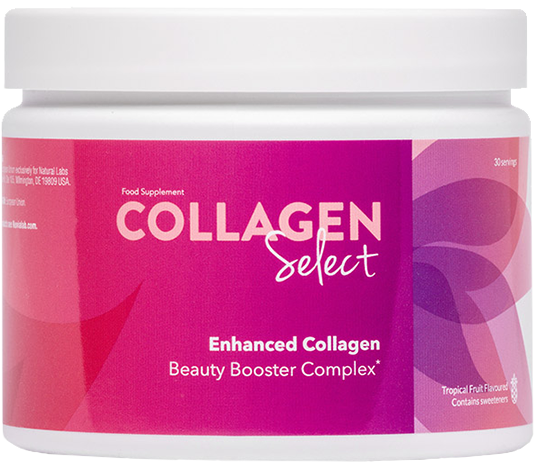
Our Recommendation — Collagen Select
Score: 5.2/10 · Best for: people who prefer a drink to capsules and want the branded VERISOL® ingredient specifically. Main caution: the maker does not publish ingredient amounts, so the dose cannot be audited — and the money-back badge carries no published day length. Fair trial: eight weeks, the VERISOL® trial window — the three-tub pack at $41.99 a tub is the trial the evidence describes; the six-tub pack is the cheapest route only for continuing users.
What Trials Actually Recorded
The cleanest summary of trial safety is the 2019 systematic review by Choi and colleagues in the Journal of Drugs in Dermatology: 11 randomised trials, 805 participants, doses of 2.5–10 g/day for 8–24 weeks — and no adverse events reported across them.
Hold that result with both of its limits attached. The trials were short — the longest ran about six months — and they enrolled healthy adults, the population least likely to generate safety signals. Pregnant people, stone-formers, people with allergies and people on medication were, as usual, screened out or never enrolled.
"No adverse effects reported" also deserves its literal reading: small trials report what they collect, and supplement trials collect adverse events less rigorously than drug trials. Absence of reported harm in 805 healthy people over 24 weeks is genuinely reassuring for healthy people over 24 weeks. It is not a lifetime safety certificate for everyone else.
One more boundary is statistical. A programme of 805 participants can rule out common harms; it cannot detect a reaction that strikes one user in five thousand. Rare harms in supplement categories surface through case reports and regulator warnings over years of wide use — which is why sections below lean on the CDC, the FDA and feeding-study data rather than on the trials alone.
Everything after this section is about the people and situations the trials don't describe.
The Common Complaints
Outside formal trial reporting, the effects users and clinicians describe most are mundane: a feeling of fullness, mild bloating, bowel changes in either direction, and an aftertaste or heaviness from larger powder doses.
These are dose-shaped complaints. They cluster at the top of the studied range (10 g and above), they usually settle within days, and the standard responses work: split the dose, take it with food, or step down to the 2.5–5 g range where the skin evidence actually lives.
Managing them is unglamorous and effective. Take the dose with food rather than on an empty stomach; split a 10 g serving into two 5 g servings; step down for a week and rebuild. Complaints that persist at the studied 2.5 g floor are a reasonable stopping rule — the margin of benefit in this category never justifies pushing through symptoms.
Headache appears on some clinic lists of reported effects; it is uncommon and non-specific. What does not appear anywhere credible is a pattern of organ injury, hormonal effects or dependency from collagen peptides themselves in healthy adults.
The complaints worth acting on are different in kind, and they are the subject of the next section: reactions that arrive hours late, risks that apply only to specific bodies, and harms that come from the ingredients standing next to the collagen in the jar.
Who Should Be Careful, Person by Person
Alpha-gal syndrome: the bovine/porcine risk nobody prints
Alpha-gal syndrome is an allergy to a sugar — galactose-alpha-1,3-galactose — found in the tissue of mammals other than primates. It is usually acquired through tick bites, and the CDC estimates as many as 450,000 people in the United States may have it.
Its signature is delay. Where ordinary food allergies strike in minutes, alpha-gal reactions characteristically arrive hours later — the CDC's case definition works with symptom onset 2–10 hours after eating mammalian meat or a mammalian-derived product, and names gelatin as such a product.
Gelatin is collagen with less processing, and collagen supplements are gelatin's refined descendants. Bovine collagen comes from cattle; porcine from pigs; both are mammalian. For a person with alpha-gal syndrome, a daily bovine collagen drink is a daily dose of the allergen class their immune system is primed against — in a form concentrated enough to matter and delayed enough to be misattributed to dinner.
Reactions range from hives and abdominal cramping to anaphylaxis. Sensitivity varies — some patients tolerate gelatin, others react to it — which is precisely why this needs an allergist's input rather than a webpage's permission. If you have alpha-gal syndrome, or unexplained delayed reactions after red meat, treat mammalian collagen as not for you until a specialist says otherwise.
Diagnosis runs through history plus a blood test for alpha-gal-specific IgE, and management is avoidance: mammalian meat and, for reactive patients, mammalian-derived products such as gelatin — the category collagen supplements belong to. Patients at risk of severe reactions are typically advised to carry epinephrine.
Why does a supplement article spend this long on a tick-borne allergy? Because the exposure pattern fits supplements exactly: daily, concentrated, and easy to overlook as a "drink" rather than a mammalian product. Alpha-gal patients are counselled to scrutinise medications and foods for gelatin; a collagen powder deserves the same scrutiny, and almost no collagen label invites it.
The direct application: Collagen Select's collagen is bovine. For the alpha-gal reader, this article ends here for that product — and the maker's page, which publishes no warnings, would never have told you.
Kidney-stone formers: hydroxyproline becomes oxalate
Collagen's signature amino acid is hydroxyproline, and hydroxyproline metabolism produces oxalate — the compound at the centre of the commonest kidney stones. This pathway is not speculation; it has been fed to volunteers and measured.
In Knight and colleagues' 2006 Kidney International study, healthy volunteers on controlled diets excreted 43% more urinary oxalate on a 30 g/day gelatin regimen than on a whey-protein comparison, with urinary glycolate 5.3-fold higher on the gelatin diet.
The dose response is the part that matters for supplement users. Significant rises in urinary oxalate and glycolate appeared at gelatin loads of 5 g and 10 g — squarely inside the supplement range — but not at loads of 1 g and 2 g.
Context, before alarm: these were gelatin loads in controlled feeding studies of healthy volunteers, and a rise in urinary oxalate is a risk factor, not a stone. Nobody has run a trial asking whether collagen supplements cause stones, and the honest statement is "unmeasured".
The same study estimated why the effect is hard to dodge entirely: the authors calculated that hydroxyproline metabolism contributes roughly 20–50% of urinary glycolate and 5–20% of endogenously produced urinary oxalate in healthy adults on controlled diets. Collagen turnover is part of normal physiology — the question supplements raise is only whether the added load matters for a susceptible kidney.
But the direction of prudence is clear. If you have formed calcium oxalate stones, have been told your urinary oxalate runs high, or have kidney disease, a daily 5–10 g collagen habit is a conversation for your clinician or dietitian first — ideally before the first tub, not after the first recurrence.
Pregnancy and breastfeeding: no safety data exists, stated plainly
There are no randomised trials of collagen supplements in pregnancy or breastfeeding, no registry data, and no regulator-reviewed safety assessment for these groups. That is the entire evidence base: a blank.
Collagen is a food protein, and dietary collagen in food is not a concern in pregnancy. A concentrated daily supplement is a different exposure — untested, in a period when "untested" is normally decisive.
Blends sharpen the point. A collagen product carrying vitamin A (Collagen Select does, at an unpublished amount) imports the one nutrient in the formula with a genuine pregnancy warning — excess preformed vitamin A is a known teratogen at high intakes. Standard guidance applies: non-essential supplements wait until after pregnancy and breastfeeding, unless your clinician advises otherwise.
The blend problem is general, not specific to one brand. Pregnancy safety data are missing for most botanical extracts used in beauty formulas, dragonhead included, and "it's only a collagen drink" understates how many distinct exposures a modern formula contains. Pregnancy is the one state where the burden of proof reverses completely: a product is out until it is shown to be in.
Source allergies: fish collagen cross-reactivity; crustacean allergy is a different thing
Collagen allergy follows the source animal, and the sources are not interchangeable. Fish collagen is a documented allergen in its own right: Hamada and colleagues identified collagen as a fish allergen in 2001 (Bioscience, Biotechnology, and Biochemistry 65:285–291), and later work in a Japanese cohort found about half of fish-allergic patients carried IgE against mackerel collagen — reactivity that crossed between fish species.
The same literature draws the boundary that matters for product choice: fish and mammalian gelatins do not cross-react — in testing of 100 people with fish allergy or sensitisation, only 3 reacted to tuna-skin gelatin, and no fish-versus-mammal cross-reactivity was observed (summarised in the Frontiers review of fish allergens).
So: a fish allergy is a reason to avoid marine collagen, not bovine — and a beef or pork allergy (or alpha-gal syndrome, above) is a reason to avoid mammalian collagen, not marine. Match the avoidance to the source on the label.
One confusion to clear: shellfish allergy is mostly an allergy to tropomyosin, a muscle protein in crustaceans and molluscs. It is not a collagen allergy, and it does not by itself rule any collagen source in or out.
Heavy Metals and Product Quality
Collagen is rendered from hides, bones and scales — tissues that can carry what the animal accumulated — and supplements in the US are not pre-screened by the FDA for purity before sale. The quality question is therefore empirical: what do independent testers find when they buy products off the shelf?
Testing organisations such as the Clean Label Project and ConsumerLab have bought and assayed collagen powders in past testing programmes and reported detectable heavy metals — lead most prominently — in a portion of products tested, alongside products that came back clean.
Two disciplines apply to those findings. First, they are product-specific: one brand's result says nothing about another's, and we never generalise a contamination finding across the category. Second, "detectable" is an instrument statement, not a dose statement — the health question is amount per serving against recognised limits, which is why published test reports argue about thresholds rather than detection alone.
Source nuance matters here too. Marine collagen is drawn from skins, scales and bones rather than the muscle tissue where mercury concentrates in fish — a structural reason its metals profile differs from eating predatory fish, and still no substitute for a tested certificate. Bovine and porcine material carries its own sourcing questions, answered the same way: by paperwork, not by adjectives.
Reading a certificate of analysis is a learnable skill. Look for the specific product and batch, not a generic company document; a heavy-metals panel naming lead, cadmium, arsenic and mercury rather than a bare "passed"; results in amount per serving; and limits referenced to a recognisable standard. A certificate that fails any of those is marketing stationery.
The buyer's tools are verification habits: a certificate of analysis for the specific product, a recognised third-party seal (USP, NSF, Informed Sport and similar), and a maker willing to publish both. A maker that publishes neither test results nor ingredient amounts — Collagen Select publishes no amounts — leaves you with nothing to verify, which is itself the finding.
The Additives in the Blend Are Part of the Safety Picture
Almost nobody takes collagen alone. They take a formula — and the formula's other ingredients have safety profiles the peptide's clean record does not cover.
Biotin and lab tests
Biotin at supplement doses can interfere with common blood tests that use biotin-based assay chemistry, producing results that read falsely high or falsely low.
The FDA's safety communication (2017, updated 2019) is particularly concerned with troponin — the heart-attack marker — where interference pushes results falsely low. The agency had received a report of a patient death following a low troponin result on an affected assay.
The doses in hair-and-beauty blends are the relevant ones: biotin's daily requirement is measured in micrograms, while beauty formulas dose hundreds of micrograms and up. The defence is disclosure — tell the lab and your clinician what you take before blood work, and follow their instruction on pausing it.
Our dedicated article, Biotin and Blood Tests, covers which tests are affected and why hair-supplement users specifically should read it — the problem lives in that category even more than in this one.
Vitamin A stacking
Preformed vitamin A (retinol) has a tolerable upper intake level of 3,000 micrograms a day for adults, and its risks — liver toxicity chronically, birth defects in pregnancy — are dose-and-stack risks. It rarely arrives from one product; it accumulates across a multivitamin, a skin formula, a hair formula and a diet.
A collagen blend containing vitamin A at a published amount can be added into that arithmetic. At an unpublished amount — Collagen Select's position — it cannot, and the stack becomes guesswork. Readers taking isotretinoin or other retinoid medication should treat any additional vitamin A source as a clinician question, full stop.
The minerals: zinc and copper, a deliberate pair
Blends that include zinc usually include copper for a reason worth knowing: sustained high zinc intake interferes with copper absorption, and zinc-induced copper deficiency is a documented, preventable harm of enthusiastic supplementation. The adult upper limit for zinc is 40 mg/day from all sources.
A formula printing both amounts lets you check the pair and your total stack. A formula printing neither — the pattern this article keeps meeting — leaves the most checkable part of mineral safety uncheckable. The principle generalises: in a blend, every unpublished amount is a safety question the maker has declined to answer.
Applied to a real label: Collagen Select's blend, named
Collagen Select combines bovine VERISOL peptides with DracoBelle Nu (a Moldovan dragonhead extract with supplier-side research and little human safety literature), vitamin C, vitamin A, riboflavin, niacin, biotin, zinc and copper — no amounts published for any of them.
Run the blend through this article: the collagen is bovine (alpha-gal readers stop here); vitamin A is present at an unknown amount (stacking unanswerable); biotin is present at an unknown amount (lab-test disclosure still applies); DracoBelle is a little-studied botanical in pregnancy (the standard avoidance advice applies); and the maker publishes no warnings for any of it, answering its own FAQ's safety question with the words "completely safe".
Nothing in that list makes the product dangerous for a healthy adult. All of it makes the maker's answer inadequate — and it is why this product's safety subscore, like its overall 5.2/10, is capped by paperwork rather than by the peptide.
Interactions and Special Situations
Collagen peptides have no known major drug interactions of their own — a genuinely short list, and one of the category's real advantages. The interactions that matter attach to situations rather than to the peptide.
Thyroid medication: levothyroxine is taken alone on an empty stomach, and a morning collagen drink counts as food in that window. Our timing article sets out the separation rule from the prescribing information.
Kidney disease and protein restriction: anyone on a medically prescribed protein limit should count a 5–10 g protein supplement inside that limit, and clear it with the clinician who set it — the same logic as the stone-former caution, applied to a different kidney.
The GLP-1 confound: weight-loss drugs of the GLP-1 class commonly slow digestion and cause nausea, fullness and constipation on their own. Adding a daily protein drink to that picture muddies attribution — digestive complaints that would be blamed on the collagen may belong to the drug, and vice versa. No study examines the combination; if you use both, introduce one change at a time so you can tell which is speaking.
Daily, Long-Term Use: What Is Actually Known
The formal record runs to about six months: trials at 2.5–10 g/day, in healthy adults, with no adverse events reported in the pooled dermatology review. Beyond six months, the record is not alarming — it is absent. No multi-year safety trial of daily collagen supplementation exists.
What indirect evidence exists is mildly reassuring: gelatin and collagen are long-standing food ingredients, the amino acids involved are ordinary dietary components, and no signal of cumulative harm has emerged from the category's wide use.
"No signal from wide use" is weaker than "tested and safe", and the difference is the reason for the periodic-review habit: re-check your own panel (kidney history, new medications, new diagnoses, pregnancy plans) whenever your situation changes, not just when the product does.
Long-term use also multiplies the blend question. A biotin dose that is a footnote in month one is still distorting a thyroid panel in year two; vitamin A stacking is a cumulative arithmetic, not a daily one. The peptide is the least of the long-term questions. Audit the formula.
Why is the long-term record so thin? Because supplements are not drugs in law: no regulator requires multi-year safety trials before or after sale. Post-market safety rests on voluntary adverse-event reports and occasional regulator reviews — a system that catches dramatic, immediate harms well and slow, subtle ones poorly. That asymmetry, not any specific finding, is the rational basis for the conservative habits in the next section.
How to Lower Your Risk
Five habits cover most of this article's map. First, match the source to your allergies: marine for mammalian-allergic readers (with allergist input), bovine/porcine only if mammalian products are safe for you, and nothing at all with alpha-gal syndrome until a specialist clears it.
Second, respect the dose geography: 2.5–5 g/day is the studied skin range; the oxalate signal appeared at 5–10 g gelatin loads, so stone-formers have a specific reason to stay low or stay away. Third, demand paperwork — printed amounts and a certificate of analysis — because unpublished labels cannot be safety-audited, only trusted.
Fourth, disclose supplements before any blood test, and treat biotin content as the reason. Fifth, run new situations past a clinician: pregnancy, kidney disease, retinoid medication, thyroid medication timing. None of these are exotic; all of them are exactly the people the trials left out.
Our Verdict
Collagen peptides are among the better-tolerated supplement ingredients ever trialled — for the healthy adults who were trialled, at studied doses, for up to six months. The safety work in this category is not worrying about the peptide; it is knowing which reader you are.
If you are in one of the mapped groups, the answer ranges from "choose a different source" to "do not take this". If you are not, the remaining risks live in the blend and the label — and both are auditable before you spend anything.
Our Recommendation — Collagen Select
Score: 5.2/10 · Best for: people who prefer a drink to capsules and want the branded VERISOL® ingredient specifically. Main caution: the maker does not publish ingredient amounts, so the dose cannot be audited — and the money-back badge carries no published day length. Fair trial: eight weeks, the VERISOL® trial window — the three-tub pack at $41.99 a tub is the trial the evidence describes; the six-tub pack is the cheapest route only for continuing users.
Frequently Asked Questions
Who should not take collagen supplements?
People with alpha-gal syndrome (for bovine/porcine collagen), anyone allergic to the product's source animal, pregnant or breastfeeding people (no safety data), and — pending a clinician conversation — kidney-stone formers, people with kidney disease or protein restrictions, and people stacking vitamin A from several products.
Is collagen safe during pregnancy?
Unknown — no trials or safety assessments exist for supplements in pregnancy. Dietary collagen in food is not the concern; concentrated daily supplements are untested, and blends may add vitamin A, which carries a genuine pregnancy warning. Standard advice: skip non-essential supplements.
Can collagen cause kidney stones?
Not shown directly — no trial has tested it. The mechanism is measured, though: urinary oxalate rose 43% on a 30 g/day gelatin diet versus whey in healthy volunteers, with significant effects at 5 g and 10 g loads but not at 1–2 g. Stone-formers should treat that as a reason to ask first.
Is collagen safe to take every day, long-term?
Trials support daily use for up to about six months in healthy adults, with no adverse events reported. Beyond that there is no formal record — only the reassurance of collagen's long history as a food ingredient and the absence of an emerging harm signal.
Can collagen cause allergic reactions?
Yes, source-specifically: fish collagen is a documented allergen for some fish-allergic people; mammalian collagen is a hazard in alpha-gal syndrome; and fish and mammalian collagens do not cross-react with each other. Match the product's source to your allergy profile.
Does the biotin in collagen blends matter?
It can: biotin at supplement doses interferes with lab tests including troponin and thyroid panels, per the FDA's safety communication. Always disclose supplements before blood work. Collagen Select contains biotin at an unpublished amount — disclosure matters more, not less, when you can't state the dose.
Who Should Buy Collagen Select — and Who Should Skip It
Buy it if: you are a healthy adult with no mammalian-meat allergy, no stone history, no pregnancy in view, and a supplement list you have audited for vitamin A stacking — and you want the VERISOL drink format with its paperwork caveats accepted.
Skip it if: you have alpha-gal syndrome (the collagen is bovine — a hard stop, not a caution); you form calcium oxalate stones and haven't discussed a daily collagen load with your clinician; you are pregnant or breastfeeding; or you need a maker who publishes warnings and amounts — this one publishes neither, and on safety questions that silence is the answer.
Collagen's safety story is genuinely good for most people. This product's safety paperwork is the weakest in its wave — and for the readers in this article's risk map, paperwork is where safety starts.
Last reviewed: October 2026. This article is educational and is not medical advice.
