
- Quick Answer
- Morning or Night? What the Trials Actually Did
- Empty Stomach or With Food?
- Collagen in Hot Coffee or Tea
- Do You Need Vitamin C With It?
- Every Day, and for How Long?
- The One Timing Rule That Matters: Thyroid Medication
- Our Verdict
- Frequently Asked Questions
- Should I take collagen in the morning or at night?
- Is it better on an empty stomach?
- Can I put collagen in hot coffee?
- Do I need to take vitamin C at the same time?
- Should I take collagen every day?
- Who Should Buy Collagen Select — and Who Should Skip It
- Read This Next
Disclosure: This article contains affiliate links. If you buy through them, we may earn a commission at no extra cost to you. It never changes our conclusions.
Quick Answer
No trial has ever randomised people to a morning or an evening collagen dose, so there is no evidence-based "best time". The trials dosed once daily, at whatever time the protocol used, and measured results at 8–12 weeks.
Consistency beats timing: the best time is the time you will still be doing at week 8. Exactly one timing rule in this topic is real — the thyroid-medication rule, boxed below.
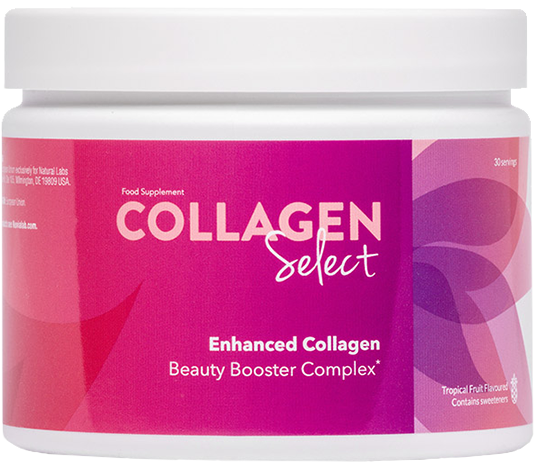
Our Recommendation — Collagen Select
Score: 5.2/10 · Best for: people who prefer a drink to capsules and want the branded VERISOL® ingredient specifically. Main caution: the maker does not publish ingredient amounts, so the dose cannot be audited — and the money-back badge carries no published day length. Fair trial: eight weeks, the VERISOL® trial window — the three-tub pack at $41.99 a tub is the trial the evidence describes; the six-tub pack is the cheapest route only for continuing users.
Morning or Night? What the Trials Actually Did
Search this question and you will find confident answers — morning for "absorption", night because "the body repairs during sleep". Neither has a trial behind it. The skin studies dosed once a day without comparing times, because time of day was never a variable anyone tested.
What physiology does say: the hydroxyproline peptides from a dose appear in blood within about one to two hours and clear over the following hours, whenever you take it. A morning dose and an evening dose produce the same daily pulse at different hours.
The sleep-repair argument deserves a direct answer, since it is the most repeated. Skin does follow daily rhythms, but no study has shown that aligning a collagen dose with them changes any measured outcome. An argument from rhythm is a hypothesis; hypotheses are not schedules.
Choose by routine. Attach the dose to a habit that already exists — breakfast, the morning coffee, the evening wind-down — because adherence across 8–12 weeks is the variable the trials actually depended on.
Empty Stomach or With Food?
No demonstrated difference exists for collagen peptides. The "empty stomach absorbs better" rule is borrowed from other supplements with different chemistry; peptides are already digestion products, and the feeding studies that detected them in blood were not built around fasted dosing rituals.
Food can even be the practical choice: a dose taken with breakfast is a dose taken daily, and mild fullness — the commonest complaint in this category — is often gentler with food than without.
One real exception overrides all of this for a specific group of readers, and it is not about the collagen at all. It is the boxed rule at the end of this article: if you take levothyroxine, your medication's empty-stomach window comes first, and the collagen goes somewhere else in the day.
Collagen in Hot Coffee or Tea
The claim that hot drinks "destroy" collagen peptides fails on its own terms. These peptides are manufactured by controlled hydrolysis — they are already fragments — and they survive normal food processing and the temperatures of a cup of coffee.
Coffee is, in fact, the most common real-world vehicle for collagen powder, precisely because the peptides dissolve cleanly and the flavour disappears. We found no evidence that a hot drink reduces peptide uptake, and the burden of proof sits on the destruction claim, which offers none.
One honest boundary: boiling a peptide solution for a prolonged cook is a different exposure from stirring powder into a hot drink. For the use everyone is asking about — coffee, tea, warm water — heat is not a reason to change anything.
Do You Need Vitamin C With It?
The underlying fact is real: vitamin C is a required co-factor for the enzymes that build and stabilise collagen in your own tissues. Without it, collagen synthesis genuinely fails — that failure is scurvy.
The marketing leap is the next step: "therefore take vitamin C with your collagen". For anyone eating a normal diet, vitamin C is rarely the limiting factor — deficiency severe enough to impair synthesis is rare, and the trials that showed skin effects did not hinge on co-dosing vitamin C at the same sitting. Timing the two together has never been tested.
The regulatory picture sharpens the point. In the EU, the authorised health claim in this area belongs to the vitamin, not the protein: "vitamin C contributes to normal collagen formation for the normal function of skin".
Collagen itself has no authorised health claim — its claims were assessed and rejected. (We state this without a link; the EU Register's public record is the source, and we could not verify a stable public URL for it at drafting.)
Where does that leave a specific product? Collagen Select already includes vitamin C in its nine-ingredient formula — at an unpublished amount, like everything else on its label. The pairing is built in; whether the amount matters is, characteristically, uncheckable.
Every Day, and for How Long?
Every trial in the skin literature dosed seven days a week. There is no studied "five days on, two off" pattern, and the daily-pulse nature of the peptide signal argues against improvising one.
Duration: skin trials ran 8–52 weeks depending on endpoint, with the main skin measurements at 8–12 weeks. The practical schedule is daily dosing for a full 8–12-week trial window, a photographic judgement, then a decision — continue, or stop and keep the money. Our timeline article sets out the measurement calendar in full.
The One Timing Rule That Matters: Thyroid Medication
If you take levothyroxine for hypothyroidism, this is the only collagen timing rule with a regulator behind it.
The levothyroxine prescribing information on DailyMed instructs a single daily dose on an empty stomach, one-half to one hour before breakfast, with separation from substances that interfere with absorption.
A collagen drink is food for these purposes — protein, calories, minerals in a glass. Stirring it into the medication's window risks the inconsistent absorption your endocrinologist is trying to avoid. The fix is trivially easy: medication first thing, collagen at lunch or later.
This rule generalises beyond one product and one brand: any protein drink, shake or supplement breakfast deserves the same separation. It is also a reminder that the genuinely important supplement timings are usually about your medicines, not your supplements.
Our Verdict
Take collagen when you will take it daily. Morning, night, with food, in coffee — the evidence supports all of them equally, which is to say it is silent, and silence should be answered with convenience, not ritual.
Reserve your care for the two things timing cannot fix: a dose in the studied range, printed on the label, sustained for the full trial window.
Our Recommendation — Collagen Select
Score: 5.2/10 · Best for: people who prefer a drink to capsules and want the branded VERISOL® ingredient specifically. Main caution: the maker does not publish ingredient amounts, so the dose cannot be audited — and the money-back badge carries no published day length. Fair trial: eight weeks, the VERISOL® trial window — the three-tub pack at $41.99 a tub is the trial the evidence describes; the six-tub pack is the cheapest route only for continuing users.
Frequently Asked Questions
Should I take collagen in the morning or at night?
Either. No trial has compared them. Peptide blood levels peak about one to two hours after a dose at any time of day, and outcomes were measured after weeks of daily dosing. Pick the time your routine protects.
Is it better on an empty stomach?
Not demonstrably. No study shows a fasting advantage for collagen peptides; with food is fine and often gentler. The exception is thyroid medication: levothyroxine's empty-stomach window must stay clear of the collagen drink.
Can I put collagen in hot coffee?
Yes. The peptides are already hydrolysed fragments and tolerate drink temperatures; the "heat destroys collagen" claim has no evidence behind it. Coffee is the commonest way people take the powder the trials used.
Do I need to take vitamin C at the same time?
No timing requirement exists. Vitamin C is genuinely required for your body's own collagen synthesis, but deficiency is rare on a normal diet, and co-timing has never been tested. Some formulas — Collagen Select among them — include vitamin C already.
Should I take collagen every day?
The trials dosed daily, seven days a week, for 8–12 weeks on the main skin endpoints. No intermittent schedule has been studied, so daily is the only evidence-matched answer.
Who Should Buy Collagen Select — and Who Should Skip It
Buy it if: a flavoured once-a-day drink is the routine you will actually keep for two months, you want the VERISOL ingredient, and you are untroubled by its unpublished dose.
Skip it if: you take levothyroxine and your mornings are already a careful medication window (a powder you can move to midday is simpler); you dislike sweetened drinks daily; or you are choosing on evidence paperwork — no named seller, no published amounts, and a guarantee with no stated length.
Timing is the question this category's shoppers ask most and its evidence answers least. Collagen Select at least keeps the answer simple: once a day, in water, whenever the habit holds.
Last reviewed: October 2026. This article is educational and is not medical advice.
