
- Quick Answer
- What "Wrinkle Reduction" Actually Measured
- Eye-wrinkle volume (instrument)
- Skin roughness (the null endpoint)
- Visible wrinkles (grading and photographs)
- The 114-Woman Trial, Read Closely
- Elasticity and Firmness: the Stronger Endpoint
- Hydration: the Quiet Endpoint
- Collagen vs Retinol for Wrinkles
- What each one actually does
- Using both, and what to expect from each
- What This Means Before You Buy
- Our Verdict
- A Stronger Alternative in This Category
- Frequently Asked Questions
- Can collagen remove wrinkles?
- Which collagen result is strongest: wrinkles, elasticity or hydration?
- Is 20% wrinkle reduction a lot?
- Does collagen work better than retinol?
- How long until a wrinkle effect could appear?
- Who Should Buy Collagen Select — and Who Should Skip It
- Read This Next
Disclosure: This article contains affiliate links. If you buy through them, we may earn a commission at no extra cost to you. It never changes our conclusions.
Quick Answer
One instrument-measured endpoint genuinely moved: in a trial of 114 women aged 45–65 taking 2.5 g of VERISOL daily for 8 weeks, eye-wrinkle volume was about 20% lower than in the placebo group.
The endpoints shoppers actually mean by "wrinkles" — visible lines, surface roughness — are weaker or null. And the dose is the gate: the trial used 2.5 g of a named peptide, so a product that never prints its collagen grams cannot promise you the trial's result.
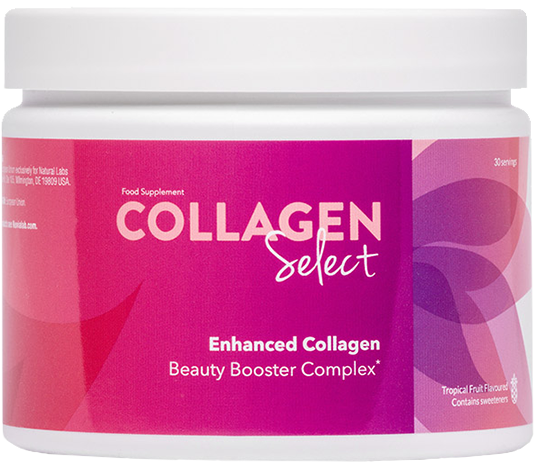
Our Recommendation — Collagen Select
Score: 5.2/10 · Best for: people who prefer a drink to capsules and want the branded VERISOL® ingredient specifically. Main caution: the maker does not publish ingredient amounts, so the dose cannot be audited — and the money-back badge carries no published day length. Fair trial: eight weeks, the VERISOL® trial window — the three-tub pack at $41.99 a tub is the trial the evidence describes; the six-tub pack is the cheapest route only for continuing users.
What "Wrinkle Reduction" Actually Measured
"Reduces wrinkles" sounds like one claim. In the trial literature it is three different measurements, and they do not agree with each other.
Eye-wrinkle volume (instrument)
The headline endpoint is a profilometry measurement: a skin-surface scan around the eye converts crow's-feet topography into a volume number. It is objective, repeatable — and invisible to the naked eye at the sizes involved.
This is the endpoint that improved. When an advertisement shows a face transformed, it is borrowing credibility from a measurement no mirror can verify.
Skin roughness (the null endpoint)
Roughness — the fine surface texture of skin — was measured in the same research programme and across the pooled literature, and it is the endpoint that does not cooperate.
An umbrella review of 16 systematic reviews found skin roughness did not improve with collagen supplementation (we state this without a link; we could not verify the review's full citation). Roughness is also the endpoint with extreme statistical heterogeneity in the 2021 pooled analysis, which means even its average is unstable.
Visible wrinkles (grading and photographs)
Expert grading of photographs — the closest proxy for what you see in a mirror — is the least-used endpoint in this literature and the least impressive where it appears.
No collagen trial has demonstrated a visible, photograph-graded wrinkle transformation of the kind advertising implies. If your goal is a change other people can see, the trial record does not describe one.
The 114-Woman Trial, Read Closely
The study behind nearly every wrinkle claim in this category is Proksch and colleagues, 2014, in Skin Pharmacology and Physiology. Here is the whole design, because the details are the claim.
One hundred and fourteen women aged 45–65 were randomised to 2.5 g of VERISOL bioactive collagen peptides or a placebo, once daily for 8 weeks, with 57 women in each group. Eye wrinkles were measured objectively before treatment, at 4 and 8 weeks, and again 4 weeks after the last dose.
After 8 weeks, eye-wrinkle volume in the peptide group was about 20% lower than in the placebo group — a statistically significant difference, present already at 4 weeks and still detectable 4 weeks after stopping.
In a biopsy subgroup, the same 8 weeks produced procollagen I content 65% higher and elastin content 18% higher than in the placebo group; fibrillin rose 6% versus placebo, which did not reach significance.
Now the context that must travel with those numbers. The trial was run with the ingredient's manufacturer: GELITA makes VERISOL, and the author list includes researchers from the Collagen Research Institute. One hundred and fourteen women is a small sample, eight weeks is a short window, and the result has never been replicated by an independent group.
And the 20% itself: it is 20% of an instrument's volume reading in the eye area of women aged 45–65 — not 20% younger-looking, not 20% fewer lines in a photograph.
Elasticity and Firmness: the Stronger Endpoint
If wrinkles are the marketed claim, elasticity is the better-evidenced one. The companion trial — Proksch and colleagues, 2014, 69 women aged 35–55 — tested 2.5 g and 5 g of specific collagen peptides daily against placebo for 8 weeks.
Skin elasticity improved significantly versus placebo in both dose groups by the end of treatment. Elasticity is also the endpoint that survives most consistently when trials are pooled, which is why our hub article rates it the category's strongest claim.
The honest link between the two: firmer-feeling, more elastic skin can make fine lines look softer without any line having been "removed". A buyer who understands that distinction will judge a collagen trial by feel and instrument photos — and will not be disappointed by the absence of a transformation.
Hydration: the Quiet Endpoint
Hydration is the endpoint nobody leads with and everybody's data quietly supports. Pooled analyses find skin hydration improving on collagen versus placebo with about the same consistency as elasticity.
The 69-woman elasticity trial itself is the exception that proves the pattern: its hydration effect reached significance only in a subgroup and not in the full group. Individual trials wobble; the pooled direction holds.
For dry, dehydrated-feeling skin, this matters practically. Dehydrated skin creases more visibly — fine lines look deeper when the surface is dry. A hydration gain can soften the appearance of lines through a completely different mechanism than wrinkle repair, and it is the most plausible early benefit a user would actually notice.
It is also the benefit with the cheapest rival: a plain moisturiser improves surface hydration in days. Collagen's claim is to dermal water content, measured by instrument — a deeper claim, a slower one, and a less certain one.
Collagen vs Retinol for Wrinkles
What each one actually does
Retinoids — adapalene over the counter, tretinoin on prescription — act on the skin's surface cells and dermal signalling directly, with decades of controlled trials behind their wrinkle claims and a known irritation cost while skin adapts.
Collagen peptides act, if they act, from the digestion side: a daily 2.5 g dose, a blood-borne peptide pulse, and a hypothesised nudge to fibroblasts. The evidence depth is not comparable — retinoids are the reference treatment this category is measured against, and nothing in the peptide literature approaches it.
Using both, and what to expect from each
They are not rivals in practice. A retinoid at night and a collagen drink in the morning do not interact; many trial-era dermatologists would call that ordering correct — the proven topical first, the unproven oral as an optional extra.
Expectations, calibrated: from a retinoid, graded visible change over 3–6 months, with early irritation. From collagen, at best, instrument-level changes in eye-wrinkle volume and elasticity at 8 weeks — changes you verify with photographs, not compliments.
What This Means Before You Buy
Everything above reduces to a dose check. The wrinkle result belongs to 2.5 g/day of a named peptide, taken for 8 weeks, by women aged 45–65. To borrow it, a product must deliver that dose of that peptide — and say so.
Collagen Select shows why the check matters. Its formula is built on VERISOL, which is the right starting point — and its maker publishes no ingredient amounts in readable text, so the collagen content could sit anywhere under the 5 g of total powder in each serving.
A serving might deliver 2.5 g. It might deliver 1 g. The label gives you brand names where the trial gave you grams, and at $62.99 a tub, that gap is the purchase.
The general rule travels: in this category, buy the dose, not the ingredient logo. A generic powder printing "2.5 g VERISOL per serving" offers you more of the trial than a premium drink that prints nothing.
Our Verdict
Collagen for wrinkles is a real instrument result wrapped in an inflated visual promise. The trial effect is genuine, small, single-study and manufacturer-funded; the transformation in the advertising exists in no trial.
Try it, if you try it, for elasticity and hydration, at a printed 2.5 g dose, judged at 8 weeks by photograph — and let the wrinkle claim be a possible bonus rather than the reason for the purchase.
A Stronger Alternative in This Category
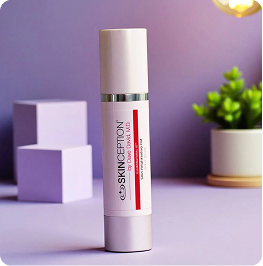
The stronger alternative: Kollagen Intensiv · 7.0/10Our higher-scored skin product: a firmness cream reviewed with the same audit, whose guarantee terms are stated in writing — where this drink publishes neither its dose nor its guarantee length.
Our Recommendation — Collagen Select
Score: 5.2/10 · Best for: people who prefer a drink to capsules and want the branded VERISOL® ingredient specifically. Main caution: the maker does not publish ingredient amounts, so the dose cannot be audited — and the money-back badge carries no published day length. Fair trial: eight weeks, the VERISOL® trial window — the three-tub pack at $41.99 a tub is the trial the evidence describes; the six-tub pack is the cheapest route only for continuing users.
Frequently Asked Questions
Can collagen remove wrinkles?
No trial shows removal. The best result is a ~20% reduction in instrument-measured eye-wrinkle volume versus placebo in 114 women aged 45–65 after 8 weeks on 2.5 g/day — a measurement change, not an erasure.
Which collagen result is strongest: wrinkles, elasticity or hydration?
Elasticity and hydration, in that order — they improve most consistently across pooled trials. Wrinkle volume rests mainly on one trial, and surface roughness does not improve at all in the umbrella evidence.
Is 20% wrinkle reduction a lot?
It is 20% of a profilometry volume reading around the eye, in women aged 45–65, against placebo. Researchers consider it meaningful; shoppers expecting to see a fifth of their crow's feet gone will be disappointed.
Does collagen work better than retinol?
No. Retinoids have deeper evidence, visible graded outcomes and guideline support; collagen's wrinkle evidence is one small manufacturer-funded trial plus pooling. They can be combined, but if you buy only one, the retinoid is the evidence-based purchase.
How long until a wrinkle effect could appear?
The trial measured at 4 and 8 weeks, with the difference present at both points and persisting 4 weeks after stopping. Judge any product at 8 weeks minimum — our timeline article explains why those are measurement dates, not promises.
Who Should Buy Collagen Select — and Who Should Skip It
Buy it if: you want the VERISOL ingredient in a drink format, your expectations are set at elasticity and hydration rather than wrinkle removal, and you accept the unpublished-dose caveat as the price of the format.
Skip it if: your goal is visible wrinkle change (start with a retinoid and sun protection — the evidence order is not close); you want to verify the 2.5 g trial dose on the label before paying; or you are outside the trialled population and want evidence in people like you — the wrinkle trial covers women aged 45–65 only.
The wrinkle claim is the most borrowed claim in this category. Collagen Select borrows it from the right trial; it just declines to show you the dose that would make the borrowing legitimate.
Last reviewed: October 2026. This article is educational and is not medical advice.
