
- Quick Answer
- What Collagen Supplements Are Claimed to Do
- Skin elasticity
- Wrinkles
- Hydration and firmness
- The Digestion Objection: Does Swallowed Collagen Reach Your Skin?
- Hydroxyproline peptides do appear in blood
- Signalling vs building blocks: the honest state of the debate
- What the Pooled Evidence Says — and Why the Meta-Analyses Disagree
- The positive pools (2021, 2023)
- The funding split: when industry-funded trials are removed, the benefit goes with them
- The two trials everything cites
- The trials themselves: small, short, and mostly in women
- The endpoint split (elasticity/hydration improve; roughness does not)
- Answering the Sceptics: the Three Arguments That Matter
- Argument one: the positive trials are manufacturer-funded
- Argument two: an unregulated category with no label police
- Argument three: "protect the collagen you already have" beats replacing it
- The Label Audit: Grams Are the Whole Game
- Trial doses run 2.5–15 g/day
- The per-serving check every buyer should run
- Worked example: a drink whose maker never prints the grams
- Can Food Do the Same Job?
- Who Might Reasonably Try It — and Who Shouldn't Bother
- Our Verdict
- Frequently Asked Questions
- Do collagen supplements work at all, in one sentence?
- How much collagen do the studies use?
- How long before I could judge a result?
- Is drinking collagen different from taking capsules?
- Why do you keep returning to who funded the trials?
- Does Collagen Select contain the studied dose?
- Who Should Buy Collagen Select — and Who Should Skip It
- Read This Next
Disclosure: This article contains affiliate links. If you buy through them, we may earn a commission at no extra cost to you. It never changes our conclusions.
Quick Answer
The honest short version: collagen peptides produce small, real-looking improvements in skin elasticity and hydration in small randomised trials — but the trials are mostly funded by the companies that sell the ingredient, and when a 2025 re-analysis separated the funded trials from the unfunded ones, the benefit was significant only in the funded group.
Independent authorities, Cleveland Clinic among them, remain unconvinced, and no regulator anywhere has authorised a general "collagen improves skin" claim on the pooled evidence.
So the answer is "possibly, a little, at the right dose" — with the dose doing most of the work in that sentence. Skin trials dosed 2.5–10 g of peptides a day; a product that never prints its grams cannot be checked against them.
Best for: people who prefer a drink to capsules and want the branded VERISOL ingredient specifically — that is the case for Collagen Select (our score: 5.2/10), with the caveat that its maker publishes no per-serving gram amount, so even the ingredient's studied 2.5 g dose cannot be confirmed in the product itself.
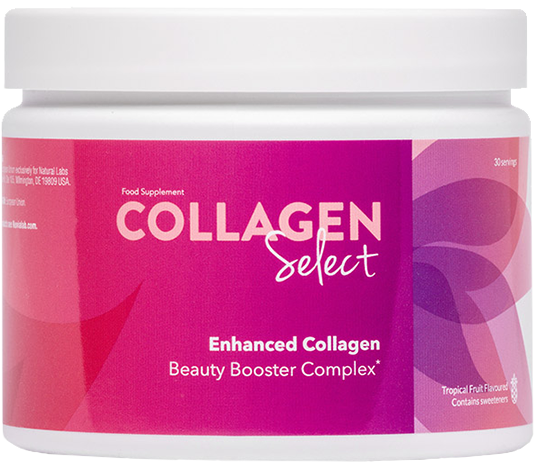
Our Recommendation — Collagen Select
Score: 5.2/10 · Best for: people who prefer a drink to capsules and want the branded VERISOL® ingredient specifically. Main caution: the maker does not publish ingredient amounts, so the dose cannot be audited — and the money-back badge carries no published day length. Fair trial: eight weeks, the VERISOL® trial window — the three-tub pack at $41.99 a tub is the trial the evidence describes; the six-tub pack is the cheapest route only for continuing users.
What Collagen Supplements Are Claimed to Do
Collagen is the structural protein your skin is mostly built from, and production falls with age — which is the entire sales pitch in one sentence: replace what time removes, and skin should look younger.
The claims cluster into three groups, and they do not stand on equal evidence.
Skin elasticity
Elasticity — how well skin springs back — is the best-measured claim. Instruments, not mirrors, do the measuring in the trials, and elasticity is the endpoint that improves most consistently across the pooled analyses.
It is also the endpoint where the funding question bites hardest, as the pooling section below shows.
Wrinkles
Wrinkle claims rest largely on one instrument endpoint: eye-wrinkle volume, measured by skin-surface profilometry in a single 114-woman trial of one branded peptide.
That is a much narrower base than the advertising built on it. Our endpoint-by-endpoint wrinkle audit separates what that trial measured from what the headlines say.
Hydration and firmness
Hydration improves in the pooled analyses about as reliably as elasticity — skin holds measurably more water after 8–12 weeks of peptides than after placebo in the trial populations studied.
"Firmness" is mostly elasticity and hydration wearing a second name. No trial measures firmness as its own endpoint, and any label that lists it separately is counting the same evidence twice.
The Digestion Objection: Does Swallowed Collagen Reach Your Skin?
The oldest objection to this whole category is digestive: you eat protein, your gut dismantles it into amino acids, and none of it arrives in your skin as collagen. On that logic, collagen powder is just expensive protein.
The objection is half right, and the half it gets wrong is the interesting half.
Hydroxyproline peptides do appear in blood
Collagen is unusually rich in hydroxyproline, an amino acid rare in other proteins. When researchers feed people collagen hydrolysate, small hydroxyproline-containing peptides — Pro-Hyp and Hyp-Gly are the named pair — survive digestion and appear in the bloodstream intact.
That much is measured, not theorised. It is the factual floor of the category: something distinctive from the dose does reach circulation.
The time course is also mapped: peptide levels in blood peak roughly one to two hours after a dose and fall back over the following hours. Whatever these fragments do, they do it as a daily pulse, not a permanent elevation — one reason every skin trial dosed daily rather than weekly.
Signalling vs building blocks: the honest state of the debate
What those peptides then do is where certainty ends. The signalling hypothesis says they act as messengers: fibroblasts — the skin cells that build collagen — respond to these fragments in cell culture by producing more collagen and hyaluronic acid, as if the fragments were damage signals.
The alternative reading is duller: the peptides are simply building material, and any protein-rich food would do as much. Cell-culture responses do not settle which story is true in a living face, and no trial has been designed to separate them.
Our position: the absorption half of the marketing ("peptides survive digestion") is supported; the mechanism half ("and rebuild your skin") remains a hypothesis with plausible biology and no decisive human test.
What the Pooled Evidence Says — and Why the Meta-Analyses Disagree
Individual collagen trials are small — dozens of participants, eight to twelve weeks. The picture comes from pooling them, and the pools disagree, which is why this category generates confident headlines in both directions.
The positive pools (2021, 2023)
De Miranda and colleagues pooled 19 randomised trials (1,125 participants, 95% of them women aged 20–70) in the International Journal of Dermatology in 2021 and found hydrolysed collagen beat placebo on hydration, elasticity and wrinkles.
A 2023 meta-analysis in Nutrients pooled 26 randomised trials with 1,721 participants and found significant improvements in skin hydration and elasticity against placebo.
An earlier systematic review by Choi and colleagues (2019) gathered 11 trials with 805 participants, using 2.5–10 g/day for 8–24 weeks, and called the preliminary results promising for skin ageing.
Read at face value, that is a consistent positive literature. Two qualifications apply to all of it. First, the trials underneath are small and short — the biggest single skin trial in this field enrolled 114 women.
Second, the 2021 pool's own statistics are untidy: a 2026 commentary in the Journal of Cosmetic Dermatology notes heterogeneity values above 90% in its hydration, elasticity and roughness estimates — the pooled trials differ from each other so much that averaging them is itself questionable.
The funding split: when industry-funded trials are removed, the benefit goes with them
In 2025, Myung and Park published the analysis this category had been avoiding, in The American Journal of Medicine: 23 randomised trials, 1,474 participants, re-pooled with two extra cuts — by funding source and by study quality.
Across all 23 trials, collagen significantly improved hydration, elasticity and wrinkles versus placebo — the familiar result. Split by funding, trials not funded by pharmaceutical or supplement companies showed no significant effect on any of the three outcomes; the funded trials showed all of them.
Split by quality, the high-quality trials likewise showed no significant effect, while lower-quality trials did. The authors' conclusion was blunt: there is currently no clinical evidence to support using collagen supplements to prevent or treat skin ageing.
Fairness requires the counterpoint, because the split is not as clean as it looks. Funding and dose are tangled in this literature: the unfunded trials tended to be smaller and, in several cases, lower-dosed than the funded ones, so "funding" may partly be standing in for "dose and size".
Classifications of which trials count as industry-funded have also been disputed. None of that rescues the positive reading — it just means the correct conclusion is "unproven either way", not "disproven".
That distinction matters for how you should spend money: an unproven category is a discretionary experiment, not a staple.
The two trials everything cites
Most of this literature's reputation rests on a pair of 2014 studies from the same Kiel research group, both published in Skin Pharmacology and Physiology and both run with GELITA's peptide.
In the first, 69 women aged 35–55 took 2.5 g or 5 g of specific collagen peptides daily for 8 weeks; skin elasticity improved significantly versus placebo in both dose groups, while the hydration effect reached significance only in a subgroup and not overall.
In the second, 114 women aged 45–65 took 2.5 g/day for 8 weeks; eye-wrinkle volume was about 20% lower than in the placebo group, and in a biopsy subgroup, procollagen I content was 65% higher and elastin 18% higher than placebo.
These are competent small trials. They are also the ceiling of the field: one research group, one ingredient maker, 183 women between them, eight weeks each. Every confident claim in collagen marketing is, underneath, these two studies plus a tail of smaller ones like them.
The trials themselves: small, short, and mostly in women
Three structural limits apply to nearly every trial in the pools. Size: most enrolled between 20 and 120 participants, so each can detect only large effects and each positive result carries a wide margin of uncertainty.
Duration: eight to twelve weeks is the norm — long enough for the measured endpoints, far too short to say anything about years of use. Population: the 2021 pool was 95% women, largely middle-aged, so the evidence says little directly about men or about skin under 35.
None of this makes the trials worthless. It makes them preliminary — the stage of evidence where a careful buyer spends pilot-study money, not staple money.
The endpoint split (elasticity/hydration improve; roughness does not)
Even inside the positive pools, the benefits are not spread evenly across outcomes. Elasticity and hydration improve most consistently; wrinkle endpoints improve in fewer trials and by instrument measures rather than visible grading.
And at least one endpoint refuses to move: an umbrella review of 16 systematic reviews found that skin roughness — the surface texture measure — did not improve with collagen supplementation. (We name this finding without a link because we could not verify the review's full citation; the pattern, though, matches what the individual pools show.)
The practical translation: if collagen does anything, it does it to how skin feels and stretches before it does anything to how lines photograph.
Answering the Sceptics: the Three Arguments That Matter
The strongest sceptical case is not found on competitor blogs. It is the position Cleveland Clinic's dermatologists publish for their own patients: collagen supplements are not the best option for improving skin's appearance, the few positive studies are manufacturer-sponsored, and the industry is poorly regulated.
It deserves answers, not dismissal — because two of its three arguments are simply correct, and the third is half correct. Here they are at full strength.
Argument one: the positive trials are manufacturer-funded
True, and now quantified: the 2025 funding-stratified analysis above is the sceptics' best evidence, and we printed it in full rather than around it.
The honest answer is that manufacturer funding is a reason to discount results, not a proof they are fabricated — the VERISOL trials are real randomised, placebo-controlled studies, run at university dermatology departments, with instrument endpoints. The discount is already in our scoring: this category's products do not score like categories with independent replication.
Argument two: an unregulated category with no label police
Also true. In the US, supplements reach shelves without pre-market proof of contents or efficacy, and collagen is no exception: independent testing programmes have periodically found powders that do not match their labels.
The answer is not to trust harder; it is to audit differently. In an unregulated category, the label itself is the product. A maker that prints exact grams per serving can be checked against trial doses; a maker that prints brand names without amounts cannot — and should be priced accordingly. That audit is the next section.
Argument three: "protect the collagen you already have" beats replacing it
Cleveland Clinic's constructive advice is to protect existing collagen: daily sun protection, not smoking, and proven topicals such as retinoids and vitamin C, which stimulate the skin's own production through pathways with decades of evidence.
Half of this argument we simply concede. Ultraviolet exposure is the dominant external driver of skin collagen loss, and no 2.5 g drink outruns unprotected sun. Anyone who buys collagen before buying sunscreen has the order exactly backwards.
Where the argument overreaches is the implication that protection and supplementation are rivals. They act on different sides of the ledger — one slows loss, the other may (unproven) nudge synthesis — and the trial populations showing elasticity gains were not sun-abusing outliers. The correct ranking is: protection first, retinoids second, supplements a distant, optional third.
The Label Audit: Grams Are the Whole Game
Strip away the branding and every collagen purchase reduces to one question: how many grams of peptides, per day, does this product actually deliver? Everything else — flavour, format, added vitamins — is secondary to that number, because the trials are denominated in grams.
Trial doses run 2.5–15 g/day
The studied range is wide but bounded. VERISOL's skin trials used 2.5 g/day. The wider hydrolysate literature pooled by Choi and colleagues ran 2.5–10 g/day. Joint and bone studies — a different question, covered in our dose article — reach higher.
Below 2.5 g/day, there is essentially no skin evidence at all. That single fact eliminates most capsule products from serious consideration, as our dose guide shows with the capsule arithmetic.
The per-serving check every buyer should run
The check takes thirty seconds. Find the serving size in grams. Find the collagen amount per serving — not per 100 g, not per scoop-of-unspecified-size. Compare it with 2.5 g.
If the collagen shares its serving with flavouring, sweeteners and other actives, subtract accordingly: a 5 g serving of a nine-ingredient drink mix is not 5 g of collagen. If the label names branded ingredients but prints no amounts anywhere, the check cannot be run — which is itself the result.
Worked example: a drink whose maker never prints the grams
Collagen Select is the worked example because it is the most instructive label in this wave. The ingredient choice is genuinely good: VERISOL, the branded peptide with the 2.5 g trial record, in a once-a-day drink.
The label, in readable text, prints no amounts at all — not for the collagen, not for anything. The tub's arithmetic sets only a ceiling: 150 g across 30 servings is 5 g of powder per serving, shared between the peptides, the flavouring and eight other named ingredients.
So the collagen content sits somewhere below 5 g, and whether it reaches the studied 2.5 g is unknowable from anything the maker publishes. The product may well deliver the dose; the point is that you are asked to take that on faith, priced at $62.99 a tub.
That is why a well-chosen ingredient still lands at 5.2/10 in our scoring: in this category, unpublished grams are not a paperwork quibble. They are the difference between a product that can be audited and one that can only be believed.
Can Food Do the Same Job?
The reasonable sceptic's alternative: skip the powder, eat protein, and let your body build its own collagen. The logic is sound as far as it goes — your fibroblasts use amino acids from any protein source, and vitamin C is the one genuinely required co-factor for collagen synthesis.
A varied diet meeting normal protein needs (roughly 0.8 g per kilogram of body weight daily, more for older adults) leaves nobody collagen-deficient in the building-block sense. Vitamin C deficiency severe enough to impair synthesis is scurvy — rare outside extreme diets.
Bone broth, the traditional candidate, does contain collagen — in amounts that vary wildly by recipe and are never printed, which makes it the food version of the unpublished label. Gelatin desserts are collagen too, at dessert doses.
One food candidate deserves its own sentence: gelatin. Gelatin is collagen, lightly processed, and it does deliver hydroxyproline — feeding studies using gelatin loads are exactly how researchers mapped the oxalate pathway our safety article covers. But dessert and stock doses sit far below the 2.5 g peptide floor, and nobody has run a skin trial on eating gelatin.
Where food logic stops: the trial effects, if real, are attributed to the specific hydroxyproline peptides that appear in blood after hydrolysate doses — a concentrated peptide bolus that ordinary meals do not replicate at the same scale. "Eat well" is the right foundation and an unproven substitute at the same time.
Who Might Reasonably Try It — and Who Shouldn't Bother
A reasonable trial looks like this: a product printing at least 2.5 g of a named peptide per serving, taken daily for a full 8–12 weeks, judged by photographs in consistent light — the way the trials measured, not the way mirrors flatter.
People with the strongest case: those whose concern is elasticity and hydration feel rather than deep lines; those already doing the protection basics, for whom this is an addition rather than a substitute; and those who treat the cost as an experiment's price.
Who shouldn't bother: anyone expecting visible wrinkle reversal (the best trial result is an instrument-measured ~20% reduction in eye-wrinkle volume versus placebo in 114 women aged 45–65 after 8 weeks on 2.5 g/day — real, and much smaller than it sounds); anyone whose product hides its dose; and anyone for whom the money competes with sunscreen or a retinoid.
Price the experiment honestly before starting it. At category prices, a 12-week trial costs roughly what a year of daily sunscreen costs — and the sunscreen's effect on collagen preservation is the one result in this entire field that no funding analysis has ever disturbed. Sequence the spending the way the evidence is sequenced: protection, then proven topicals, then — if curiosity and budget survive — a measured peptide experiment with an end date.
Safety screening comes first for some readers entirely: alpha-gal syndrome, kidney-stone history and pregnancy all change the answer, and our safety article maps those risks person by person before any purchase makes sense.
Our Verdict
Collagen supplementation is a small-effects category resting on small trials, and its pooled benefits currently survive only inside the manufacturer-funded portion of its literature. That is not the profile of a scam — the trials are real, the absorption data are real — but it is the profile of an unproven one.
Buy it, if you buy it, the way you would fund a pilot study: a named peptide, a printed dose of at least 2.5 g, a fixed 8–12-week window, photographs, and no renewal if the photographs say no.
What would change our assessment is equally specific: one independently funded, pre-registered trial of at least a few hundred participants, dosed at the commercial 2.5–5 g range, with instrument endpoints and six months of follow-up. The category has had a decade of small funded trials to produce that study. Its absence is information, too.
Our Recommendation — Collagen Select
Score: 5.2/10 · Best for: people who prefer a drink to capsules and want the branded VERISOL® ingredient specifically. Main caution: the maker does not publish ingredient amounts, so the dose cannot be audited — and the money-back badge carries no published day length. Fair trial: eight weeks, the VERISOL® trial window — the three-tub pack at $41.99 a tub is the trial the evidence describes; the six-tub pack is the cheapest route only for continuing users.
Frequently Asked Questions
Do collagen supplements work at all, in one sentence?
They improve skin elasticity and hydration modestly in small trials at 2.5–10 g/day — but the benefit disappears in the unfunded, high-quality subset of those trials, so "unproven" is the accurate one-word verdict.
How much collagen do the studies use?
Skin trials ran 2.5–10 g/day; the VERISOL skin programme used exactly 2.5 g/day. Anything below 2.5 g/day is outside the studied range for skin. Our dose article works through the label arithmetic in full.
How long before I could judge a result?
The trials measured at 8–12 weeks, and no trial tracked week-by-week onset — timelines in marketing are measurement schedules, not onset data. Judge at two to three months, by photographs. See our timeline article.
Is drinking collagen different from taking capsules?
Only in arithmetic: capsules hold roughly 0.5–1 g each, so reaching 2.5 g takes several capsules per serving, while drinks and powders deliver grams easily. No trial has compared formats head-to-head.
Why do you keep returning to who funded the trials?
Because it is currently the strongest predictor of a trial's result in this category: significant benefits appear in the funded group and not in the unfunded group of the 2025 meta-analysis. Until an independently funded trial replicates the effect, funding is a material fact about every claim built on these studies.
Does Collagen Select contain the studied dose?
Nobody outside the maker can say. Its serving is 5 g of powder in total, shared with flavouring and eight other ingredients, and the collagen grams are published nowhere in readable text — the audit limit that caps its score at 5.2/10.
Who Should Buy Collagen Select — and Who Should Skip It
Buy it if: you want the specific branded collagen (VERISOL) rather than a generic peptide; you prefer a once-a-day drink to capsules and will keep a two-month routine; and the unpublished dose and unspecified guarantee length do not decide the purchase for you.
Skip it if: you want your collagen dose confirmed in grams before paying (labelled VERISOL powders publish theirs); a guarantee with stated terms matters to you — this one's length appears nowhere in writing; you avoid bovine products (the collagen is bovine); or you have not yet covered the basics that outperform any supplement in this category — sun protection first.
Our closing judgement matches our product page: the right branded ingredient in a pleasant format, wrapped in the thinnest paperwork of its wave. The formula earns the trial; the label has to earn the trust, and this one only half does.
Last reviewed: October 2026. This article is educational and is not medical advice.
