
- Quick Answer
- Why No Plant Makes Collagen
- Where Supplement Collagen Actually Comes From
- Bovine
- Marine
- Porcine
- The Two Meanings of "Vegan Collagen"
- Builder blends (amino acids + vitamin C: they feed your own synthesis and only bite when the diet is short)
- Precision-fermented collagen (real collagen, scarce, expensive, mostly cosmetics/medical — the price test that identifies it)
- The Ovo-Vegetarian Grey Area: Eggshell Membrane
- Bovine vs Marine: the Pescatarian's Choice
- Label Traps
- The Direct Answer for One Real Product
- Our Verdict
- Frequently Asked Questions
- Is any collagen supplement vegetarian?
- Is marine collagen vegetarian?
- What is "vegan collagen" actually made of?
- Is eggshell membrane vegetarian?
- Is Collagen Select vegetarian or vegan?
- Who Should Buy Collagen Select — and Who Should Skip It
- Read This Next
Disclosure: This article contains affiliate links. If you buy through them, we may earn a commission at no extra cost to you. It never changes our conclusions.
Quick Answer
No. Collagen exists only in animals, so no collagen supplement is vegetarian or vegan — whatever the front of the tub implies. "Vegan collagen" on a label means one of two different things: a builder blend of amino acids and vitamin C, or, rarely, genuine collagen made by fermentation.
The direct answer for the product this cluster reviews: Collagen Select's VERISOL is bovine. It is neither vegetarian nor vegan, and no format trick changes that.
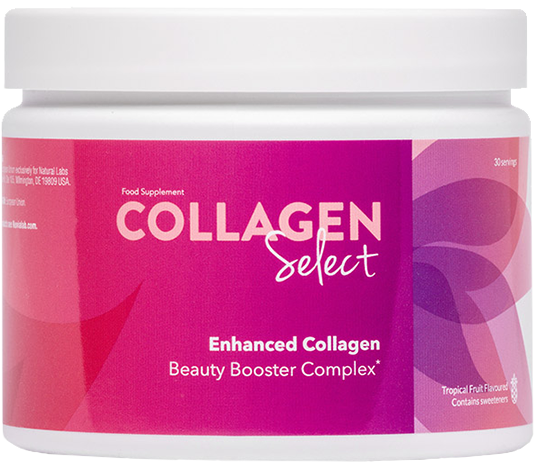
Our Recommendation — Collagen Select
Score: 5.2/10 · Best for: people who prefer a drink to capsules and want the branded VERISOL® ingredient specifically. Main caution: the maker does not publish ingredient amounts, so the dose cannot be audited — and the money-back badge carries no published day length. Fair trial: eight weeks, the VERISOL® trial window — the three-tub pack at $41.99 a tub is the trial the evidence describes; the six-tub pack is the cheapest route only for continuing users.
Why No Plant Makes Collagen
Collagen is a structural protein of animal connective tissue — skin, bone, tendon, cartilage, scales. Plants build their structure from cellulose and lignin; the collagen gene family simply is not part of plant biology.
That is why every gram of supplement collagen begins as an animal by-product. There is no orchard, algae or mushroom exception, and any product suggesting otherwise is selling one of the substitutes in the next sections under a borrowed name.
The practical consequence is total: vegetarian and vegan shoppers are not looking for a special kind of collagen. They are choosing between leaving the category and using products that support their own collagen production instead.
Even the exotic sources obey the rule. Jellyfish collagen is marketed as a novel marine alternative, and it is still animal — an invertebrate, but an animal. "Plant collagen" listings online resolve, on inspection, into builder blends every time. There is no third kingdom to shop in for collagen.
Where Supplement Collagen Actually Comes From
Bovine
Cattle hides (and some bone) supply the largest share of the market, including GELITA's VERISOL. Bovine collagen is predominantly types I and III — the types of skin — which is why the beauty category defaults to it.
For dietary frameworks: bovine collagen is beef, with everything that implies — not vegetarian, not vegan, not halal or kosher unless certified as such, and a hazard class of its own for alpha-gal patients, as our safety article maps.
Marine
Fish skins and scales supply marine collagen, predominantly type I. It is the pescatarian option — still an animal product, still not vegetarian — and the one source that matters for fish-allergy readers, because fish collagen is a documented allergen for a subset of fish-allergic people.
Porcine
Pig skin supplies porcine collagen, chemically close to bovine and common in gelatin. It excludes the same vegetarian and vegan shoppers, plus those avoiding pork for religious reasons — a group for whom source labelling is often the difference between a usable product and an unusable one. Chicken-derived collagen (including much type II for joints) completes the standard source list.
The Two Meanings of "Vegan Collagen"
Builder blends (amino acids + vitamin C: they feed your own synthesis and only bite when the diet is short)
Almost everything sold as "vegan collagen" is this: no collagen at all, but a blend of the things your body uses to make its own — amino acids such as glycine, proline and lysine, plus vitamin C, the genuinely essential co-factor for collagen synthesis, sometimes with silica or antioxidants.
Judge it as what it is. If your diet is short on protein or vitamin C, the blend fills a real gap and your own production benefits. If your diet already covers both — true for most people eating enough protein — the blend adds ingredients your synthesis was never waiting for. It is a deficiency product wearing a collagen name.
The honest label for these products exists and some brands use it: "collagen support" or "collagen builder". The dishonest version lets shoppers believe the tub contains collagen. Check the ingredients list: if no animal source is named and the panel lists amino acids, it is a builder.
Judging a builder blend is then ordinary nutrition arithmetic. Total protein intake is the foundation — around 0.8 g per kilogram of body weight daily is the standard reference for adults, and most people eating enough protein are not short of glycine or proline. Vitamin C is the second check: citrus, peppers and most varied diets cover it. A builder blend earns its price only where one of those two checks genuinely fails.
Precision-fermented collagen (real collagen, scarce, expensive, mostly cosmetics/medical — the price test that identifies it)
The genuine article does exist. Engineered yeast or bacteria, given collagen genes, can ferment real collagen protein — animal-free in sourcing, chemically actual collagen (usually a defined fragment or gelatin-type product).
It is scarce, costly, and sold mainly into cosmetics and medical materials rather than supplement tubs. Which gives shoppers a reliable test: fermentation collagen cannot be the cheap powder in a discount "vegan collagen" blend. If the price looks like ordinary supplement pricing, you are looking at a builder blend, whatever the front label says.
The Ovo-Vegetarian Grey Area: Eggshell Membrane
Eggshell membrane — the film inside an eggshell — contains collagen (types I, V and X) along with other joint-and-skin proteins, and it is sold as a supplement ingredient in its own right.
For ovo-vegetarians, who eat eggs, membrane sourced from eggshells sits in a genuine grey area: it is an egg-industry by-product rather than a slaughter product, and many ovo-vegetarians accept it on the same logic as eggs themselves. Vegans do not — it is animal-derived, full stop.
Two cautions. Eggshell membrane is a different ingredient from the peptide products in this cluster, with its own (mostly joint-focused) evidence; and egg allergy excludes it regardless of dietary philosophy.
Bovine vs Marine: the Pescatarian's Choice
For shoppers who eat fish but not meat, marine collagen is the only true collagen option, and the comparison with bovine is short. Types: bovine brings I and III; marine is essentially type I — the dominant skin type, so little is lost for skin purposes.
Evidence: the flagship skin trials in this category were run on bovine/porcine-family peptides (VERISOL's programme), while marine products borrow the category's pooled evidence, which mixes sources. Price: marine typically costs more per gram. Allergy: marine is excluded for fish-allergic readers — the one hard rule in this section, detailed in our safety article — while bovine is excluded by alpha-gal syndrome instead.
Neither source wins on absorption in any tested comparison. Choose by diet, allergy and price per gram — the variables that actually differ.
Label Traps
Three traps recur. First, the capsule shell: a "plant-based formula" can arrive in a gelatin capsule — bovine or porcine gelatin — making the finished product non-vegetarian even where the fill is arguable. Check the capsule, not just the panel.
Second, "collagen booster", "collagen support" and "collagen formula" wording on products containing no collagen. The wording is legal because it claims to support your collagen — the shopper's job is to notice the difference, ideally before paying collagen prices for amino acids.
A related check for religious dietary rules: bovine and porcine sources are not interchangeable for halal and kosher shoppers, and a label that says only "collagen peptides" without naming the animal has not answered the question. Certified products say so explicitly; uncertified ones leave the shopper to email a maker who, in this category, may not even name itself.
Third, the claims position itself. In the EU, collagen has no authorised health claim — its claims were assessed and rejected — while vitamin C's "contributes to normal collagen formation" wording is authorised.
That asymmetry explains the labels you see: builder blends lean on the vitamin C claim precisely because it is the only adjacent sentence a regulator has approved. (Stated without a link: the EU Register is the source, and we could not verify a stable public URL for it at drafting.)
The Direct Answer for One Real Product
Collagen Select deserves credit for answering this question plainly in its own FAQ: its VERISOL collagen peptides are bovine-derived, and the product is not suitable for vegetarians.
The format invites the confusion — a tropical-flavoured drink feels plant-adjacent in a way a capsule of powder doesn't — so the plain answer matters. Bovine source, animal product, excluded for vegetarians and vegans alike; and for alpha-gal readers, excluded on medical rather than dietary grounds.
That clarity is one reason the product holds a mid-range score despite its paperwork gaps elsewhere. On the vegetarian question, at least, the label tells the truth in one sentence.
Our Verdict
The category's rule is absolute and simple: collagen is animal, always. Everything else in this article is taxonomy — which animal, which substitute, which label wording — and shoppers who learn the taxonomy stop being mis-sold to.
Vegetarians and vegans are not missing a product; they are being marketed a word. What they can genuinely buy is adequate protein, vitamin C sufficiency, and sun protection — the inputs of their own collagen, which no animal needs to supply.
Our Recommendation — Collagen Select
Score: 5.2/10 · Best for: people who prefer a drink to capsules and want the branded VERISOL® ingredient specifically. Main caution: the maker does not publish ingredient amounts, so the dose cannot be audited — and the money-back badge carries no published day length. Fair trial: eight weeks, the VERISOL® trial window — the three-tub pack at $41.99 a tub is the trial the evidence describes; the six-tub pack is the cheapest route only for continuing users.
Frequently Asked Questions
Is any collagen supplement vegetarian?
No. Collagen comes only from animals — bovine, porcine, marine or chicken sources, or eggshell membrane. Products labelled "vegan collagen" contain no collagen; they are amino-acid builder blends or, rarely, fermented collagen at a price that gives them away.
Is marine collagen vegetarian?
No — it is fish. Pescatarians can use it; vegetarians and vegans cannot.
It is also the one source excluded by fish allergy, since fish collagen is a documented allergen for some fish-allergic people.
What is "vegan collagen" actually made of?
Usually amino acids (glycine, proline, lysine), vitamin C and sometimes silica or plant extracts — a builder blend feeding your own collagen synthesis. It can help if your diet is short on protein or vitamin C; it contains no collagen to absorb.
Is eggshell membrane vegetarian?
For ovo-vegetarians, arguably — it is an eggshell by-product, not a slaughter product. For vegans and for egg-allergic readers, no. It is also a distinct ingredient with its own evidence, not a substitute for collagen peptides gram-for-gram.
Is Collagen Select vegetarian or vegan?
Neither. Its VERISOL peptides are bovine-derived, as the maker itself states. The drink format does not change the source.
Who Should Buy Collagen Select — and Who Should Skip It
Buy it if: you eat beef-derived products without restriction, you want the VERISOL ingredient in a drink, and the unpublished dose is a caveat you accept.
Skip it if: you are vegetarian or vegan (the answer is absolute, not a matter of degree); you avoid bovine products for religious reasons; you have alpha-gal syndrome; or you are a pescatarian better served by a marine product — the only true-collagen route your diet allows.
On this question the product is honest and the category often is not. Collagen Select tells you it is bovine in one sentence; keep that standard, and apply it to every label that reaches for the word "vegan".
Last reviewed: October 2026. This article is educational and is not medical advice.
