
Description of the article « ProFlexen »
Disclosure: This page contains an affiliate link. If you buy through it, we may earn a commission at no extra cost to you. It never changes our scores or conclusions.
Quick Answer
ProFlexen's genuine appeal is its ingredient list: thirteen named joint ingredients built around UC-II® — undenatured type II collagen — the one joint ingredient whose research uses a genuinely small daily dose, alongside glucosamine, chondroitin, MSM, boswellia and curcuma. On paper, it is the broadest joint stack in this wave.
The problem is that the paper is all there is. The maker publishes no amount for any ingredient — not on the panel, not anywhere on its store — so not one dose in the bottle can be checked against the research the ingredients are sold on. The 40 mg figure on the store belongs to the UC-II® study the maker describes, not to this product. The maker also publishes no money-back guarantee. Best for: adults who want a broad, UC-II®-led joint stack and are willing to buy it without being able to verify a single dose. Score: 4.4/10.
ProFlexen at a glance
Single bottle$49.99
Best pack$149.97 — 6 bottles ($24.99 per bottle)
Cost per day$0.83–$1.67
FormatCapsules (60 per bottle)
Directions2 capsules a day, 30 minutes before a meal
Doses publishedNames only
What we checked
- No amount is published for any of the thirteen ingredients — not one dose in the bottle can be checked against the research.
- The 40 mg figure on the store belongs to the UC-II® study the maker describes — it is not an amount printed for this product.
- With amounts unpublished, dose-based safety checks cannot be run either — and the glucosamine and chondroitin sources are not stated, which matters for shellfish allergy.
- Glucosamine with chondroitin has case reports of increased INR in people taking warfarin — anyone on anticoagulants needs clinician clearance first.
- The ingredient list itself is a broad, sensible joint stack — UC-II®, the glucosamine trio, boswellia and curcuma are all named, and directions are printed.
- No money-back guarantee is published — the maker’s “guarantees the free and comfortable movement of joints” phrase promises an effect, not a refund.
Our Score: 4.4/10
| Criterion | Weight | Score | Why |
|---|---|---|---|
| Ingredients | 30% | 4.0 | Thirteen sensible joint ingredients are named, including branded UC-II® — but no amount is published for any of them, so not one dose can be audited |
| Evidence | 25% | 4.0 | UC-II®, boswellia and curcumin carry modest trial records at known doses, and glucosamine/chondroitin is contested even at full dose — but with amounts unpublished, none of that evidence can be connected to what is actually in this bottle; no trial of the formula |
| Maker credibility | 20% | 5.0 | The branded ingredient is named and directions are printed; against that, an unnamed seller behind Hong Kong terms, absolute efficacy language, no published amounts and no guarantee |
| Safety | 15% | 5.0 | The ingredients are the category's usual ones and are generally well tolerated at studied doses — but unpublished amounts mean dose-dependent safety cannot be assessed either |
| Value | 10% | 4.0 | $49.99 a month is standard for the category and bundles fall to $24.99 a bottle; but that is full-formula pricing for amounts you cannot see, shipping adds $12, and no guarantee stands behind it |
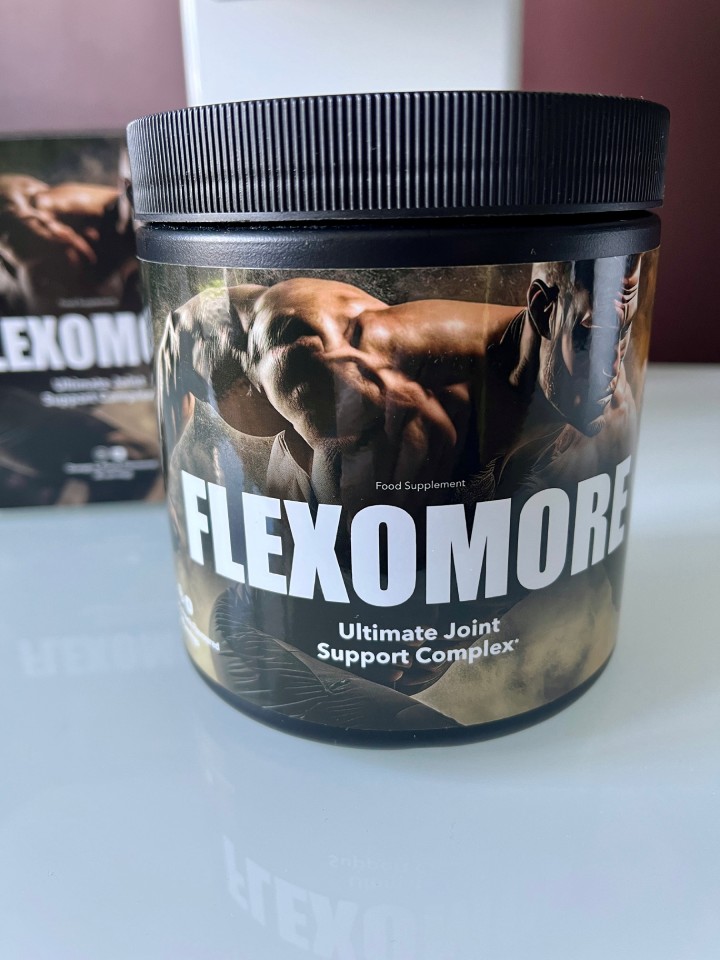
The stronger alternative: Flexomore · 6.8/10The joint formula we scored highest publishes — and delivers — the full research doses: 2 g of glucosamine sulfate per scoop. This page cannot show a single amount. Flexomore is a powder rather than a capsule, and it also publishes no guarantee.
What It Is
ProFlexen is a 60-capsule bottle — the bottle art reads "60 Capsules 840 mg" — lasting one month at 2 capsules a day, taken 30 minutes before a meal with about 300 ml of water, the directions given in the maker's FAQ. The seller is never named as a company: the operator is identified only by the store's own site name, based in Hong Kong.
Sold via the official website. The formula follows the category's familiar pattern and then widens it: the glucosamine–chondroitin–MSM trio, UC-II® collagen, boswellia, curcuma and ginger as the botanicals, the enzymes bromelain and papain, and vitamin C, zinc, manganese and selenium in support. What it does not follow is the disclosure pattern of the better products in this catalogue — and that difference drives everything below.
Ingredients (per daily serving of 2 capsules)
Thirteen ingredients are named across the maker's ingredient cards and composition text. The amount column is the finding of this review:
| Ingredient | Amount |
|---|---|
| UC-II® (undenatured type II collagen) | Not published |
| Glucosamine | Not published |
| Chondroitin | Not published |
| Methylsulfonylmethane (MSM) | Not published |
| Boswellia | Not published |
| Curcuma (turmeric) | Not published |
| Ginger | Not published |
| Bromelain | Not published |
| Papain | Not published |
| Vitamin C | Not published |
| Zinc | Not published |
| Manganese | Not published |
| Selenium | Not published |
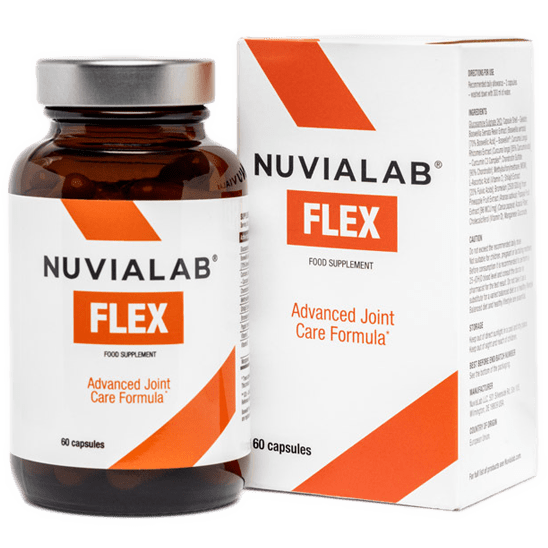
Read that table against the two joint products already in this catalogue. NuviaLab Flex (5.2/10) prints all eleven of its amounts, which is what allowed us to audit its glucosamine at one-third of the trial dose. Flexomore (6.8/10) goes further and delivers the full 1,500 mg glucosamine dose the research is built on. ProFlexen allows neither kind of check: a buyer cannot tell whether its glucosamine is 1,500 mg or 50 mg, whether its MSM is measured in grams or in dust, or whether any ingredient reaches the level its evidence requires.
The one figure the store does print needs careful handling. The maker's study section describes research in which UC-II® was used at 40 mg a day — and 40 mg is a plausible dose for this ingredient, because undenatured type II collagen is not dosed like ordinary collagen. But that is the dose in the study the maker cites, not an amount printed for this product. The maker's own panel gives no UC-II® quantity, so no buyer can confirm the bottle matches the study. Any review that tells you ProFlexen "contains 40 mg of UC-II®" is presenting a study dose as a product fact; we do not.
What the Evidence Actually Supports
For UC-II®, the ingredient record is the most interesting in this formula: small trials in knee osteoarthritis, using 40 mg a day, report modest improvements in joint comfort and function over several months — in one trial, outcomes at least comparable to a standard glucosamine-plus-chondroitin combination. It is a real but small evidence file, and it is dose-specific. Everything depends on the product actually delivering that dose, which — as set out above — cannot be verified here.
For glucosamine and chondroitin, the honest summary is "contested at full dose". The largest trial, GAIT (Clegg and colleagues, New England Journal of Medicine, 2006), found the combination no better than placebo overall for knee osteoarthritis pain, and the research doses are 1,500 mg and 800–1,200 mg a day respectively. ProFlexen names both ingredients and discloses neither amount, so the contested full-dose record is the most that could ever be claimed — and even that cannot be attached to this bottle.
Boswellia and curcumin carry modest positive trial records for knee pain and stiffness — small trials, short durations, effects that are real but not dramatic, at standardised-extract doses that are known for those products. Ginger has a thinner file: small studies, modest results. Bromelain, papain, MSM and the four micronutrients are supporting-cast ingredients whose contributions depend entirely on dose — the one thing not published.
There is no trial of ProFlexen itself, and the maker's headline language should be read in that light. The store says the product "guarantees the free and comfortable movement of joints". That is an efficacy phrase, not a finding — no supplement can guarantee an outcome — and, as the price section sets out, it is not a money-back guarantee either. Joint pain also has causes — inflammatory arthritis, injury, gout — that no supplement addresses and that worsen while being self-treated.
Price and Packs (maker's prices, verified 2026-11-01)
Prices from the maker's order page (US), before shipping. Shipping is $12.00 on every package, with no free-shipping option published.
| Package | What you get | Total | Per bottle |
|---|---|---|---|
| Basic | 1 bottle (1-month supply) | $49.99 | $49.99 |
| Standard — Buy 2, Get 1 Free | 3 bottles (3-month supply) | $99.98 | $33.33 |
| Best Value — Buy 3, Get 3 Free | 6 bottles (6-month supply) | $149.97 | $24.99 |
With shipping, the totals are $61.99, $111.98 and $161.97. On the six-bottle pack the maker shows the single-bottle price crossed out — that is bundle presentation, not a separate list price we can verify. More important is what is absent: no money-back guarantee is published anywhere on the sales page, order page or terms. The phrase quoted in the evidence section is the closest the maker comes, and it promises an effect, not a refund. The terms offer only a 10-day withdrawal for unused goods, and include a clause disclaiming that the maker's own product descriptions are guaranteed accurate.
Safety Notes
The unusual safety fact about ProFlexen is structural: because no amounts are published, the normal dose-based safety check cannot be run. The ingredients themselves are the category's standard ones, and at the doses used in their research they are generally well tolerated — but a buyer cannot confirm that this product sits at those doses, below them, or anywhere else. Our notes:
- Anticoagulant caution: glucosamine with chondroitin has case reports of increased INR in people taking warfarin. Anyone on anticoagulant medication should clear this product with their clinician first — particularly here, where the amounts involved cannot be checked.
- Mild digestive effects are the common pattern for this ingredient class: curcumin and boswellia commonly produce mild gastrointestinal effects in trials, and glucosamine can upset digestion in some users. A claim that a thirteen-ingredient product suits everyone, at unstated doses, should not be taken at face value.
- Allergy sources are not stated. The maker does not publish where its glucosamine or chondroitin comes from; most glucosamine is shellfish-derived, so anyone with a shellfish allergy should get the source confirmed by the maker before use.
- Pregnancy, breastfeeding and medication use are reasons to check with a clinician before starting any multi-ingredient supplement — and the inability to state the doses is itself the reason to have that conversation rather than skip it.
- New, hot, swollen or injured joints need diagnosis, not supplements — whatever a sales page says about guaranteed movement.
Frequently Asked Questions
How do I take ProFlexen?
2 capsules a day, 30 minutes before a meal, with about 300 ml of water — the directions in the maker's FAQ. One 60-capsule bottle lasts one month.
How much UC-II® is in ProFlexen?
The maker does not publish the amount — for UC-II® or for any other ingredient. The 40 mg figure on the maker's store is the dose used in the UC-II® study described in its study section; it is not a printed product amount, and no buyer can confirm the bottle contains it.
Is there a money-back guarantee?
No. We checked the sales page, order page and terms: no money-back guarantee is published. The maker's phrase about guaranteeing "the free and comfortable movement of joints" is an efficacy claim, not a refund promise. The terms allow withdrawal within 10 days for unused goods only.
Does it contain glucosamine?
Yes — glucosamine is named in the maker's composition, alongside chondroitin and MSM. The amounts are not published, and neither is the glucosamine's source, which matters if you have a shellfish allergy.
How does ProFlexen compare with NuviaLab Flex and Flexomore?
On disclosure, it trails both. NuviaLab Flex (5.2/10) prints every amount, which let us audit it — and find its trio underdosed. Flexomore (6.8/10) delivers the full research doses of its headline ingredients. ProFlexen names a broader list than either and lets you verify none of it, which is why it scores below both despite the longer ingredient list.
How long before I can judge it?
The UC-II® trials ran for months, not weeks, and the boswellia and curcumin records are similar. A fair self-trial is two to three months, judged on pain and function recorded from a written baseline — remembering that joint symptoms fluctuate on their own, and that with no guarantee, the cost of the trial is yours either way.
Why doesn't the maker publish the amounts?
We don't know — the maker gives no reason. What we can say is what it costs the buyer: every dose claim, every comparison with the research, and every dose-based safety check becomes impossible. In this catalogue, the products that publish their panels score better for exactly that reason.
Who Should Buy ProFlexen — and Who Should Skip It
Buy it if: you specifically want a UC-II®-led formula with the category's standard supporting ingredients in one capsule; you understand that the studied UC-II® dose is 40 mg and that this product's amount is unverified; and you are comfortable paying standard category prices for a formula you cannot dose-audit, with no guarantee behind it.
Skip it if: you want to know what you are taking — choose NuviaLab Flex (5.2/10) for a fully printed panel or Flexomore (6.8/10) for full research doses instead; you take warfarin and cannot get clinician clearance; you have a shellfish allergy and cannot get the glucosamine source confirmed; your joint pain is new, inflamed or injury-related — that needs diagnosis first; or you want a money-back guarantee, because none is published.
Our verdict: the broadest ingredient list in this wave, attached to the least information. ProFlexen may contain a well-dosed formula — UC-II® at its studied dose would make it genuinely interesting — but the maker has chosen not to show a single amount, so the score has to reflect what a buyer can actually verify: names, claims, and nothing else.
Guides & Research
Every claim on this page is examined in depth in our Joint Health guides — the dose audits, the trial record and the medicine-interaction checks, graded the same way we grade this product:
- How Much Glucosamine Do You Need? The 1,500 mg Standard, Explained
- Is 500 mg of Glucosamine Enough? Reading a Joint Label Against the Trials
- Does Glucosamine Actually Work? GAIT, the Guidelines, and the Form Problem
- Boswellia for Joint Pain: Boswellic Acid Percentages vs the AKBA Extracts Trials Used
- Joint Supplements and Your Medicines: Warfarin, Shellfish, Diabetes
Related Products
Last reviewed: October 2026