
- Quick Answer
- What Silvets Is — and What Its Label Actually Tells You
- Has Silvets Itself Ever Been Tested?
- The Ingredient Evidence, Graded One by One
- Green tea — a small, non-significant pooled effect
- L-carnitine — the panel's best file
- Cayenne and capsaicin — a few dozen calories a day
- Guarana — caffeine delivery, no stand-alone record
- Acai — no weight-loss evidence at all
- Why None of That Evidence Can Be Applied to This Bottle
- How Long Would It Take to Show Results?
- Does It Suppress Appetite?
- What Happens When You Stop?
- The Photos and Testimonials Problem
- Is It Worth $59?
- Our Verdict — Who, If Anyone, This Is For
- A Stronger Alternative in This Category
- Frequently Asked Questions
- Is Silvets a tablet or a capsule?
- Who makes Silvets?
- Is Silvets organic?
- Read This Next
Disclosure: This article contains affiliate links. If you buy through them, we may earn a commission at no extra cost to you. It never changes our scores or conclusions.
Quick Answer
No trial has ever tested Silvets itself. What exists is ingredient-level evidence for some of its six listed ingredients, gathered at stated doses in controlled trials — doses this label never confirms the product reaches, or even publishes.
The label also withholds the other two things a buyer needs to judge a stimulant product: directions for use, and a total caffeine figure for its guarana and green tea. Without amounts, directions, or a caffeine total, the product cannot be audited.
Best for: only a bargain-hunter comfortable taking an unauditable label entirely on trust. We score Silvets at 3.5/10 — familiar ingredients, no published amounts for any of them, and money-back wording with no time period stated.
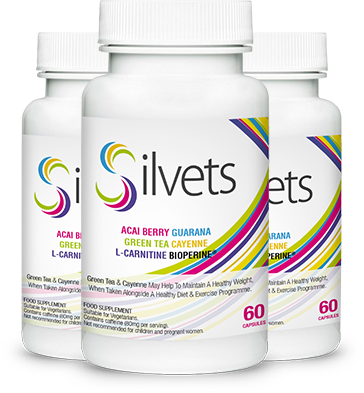
Our Recommendation — Silvets
Score: 3.5/10 · Best for: only the committed bargain-hunter who tolerates an unauditable label. Main caution: no amounts or directions published on the official store, and an advertised ingredient is missing from the formula. Fair trial: the three-bottle bundle at $39.33 a bottle — the six-pack maths only wins if you accept zero refund protection beyond ten days, unused.
What Silvets Is — and What Its Label Actually Tells You
Silvets is a stimulant fat burner sold as 60 capsules described by the maker as a 1-month supply. That supply description is almost the only quantitative statement the maker publishes about the product anywhere on its sales or order pages.
The maker's own ingredient list names six ingredients: acai, green tea, guarana, cayenne, L-carnitine tartrate, and BioPerine. It publishes no amount for any of them — not per capsule, not per serving, and not per day, in any document we could find.
The maker also publishes no directions. There is no stated serving, no timing guidance, and no instruction about food anywhere on its sales or order pages. Third-party sites publish directions for this product, but those directions do not come from the maker.
Even the product's form is described inconsistently. The maker's own pages call the product "tablets" in places, while the bottle in the maker's own photograph is labelled "60 CAPSULES". A buyer cannot tell, from the maker's text alone, which word is correct.
The seller behind the product does not name itself. The terms are written for a Hong Kong operator, and the company name in those terms is left blank. The site footer carries only the product's name, not a company a buyer could contact.
Has Silvets Itself Ever Been Tested?
No. We found no published trial, no registered study, and no peer-reviewed paper testing Silvets as a finished product, in any population, at any dose, against placebo or against anything else. The finished formula has no clinical record at all.
That absence matters because combination products are not the sum of their ingredient papers. Ingredients interact, doses differ, and a blend can behave differently from any single component tested alone. Evidence for an ingredient is not evidence for a product containing it.
What would count as evidence is straightforward. A randomised, placebo-controlled trial of the product as sold, in adults with overweight or obesity, run for at least eight to twelve weeks, reporting weight and waist change against a placebo group, would settle the basic question.
The wider category sets the same expectation. The NIH Office of Dietary Supplements weight-loss fact sheet stresses that lifestyle change, not supplementation, is the basis of long-term weight loss.
No such trial exists for this product, and the maker does not claim one. There is also no verifiable user dataset behind it — no independently collected outcomes, no audited measurements, and no registry entry a sceptical reader could check for themselves.
So every efficacy statement about Silvets, anywhere, is borrowed. It borrows from trials of individual ingredients, tested separately, at doses the borrowing label does not disclose. The next section grades that borrowed evidence honestly, ingredient by ingredient, before we test the borrowing itself.
The Ingredient Evidence, Graded One by One
Green tea — a small, non-significant pooled effect
Green tea is the panel's most studied weight-loss ingredient, and its record is modest. Its catechins and caffeine are the proposed mechanism, and the trials behind it generally used defined extract doses over at least twelve weeks in controlled settings.
The definitive pooling is Jurgens et al. 2012, in the Cochrane Database of Systematic Reviews. In overweight or obese adults taking green tea preparations versus control groups, the pooled weight loss was small and statistically non-significant, and the reviewers judged it unlikely to be clinically important.
That verdict held across the review's studies conducted outside Japan in overweight or obese adults versus controls, where the mean difference was close to zero. Green tea also showed no significant effect on maintaining weight loss in the same adult population versus control conditions.
Grade: real research, weak result. Green tea at studied extract doses, in overweight or obese adults compared with controls, produced an effect its own Cochrane reviewers described as small and not clinically important. That is the strongest honest sentence available for this ingredient.
L-carnitine — the panel's best file
L-carnitine has the most favourable pooled result on this panel. It transports fatty acids into mitochondria for oxidation, a real mechanism, and unlike several ingredients here it has been pooled across randomised trials with weight as a measured outcome.
In Pooyandjoo et al. 2016, in Obesity Reviews, adults given carnitine lost 1.33 kg more weight than adults given control treatment across nine trials with 911 participants. The effect was statistically significant, and it faded as trial duration lengthened.
Those trials used gram-level daily doses, not trace amounts. The dose matters more than the ingredient name, because the pooled effect belongs to the doses tested. Our dedicated article on L-carnitine works through the full dose-response record in detail.
Grade: the panel's best file, with an asterisk. A pooled advantage of about 1.3 kg in adults receiving carnitine versus adults receiving control treatment is a real, small effect — at one to two grams a day, in trials, alongside diet contexts.
Cayenne and capsaicin — a few dozen calories a day
Cayenne's active compounds, the capsaicinoids, raise energy expenditure and fat oxidation slightly and can reduce appetite at a meal. The mechanism runs through the TRPV1 receptor, and the human literature is a set of small, short studies rather than large weight trials.
Whiting et al. 2012, in Appetite reviewed twenty studies with 563 participants examining capsaicinoids in human volunteers versus control conditions, and found consumption raised energy expenditure by approximately 50 kilocalories per day in those participants compared with baseline control measurements.
Fifty kilocalories a day is a real number, and a small one. Sustained perfectly, with no compensation in appetite or activity, it would take many months to amount to a kilogram. Real diets rarely sustain any small deficit perfectly for that long.
Grade: a genuine class effect at specific small studied doses of capsaicinoids, in human study participants versus control conditions. It is a nudge measured in tens of calories, not a fat-melting action, and it belongs to the studied doses, not to any capsule naming cayenne.
Guarana — caffeine delivery, no stand-alone record
Guarana is a caffeine source. Its seeds are naturally rich in caffeine, and that caffeine — not a separate guarana mechanism — accounts for its stimulant effect. Any thermogenic or alertness effect attributed to guarana is, pharmacologically, a caffeine effect wearing a botanical name.
We found no stand-alone human trial showing guarana itself causes fat loss independent of its caffeine content. Caffeine has its own modest, short-term effects on energy expenditure and appetite, and those effects are covered by the caffeine literature, not by a guarana literature.
For a buyer, the practical point is accounting. Guarana contributes an unknown share of this product's total caffeine, alongside green tea, and the maker publishes no total. The FDA's caffeine consumer guidance gives healthy adults a daily reference point; this label gives none.
Grade: no independent fat-loss record. Guarana earns its place on a stimulant panel as caffeine delivery, and it should be judged — and counted — as caffeine, in a product whose maker declines to count it for you at all.
Acai — no weight-loss evidence at all
Acai is listed first on this panel, and it has the emptiest weight-loss file of the six. Acai is a nutritious fruit with genuine antioxidant content, eaten as food in Brazil for generations. None of that is a weight-loss finding.
We found no clinical trial showing acai causes weight loss in humans, at any dose, in any population, against any comparator. The ingredient's weight-loss reputation was built by marketing, including a fake-news advertising era that regulators later shut down, which our acai article documents.
Grade: no evidence. A lead position on a label is a marketing decision, not a scientific one. Acai's place at the front of this list tells a buyer about recognition and halo, and nothing about what the capsule can be expected to do.
Why None of That Evidence Can Be Applied to This Bottle
Every result above is dose-dependent. The green tea pooling tested defined preparations, the carnitine pooling tested grams, and the capsaicin review tested specified capsaicinoid amounts. Remove the dose from a result and the result no longer describes anything a buyer can purchase.
This label publishes no dose. Not a low dose, not a high dose — no dose, for any ingredient, in any of the maker's documents. A reader therefore cannot place a single ingredient in this bottle on either side of its studied line.
The gap is not a technicality. A capsule has a fixed total weight shared six ways. Even before any arithmetic, a six-ingredient capsule cannot deliver gram-level amounts of several ingredients at once. The studied carnitine dose alone exceeds what a shared capsule can plausibly hold.
We set out our full audit of this label — the names-only panel, the missing directions, the guarantee wording, and the order-page contradiction documented in our garcinia article — in our full Silvets review. The audit that cannot be run is, itself, the finding of this article.
How Long Would It Take to Show Results?
There is no universal timeline for a fat burner, and any page promising visible results in a set number of days is inventing one. The only honest clock available is the clock the ingredient trials themselves used to measure their effects.
For the ingredients on this panel, that window is eight to twelve weeks. The green tea trials in the Cochrane review ran at least twelve weeks in overweight or obese adults versus controls. The carnitine trials ran for weeks to months at gram-level doses.
Judgement inside that window should rest on measurement, not feeling. A stimulant product produces sensations — warmth, energy, a faster pulse — from its first dose. Those sensations are caffeine pharmacology. They carry no information about fat loss in either direction.
The usable measures are the trial measures: body weight, averaged weekly to smooth daily fluctuation, and waist circumference taken at the same time of day. If neither has moved beyond what the diet alone explains by week twelve, the product has given its answer.
Does It Suppress Appetite?
Appetite control is the lead promise on the brand pages that promote this product, so it deserves a direct answer. No ingredient on this panel has a human appetite trial at any confirmed dose in this formula. That sentence is the whole evidence position.
The one plausible route is caffeine. Caffeine blunts hunger modestly and briefly in adults consuming it versus adults consuming no caffeine, an effect measured in hours rather than days. Guarana and green tea both deliver caffeine, so a short-term appetite dip is pharmacologically plausible here.
Capsaicin has a meal-level appetite finding in the Whiting review's human participants versus control conditions, where a dose before a meal reduced energy eaten at that meal. That is a single-meal effect at studied doses, again doses this label never confirms it delivers.
Our verdict on the appetite promise is therefore narrow. Expect, at most, the brief blunting any caffeinated product can produce. A label that publishes no amounts cannot support a stronger appetite claim, and the maker's pages offer no appetite trial to support one either.
What Happens When You Stop?
The maker claims the product is "free of the yo-yo effect". That is a claim, printed by the seller, and we flag it as one. No trial of this product — and no trial of any ingredient here — establishes protection against weight regain after stopping.
The default expectation from the wider weight literature is less comforting. When any aid stops, the habits and deficit that produced the loss are what remain. If those stop with the product, weight regain is the ordinary outcome, not a personal failure.
Nothing on this panel has a mechanism that would lock in a loss after the last capsule. Fat loss is maintained by maintained behaviour. A seller claiming its capsule exempts a buyer from that arithmetic is claiming something no ingredient trial supports.
The Photos and Testimonials Problem
Search this brand and the results fill with week-by-week user stories, photographs, and dramatic timelines. Those pages are not reviews in any sense we recognise. They are sales funnels written in the first person, and they follow a documented template.
The template is older than this product. During the acai marketing era, affiliate operations built fake news sites with invented reporters, fabricated reader comments, and impossible short-term transformation stories. Regulators dismantled that industry, and our acai article sets out the enforcement record in full.
The tells are consistent. A testimonial page that names no verifiable person, shows photographs that appear across unrelated products, quotes losses no trial has produced, and ends at a single buy link is not reporting an experience. It is performing one, for commission.
A genuine review does the opposite work. It quotes the maker's own documents, grades the primary literature, states what cannot be known, and publishes a score the reader can disagree with. If a page about this product contains no label criticism at all, ask why.
Is It Worth $59?
The maker prices a single bottle at $59. On its largest bundle, three bought bottles plus three free bottles, the received cost falls to $29.50 per bottle. Shipping is charged on orders, and the money-back wording published states no time period at all.
What that money buys is six commodity ingredients at unknown doses. Every ingredient on this panel is sold separately, cheaply, with its amount printed on the label. A buyer who wants L-carnitine at the studied dose can buy exactly that, verifiably, for less.
Disclosed-label alternatives inside the wider fat-burner category also exist, including products whose panels print amounts a buyer can audit against trials before paying. The comparison is not close: a printed dose can be wrong for you, but an unprinted one cannot even be checked.
The bundle maths deserves a cold eye. The deepest discount rewards the largest commitment to an unverifiable dose, from a seller who does not name itself, behind guarantee wording with no period stated. Cheap per bottle is the whole case for this product.
Our Verdict — Who, If Anyone, This Is For
Silvets is not a dangerous outlier, and it is not a tested product. It is a familiar stimulant formula sold behind the least informative label we have audited in this wave: no amounts, no directions, no caffeine total, and an unnamed seller.
The ingredient evidence, graded fairly, is one small pooled carnitine effect at gram-level doses in adults versus control treatment, one small non-significant green tea effect in overweight or obese adults versus controls, one tens-of-calories capsaicin effect, caffeine delivery, and one ingredient with no evidence.
None of that evidence can be applied to this bottle, because the bottle's contents are unpublished. That single fact, not any ingredient's weakness, is why the score sits at 3.5/10. A buyer is asked to trust everything and verify nothing.
Who should buy it? Only a reader who has read this audit, understands the dose is unknowable, and still prefers the bundle price to a disclosed label. Everyone else — especially anyone counting caffeine or taking medication — should choose a label they can audit.
A Stronger Alternative in This Category
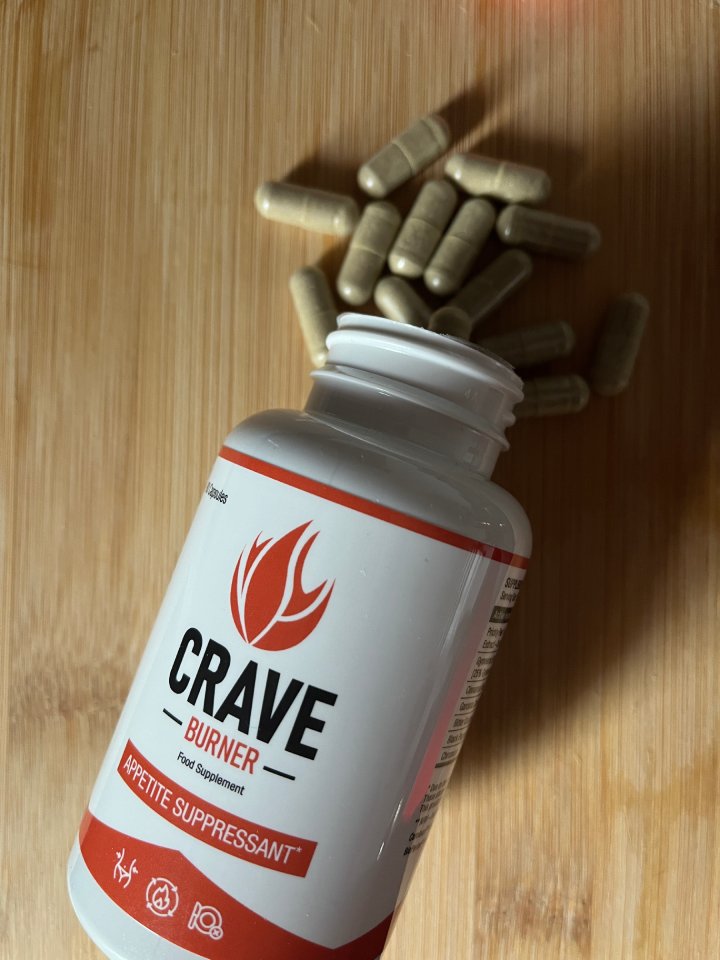
The stronger alternative: Crave Burner · 6.5/10Same weight-loss shelf, one honest step up: Crave Burner publishes its full panel with amounts — a 1,000 mg lead dose included — where Silvets publishes no amounts, no standardisations and no directions at all.
Our Recommendation — Silvets
Score: 3.5/10 · Best for: only the committed bargain-hunter who tolerates an unauditable label. Main caution: no amounts or directions published on the official store, and an advertised ingredient is missing from the formula. Fair trial: the three-bottle bundle at $39.33 a bottle — the six-pack maths only wins if you accept zero refund protection beyond ten days, unused.
Frequently Asked Questions
Is Silvets a tablet or a capsule?
The maker's own documents disagree. Its sales pages use the word "tablets" in places, while the bottle in the maker's own photograph is labelled "60 CAPSULES". We report the inconsistency as found; the bottle label is the physical document a buyer actually receives.
Who makes Silvets?
The seller does not name itself. The site footer carries only the product's name, and the terms describe a Hong Kong operator in a template where the company name itself is left blank. Our product page sets out everything that can actually be verified about the seller.
Is Silvets organic?
The maker claims the product is "100% ORGANIC". That wording is the maker's own claim, published without a certifier or certificate we could check, and the claim sits on a label that publishes no ingredient amounts. We report it as an unverified maker claim, not as a fact.
Last reviewed: October 2026.
