
- Quick Answer
- What Is Nopal?
- How Does Nopal Act as a Natural Appetite Suppressant?
- Is Nopal Effective for Weight Control?
- Nopal as Food vs Nopal as a Supplement
- How to Use a Fibre-Based Appetite Aid Well
- Safety and Practical Notes
- Nopal in Crave Burner: Carolean™
- Frequently Asked Questions
- Read This Next
Affiliate disclosure: This article contains affiliate links. If you buy through a link on this page, we may earn a commission at no extra cost to you. Nopal is a genuinely useful food and an interesting fibre source; the supplement claims built on it need separating from both.
Quick Answer
Nopal (prickly pear cactus) acts as an appetite aid the way other viscous fibres do: its soluble fibre forms a gel with water in the stomach and gut, which can increase fullness and slow carbohydrate absorption.
As a weight-loss ingredient, the clinical evidence is weak: a meta-analysis of randomised trials of Opuntia ficus-indica found no statistically significant reduction in body weight or waist circumference. Nopal can support a calorie-controlled diet the way fibre does; it has not been shown to drive weight loss on its own.
What Is Nopal?
Nopal is the pad (cladode) of the prickly pear cactus, a staple vegetable in Mexican cooking; the fruit is the “prickly pear” itself. Both are rich in soluble fibre and mucilage.
Supplements use several different preparations — pad powders, fruit extracts, and patented fibre complexes — and they are not interchangeable. This matters when reading trials: a study of one branded fibre complex is not a study of every product with a cactus on the label.
How Does Nopal Act as a Natural Appetite Suppressant?
- Gel formation: nopal's soluble fibre hydrates into a viscous gel, adding physical volume in the stomach — one of the signals the body reads as fullness.
- Slower carbohydrate absorption: the same gel can slow the rate at which a meal's glucose reaches the bloodstream, flattening the post-meal rise. Traditional-use and small clinical observations in type 2 diabetes are largely about this effect.
- Fibre's ordinary benefits: like other soluble fibres, it can modestly influence cholesterol handling and gut function. These are fibre effects, not cactus magic.
Two conditions decide whether any of this happens: the fibre must be taken with enough water (the gel is the mechanism. And dry fibre is a swallowing hazard) and before or with the meal it is meant to moderate. A capsule taken hours from food is decoration.
Is Nopal Effective for Weight Control?
The most complete summary is the systematic review and meta-analysis of randomised clinical trials of Opuntia ficus-indica: across the eligible trials, supplementation did not produce statistically significant reductions in body weight or waist circumference. Small reductions in BMI and body-fat percentage were reported, with effect sizes the reviewers treated cautiously given study flaws and inconsistency. That is the top of the evidence pyramid, and it does not support strong claims.
One trial often quoted in marketing — a 12-week study of a patented Opuntia cladode-fibre complex in 125 adults, reporting roughly 3.8 kg lost versus 1.4 kg on placebo alongside diet advice — studied that specific fibre complex, not generic nopal powder and not any product sold today with a different blend.
We do not transfer its result to other formulas. That single rule, applied consistently, is the difference between a review site and a sales page.
Where does that leave nopal? As a food, it is excellent: low-calorie, fibre-rich, and filling. As a supplement fibre, it is plausible and probably modest, comparable to other soluble fibres. As a stand-alone weight-loss treatment, it is unproven.
Nopal as Food vs Nopal as a Supplement
The strongest case for nopal is on a plate. Cooked nopal pads are a traditional vegetable: high in fibre and water, very low in calories. And eaten as part of a meal — which is exactly the context in which fibre helps. A serving of nopales in eggs or a salad delivers the gel-forming fibre alongside protein and bulk, at food prices, with food-level safety.
The supplement version trades that context for convenience and concentration, and inherits supplement problems: variable preparations, marketing that borrows trials from other products. And doses that may be lower than the fibre in a normal serving of the vegetable.
If you enjoy nopal as food, you likely gain more from eating it than from any capsule. If you do not have access to it or want a standardised pre-meal routine, a transparent fibre formula is the supplement route — judged as fibre, not as cactus.
How to Use a Fibre-Based Appetite Aid Well
- Time it before the meal — the gel must be forming as you sit down, typically 15–30 minutes prior.
- Use the full glass of water the label specifies; half a glass halves the mechanism and raises the swallowing risk.
- Pick the meal that causes the damage — for most people the largest or least controlled meal, often dinner.
- Give it four consistent weeks and judge by portions finished and snacking frequency, not by day-three feelings.
- Do not stack fibres blindly — combining several swelling fibres raises bloating and obstruction risk without doubling benefit.
Safety and Practical Notes
- Water is mandatory: fibre products must be taken with a full glass of water; people with swallowing difficulties or gut narrowing should avoid swelling fibres.
- Digestive effects: bloating, gas and loose stools are the usual complaints, especially at the start.
- Blood-sugar medicines: nopal can add to glucose-lowering effects; diabetes medication users should involve their clinician.
- Medicine timing: a gel-forming fibre can slow absorption of medicines taken at the same moment — ask a pharmacist about spacing.
- Pregnancy and breastfeeding: food amounts are one thing; concentrated extracts lack safety data — avoid supplements.
Nopal in Crave Burner: Carolean™
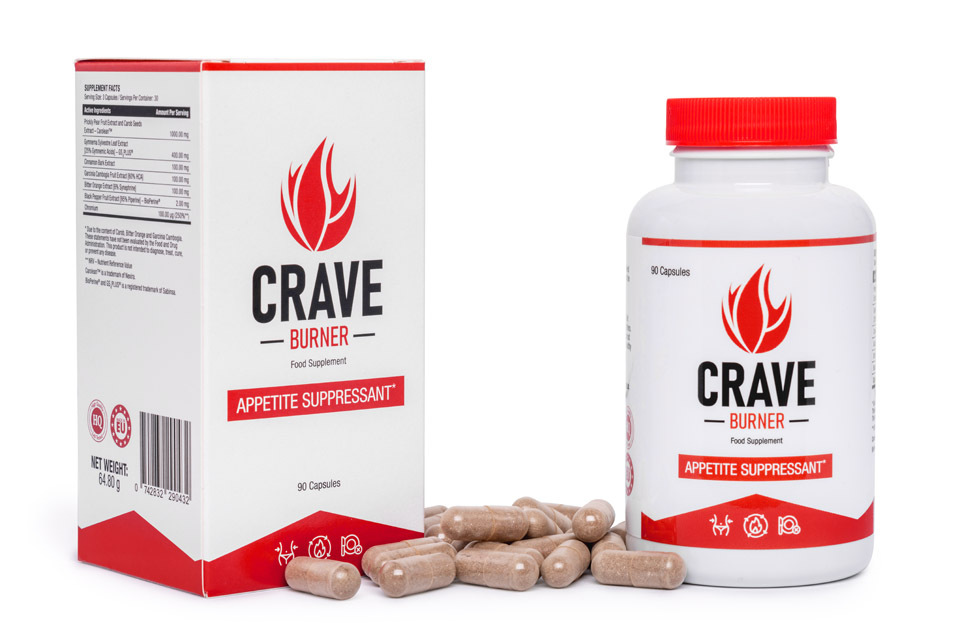
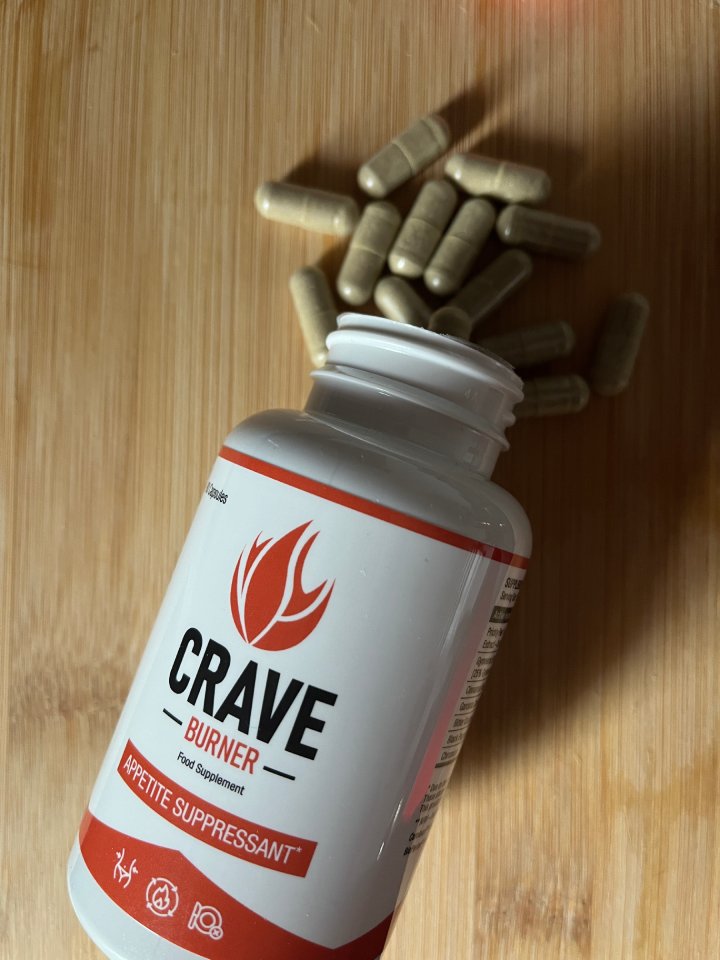
Crave Burner's lead ingredient is Carolean™ at 1,000 mg per daily serving — a patented blend of prickly pear fruit extract and carob seed extract, taken with 300 ml of water 15 minutes before the main meal.
The maker states the gel effect is felt within about 15 minutes and lasts up to two hours. Carob adds its own viscous fibre, so the fullness mechanism is coherent on paper, and the dose is a full gram rather than a dusting.
What we cannot say — and what no honest page should — is that Carolean™ itself has been shown in a published trial to reduce appetite or weight.
No finished-product trial for Crave Burner is published. our Crave Burner review scores it 6.5/10 on formulation transparency and plausibility, with evidence and the missing money-back guarantee holding the score down. For the category-wide picture, see whether appetite suppressants really work and the fibre's partner ingredient in our gymnema guide.
Frequently Asked Questions
How does nopal act as a natural appetite suppressant?
Its soluble fibre forms a gel with water in the stomach, increasing fullness and slowing the meal's glucose absorption. It requires adequate water and pre-meal timing to work as designed.
Is nopal effective for weight control?
Not on its own, per the trial meta-analysis: no significant effect on body weight or waist circumference versus control. It can play the supporting role any good fibre plays inside a calorie-controlled diet.
Disclaimer: This article is general information, not medical advice. Dietary supplements are not intended to diagnose, treat, cure or prevent any disease. Consult a healthcare professional before use if you take medication, especially for blood sugar.
Last reviewed: October 2026
