
- Quick Answer
- What Serenzo Is
- The One Human Study, Audited
- The Reference Trick: Orange Juice Is Not Serenzo
- What the Preclinical Evidence Shows (Labelled as Such)
- What Would Change Our Mind
- Safety: the Quiet Section
- Serenzo Inside Restilen: the One Honest Plus
- Frequently Asked Questions
- Does Serenzo work for stress?
- What is Serenzo made from?
- What dose was studied?
- Is Serenzo safe?
- Read This Next
Disclosure: This article contains affiliate links. If you buy through them, we may earn a commission at no extra cost to you. It never changes our conclusions.
Quick Answer
Serenzo™ is a sweet-orange (Citrus sinensis) peel extract, standardised to 20% D-limonene, sold as a stress ingredient. Its human evidence consists ofone study: an unpublished, open-label, manufacturer-sponsored pilot with no placebo group, in which 40 adults took ~500 mg/day for 12 weeks and reported large improvements (the manufacturer cites −53% on a symptom-severity index and −50% on an anxiety scale). An independent ingredient database rates Serenzo's evidence"Preliminary, 1/5" with zero published clinical trials. Those headline percentages come from the weakest design in clinical research — everyone knew they were taking it, nobody took a placebo, and the results were never peer-reviewed — so the honest grade is "unproven, with a plausible mechanism and a clean early safety picture". Its one solid point: the product this site reviews,Restilen, uses exactly the studied 500 mg dose.
What Serenzo Is
| Fact | Detail |
|---|---|
| Source | Peel of sweet orange, Citrus sinensis |
| Standardisation | 20% D-limonene (the peel's main aromatic compound); microencapsulated to protect it |
| Developer / owner | Developed by Bio Serae; now a Nexira ingredient |
| Proposed mechanism | Interaction with adenosine A2A receptors — a manufacturer/preclinical framing, not demonstrated in humans |
| Studied dose | ~500 mg/day |
| Published human trials | None, as of October 2026 |
The One Human Study, Audited
| Design element | What it was | Why it matters |
|---|---|---|
| Design | Open-label (everyone knew they were taking Serenzo) | Expectancy effects run at full strength — especially for subjective stress outcomes |
| Control group | None — no placebo arm | There is no way to separate the ingredient from the ritual, the attention and the passage of 12 weeks |
| Participants | 40 adults, 18–60, with stress symptoms | Small; and stressed volunteers typically improve over a study period anyway (regression to the mean) |
| Sponsor | The ingredient's manufacturer | Industry pilots are marketing instruments until independently replicated |
| Publication | Unpublished — figures circulate via manufacturer and retailer material | Never peer-reviewed; methods and full data unavailable for scrutiny |
| Reported results | SCL-90-R global severity −53%; HAM-A anxiety −50% at 12 weeks; "32% less stress at 6 weeks" in summaries | Manufacturer-reported; effect sizes of this shape, uncontrolled, are what placebo arms in this field routinely produce (compare the −17.9% placebo response in the 2024 theanine RCT inour theanine article) |
Read the table and the marketing inverts: the numbers are largebecausethe design is weak. An effect that survives blinding and placebo control shrinks; an effect measured without either is an upper bound wearing a lab coat. None of this proves Serenzo inert — D-limonene has genuine preclinical stress research behind it (next section), and the ingredient may well do something. It proves the current human file cannot distinguish "something" from "nothing", and that any page quoting −53% without the wordsopen-label, uncontrolled, unpublishedattached has chosen a side, and it is not yours.
The Reference Trick: Orange Juice Is Not Serenzo
The one independent profile of Serenzo lists two clinical references under it — randomised trials from the American Journal of Clinical Nutrition (2015) and the European Journal of Nutrition (2016). Open them and a substitution appears: both are trials of orangejuiceflavonoids measuringcognition, not stress, and neither administered Serenzo. Citrus research is a legitimate neighbouring field, but a juice-cognition trial cannot support a peel-extract stress claim; the references function as decoration — the appearance of a literature where the actual one is a single pilot. We flag this because it is the most sophisticated move in the ingredient's marketing: not inventing data, but borrowing adjacent data's credibility. A reader who checks references — the habit this whole site exists to reward — catches it in two clicks.
What the Preclinical Evidence Shows (Labelled as Such)
Below the human line, the file is more respectable. D-limonene has shown anti-stress and anxiolytic-like effects in rodent models; orange-peel preparations have traditional use as calmatives; an in-vitro study (2010, trade-reported) found ICAM-1 reduction, an inflammation-adjacent signal the manufacturer weaves into a stress-inflammation narrative; and the proposed adenosine A2A mechanism is pharmacologically coherent as a hypothesis — adenosine signalling is genuinely involved in arousal and stress responses, which is also why caffeine (an adenosine antagonist) does what it does. Coherent hypotheses plus rodent data plus one open pilot is a perfectly normalearlyevidence profile — for an ingredient at the start of its research life. The problem is purely presentational: Serenzo is sold, and priced, as though it were at the end of that life.
What Would Change Our Mind
Audits should state their falsification conditions, so here are ours. A single randomised, double-blind, placebo-controlled trial — 100+ stressed adults, 500 mg/day, 8–12 weeks, a validated stress scale as the primary outcome, published in a peer-reviewed journal with the sponsor's role declared — would move Serenzo from Tier 3 to the tier its results earned, in either direction
A null result would move it the other way, permanently, and we would update this article to say so. Until either appears, the rational price for Serenzo's evidence is the price of an interesting hypothesis, and the rational description is the one this page uses
We note, for the record, that the ingredient has been marketed for years at scale — the trial above costs less than a modest advertising campaign, and its absence is a choice the manufacturer renews annually. Buyers are entitled to factor that choice into their own.
Safety: the Quiet Section
Here the news is genuinely calm. The pilot reported good tolerability, with occasional mild digestive upset the only recurring note in the ingredient's materials; D-limonene is a ubiquitous food flavouring compound with a long dietary history; no serious adverse-event signal exists in the (admittedly thin) record
Standard cautions apply: a theoretical additive caution with sedatives given the proposed mechanism; citrus-peel allergy is a stop; pregnancy and breastfeeding have no data and therefore no recommendation. Safety, in other words, is not the reason for this article's scepticism — the ingredient looks benign. "Benign and unproven" is a coherent verdict, and for some buyers a fair price exists for it
It is not the price of a proven one.
Serenzo Inside Restilen: the One Honest Plus
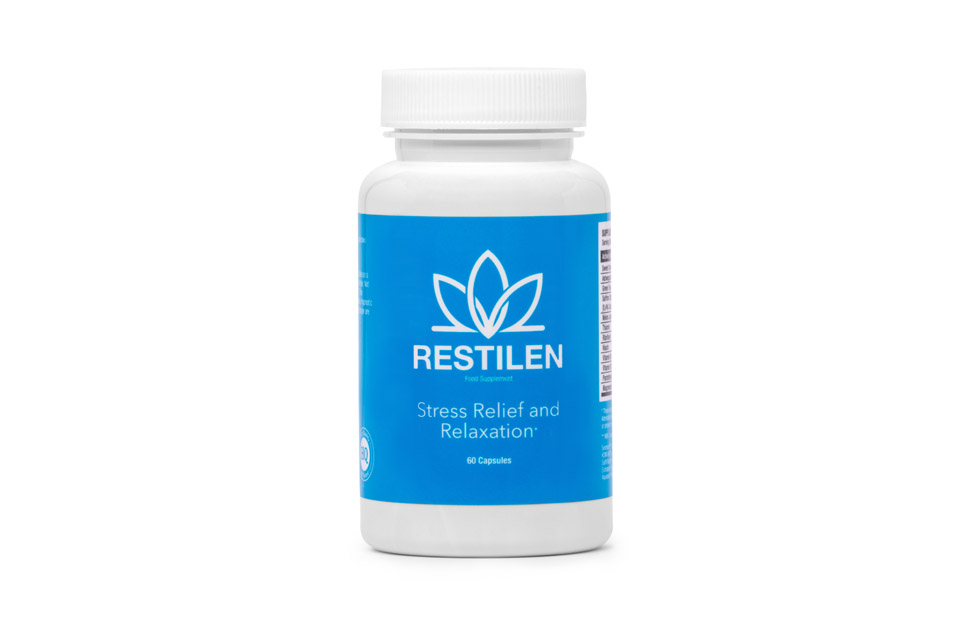
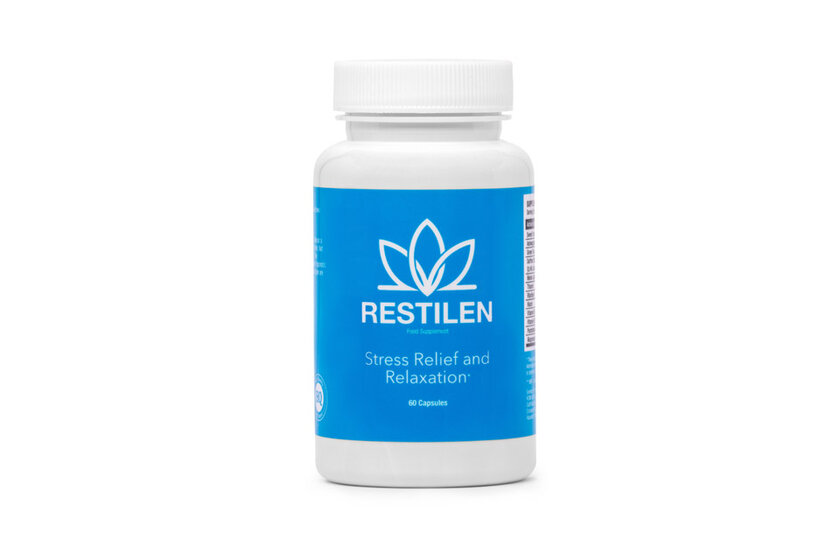
Context matters: Serenzo reaches most consumers as the headline ingredient ofRestilen, and the audit cuts both ways. Against the product: its lead ingredient carries the weakest evidence in the formula. For the product — genuinely — Restilen doses Serenzo at exactly the studied 500 mg/day, in a formula where several better-evidenced ingredients (ashwagandha, magnesium, theanine) areunder-dosed relative to their trials (the full table is inour stress roundup). There is an irony there worth naming: the product is most faithful to the weakest study in its own label. Our 6.6/10 score for Restilen prices both halves of that sentence, together with the absent money-back guarantee — and this article is, in effect, the footnote that score always owed its readers.
Frequently Asked Questions
Does Serenzo work for stress?
Unknown. One unpublished, uncontrolled manufacturer pilot reports large improvements; no placebo-controlled or peer-reviewed human trial exists. An independent database grades the evidence "Preliminary, 1/5".
What is Serenzo made from?
Sweet orange peel, standardised to 20% D-limonene and microencapsulated. It is a Nexira ingredient (originally Bio Serae).
What dose was studied?
~500 mg/day for 12 weeks in the pilot — the dose Restilen uses.
Is Serenzo safe?
Early indications are benign (occasional mild digestive upset; D-limonene is a common food compound), but the safety file is as thin as the efficacy file. Sedative combinations and pregnancy are no-data zones.
Last reviewed: October 2026. This article is educational and is not medical advice.
