
- Quick Answer
- The Interaction Table: Ingredient × Drug Class
- Ordinary Side Effects, Ingredient by Ingredient
- Quality and Dose: the Safety Issue Hiding in the Manufacturing
- Children, Teenagers and Older Adults
- Pregnancy and Breastfeeding, Ingredient by Ingredient
- Long-Term Use: the 12-Week Wall
- How to Start Safely: a Protocol
- Stop Signals: Effects That End the Experiment
- When Stress Is More Than Everyday Stress: See a Doctor
- Frequently Asked Questions
- Are stress supplements safe?
- Can I take stress supplements with antidepressants?
- Which stress supplement is safest?
- Are they safe long-term?
- Read This Next
Disclosure: This article contains affiliate links. If you buy through them, we may earn a commission at no extra cost to you. It never changes our conclusions.
Quick Answer
For a healthy adult not taking medication, the mainstream stress ingredients — ashwagandha, rhodiola, L-theanine, saffron, magnesium — have generally mild short-term safety records in trials. The risks concentrate exactly where the trials don't look:combinations with medication(a systematic review of adverse-event reports found adaptogens involved in ~9% of adverse events reported alongside antidepressants),pregnancy(saffron is contraindicated; ashwagandha is traditionally avoided; most others are simply unstudied),specific organ cautions(ashwagandha's rare liver-injury reports; rhodiola's bipolar case reports), andlong-term use, for which almost no data exists past 12 weeks for any ingredient in this set. Safety in this category is a property of the combination — ingredient × your medication × your situation — which is why this article is organised as a table, not a verdict.
The Interaction Table: Ingredient × Drug Class
| Ingredient | Antidepressants (SSRI/SNRI/MAOI) | Sedatives / benzodiazepines | Blood-pressure meds | Diabetes meds | Other notable |
|---|---|---|---|---|---|
| Ashwagandha | Caution — serotonergic/GABAergic overlap; prescriber conversation | Additive sedation possible | Possible additive lowering | Possible additive glucose lowering | Thyroid hormone increases reported; immunosuppressant caution (immunomodulatory claims) |
| Rhodiola | Caution — preclinical monoamine activity; agitation case reports; do not combine unsupervised | Less typical (stimulating), still disclose | On pharmacist watch-lists | On pharmacist watch-lists | Bipolar mania case reports; losartan named in interaction databases |
| L-Theanine | Theoretical serotonergic note only; no reported problems in the pharmacist literature | Theoretical additive calm; low concern | Theoretical additive lowering; low concern | No significant signal | Among the cleanest profiles in this table — headache/drowsiness the usual reports |
| Saffron | Theoretical serotonin-syndrome risk — do not stack with SSRIs/SNRIs without prescriber agreement | Additive sedation possible | Possible additive lowering at higher doses | No major signal | Pregnancy contraindicated(uterine-stimulant concern); bleeding-risk caution at high doses |
| Magnesium | No significant interaction | No significant interaction | Can add to lowering — usually benign | No significant interaction | Absorption:separates from tetracycline/quinolone antibiotics and bisphosphonates by 2+ hours; kidney disease = clinician first |
| Serenzo | No data | Theoretical caution (proposed adenosine mechanism) | No data | No data | "No data" is the entry, for every column — seeour audit |
How to use this table: find your medication's column before your ingredient's row. The pattern it reveals is the article in miniature — the gentlest ingredients (theanine, magnesium) are gentle across every column, while the pharmacologically interesting ones (saffron, ashwagandha, rhodiola) each carry one or two cells that deserve a professional conversation. "Natural" appears nowhere in the table, because it predicts nothing in it.
Ordinary Side Effects, Ingredient by Ingredient
Below the interaction level sit the effects healthy users actually meet.Ashwagandha:nausea and loose stools lead; occasional headache and drowsiness; most trial participants report nothing.Rhodiola:dizziness and dry mouth are the textbook reports, plus jitteriness or sleep disturbance when dosed late or high — the timing error, mostly.L-Theanine:occasional headache or drowsiness; across hundreds of products in pharmacist databases it generates remarkably few problem reports.Saffron:at 30 mg/day, trials report little beyond occasional nausea or headache; the side-effect curve wakes up above ~200 mg/day (nausea, dry mouth, appetite changes) — one more reason dose discipline is a safety practice, not a pedantry.Magnesium:loose stools are the dose-limiting effect, form-dependent (citrate loosens more than glycinate; oxide mostly passes through unabsorbed).Combination formulasadd arithmetic: several mild ingredients at once mean several small probabilities at once, and a symptom that appears on a five-ingredient product has five suspects — the practical argument for the one-at-a-time protocol below. Two effects deserve explicit naming because marketing rebrands them: feelingwiredon an adaptogen is not "it working", and feelingsedatedon a stress product you take for daytime function is a mismatch, not a detox.
Quality and Dose: the Safety Issue Hiding in the Manufacturing
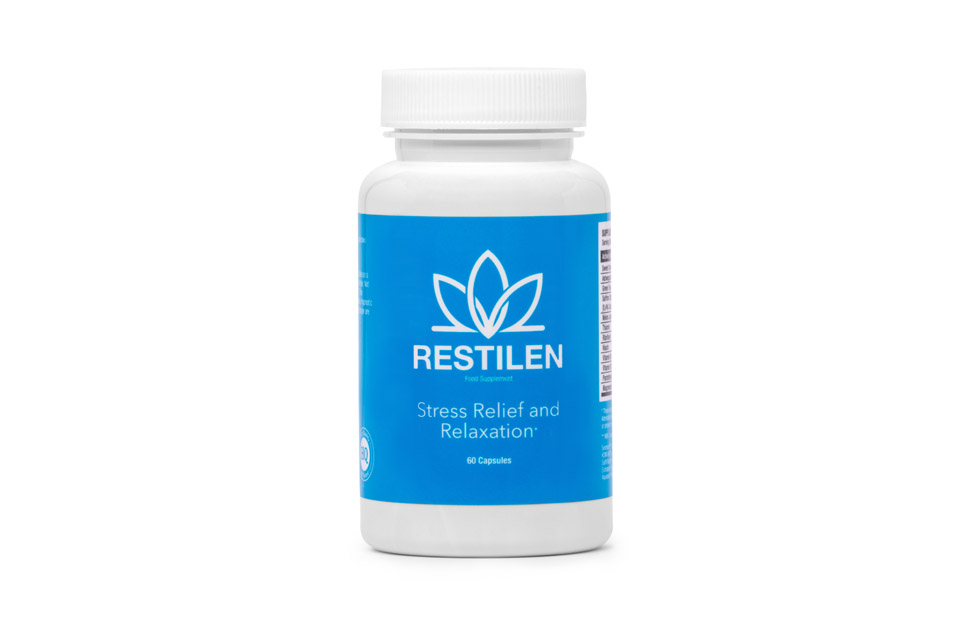
The stress aisle does not carry the male-enhancement aisle's adulteration record, but it has its own quieter quality problems, and they are safety problems in disguise.Unprinted doses(proprietary blends) make interaction-checking impossible — you cannot clear what you cannot read.Under-dosing, documented across this set's audit (rhodiola at half the trial floor, magnesium at a quarter), inverts into a behavioural risk: users who feel nothing escalate — doubling capsules, stacking products — until the totals enter ranges nobody studied, B6 creep being the arithmetically easiest example (Restilen's 3.5 mg is modest; add a B-complex and an energy drink habit and the EFSA 12 mg ceiling arrives without any single product misbehaving).Species and standardisation errors(the rhodiola substitution problem inour rhodiola guide) mean the ingredient in the bottle may not be the ingredient in the trial whose safety you are relying on. The mitigations rhyme with the rest of this site: printed amounts, branded standardised extracts, one product at a time, and a seller — like Restilen's maker on its label, if not its guarantee — whose identity you can verify.
Children, Teenagers and Older Adults
Children and adolescents:none of these ingredients has a paediatric stress evidence base; developing brains and exam-season marketing are a bad pairing, and stress presentations in minors deserve adult-guided, clinical-first responses.Older adults:the interaction table matters more with every decade, because medication lists lengthen (antidepressants, blood-pressure agents and thyroid medication — this set's three busiest columns — are all common in later life) and kidney function, which governs magnesium's safety margin, declines. The ingredient set is not forbidden to either group by chemistry; it is unstudied in the first and interaction-dense in the second, and both facts argue for professional guidance as the default rather than the exception.
Pregnancy and Breastfeeding, Ingredient by Ingredient
Saffron:contraindicated in pregnancy at supplemental doses (uterine-stimulant history; culinary amounts in food are a different exposure).Ashwagandha:traditionally associated with miscarriage risk — avoid in pregnancy; insufficient data for breastfeeding.Rhodiola:insufficient data — avoid in both.L-Theanine:insufficient formal data; dietary exposure via tea is normal, supplemental doses are unstudied in pregnancy.Magnesium:the exception — an essential nutrient with established pregnancy use under clinical guidance for deficiency; supplemental dosing still belongs to your clinician.Serenzo and combination formulas(includingRestilen): no data; the combination of a contraindicated ingredient (saffron) inside a general formula is itself the lesson — a product-level "is it safe in pregnancy?" is answered by its riskiest ingredient, and for Restilen the answer is no.
Long-Term Use: the 12-Week Wall
Nearly every trial behind this category ends by week 12. That fact quietly bounds every responsible claim: rhodiola's safety file is solid to ~12 weeks and empty beyond it; ashwagandha's liver-injury case reports emerged from real-world use longer and less monitored than its trials; saffron's dose-related side effects (nausea, headache, dry mouth) climb above ~200 mg/day — six times the studied dose, and a reminder that "more" has a documented cost here. The conservative practice for indefinite use of any of these: treat each 8–12 week block as a trial with a judgement at the end (the protocol inour roundup), take breaks rather than assuming permanence, and re-run the interaction table whenever a new medication joins your list — because that event, not the calendar, is what most often converts a safe supplement into an unsafe combination.
How to Start Safely: a Protocol
One new ingredient at a time, at or below its studied dose, from a label that prints amounts (no proprietary blends — an unlisted dose is an unlistable interaction). Check the table above against your actual medication list, including the occasional ones. Tell your clinician and pharmacist what you take; bring the bottle or a photo of its panel, because "a stress supplement" conveys nothing and the panel conveys everything
Start on a low-stakes week, not the week of the presentation, the flight or the deadline — if something feels wrong, you want slack to notice. And pre-commit to the stop rules in the next section, because the time to decide what counts as a warning is before you are the person experiencing it.
Stop Signals: Effects That End the Experiment
Stop and seek advice for: agitation, racing thoughts or a markedly reduced need for sleep after starting an adaptogen (the activation pattern — urgent if you have any bipolar history); symptoms of serotonin toxicity on any antidepressant combination — confusion, agitation, sweating, tremor, diarrhoea (same-day medical care); yellowing of eyes or skin, dark urine, or right-sided abdominal pain (the liver pattern, ashwagandha's file); allergic symptoms of any kind; fainting or palpitations; and any effect that frightens you, full stop — a supplement for everyday stress that produces a medical event has failed its only job description
Report what happened (in the US, the FDA's safety reporting portal) and keep the bottle: adverse-event knowledge in this category is built one report at a time, and yours is how the next reader's table gets better.
When Stress Is More Than Everyday Stress: See a Doctor
This closing section is the most important in the article, and it is not boilerplate. The supplement category you have been reading about addresseseveryday stress in healthy people. The following are not that, and no ingredient in this set is their treatment:panic attacks(sudden surges of fear with physical symptoms);persistent low mood, loss of interest or pleasure, or stress that has flattened into numbness (depression's territory);thoughts of harming yourself— treat this as an emergency, today, with your local crisis line or emergency services;stress with chest pain, palpitations at rest, or breathlessness(cardiac causes must be excluded first, always);insomnia that has collapsed your functioning;stress driving escalating alcohol or drug use; andphysical symptoms riding along— unintentional weight change, tremor, heat intolerance, hair loss — which point at thyroid and other medical mimics that a blood panel finds in one visit. Seeing a doctor for these is not "giving up on natural options"; it is the correct first move, and effective treatments exist for every item on the list. The supplements in this set will still be here, in their proper place — the mild end of the spectrum — if a clinician sends you back to it.
Frequently Asked Questions
Are stress supplements safe?
For healthy, unmedicated adults at studied doses over trial-length periods: generally yes, with mild side-effect profiles. Safety collapses at the edges — medication combinations, pregnancy, organ disease, indefinite use — which is why this article is a table and a protocol rather than a yes.
Can I take stress supplements with antidepressants?
Only with your prescriber's knowledge. Adaptogens appear in ~9% of adverse events reported alongside antidepressants; saffron carries a specific theoretical serotonin-syndrome caution; rhodiola has monoamine activity in preclinical work. This is the category's most important interaction zone.
Which stress supplement is safest?
On current data: L-theanine and magnesium have the cleanest profiles across every drug class we tabulated. Both are also among the mildest in effect — safety and potency trade against each other throughout this category.
Are they safe long-term?
Unknown past ~12 weeks for almost every ingredient. Use trial blocks with judgement points and breaks rather than open-ended daily use, and re-check interactions whenever your medication list changes.
Last reviewed: October 2026. This article is educational and is not medical advice.
