
- Quick Answer
- The Master Comparison
- Rhodiola vs Ashwagandha: the Head-to-Head That Matters
- Where Magnesium Fits: the Non-Adaptogen
- Magnesium Forms, Compared
- Profile Verdicts: Five Readers, Five Answers
- Stacking the Three: What Combination Logic Survives Scrutiny
- The Marker-vs-Feeling Problem (Why Your Cortisol Result Isn't the Point)
- The Combined-Formula Audit: What Blending Does to Each Ingredient
- Cost per Studied Month: the Comparison Nobody Prints
- Frequently Asked Questions
- Rhodiola or ashwagandha — which is better for stress?
- Can I take magnesium with an adaptogen?
- Which magnesium form is best for stress?
- Why do formulas contain less than the studied doses?
- What if I can only buy one?
- Read This Next
Disclosure: This article contains affiliate links. If you buy through them, we may earn a commission at no extra cost to you. It never changes our conclusions.
Quick Answer
The three ingredients answer three different stress patterns. Rhodiola is the morning adaptogen for fatigue-dominant stress — stimulating, fastest of the chronic ingredients (1–4 weeks), with a bias-flagged trial record and one negative trial.
Ashwagandha is the evening adaptogen for tension-dominant stress — the deepest trial base in the category, a measurable cortisol effect. And a recurring gap between the hormone moving and the person feeling it. Magnesium is not an adaptogen at all but a deficiency correction.
Powerful inside the stress–magnesium depletion loop, unremarkable outside it, and the only one of the three whose effect you can verify with a dietary audit before spending anything. Saffron and theanine, compared in the extended table, own the mood-baseline and acute-calm lanes respectively. And inside combined formulas — Restilen audited below — each ingredient's dose. And therefore its identity, changes: the comparison that matters is not ingredient vs ingredient but studied dose vs label dose.
The Master Comparison
| Dimension | Rhodiola | Ashwagandha | Magnesium | Saffron | L-Theanine |
|---|---|---|---|---|---|
| Stress pattern it fits | Wired + exhausted; fatigue-forward | Tense, rumination, poor sleep onset | Stressed + depleted (poor diet, high losses) | Low mood shading the stress | Acute moments; pre-sleep mental noise |
| Studied dose | 200–600 mg/day | 300–600 mg/day | ~300 mg/day elemental | 28–30 mg/day | 100–200 mg per dose |
| Onset | 1–4 weeks (fatigue) | 4–8 weeks | 1–3 weeks (if deficient) | 4–8 weeks | 30–60 minutes |
| Timing | Morning, before food | Evening-leaning | Evening common | Any consistent time | As needed / pre-bed |
| Evidence grade | Low — positives with high/unclear bias + 1 negative trial | Low–moderate — deepest base, high heterogeneity, low certainty | Moderate within deficiency; low outside it | Low–moderate — small consistent trials at one dose | Low — small trials, EEG data, one placebo-match |
| Signature honesty caveat | Punja 2014: fatigue worsened vs placebo | Cortisol fell in pooled analysis while perceived stress didn't | Replete people should expect ~nothing | Fluoxetine comparisons are small-trial signals, not equivalence | 2024 RCT: placebo matched its stress improvement |
| Main cautions | Antidepressant combos; bipolar; stimulating | Pregnancy; thyroid; rare liver reports | Kidney disease; antibiotic spacing | Pregnancy contraindicated; SSRI caution | Minimal — drowsiness at high dose |
| Typical monthly cost at studied dose | Moderate | Moderate | Low | High (genuine extract) | Low |
Rhodiola vs Ashwagandha: the Head-to-Head That Matters
These two share the adaptogen label and almost nothing else. Direction: rhodiola pushes toward alertness (morning dosing, stimulating reports, a trial in night-duty physicians); ashwagandha pulls toward calm (evening use, sleep-adjacent data, cortisol reduction).
Evidence architecture: ashwagandha has more and larger trials and meta-analyses — with heterogeneity above 90% warning that its average conceals disagreement — while rhodiola has fewer, smaller, bias-heavier trials and the set's only clear negative. The marker-vs-feeling gap haunts both differently: ashwagandha demonstrably moves cortisol in pooled data while perceived stress sometimes refuses to follow.
Rhodiola's human cortisol datum (Olsson's blunted awakening response) is a single trial. Failure modes: rhodiola fails by wiring the already-wired (and, in Punja, by worsening fatigue); ashwagandha fails by promising serenity and delivering a lab value.
The choice rule the evidence supports: match the pattern — exhaustion-forward to rhodiola, tension-forward to ashwagandha — commit to one for its full trial window (2–4 weeks vs 4–8). And do not stack them on day one, because attribution is the only thing a self-experiment produces. Full files: rhodiola; ashwagandha is graded inside our roundup and the adaptogens guide.
Where Magnesium Fits: the Non-Adaptogen
Magnesium breaks the comparison's frame in a useful way: it is not modulating a healthy system but refilling a depleted one. Stress and cortisol increase urinary magnesium loss; low magnesium heightens neuromuscular and stress reactivity.
The loop is the mechanism (Pouteau 2018's design — stressed adults selected for low magnesium status — is the template: 300 mg/day improved stress scores, more with B6 alongside). Three consequences. First, magnesium is the only ingredient here with a rational pre-test: a dietary audit (whole grains, legumes, nuts, leafy greens.
The foods modern diets skip) estimates your loop membership better than any symptom list. Second, its ceiling is repletion — past sufficiency, extra magnesium is expensive urine with a laxative side-effect. Third, it combines with either adaptogen without mechanistic collision, which is why it appears in so many formulas. And why its formula doses (next section) deserve the hardest look, because a quarter-dose of a correction corrects a quarter as much.
Magnesium Forms, Compared
| Form | Absorption | GI tolerance | Best use / note |
|---|---|---|---|
| Glycinate (bisglycinate) | Well absorbed (chelated) | Gentle — the low-loose-stool option | The default recommendation for stress/sleep purposes |
| Citrate | Decent | Can loosen stools at higher doses | Good all-rounder; constipation overlap |
| Oxide | Poorly absorbed (~4% in commonly cited comparisons) | Mostly passes through | Cheap filler in weak products; near-decorative for repletion |
| Threonate | Marketed for brain delivery | Gentle | Cognition claims; thin stress-specific evidence |
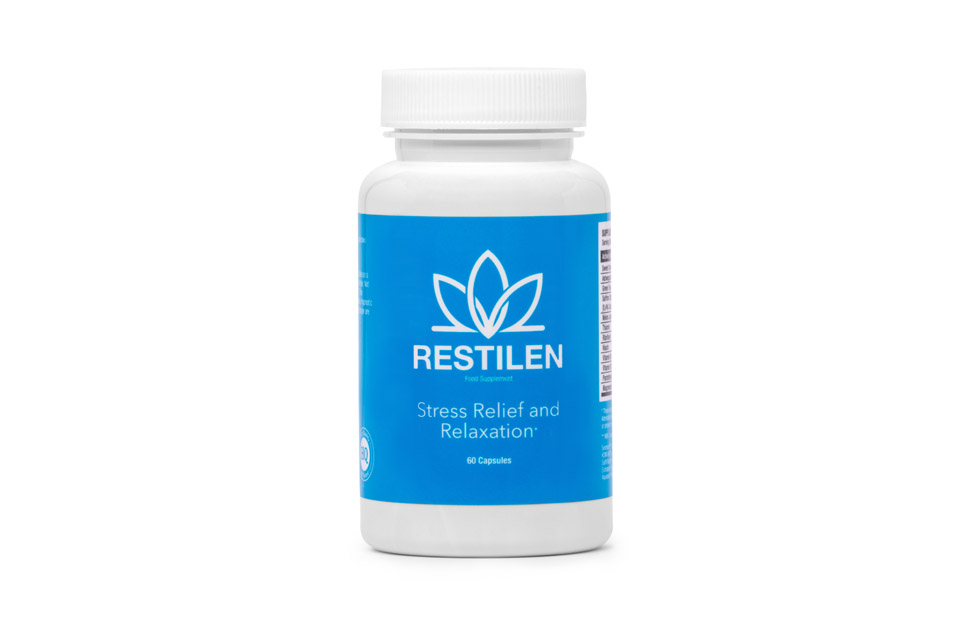
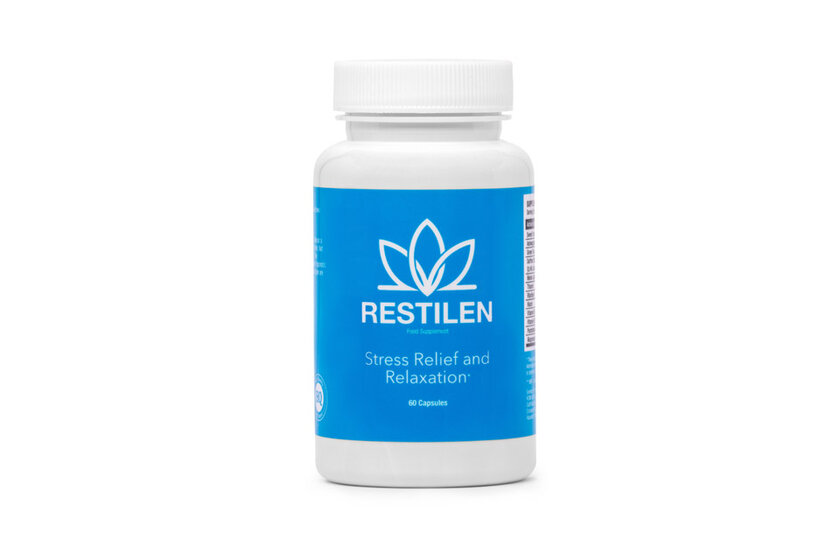
| Aquamin™ (marine multi-mineral) | Plant-source magnesium within a mineral complex | Generally good | Restilen's form — respectable identity, but 75 mg is 75 mg (see audit) |
Read the elemental number, always: "magnesium glycinate 500 mg" is not 500 mg of magnesium (the elemental fraction is roughly a seventh of the compound's weight for glycinate). Labels that print elemental magnesium are doing you a service; labels that print compound weight beside a 300 mg trial claim are doing themselves one.
Profile Verdicts: Five Readers, Five Answers
The exhausted striver — workload high, sleep short, afternoons collapsing: rhodiola's trial populations (physicians on night duty, students in exams) are your portrait. And its 2–4 week fatigue window matches your complaint. Verdict: rhodiola at 200–400 mg, morning — after the honest preliminary that no adaptogen repays a sleep debt indefinitely.
The tense ruminator — body wound tight, mind replaying the day at 2 a.m.: ashwagandha's file (cortisol reduction, anxiety-score improvements, evening profile) is the closest map, with the marker-vs-feeling caveat taped to it. Verdict: ashwagandha 300–600 mg, evening, judged at 8 weeks on sleep and tension scores. The depleted modern eater — refined diet, high caffeine, cramps and tension headaches in the mix: you are the magnesium loop's textbook member.
And the cheapest experiment in this article is yours. Verdict: dietary audit first; glycinate at a real elemental dose second; expect the loop, not a transformation. The flat, grey striver — stress with the colour drained out of it: saffron's subclinical-mood trial population is the match. And its 30 mg discipline makes the trial clean to run.
Verdict: saffron 30 mg for 6–8 weeks — with the standing instruction that if flat becomes persistent or dark, the next step is clinical, per the safety guide. The situational stressor — fine generally, undone by presentations, flights and deadlines: theanine's acute, honest, expectancy-friendly nudge is proportionate to your problem in a way no 8-week adaptogen is. Verdict: theanine 200 mg, an hour before, and the tea-break ritual unashamedly included.
Stacking the Three: What Combination Logic Survives Scrutiny
Readers will combine these whatever we write, so the combination gets the same grading discipline. Rhodiola + ashwagandha (morning + evening) is the classic adaptogen stack: mechanistically complementary on paper, never trialled together. And guaranteed to destroy attribution — if month two feels better, you own two subscriptions and no knowledge.
Sequence them instead (one full trial window each) and the stack, if you still want it, is built from ingredients that individually earned their place. Either adaptogen + magnesium is the defensible pair: different layers (modulation + repletion), no known collisions.
And magnesium's pre-test (the dietary audit) tells you whether its half of the stack is even addressed to you. All three + saffron + theanine is, of course, a description of the modern stress formula — Restilen minus ashwagandha, roughly — and it inherits the audit problem in full: five plausible mechanisms at fractional doses, zero combination trials.
And a monthly price exceeding any single studied intervention. The stacker's rule that survives this article: combine only ingredients that passed their solo trials for you, at their solo doses. And let the total cost argue against you honestly.
The Marker-vs-Feeling Problem (Why Your Cortisol Result Isn't the Point)
One honesty box governs this whole comparison, because every ingredient in it is sold on biomarkers. Stress is a felt condition that happens to have hormonal correlates. A supplement can move the correlate without moving the condition. Ashwagandha's pooled split (cortisol down, perceived stress statistically unmoved in one analysis) is the documented example, rhodiola's cortisol datum rests on one trial.
And the only ingredient whose trial measured both sides cleanly in this set, Serenzo, measured them without a placebo (see the audit). The discipline: choose ingredients by trials whose primary outcomes were symptoms you recognise, use biomarkers as supporting evidence, and run your own judgement on symptom scores recorded on paper.
A calmer cortisol curve attached to an equally miserable month is a lab improvement, not a life one — and you are buying the life one.
The Combined-Formula Audit: What Blending Does to Each Ingredient
| Ingredient | Studied dose | Restilen delivers | Verdict |
|---|---|---|---|
| Rhodiola | 200–600 mg | 100 mg | Below the studied floor |
| Magnesium | ~300 mg elemental | 75 mg | Quarter dose |
| L-Theanine | 100–200 mg | ~49 mg (via 50 mg extract) | Half or less |
| Saffron | 28–30 mg | 30 mg | Exact |
| Serenzo | ~500 mg (pilot) | 500 mg | Exact — to the weakest study |
| Ashwagandha | 300–600 mg | Absent | The category leader isn't in the formula |
This is not an argument that blends cannot work — synergy is possible in principle — it is the observation that no blend in this category has been trialled as a blend, so a formula's evidence is borrowed ingredient by ingredient. And the borrowing only works at the borrowed doses. Restilen (6.6/10 in our review) is, by this standard, two exact matches carrying three under-doses.
Still the most honest arithmetic in its wave, and still a different intervention from any row of the master table used alone at full dose. Decide which bet you are making — one ingredient at its studied dose, or a portfolio of fractions — and make it with the table open.
Cost per Studied Month: the Comparison Nobody Prints
Divide shelf prices by dose fidelity and the category inverts once more. Magnesium glycinate at a full 300 mg elemental month is typically the cheapest intervention in the master table. And the only one whose target population can be identified free, by dietary audit. Theanine at 200 mg is inexpensive and its acute use means a bottle lasts months of occasions rather than weeks of routine.
Ashwagandha and rhodiola at full studied doses of standardised extracts sit in the middle band — real money, honestly spent if the pattern matches. Genuine standardised saffron is the premium single ingredient, for raw-material reasons no formulator can evade.
And the blended formula — Restilen at $59.99 — costs more than any single studied intervention it fractionally contains, which is the cleanest statement of what blends sell: breadth and convenience, priced above depth. There is no scandal in that trade when it is made knowingly. This article exists so that it is.
Frequently Asked Questions
Rhodiola or ashwagandha — which is better for stress?
Different patterns: rhodiola for fatigue-dominant stress (morning), ashwagandha for tension-dominant stress (evening). Ashwagandha's evidence base is deeper; rhodiola's onset is faster. Neither is "better" outside the pattern match.
Can I take magnesium with an adaptogen?
Generally yes — magnesium's deficiency-correction role doesn't collide mechanistically with adaptogens, and it has the mildest interaction file of the three. Kidney disease and antibiotic spacing are its governing cautions (safety guide).
Which magnesium form is best for stress?
Glycinate for tolerance and absorption; citrate as the all-rounder. Avoid oxide for repletion purposes — it is poorly absorbed. Judge by elemental milligrams.
Why do formulas contain less than the studied doses?
Cost, capsule space and label marketing: five famous names at fractions read better than one ingredient at full dose. The audit table above shows the arithmetic; whether fractions add up to an effect is untested for every blend in the category.
What if I can only buy one?
Match your pattern from the master table, buy that ingredient alone at its studied dose from a label that prints it. And run the four-week fair trial from our roundup.
Last reviewed: October 2026. This article is educational and is not medical advice.
