
- Quick Answer
- First, the Diagnosis: Why "I Eat So Much" Is Usually Wrong
- The Calorie Maths, Worked
- The Appetite Problem Is Real — Solve It Mechanically
- Mass Gainers, Priced Against Food
- Training for the Skinny Beginner: Where the Calories Go to Work
- A Sample Day at ~2,700 kcal (the 65 kg Example, Completed)
- Creatine: the One Supplement That Earns Its Paragraph
- And the Herbal "Bulking" Formulas? The Bulk Extreme Audit in Brief
- The Ectomorph Label, Retired
- Frequently Asked Questions
- What is the best supplement for a skinny guy to gain muscle?
- Why can't I gain weight even though I eat a lot?
- How many calories should a skinny guy eat to gain muscle?
- Are mass gainers worth it?
- Will a testosterone booster help a skinny guy gain?
- Read This Next
Disclosure: This article contains affiliate links. If you buy through them, we may earn a commission at no extra cost to you. It never changes our conclusions.
Quick Answer
For a skinny guy who "eats a lot and gains nothing", the supplement question is almost always a calorie question in disguise. Muscle at natural rates needs a sustained surplus of roughly +300–500 kcal/day and protein near 1.6 g/kg.
Self-described hardgainers who track honestly typically discover they eat far less than they believe — big weekend meals averaging out against skipped weekday breakfasts.
So the honest ranking is: (1) tracked food, (2) liquid calories and calorie density tactics, (3) creatine (the one supplement with real evidence for the goal), (4) a mass gainer only as a convenience calorie vehicle — priced below against the homemade equivalent — and (5) herbal "bulking" formulas like Bulk Extreme (5.3/10), which contain no calories at all and therefore cannot fix the actual problem, whatever their ingredient lists promise.
First, the Diagnosis: Why "I Eat So Much" Is Usually Wrong
The hardgainer self-diagnosis survives because it is almost never tested.
Studies that put self-reported intake under measurement — and every experienced coach's intake audits — converge: people systematically over-report what they eat, and lean young men with physical jobs, high NEAT (fidgeting, walking, standing all day) and irregular meal patterns are the demographic most likely to be running a deficit dressed as a surplus.
The metabolism piece is real but modest: resting metabolic rates vary between individuals by a few hundred kilocalories, not the thousands the "fast metabolism" story needs. The bigger variable is unconscious activity, which can burn a meal a day without ever feeling like exercise.
The test is free and takes two weeks: weigh your food, log everything, compare the average against your maintenance estimate (bodyweight in lb × ~15–16 kcal as a starting guess, adjusted by the scale's verdict). Nearly every reader who runs that test discovers the gap his supplement budget was trying to paper over.
If two honest tracked weeks at a true +400 kcal surplus produce no upward weight trend, then — and only then — the conversation moves to medical causes (thyroid, malabsorption, diabetes screening), which a blood panel addresses better than any product.
The Calorie Maths, Worked
| Step | Example: 65 kg skinny beginner | Your number |
|---|---|---|
| Maintenance estimate | 65 kg ≈ 143 lb × 15–16 ≈ 2,150–2,300 kcal | Bodyweight (lb) × 15–16, then verify against 2 weeks of scale trend |
| Gaining target | Maintenance + 300–500 ≈ 2,500–2,750 kcal/day | +300 to start; +500 only if 3 weeks show no trend |
| Protein | 1.6 g/kg ≈ 105 g/day | 1.6 × bodyweight (kg) |
| Expected gain at that surplus | Total ~0.9–1.4 kg/month, of which muscle ~0.65–1.0 kg (the models) | Faster than this = mostly fat; slower = surplus is fictional |
| The cheap 500 kcal | 1 litre whole milk ≈ 640 kcal, 33 g protein, pennies per day | The GOMAD insight without the full gallon: liquid calories bypass satiety |
Read the last row twice: the single most effective "supplement" for this population is a food-delivery format — liquid, calorie-dense, cheap — and every commercial product in this article is, functionally, an attempt to sell you that row back at a markup.
The Appetite Problem Is Real — Solve It Mechanically
Grant the objection: at some point, eating more is genuinely hard — satiety is a physiological signal, not a character flaw. The mechanical fixes outperform willpower. Liquid calories: shakes and milk deliver 500–800 kcal without triggering the fullness of the same calories chewed.
Calorie density: cooking oils, nut butters, cheese, dried fruit — foods where 100 g carries 400–600 kcal — added to meals you already eat. Frequency and anchoring: three meals plus two scheduled snacks, eaten by the clock rather than by appetite, because appetite is the broken instrument. Breakfast specifically: the skipped meal in nearly every hardgainer audit.
A 700 kcal breakfast converts the day's maths from heroic to routine. Post-workout window realism: not a magic anabolic hour, just a reliable anchor for a shake you would otherwise forget. None of this is supplement advice. All of it outperforms supplement advice for this reader, which is why it is in this article first.
Mass Gainers, Priced Against Food
| Typical commercial gainer | Homemade equivalent | |
|---|---|---|
| Per serving | ~1,000–1,250 kcal, 40–60 g protein, mostly maltodextrin + whey | Whole milk 500 ml + oats 80 g + banana + peanut butter 2 tbsp + whey scoop ≈ 950–1,050 kcal, ~55 g protein |
| Cost per 1,000 kcal | Commonly 2–4× the homemade route | The baseline |
| Ingredient honesty | Labelled "protein blends" can protein-spike; sugar content varies wildly | You watched yourself make it |
| When it wins | Travelling, no kitchen, genuine convenience constraint | Everywhere else |
A gainer is not a scam — it is bottled surplus, and surplus is the goal — but it is the most expensive way to buy flour-and-milk calories ever devised, and its "muscle matrix" additions (a gram of creatine here, a vitamin dusting there) exist to justify the markup.
If you buy one, buy it as discounted convenience, check its protein-per-100-kcal (the honest are mostly carbohydrate — which is fine, surplus is the point — but should be priced as carbohydrate), and never let it replace the tracked-food diagnosis above.
Training for the Skinny Beginner: Where the Calories Go to Work
Surplus without stimulus becomes fat. The training half of the equation deserves the same concreteness. Programme shape: three to four sessions weekly built on progressive compound movements (squat and hinge patterns, presses, rows) with a written progression — the stimulus that tells surplus calories to become contractile tissue rather than storage.
Volume honesty: more is not better past the point of recoverable progression.
The skinny beginner's instinct to train six days and add cardio "for fitness" rebuilds the deficit in the gym that the kitchen just fixed — conditioning work is healthy and should be kept modest and accounted for in the calorie target, not banned, but every uncounted 400 kcal session is a shake that never happened.
Progression as the scoreboard: when loads rise month to month on the main lifts and the scale rises at the tabled rate, the system is working at the speed biology allows (the models) When either stalls, the audits in that article — calories, programme, recovery, in that order — find the leak faster than any product search.
A Sample Day at ~2,700 kcal (the 65 kg Example, Completed)
| Meal | Contents | Approx. kcal / protein |
|---|---|---|
| Breakfast (the previously skipped meal) | Oats 80 g cooked in whole milk 300 ml, peanut butter 1 tbsp, banana | ~750 kcal / 25 g |
| Lunch | Rice, chicken thigh, vegetables in oil — a normal generous plate | ~800 kcal / 45 g |
| Shake (post-training or afternoon) | Whole milk 500 ml, whey scoop, oats 40 g | ~600 kcal / 50 g |
| Dinner | Eggs or fish, potatoes/rice, vegetables, oil | ~550 kcal / 30 g |
| Day total | ~2,700 kcal / ~150 g protein |
Nothing in that day is exotic, expensive or sold in a tub with a lightning bolt — which is rather the point of this article. The day clears the calorie target with margin, overshoots the 105 g protein requirement comfortably, and costs less than most readers' current supplement spend.
Print it, run it for two tracked weeks, and let the scale adjudicate the "fast metabolism" hypothesis.
Creatine: the One Supplement That Earns Its Paragraph
Creatine monohydrate, 3–5 g/day, is the exception that disciplines this whole article: hundreds of trials, a consistent small improvement in strength and lean-mass gains alongside training, an excellent safety record, and a price of pennies a day.
For the skinny beginner it carries a second, psychological benefit — the first 1–2 kg of intracellular water it brings in the first weeks is visible momentum while the real tissue accrues at the models' rates. No loading phase is needed. Any time of day.
Monohydrate specifically (the studied, cheapest form — every premium variant is a markup on a solved problem). Full placement of creatine among all muscle supplements is in our muscle-supplements guide.
And the Herbal "Bulking" Formulas? The Bulk Extreme Audit in Brief
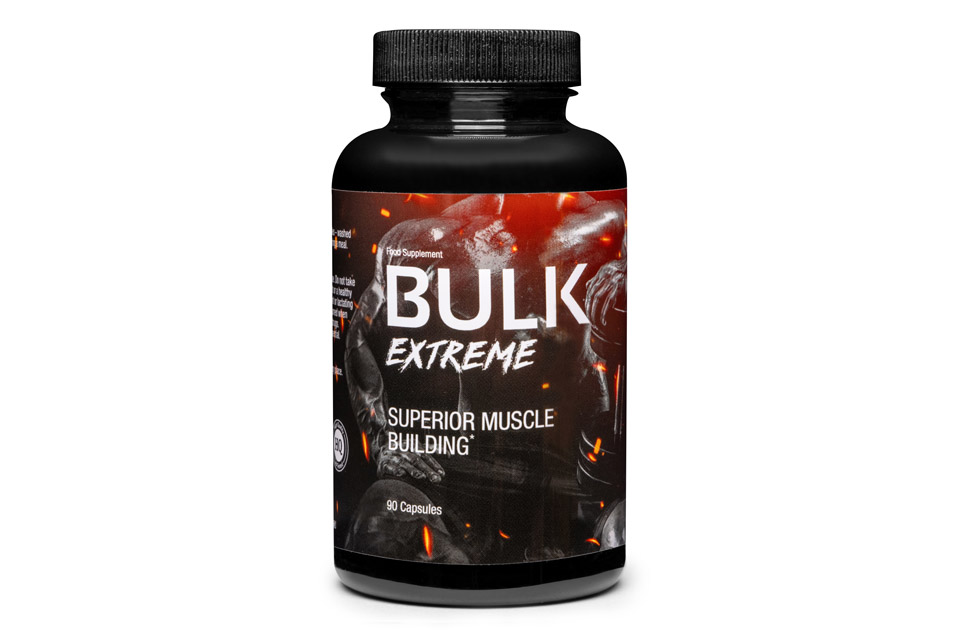
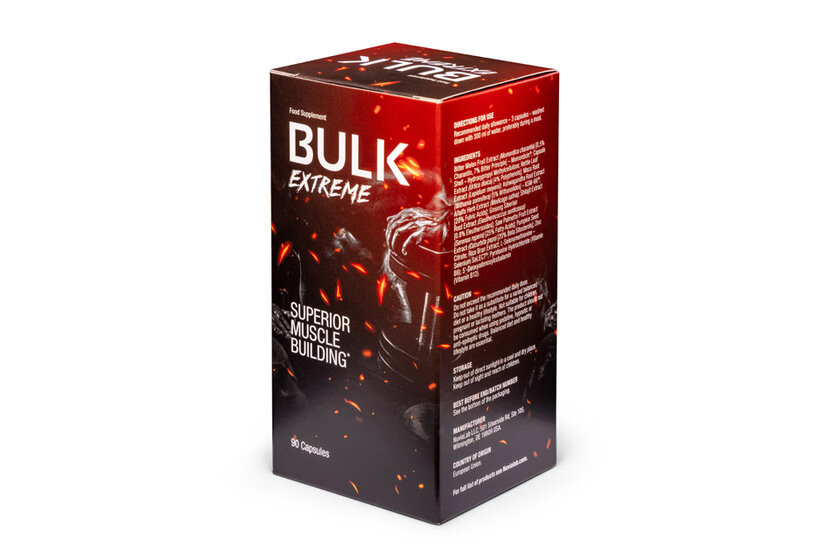
Bulk Extreme is marketed directly at this reader, so its arithmetic gets stated plainly: the formula contains zero calories.
Its ingredients — bitter melon extract, nettle, maca, beetroot extract, shilajit (150 mg, a third of its trial dose, audited here), ginseng, saw palmetto — have no demonstrated effect on appetite or energy intake in humans, no muscle-outcome trials, and a maker's "natural SARM" framing we reject in the alternatives audit.
A skinny guy's problem is an energy deficit measured in hundreds of kilocalories a day. A capsule cannot fill it, and money spent pretending otherwise is money not spent on the milk, oats and peanut butter that demonstrably can.
Where the formula might earn a modest place — a general training-support blend for someone whose calories are already handled — its own score says how modest: 5.3/10. For this article's reader, it ranks below the breakfast he is skipping.
The Ectomorph Label, Retired
A closing word on the identity that organises this market. "Ectomorph" comes from a 1940s body-type psychology that modern physiology does not use: there are no fixed somatotype destinies, only frames, appetites, activity levels and habits — every one of which, except frame, is adjustable.
The label's function in marketing is to convert a solvable arithmetic problem (Section 2) into an identity that needs a product. The readers who gain are the ones who demote the identity to a description of their starting point and run the maths for two tracked weeks.
That is the whole secret, and it costs one litre of milk a day.
Frequently Asked Questions
What is the best supplement for a skinny guy to gain muscle?
After tracked food and a real surplus: creatine monohydrate. A mass gainer is acceptable as bottled calories if convenience demands it, priced against the homemade shake in our table. Herbal bulking formulas contain no calories and cannot fix an energy deficit.
Why can't I gain weight even though I eat a lot?
Almost always: the average is lower than the memory (untracked intake over-reports), and unconscious activity burns the rest. Two weeks of weighed, logged food resolves the question — or escalates it correctly to a medical workup if a real surplus truly doesn't move the scale.
How many calories should a skinny guy eat to gain muscle?
Maintenance (bodyweight lb × 15–16) + 300–500 kcal, with protein at ~1.6 g/kg. Expect ~1 kg/month total early on. Adjust by the 3-week scale trend, not by appetite.
Are mass gainers worth it?
As convenience, sometimes. As value, rarely — the homemade equivalent delivers the same calories and protein at a fraction of the cost. Check protein per 100 kcal and price them as the carbohydrate they mostly are.
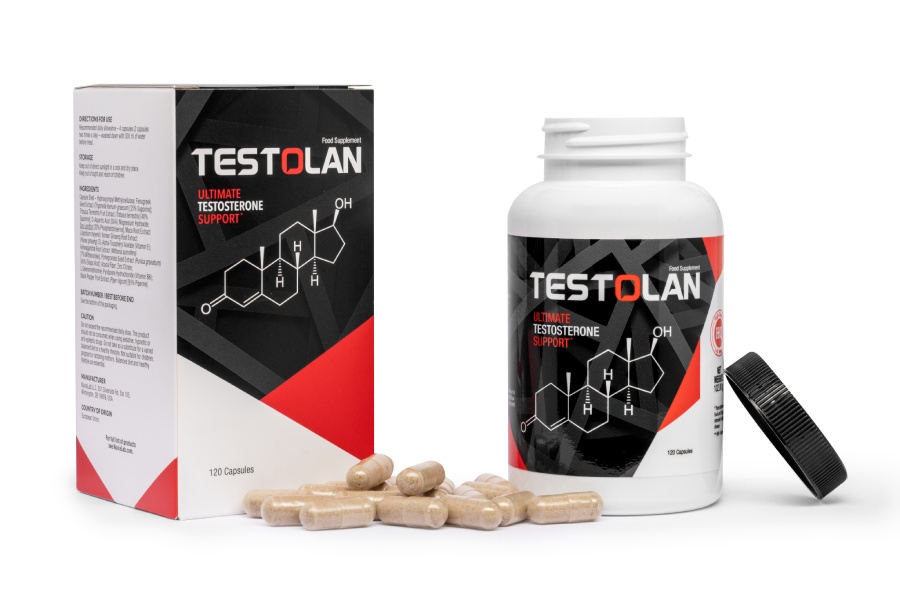
Will a testosterone booster help a skinny guy gain?
No — the deficit is caloric, not hormonal, in the overwhelming majority of young lean men. And booster effects even where real do not build muscle. See our booster verdict.
Last reviewed: October 2026. This article is educational and is not medical advice.
