
- Quick Answer
- Two Products Wearing One Word
- The Studied Breath Strains, Named
- What a Swallowed Gut Strain Can and Cannot Do
- How to Read a Probiotic Label for Breath
- The Verdict for This Label
- Frequently Asked Questions
- Which probiotic strains have actually been studied for bad breath?
- Can a swallowed probiotic capsule still help my breath?
- Is 2 billion CFU a high dose?
- Why does Dentolan not need refrigeration?
- If oral probiotics work, do they replace brushing and tongue cleaning?
- Read This Next
Disclosure: This article contains affiliate links. If you buy through them, we may earn a commission at no extra cost to you. It never changes our conclusions.
Quick Answer
One word, two products. Oral probiotics are lozenges designed to dissolve slowly in the mouth and seed the tongue and throat. Gut probiotics are capsules designed to be swallowed whole and deliver their strains to the intestine.
The bad-breath evidence belongs entirely to the first kind. The trials that measured breath odour used mouth lozenges, held in the mouth, with strains chosen because they colonise oral tissue.
A swallowed capsule passes through the mouth in seconds. Whatever its strain does further down, it does not take up residence on the tongue — and the tongue is where most bad breath is made.
The base rate matters here. Sources put the oral share of halitosis cases at roughly 80–90% of cases, compared with a small minority arising outside the mouth. Delivery site is not a detail. It is the whole story. Dentolan scores 5.4/10 in our review.
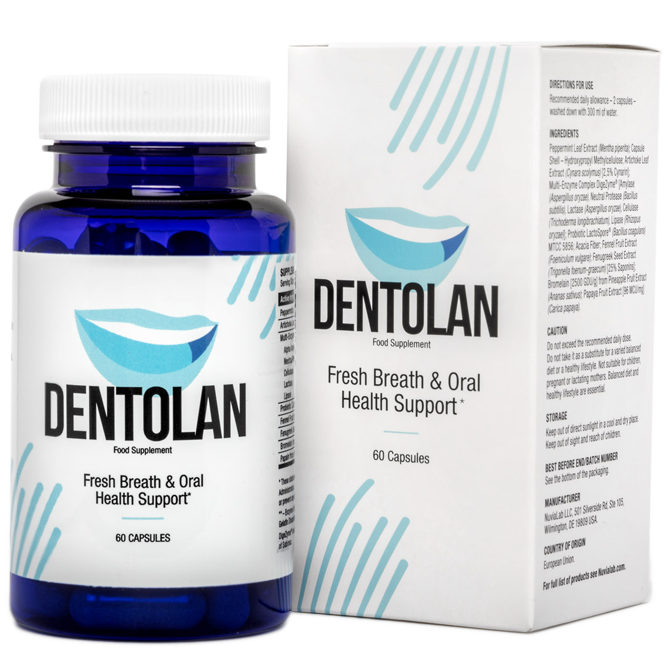
Our Recommendation — Dentolan
Score: 5.4/10 · Best for: adults whose breath worsens with meals and heavy digestion, who want every ingredient amount and the probiotic's strain printed on the label. Main caution: most bad breath is oral in origin, not digestive — and no money-back guarantee is published. Fair trial: one bottle — one month — judged honestly, with dental causes ruled out before a second.
Two Products Wearing One Word
"Probiotic" describes a delivery promise as much as a bacterium. The word tells you a product contains live microorganisms. It tells you nothing, on its own, about where those organisms are meant to end up.
That destination is decided by format. A lozenge, chewable tablet, gum or rinse keeps bacteria in contact with the mouth for minutes. A swallowed capsule keeps them in contact with the mouth for the time it takes to drink a glass of water.
The difference is not cosmetic. Bacteria colonise surfaces they can attach to, in environments they can tolerate, given time to settle. A lozenge is engineered around all three conditions. A capsule is engineered around surviving somewhere else entirely.
Manufacturers know this, which is why oral probiotic products are almost never sold as plain swallowable capsules. The lozenge format is the product. Remove it, and the same strain name describes a different intervention.
This is also why strain names alone cannot settle a buying question. Two products can print the same species on the label and deliver it to different organs. For breath, the organ that matters is the mouth.
Shoppers rarely get told this at the shelf. Labels lead with strain names, colony counts and the word "probiotic" in large type. The delivery form — the fact that decides the category — sits in smaller print.
So the first reading skill this article teaches is simple. Before asking which strain a breath product contains, ask where the product puts it. If the answer is the stomach, the breath trials are not its evidence.
Contact time is the quiet variable behind the format divide. A lozenge may sit against the tongue and palate for several minutes as it dissolves. A capsule crosses the same surfaces in a second or two, washed down and gone.
Residence matters because the mouth is a flowing environment. Saliva constantly rinses oral surfaces and carries loose bacteria away to be swallowed. A strain given minutes to attach has a chance; a strain in transit has almost none.
The mouth is also a defended environment. Resident bacteria occupy the attachment sites, and newcomers compete for a place rather than simply arriving at one. Oral strains were selected for exactly this contest, on exactly this surface.
None of these barriers is a flaw in capsule design. Capsules are optimised for a different contest — acid survival on the way to the intestine. Each format is competent at its own job and unequipped for the other's.
The Studied Breath Strains, Named
The breath literature is small, and its cast is specific. The 2025 systematic review by Passadakis and colleagues collected six randomised trials with 360 participants in total, and the strains tested were oral strains, delivered orally.
The best-known are Streptococcus salivarius K12 and M18. S. salivarius is a normal resident of a healthy mouth and tongue. The K12 and M18 strains were selected precisely because they colonise oral tissue and compete there.
K12's record began with work by Burton and colleagues in 2006, who tested it specifically for oral malodour. That study reached the 2025 review's reference list because it asked the right question in the right place: the mouth.
In the review's tally, five of the six trials reported significant reductions in volatile sulfur compounds — the gases that make breath smell — compared with their control conditions. Organoleptic scores, meaning trained-judge smell ratings, improved in the K12 trials.
Weissella cibaria, another mouth-adapted species delivered by lozenge, also showed organoleptic gains in the reviewed trials. Again, the pattern is consistent: oral species, oral delivery, oral outcomes.
Lactobacillus reuteri appears in probiotic discussions too, but its record is centred on gum and plaque outcomes rather than breath scores. Naming it in a breath context borrows credibility its trials did not earn for odour.
More recently, a 2025 randomised trial tested oral Lactobacillus gasseri and Lactobacillus paracasei over twelve weeks. Whatever its findings add to the field, it follows the same design rule: strains chosen for the mouth, delivered to the mouth.
Read the cast list as a whole and one absence stands out. None of the studied breath strains is Bacillus coagulans. Not in the 2025 review, not in the earlier trials it gathered, not as a lozenge or in any other form.
That absence is not a technicality. Probiotic effects are strain-specific in the literature — researchers insist on strain codes because one strain's results do not transfer to its cousins. A gut strain cannot inherit a tongue strain's trial record.
There is also honest disagreement in this literature, and it strengthens the delivery point rather than weakening it. A 2022 meta-analysis pooled four trials with 283 participants and found no significant overall effect on breath scores, with a p-value of 0.53.
Two careful reviews, reading overlapping small trials, reached different pooled conclusions. What neither review disputes is the design of the underlying studies. Every trial in both analyses delivered its strains to the mouth.
So even the most generous reading of the probiotic-breath evidence is a reading about lozenges. The debate is whether oral delivery works well. Nobody in this literature is debating swallowed capsules, because nobody trialled them for breath.
Duration tells the same story. The reviewed trials ran for weeks — commonly two to twelve weeks of daily lozenge use — because colonisation is gradual. A strain needs repeated oral exposure before its presence in the mouth is measurable at all.
And colonisation, even when achieved, is usually temporary. In several reviewed studies, effects persisted for a time after dosing stopped, but the pattern across the literature is that benefits depend on continuing use. The mouth does not keep the strain forever.
That has a direct consequence for marketing timelines. The maker of this wave's breath product promises, in its own words, "ultra-fresh breath in just a few days". Set against trial windows measured in weeks, that is a maker claim, not a literature finding.
It also disciplines what a fair expectation looks like. Even the trialled lozenges — right strain, right site, right format — produced modest, contested effects over weeks. Anything promising more, faster, from the wrong delivery site is promising beyond the record.
What a Swallowed Gut Strain Can and Cannot Do
Dentolan's probiotic is LactoSpore®, a branded preparation of Bacillus coagulans MTCC 5856, at 2 billion CFU per daily serving. Credit first: the panel names the strain to code level, which many labels never do.
B. coagulans is a spore-forming bacterium. In spore form it survives heat, shelf storage and stomach acid far better than fragile live cultures. That hardiness is its genuine selling point — as a gut probiotic.
The same spore biology answers a common label question: why does this product need no refrigeration? Because the organism travels dormant inside a protective spore coat and germinates later, in the intestine. Shelf stability is a gut-delivery feature.
Its evidence file matches that destination. B. coagulans has been studied for digestive outcomes — irritable-bowel-type symptoms and diarrhoea-type outcomes are where its monograph entries and trials concentrate. Those are intestinal questions, tested in the intestine.
Now place that file beside the breath problem. The large majority of halitosis is oral in origin — tongue coating, gum disease and dry mouth lead the cause list. A strain germinating in the gut does not reach the tongue's back third.
Could a healthier gut indirectly freshen breath? For the small minority of cases with a genuine digestive pattern, that is at least a coherent question. For the typical case — an oral cause — the route never intersects the problem.
No oral-colonisation claim survives this route, and to be fair, Dentolan's own panel does not make one. The claim problem arises when shoppers transfer the lozenge literature onto any label printing the word "probiotic". The transfer is the error.
Spore survival, then, is real and irrelevant at once. The organism demonstrably reaches the gut alive. Reaching the gut alive was never the requirement for acting on tongue coating.
It is also worth stating what a swallowed strain cannot be blamed for. As a gut probiotic, MTCC 5856 is a legitimate, named, studied ingredient. The criticism in this article is not of the strain. It is of the category it has been placed in.
How to Read a Probiotic Label for Breath
Start with the strain code. A serious label prints genus, species and a strain designation — K12, M18, MTCC 5856. A label printing only a species name is asking you to credit evidence that belongs to specific strains, not species generally.
Second, check the delivery form, and be literal about it. Does the product dissolve in the mouth, or is it swallowed? Lozenges, gums and rinses keep strains where breath is made. Capsules taken with water do not, whatever the front of the box implies.
Third, put the CFU count in context — carefully. Colony-forming units count live organisms at manufacture or expiry, and counts are not comparable across strains. A hardy spore former and a fragile lactobacillus play by different arithmetic.
Readers ask whether 2 billion CFU is a lot. Against typical retail products in this strain's own gut-probiotic category, Dentolan's 2 billion CFU sits at the modest end of what shelves commonly offer. It is an ordinary gut dose, neither token nor generous.
But notice what that comparison cannot do. Ranking a swallowed gut dose against other gut doses says nothing about breath. Ten times the CFU would still arrive at the intestine. Dose cannot repair a delivery-site mismatch.
Fourth, ask what outcome the strain was trialled for. A strain with digestive trials behind it has digestive evidence. If the box is sold for breath and the trials are for bloating, the label is borrowing a file from another shelf.
Finally, check the claim language against the format. "Supports oral health" on a lozenge is a testable, site-matched claim. The same words on a swallowed capsule deserve a question the label rarely answers: how would it get there?
These five checks take under a minute at a shelf or a product page. They separate the small, real breath literature from the much larger crowd of products standing near it.
One more check belongs on the list: who benefits from the ambiguity. The shared word "probiotic" lets a gut product stand in the shopper's mind beside lozenge trials it had no part in. Ambiguity, in this category, is commercially useful.
That is why precise labelling deserves the credit this article gives it. A panel that prints a strain code and a CFU count hands the reader the tools to classify the product correctly — even when the correct classification undercuts the sales story.
The Verdict for This Label
Graded as what it is, Dentolan's probiotic line is unusually honest. The strain is named to code level, the count is printed, and the organism is a real gut probiotic with a digestive evidence file behind its species.
Graded as a breath ingredient, it has no file at all. No trial of B. coagulans for breath exists, in any delivery form. The breath trials belong to oral strains in lozenges, and even those reviews disagree on the pooled effect.
That is the position set out in full in our Dentolan review: a completely printed panel, a named strain, and a delivery route aimed at the minority cause of the problem the product is sold for.
The fairest summary is a division of credit. As labelling, this is how a probiotic should be declared. As breath evidence, the label's most scientific-looking line is the one with nothing behind it for this use.
If breath is your reason for buying, the evidence points to a short list: oral hygiene first, tongue cleaning, dental causes treated — and, if you want a probiotic, a lozenge carrying a trialled oral strain.
A swallowed gut capsule may still suit someone whose goal is digestive. Just do not let the word "probiotic" convince you it was ever tested on your breath. It was not.
Our Recommendation — Dentolan
Score: 5.4/10 · Best for: adults whose breath worsens with meals and heavy digestion, who want every ingredient amount and the probiotic's strain printed on the label. Main caution: most bad breath is oral in origin, not digestive — and no money-back guarantee is published. Fair trial: one bottle — one month — judged honestly, with dental causes ruled out before a second.
Frequently Asked Questions
Which probiotic strains have actually been studied for bad breath?
The trialled strains are oral ones delivered as lozenges: Streptococcus salivarius K12 and M18, and Weissella cibaria, with a 2025 trial adding oral L. gasseri and L. paracasei. No Bacillus coagulans strain appears in the breath trial record.
Can a swallowed probiotic capsule still help my breath?
There is no trial showing that it does. Most halitosis — sources put the oral share at 80–90% of cases, compared with a small extra-oral minority — starts in the mouth. A swallowed strain transits to the gut and does not colonise the tongue.
Is 2 billion CFU a high dose?
It is a modest, ordinary dose among typical retail products using this gut strain. More importantly, CFU counts are not comparable across strains, and no CFU count changes the delivery site. For breath, the format matters more than the number.
Why does Dentolan not need refrigeration?
Because LactoSpore® is a spore former. B. coagulans travels in a dormant, heat-resistant spore state and germinates in the intestine, so shelf storage is fine. That stability is a gut-delivery advantage; it says nothing about the mouth.
If oral probiotics work, do they replace brushing and tongue cleaning?
No. The reviews describe probiotics as an adjunct alongside hygiene, not a replacement for it. The strongest results in this literature come when lozenges are added to cleaning routines — and the underlying dental causes still need treating directly.
Last reviewed: October 2026. This article is educational and is not medical advice.
