
- Quick Answer
- How You'd Tell: The Pattern That Points Below the Neck
- The Genuine GI Routes, Graded
- GERD: the commonest real route
- H. pylori: the testable one
- SIBO: the fashionable claim, honestly graded
- The rare structural causes, in one passage
- The Picture That Is Mostly Myth
- Where a Digestive Capsule Fits — and Where It Can't
- Frequently Asked Questions
- How do I know if my bad breath comes from my stomach?
- Can acid reflux cause bad breath?
- Does treating H. pylori improve bad breath?
- Is bad breath from the stomach common?
- Can a digestive supplement fix stomach-based bad breath?
- Can stress or poor digestion alone cause bad breath?
- What should I do first if I suspect a stomach cause?
- Read This Next
Disclosure: This article contains affiliate links. If you buy through them, we may earn a commission at no extra cost to you. It never changes our conclusions.
Quick Answer
Sometimes — and rarely. Review literature on halitosis puts the oral share at 80–90% of cases in people with genuine bad breath, and gastric causes at roughly 1% of cases in the same literature.
A genuine stomach pattern does exist. It usually travels with reflux symptoms, and the one gut cause with a simple test and a real treatment — H. pylori infection — belongs to a doctor, not a capsule.
So the order of operations matters: rule the mouth out first, then look below the neck. Best for: readers who have brushed, flossed and scraped, and still wonder. Dentolan scores 5.4/10 in our review.
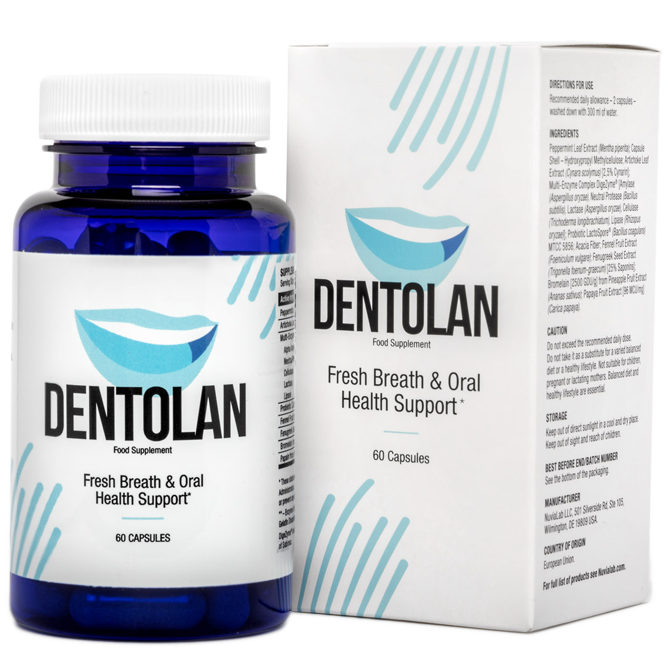
Our Recommendation — Dentolan
Score: 5.4/10 · Best for: adults whose breath worsens with meals and heavy digestion, who want every ingredient amount and the probiotic's strain printed on the label. Main caution: most bad breath is oral in origin, not digestive — and no money-back guarantee is published. Fair trial: one bottle — one month — judged honestly, with dental causes ruled out before a second.
How You'd Tell: The Pattern That Points Below the Neck
Pattern recognition is not self-diagnosis, and this section is not a test you pass or fail. It is a way of deciding which professional to see first, and in which order.
The first element is persistence despite genuinely good oral care. Breath that survives weeks of brushing, interdental cleaning, tongue cleaning and a professional scale-and-polish has earned a wider search than breath that was never properly treated.
The second element is taste. A sour or metallic taste that returns through the day, especially alongside the odour, points toward material arriving from below rather than bacteria resident in the mouth.
The third element is company. Breath that travels with heartburn, regurgitation, bloating or nausea is behaving like a digestive symptom. Breath that travels with bleeding gums and a coated tongue is behaving like a dental one.
Timing adds a clue. Reflux-pattern breath often worsens after large or late meals, or on lying down. Oral breath is worst on waking and improves, at least partly, after a proper morning routine.
A short symptom diary sharpens the picture before any appointment. Note when the breath seems worst, what you ate, whether you lay down afterwards, and which digestive symptoms kept it company. Patterns emerge on paper that memory blurs.
None of these signs is decisive alone, and several overlap. The MSD Manual's bad-breath page makes the underlying point plainly: gastrointestinal disorders rarely cause bad breath, because the esophagus is normally collapsed.
That collapsed tube is the anatomical fact the whole gut theory must overcome. The stomach is not an open chimney under the mouth. For stomach contents to flavour the breath, something must carry them upward.
Clinicians use one more comparison while sorting this out. Odour that is clearly worse through the mouth points to an oral source; odour worse through the nose points upward, toward the sinuses and nasal passages, instead.
That simple test is why the stomach is rarely the first suspect even in persistent cases. The routes are checked in order of frequency: mouth, then nose and throat, then — only then — the digestive tract.
The Genuine GI Routes, Graded
GERD: the commonest real route
Gastroesophageal reflux disease is that carrier. When the valve at the stomach's entrance relaxes at the wrong moments, acid and partly digested contents wash back into the esophagus — and sometimes reach the mouth.
The NIDDK's page on GER and GERD symptoms describes that backflow plainly: stomach contents coming up into the throat or mouth, leaving a taste of food or stomach acid.
In a study of 132 patients assessed for reflux symptoms, halitosis was reported travelling with heartburn and regurgitation in the same patients. That is co-occurrence — symptoms clustering — and we state it as exactly that, not proof of mechanism.
The plausible mechanism is direct contact. Refluxed material is acidic and carries its own odours, and repeated acid exposure also damages teeth and irritates the throat, which can feed secondary oral causes.
Reflux also has a quieter form. Some people get throat-level symptoms — hoarseness, a lump-in-throat feeling, chronic throat clearing — with little heartburn. Breath changes in that group still follow the reflux, not a separate stomach mystery.
The grading, then: GERD is the commonest genuine stomach-route cause of bad breath, and it is still uncommon next to tongue coating. Its treatment is reflux treatment — a medical conversation, not a breath product.
Notice what that treatment involves: meal timing, weight where relevant, trigger foods, and medicines that reduce acid or reflux episodes. Every effective lever acts on the reflux itself. None is a breath ingredient.
H. pylori: the testable one
Helicobacter pylori is a bacterium that lives in the stomach lining and causes much of the world's gastritis and ulcer disease. Unlike most gut theories, this one has been pooled and measured.
A 2016 meta-analysis in Medicine combined 21 studies covering 5,062 people. It found the odds of halitosis were about 2.85 times higher in H. pylori-positive people than in H. pylori-negative people in those studies.
Read that figure carefully. It is an association across observational studies, with wide confidence intervals — not a statement that the bacterium causes 2.85 times the smell, and not a promise about any individual.
How the bacterium would produce breath odour in people remains unclear. It can generate sulfur compounds in laboratory conditions, and it is associated with the reflux and gastritis patterns above, but the human mechanism is unsettled.
The same meta-analysis found halitosis was less likely after successful eradication therapy than after failed eradication in infected patients. That is genuinely interesting — and it describes a prescription antibiotic course, not a supplement.
Context cuts the other way as well. H. pylori infection is very common worldwide, and most carriers never report a breath problem. An association of this size cannot turn a positive test into a diagnosis of your breath's cause.
Testing itself is straightforward and non-invasive: a urea breath test or a stool antigen test, arranged by a clinician. There is no guesswork discount to be had by skipping it and buying a formula instead.
This is the crucial buying consequence. H. pylori is detectable with a breath or stool test, and treatable with a defined medical regimen. If this is your cause, a capsule purchase delays the one intervention with evidence.
SIBO: the fashionable claim, honestly graded
Small intestinal bacterial overgrowth — SIBO — is the newest entrant in gut-breath marketing. The theory: excess bacteria in the small intestine, including sulfur-reducing species, generate gases that reach the breath.
The honest grade is emerging, not established. Recent hypothesis-stream writing has proposed the connection, but there is no pooled trial evidence linking SIBO treatment to breath improvement in the way the H. pylori literature at least attempts.
SIBO itself is also contested territory: its breath tests are imperfect, its definitions vary, and its symptom list overlaps with common functional gut complaints. Building a breath diagnosis on it stacks one uncertainty on another.
The breath tests used for SIBO measure hydrogen and methane, not sulfur gases. Even a positive SIBO result, on its own terms, does not demonstrate that the small intestine is the source of a mouth odour.
That does not make the idea impossible. It makes it a research question. Products sold as if the question were settled are running ahead of the literature by several years.
The rare structural causes, in one passage
A few structural problems complete the genuine list. A Zenker's diverticulum — a pouch in the throat wall — can collect food that decomposes in place. Gastric stasis, where the stomach empties abnormally slowly, can do something similar below.
Both are uncommon, both usually announce themselves with swallowing difficulty or regurgitation of undigested food, and both are found by imaging or endoscopy. They are named here so readers know they exist — and fenced as rare.
Those accompanying signs are the point. Difficulty swallowing, food returning undigested, or unexplained weight loss alongside breath changes are reasons to see a doctor promptly — not reasons to shop for a stronger digestive formula.
The Picture That Is Mostly Myth
The popular image is of food rotting in the stomach, its fumes rising like smoke from a chimney. Almost every part of that picture is wrong for a healthy digestive system.
A healthy stomach is a strongly acidic, constantly churning, regularly emptying organ. Food does not sit in it fermenting for days. The acid environment suppresses exactly the bacterial overgrowth the myth requires.
The route is closed as well. The esophagus rests collapsed, and the lower esophageal sphincter seals the stomach between swallows. Gas leaves as a belch — an event you notice — not as a continuous perfumed draught.
Odours from digestion do reach the breath, but by two narrower roads: reflux, which physically carries material upward, and the bloodstream, which carries absorbed compounds — garlic's are the famous example — to the lungs.
The belch is the exception that proves the anatomy. A belch does carry stomach gas to the mouth — briefly, audibly, and by a deliberate release of the valve. Ordinary breathing involves no such traffic at all.
The MedlinePlus encyclopedia page on breath odor reflects this ordering in practice: its cause list is led by the mouth, with reflux listed among the diseases, not at the head of the page.
The myth has cousins. "Toxin build-up" and "a sluggish liver" are offered as breath causes in cleanse marketing, without a mechanism that survives the same anatomy lesson: a healthy liver does not vent odours up a sealed esophagus.
Why does the myth persist? Partly because "it comes from your gut" sounds deeper than "your tongue needs cleaning". And partly because an entire product category — digestive breath capsules — is easier to sell against a stomach than against a tongue scraper.
There is also a genuine sensation feeding it. People feel bloating and breath together after heavy meals and connect them. The likelier shared cause is mundane: a big meal, reflux tendency, alcohol, and a dry, coated mouth.
Where a Digestive Capsule Fits — and Where It Can't
Against that graded map, a digestive capsule has a coherent — narrow — logic. If breath truly follows a digestive pattern, then enzymes and a gut probiotic are at least aimed at the right organ system.
Dentolan is the formula built on exactly that logic, and our Dentolan review scores it 5.4/10. Per two capsules it prints peppermint 300 mg, artichoke extract 200 mg, and a 150 mg DigeZyme enzyme blend.
The panel continues with LactoSpore — Bacillus coagulans MTCC 5856 at 2 billion CFU — plus fennel and fenugreek extracts at 100 mg each, and bromelain and papain at 50 mg each. Every amount is stated.
That completeness is the product's real strength. Enzyme activity units are printed, the probiotic is named to strain level, and a buyer can audit the formula — which is more than most of this category allows.
What the panel cannot supply is evidence of effect. No trial of Dentolan, of DigeZyme, or of LactoSpore for bad breath exists. The formula is a plausible answer to an uncommon pattern, untested in that pattern.
And the base rate still governs the purchase: 80–90% of halitosis cases in the review literature are oral in origin, compared with roughly 1% of cases that are gastric. Most buyers of a stomach capsule statistically have a mouth problem.
One ingredient deserves a specific footnote here. The NIDDK's GERD guidance lists mint among the foods and drinks commonly linked to reflux symptoms. A peppermint-led formula is an awkward fit for the one stomach pattern that is genuinely common.
That does not make 300 mg of peppermint extract dangerous, and the panel's dose may behave differently from mint foods. It is the kind of tension an honest review should name rather than smooth over.
The commercial terms complete the picture: $59.99 for one bottle, $30.00 per bottle on the six-bottle package, $12 shipping on every order, and no money-back guarantee published. An untested effect is being sold without a refund route.
The capsule also cannot touch the two graded routes that matter most. It does not diagnose or eradicate H. pylori, and it is not a treatment for reflux — the two stomach patterns with actual interventions behind them.
So the fit is this: a transparently labelled digestive formula for a reader whose oral causes have been properly excluded and whose pattern genuinely points downward — used with the knowledge that its breath effect has never been measured.
What would change this verdict is not a better story but a measurement: a trial of the formula, or of its named enzyme blend or probiotic strain, with breath outcomes in people whose oral causes were excluded first.
Until such a trial exists, the honest description stays narrow — a well-labelled digestive product aimed at an uncommon pattern. Buyers deserve that sentence whole, not the larger claim the category prefers.
For everyone else, the sequence is cheaper and likelier to work: dentist first, tongue and gums treated, then — if the pattern persists — reflux and H. pylori ruled in or out by a clinician.
Our Recommendation — Dentolan
Score: 5.4/10 · Best for: adults whose breath worsens with meals and heavy digestion, who want every ingredient amount and the probiotic's strain printed on the label. Main caution: most bad breath is oral in origin, not digestive — and no money-back guarantee is published. Fair trial: one bottle — one month — judged honestly, with dental causes ruled out before a second.
Frequently Asked Questions
How do I know if my bad breath comes from my stomach?
Look at the pattern, not a single sign. Breath that persists despite thorough oral care, travels with heartburn, regurgitation, bloating or a sour taste, and worsens after meals or lying down points downward. Only testing confirms a specific cause.
Can acid reflux cause bad breath?
Yes — it is the commonest genuine stomach route. Reflux physically carries acidic stomach contents into the esophagus and sometimes the mouth. In a 132-patient reflux study, halitosis travelled with heartburn and regurgitation in the same patients.
Does treating H. pylori improve bad breath?
In the pooled evidence, yes, for infected patients. A 2016 meta-analysis of 21 studies and 5,062 people found halitosis less likely after successful eradication than after failed eradication. Eradication is a prescription treatment that follows a positive test.
Is bad breath from the stomach common?
No. Review literature puts gastric causes at roughly 1% of halitosis cases, compared with 80–90% of cases that are oral in origin. The stomach theory is real but heavily overweighted in marketing relative to its frequency.
Can a digestive supplement fix stomach-based bad breath?
There is no trial evidence that one can. No digestive enzyme blend or gut probiotic — Dentolan's included — has been trialled for breath outcomes. The stomach causes with proven interventions, reflux and H. pylori, are treated medically.
Can stress or poor digestion alone cause bad breath?
Not by the route usually imagined. Poor digestion does not vent odours from a healthy stomach, and stress acts mainly through dry mouth and neglected hygiene. If digestive symptoms and breath arrive together, reflux is the pattern worth discussing with a clinician.
What should I do first if I suspect a stomach cause?
Complete the oral work first: dental examination, professional cleaning, tongue care. If the breath persists with a reflux pattern, see a doctor about GERD assessment and an H. pylori test. That order rules out the 80–90% before chasing the 1%.
Last reviewed: October 2026. This article is educational and is not medical advice.
