
- Quick Answer
- Where the Smell Is Actually Made: Volatile Sulfur Compounds
- Hydrogen sulfide, methyl mercaptan, dimethyl sulfide
- Why the back of the tongue is the perfect factory
- The Oral Causes, in Order of Frequency
- Tongue coating: the largest bacterial reservoir
- Gum disease: pockets below the gumline
- Dry mouth: saliva is the mouth's rinse
- The rest of the mouth: decay, dentures, food traps, smoking, foods
- Morning Breath vs Real Halitosis
- The Non-Oral Minority
- What the Cause Map Means for Any Product Claim
- Frequently Asked Questions
- What is the most common cause of bad breath?
- Can bad breath really come from the stomach?
- Why does my breath smell worst in the morning?
- How can I tell if my breath smells if I can't smell it myself?
- Does cleaning my tongue actually help?
- Can bad breath be a sign of something serious?
- When should bad breath be checked by a professional?
- Read This Next
Disclosure: This article contains affiliate links. If you buy through them, we may earn a commission at no extra cost to you. It never changes our conclusions.
Quick Answer
Most bad breath is made in the mouth, not the stomach. Review literature on halitosis puts the oral share at roughly 80–90% of cases in people with genuine bad breath, compared with every other source combined.
Within the mouth, the order matters. Tongue coating comes first, gum disease second, and dry mouth third. The stomach, by contrast, accounts for roughly 1% of cases in the same review literature.
That order is not trivia. It decides what to fix first, what to buy last, and which product claims deserve scepticism. Best for: anyone treating a stomach they do not have. Dentolan scores 5.4/10 in our review.
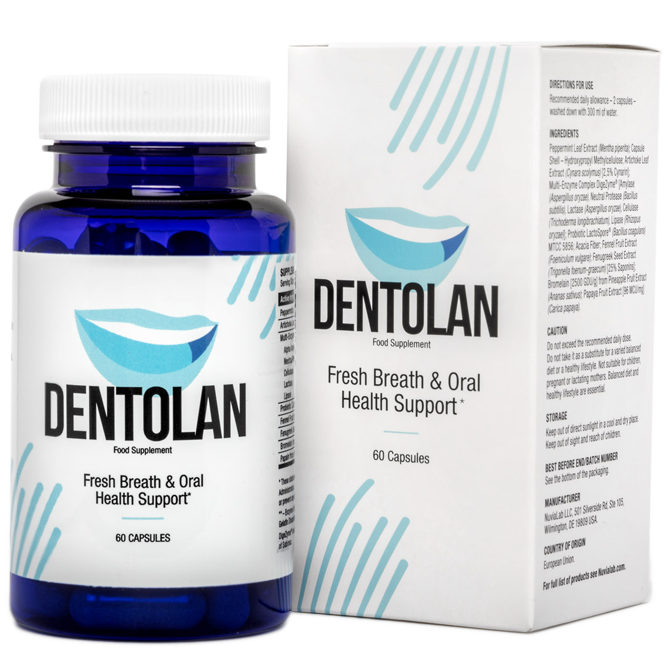
Our Recommendation — Dentolan
Score: 5.4/10 · Best for: adults whose breath worsens with meals and heavy digestion, who want every ingredient amount and the probiotic's strain printed on the label. Main caution: most bad breath is oral in origin, not digestive — and no money-back guarantee is published. Fair trial: one bottle — one month — judged honestly, with dental causes ruled out before a second.
Where the Smell Is Actually Made: Volatile Sulfur Compounds
Hydrogen sulfide, methyl mercaptan, dimethyl sulfide
Bad breath has a chemistry, and it is mostly sulfur. When bacteria break down proteins — from food debris, shed cells, saliva proteins and blood — they release gases called volatile sulfur compounds, or VSCs.
Three of them dominate. Hydrogen sulfide smells of rotten eggs. Methyl mercaptan is sharper and more faecal. Dimethyl sulfide is sweeter and more cabbage-like, and it is the one most often linked to causes outside the mouth.
The MSD Manual's page on bad breath describes the same mechanism in plain language: bacteria acting on food particles and debris in the mouth produce the foul-smelling substances other people notice.
The bacteria responsible are mostly anaerobes — organisms that thrive where oxygen cannot reach. That single preference explains the geography of bad breath: they collect wherever the mouth offers shelter from air and saliva.
It also explains why breath odour is a production problem, not a storage problem. The gases are made continuously while the bacteria feed. Masking the smell for an hour does nothing to the factory making it.
Sulfur gases do most of the work, but they are not the whole bouquet. Bacterial breakdown also produces compounds such as cadaverine, putrescine, indole and skatole — names that describe their origins in decaying protein uncomfortably well.
Clinicians can measure the sulfur fraction directly with a portable sulfide monitor, which is why VSC levels appear throughout the research. The numbers track the smell imperfectly, but they confirm the chemistry is real and quantifiable.
Why the back of the tongue is the perfect factory
The tongue's surface is not smooth. Its back third is covered in tiny projections and crypts that trap debris, and the whole area sits beyond the reach of most people's brushing.
Under a coating of dead cells, food residue and bacteria, oxygen levels drop. That is precisely the environment anaerobic, sulfur-producing bacteria need, and they multiply there in enormous numbers.
Saliva normally washes the front of the mouth far better than the back. The rear tongue is also harder to clean without gagging, so its coating is disturbed less often than any other oral surface.
Put those facts together and the back of the tongue becomes the mouth's largest bacterial reservoir. In most examinations of genuine halitosis, it is where the strongest odour is found.
The Oral Causes, in Order of Frequency
Tongue coating: the largest bacterial reservoir
Tongue coating is the whitish or yellowish film that builds on the tongue's back third. It is a mixture of bacteria, shed surface cells, food debris and dried saliva — raw material and workforce in one layer.
A professional review series from the Sunstar GUM education programme attributed about 51% of halitosis cases in its patient series to tongue plaque, compared with 17% to periodontitis and 15% to gingivitis in the same series.
Those percentages describe one clinic series, not every mouth everywhere. But the ranking they show — tongue first, gum conditions behind it — matches what the wider review literature reports.
The practical consequence is direct: a routine that never touches the tongue leaves the commonest cause untouched. Brushing teeth alone cleans the surfaces least responsible for the smell.
Gentle tongue cleaning, with a scraper or brush, physically removes the coating and its bacteria. Reviews of halitosis interventions describe short-term reductions in odour after tongue cleaning, though the effect fades as the coating rebuilds.
The coating itself is not a disease. A thin film is normal, and its thickness varies with saliva flow, diet, smoking and how much the tongue's surface is naturally abraded by food and speech.
What matters is the combination of a thick coating and a smell other people notice. A white tongue alone, without odour, is a common and usually harmless finding that dentists see every day.
Gum disease: pockets below the gumline
Second in order is gum disease — gingivitis at the surface, periodontitis when inflammation destroys the tissue and bone holding teeth. Both create exactly the sheltered, oxygen-poor spaces sulfur bacteria prefer.
As gums recede from the tooth, they form pockets. Plaque and bacteria accumulate inside those pockets, below the reach of a toothbrush, bathed in fluid and traces of blood that supply abundant protein.
Bleeding is part of the problem as well as a symptom. Blood proteins are rich feedstock for sulfur production, which is why inflamed, bleeding gums and strong breath odour so often arrive together.
Gum disease also hides. Early periodontitis is frequently painless, so a person can carry a significant breath cause for years while believing their mouth is healthy because nothing hurts.
No rinse, mint or capsule cleans inside a gum pocket. That work belongs to professional scaling and a proper interdental routine — which is why persistent bad breath earns a dental examination before anything else.
The two gum conditions also differ in what treatment can promise. Gingivitis is reversible with thorough cleaning. Periodontitis can be controlled and slowed, but the bone and attachment already lost do not simply grow back.
That difference is another argument for the examination coming early. Caught at the gingivitis stage, the second-commonest breath cause is one of the most completely fixable problems on this entire page.
Dry mouth: saliva is the mouth's rinse
Third is dry mouth. Saliva is the mouth's built-in rinsing and defence system: it washes debris away, dilutes sulfur gases, carries oxygen and contains antibacterial components that keep odour bacteria in check.
When saliva flow falls, all of that protection falls with it. Bacteria multiply faster, coating thickens, and gases concentrate instead of being flushed. The result is the familiar intensity of morning breath, discussed below.
The commonest drivers are not exotic. Hundreds of everyday medicines list dry mouth as a side effect, including many antidepressants, blood-pressure drugs and antihistamines. Mouth-breathing, especially during sleep, dries the surfaces directly.
Dehydration, alcohol, smoking and salivary-gland conditions add to the list. So does age, partly through the medicines that accumulate with it rather than through ageing itself.
The fix matches the cause: water, saliva stimulation, a review of drying medicines with the prescriber, and treatment of any gland problem. A digestive capsule does not restore a single drop of saliva.
Sugar-free chewing gum earns its place here honestly: chewing stimulates saliva flow mechanically, and the saliva does the rinsing. The gum is a pump primer, not a treatment — which is precisely why it works.
Dry mouth also raises the stakes beyond smell. Without saliva's protection, teeth decay faster and gum disease progresses more easily. Persistent dryness is worth raising with a dentist even when breath is not the complaint.
The rest of the mouth: decay, dentures, food traps, smoking, foods
Beyond the big three sits a tail of smaller oral causes. Untreated tooth decay creates cavities that harbour bacteria and trapped food. Abscesses and failing, leaky fillings do the same in miniature.
Dentures and orthodontic appliances collect plaque on surfaces a brush may skip, and dentures left in overnight are a classic, correctable source. Food trapped between teeth decomposes in place when interdental cleaning is skipped.
Smoking contributes on several fronts at once: it dries the mouth, promotes gum disease, and adds its own tobacco odour. The MedlinePlus encyclopedia page on breath odor lists tobacco among the standard causes clinicians check.
Foods are the most temporary cause on the list. Garlic and onion compounds are absorbed into the blood and exhaled through the lungs for hours after eating — an odour no brushing fully reaches, which simply fades.
Fasting adds a related, temporary pattern. Long gaps between meals reduce saliva flow and chewing, and very low-carbohydrate dieting can add a sweet, acetone-like note from ketone production. Both fade when normal eating resumes.
Alcohol deserves a line of its own: it dries the mouth directly, and heavy use is tied to the gum disease ranked second on this page. The drink can create tonight's breath and worsen next year's.
Morning Breath vs Real Halitosis
Almost everyone wakes with unpleasant breath, and it means almost nothing. Overnight, saliva flow drops to a fraction of its daytime level, the mouth dries, and bacteria work undisturbed for hours.
Morning breath clears with breakfast, water and brushing because its cause — temporary dryness — clears with them. It is a normal overnight state, not a diagnosis, and it needs no product at all.
Real halitosis is the persistent version: odour that survives a proper morning routine, returns through the day, and is noticeable to other people in ordinary conversation. Persistence is the dividing line.
Clinicians also name two honest complications. In pseudo-halitosis, a person is convinced their breath smells when objective examination finds no odour. In halitophobia, the conviction survives even after successful treatment and reassurance.
Both are commoner than the supplement market admits, and neither responds to capsules. They respond to measurement — a clinician's assessment the person can trust — and, where the worry persists, to support for the anxiety itself.
One more fact shapes all self-assessment: you cannot reliably smell your own breath. The nose adapts to its owner's constant odours. Cupping your hands and exhaling tells you far less than most people assume.
A useful working rule follows from the distinction. Give thorough home care — brushing, interdental cleaning, tongue cleaning, hydration — a fair two weeks. Breath still present after that is no longer a routine problem; it is a finding.
The Non-Oral Minority
A minority of genuine cases start outside the mouth, and the throat is the likeliest of those places. Tonsil stones — calcified plugs of debris in the tonsil crypts — are small, common and intensely smelly when dislodged.
Chronic sinus problems and post-nasal drip feed the back of the tongue with protein-rich mucus, effectively fertilising the oral factory from above. Treating the sinus cause and the tongue together is what works there.
Below the neck, the gut is a real but small contributor: review classifications put gastric causes at roughly 1% of halitosis cases in people assessed for the condition, compared with the 80–90% oral share.
That stomach minority — reflux, one testable infection, and a few rare conditions — deserves its own careful weighing rather than a paragraph, because it is the pattern an entire product category is built on.
Breath can also arrive from the lungs themselves, carried by the blood. That is how garlic compounds reach the nose hours after a meal — and how a few metabolic conditions announce themselves on the breath.
Finally, a small set of systemic conditions can change breath odour: uncontrolled diabetes, kidney failure and liver failure among them. Those odours travel with other symptoms, and they belong to prompt medical care, not self-treatment.
The referral order follows the same frequencies: dentist first, then ear, nose and throat for the throat causes, then a physician for anything systemic. Skipping straight to the rarest category is how treatable mouths stay untreated.
What the Cause Map Means for Any Product Claim
Hold the cause order in mind and product claims become easy to grade. A claim is only as plausible as the cause it can actually reach, at the site where that cause lives.
Dentolan is the worked example in this wave, and our Dentolan review scores it 5.4/10. It is a swallowed digestive formula: enzymes, a gut probiotic, and botanicals, in two capsules a day.
Its panel is genuinely well printed — full amounts, enzyme activity units, a probiotic named to strain level. That transparency is why the formula can be audited at all, and the score credits it.
But the route is the route. A capsule swallowed with water passes the tongue's back third in seconds and dissolves in the stomach. It does not scrape a coating, clean a gum pocket or restore saliva.
Against the cause map, that means Dentolan addresses the minority pattern: the roughly 1% of cases in the review literature that are gastric in origin, compared with the 80–90% that are oral.
And the evidence point must be stated plainly: no trial of Dentolan, of its DigeZyme enzyme blend, or of its LactoSpore probiotic for bad breath exists. The digestive route to fresher breath is a theory, not a tested result.
The commercial terms sharpen the same point. Dentolan costs $59.99 for a single bottle, or $30.00 per bottle on the six-bottle package, with $12 shipping on every order — and it publishes no money-back guarantee.
A dental examination, by contrast, names the actual cause before money follows it. Where the cause turns out to be a coating or a pocket, the treatment is mechanical, local and usually decisive.
None of that makes the product dishonest by itself — the label is unusually complete. It makes it a minority-cause product, and buyers whose cause is a tongue or a gum pocket should spend accordingly: dentist first.
Our Recommendation — Dentolan
Score: 5.4/10 · Best for: adults whose breath worsens with meals and heavy digestion, who want every ingredient amount and the probiotic's strain printed on the label. Main caution: most bad breath is oral in origin, not digestive — and no money-back guarantee is published. Fair trial: one bottle — one month — judged honestly, with dental causes ruled out before a second.
Frequently Asked Questions
What is the most common cause of bad breath?
Tongue coating. The bacterial film on the tongue's back third is the largest single reservoir of sulfur-producing bacteria in most examinations. Gum disease comes second and dry mouth third, ahead of every non-oral cause combined.
Can bad breath really come from the stomach?
Sometimes, but rarely. Review classifications put gastric causes at roughly 1% of halitosis cases, compared with 80–90% of cases that start in the mouth. Reflux is the commonest genuine stomach-route pattern.
Why does my breath smell worst in the morning?
Because saliva flow falls sharply during sleep. Without saliva's rinsing and antibacterial action, sulfur-producing bacteria multiply undisturbed for hours. Morning breath that clears after breakfast and brushing is normal, not halitosis.
How can I tell if my breath smells if I can't smell it myself?
Ask someone you trust, or ask your dentist — both are more reliable than any home trick. The nose adapts to its own constant odours, which is why self-tests like exhaling into cupped hands mislead.
Does cleaning my tongue actually help?
Yes, in the short term. Physically removing the coating removes bacteria and their feedstock, and intervention reviews describe reduced odour afterwards. The coating rebuilds daily, so tongue cleaning works as a habit, not a one-off cure.
Can bad breath be a sign of something serious?
Occasionally. Most bad breath is a mouth finding, but particular odours travelling with other symptoms — a fruity smell with nausea and unusual thirst, for instance — can signal conditions needing prompt care. The pattern matters more than the smell alone.
When should bad breath be checked by a professional?
When it persists despite two weeks of thorough hygiene — tongue included — or arrives with bleeding gums, pain, a loose tooth or a coating that will not clear. Those are findings a dentist needs to see directly.
Last reviewed: October 2026. This article is educational and is not medical advice.
