
- Quick Answer
- Peppermint: Mask, Antimicrobial, or Saliva?
- Fennel Seeds After Meals: The Tradition
- The Format Problem
- The Reflux Footnote
- The Verdict
- Frequently Asked Questions
- Why do people chew fennel seeds after meals?
- Does peppermint kill bad-breath bacteria?
- Does fennel tea freshen breath?
- How long does the freshening from chewing fennel last?
- Is a peppermint capsule the same as peppermint gum or tea?
- How much peppermint and fennel are in Dentolan?
- Can peppermint make bad breath worse?
- What about bromelain and papain, the other plant enzymes on breath labels?
- Read This Next
Disclosure: This article contains affiliate links. If you buy through them, we may earn a commission at no extra cost to you. It never changes our conclusions.
Quick Answer
Both peppermint and fennel have genuine breath logic — and both logics run through the mouth. Chewed or rinsed, their oils contact the tongue, their flavour covers odour briefly, and chewing itself floods the mouth with saliva.
A swallowed capsule keeps the ingredient names and skips those mechanisms. The capsule passes the mouth in seconds, triggers no chewing response, and delivers its extracts to the stomach instead of the tongue.
That format gap is the whole story of this article. Dentolan — the breath formula reviewed in this set — lists peppermint leaf extract at 300 mg and fennel fruit extract at 100 mg per two capsules, both swallowed.
Best for: readers deciding between traditional chewed remedies and a modern capsule. Dentolan scores 5.4/10 in our review — its panel is unusually transparent; its format is the problem.
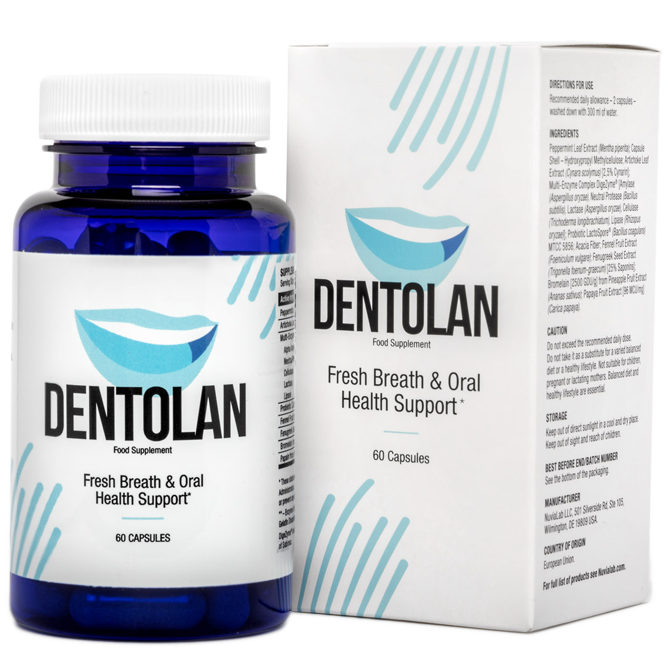
Our Recommendation — Dentolan
Score: 5.4/10 · Best for: adults whose breath worsens with meals and heavy digestion, who want every ingredient amount and the probiotic's strain printed on the label. Main caution: most bad breath is oral in origin, not digestive — and no money-back guarantee is published. Fair trial: one bottle — one month — judged honestly, with dental causes ruled out before a second.
Peppermint: Mask, Antimicrobial, or Saliva?
Peppermint is credited with three different jobs, and they are often blurred into one claim. Separating them matters, because each job depends on a different condition — and a swallowed capsule meets none of those conditions in the same way.
The first job is masking. Menthol and the other volatile oils in peppermint have a strong, clean flavour that temporarily covers mouth odour. Anyone who has used a mint after coffee knows the effect — and how short it is.
Masking changes what a nearby person smells for minutes to perhaps an hour. It does nothing to the bacteria producing the odour, which keep working underneath the flavour until the coating on the tongue is disturbed or removed.
Perceived freshness is a trap of its own. Menthol triggers cold receptors, so the mouth feels clean whether or not odour compounds have actually fallen. That gap between feeling fresh and measuring fresh runs through this whole category.
The second job is antimicrobial action. In laboratory studies, mint-family essential oils — peppermint oil among them — show antibacterial activity against oral bacteria grown in dishes, including species associated with odour production.
A laboratory dish is not a mouth. In a dish, oil sits in direct, sustained contact with bacteria at a chosen concentration. In the mouth, saliva dilutes, swallowing clears, and contact lasts minutes at most.
One more distinction hides inside the word peppermint itself. The laboratory and rinse work uses peppermint essential oil — the concentrated volatile fraction. Dentolan lists a leaf extract, a different preparation, made from the leaf rather than distilled for its oil.
That is why the human evidence for peppermint sits with mouth formats: oils and extracts in rinses, gums and lozenges that hold the ingredient against the tongue and teeth. The delivery site is part of the intervention being tested.
The third job is saliva. Chewing and sucking stimulate salivary flow, and saliva is the mouth's own rinse: it washes away food debris, neutralises acids, and makes life harder for the anaerobic bacteria behind most odour.
Dry mouth is therefore a breath problem in its own right. Overnight, flow falls and morning breath follows. A peppermint sweet or gum earns much of its effect simply by restarting flow — the flavour is partly a delivery device for chewing.
Dental advice leans on exactly this mechanism. Sugar-free chewing gum after meals is a standard recommendation for people prone to dry mouth, not because gum is medicine, but because twenty minutes of chewing is twenty minutes of rinsing saliva.
Ordinary sugared mints undermine their own job. The sugar that makes a mint pleasant feeds oral bacteria between brushings, so the freshening is borrowed against later odour. Sugar-free formats exist precisely because dentists kept making this point.
Dentolan's peppermint never performs any of these jobs in the mouth. Its 300 mg is a leaf extract inside an HPMC capsule, swallowed with water on the panel's directions. Contact with the tongue lasts seconds.
The delivery-site problem is the same one that separates mouth lozenges from gut capsules among probiotics, covered in our companion article on oral versus gut probiotics. An ingredient's evidence rarely survives a change of address.
Fennel Seeds After Meals: The Tradition
Fennel's breath use is older than any supplement label. In the Ayurvedic tradition of India, fennel seeds are chewed after meals — a custom still served in restaurants as a small dish of seeds offered with the bill.
The usual amount is modest: roughly a teaspoon of seeds, chewed slowly after eating. The practice pairs breath freshening with a digestive ritual — fennel also has a long traditional use after heavy or spiced food.
The seeds' sweet, aniseed flavour comes mainly from anethole, an aromatic compound in fennel oil. Traditional accounts credit the seeds with calming the stomach and freshening the mouth at the same time.
We present that exactly as it is: a tradition with a plausible flavour chemistry, not a tested treatment. We found no clinical trial that measured chewed fennel seeds against breath odour scores.
Notice what the tradition actually does, mechanically. Several minutes of chewing stimulates a strong flow of saliva. The seeds and their oils coat the tongue and mouth, and the chewing itself clears debris left by the meal.
Fennel tea sits between the formats. An infusion drunk slowly washes the mouth and throat and carries the seeds' flavour with it, so it keeps some oral contact. It stimulates far less saliva than chewing, which is why the tradition chews rather than brews.
One modern detail works against the tradition: restaurant seeds are often sugar-coated. Sugar in the mouth feeds the same bacterial community that produces odour, so the plain seed is the more defensible version of the custom.
Strip away the chewing and very little of that remains. A fennel extract swallowed in a capsule delivers anethole-containing material to the stomach, with seconds of mouth contact and no saliva response at all.
That does not make the tradition foolish — it makes it format-specific. The remedy and the action are the same thing. Traditions that survive for centuries usually contain a working mechanism; here the mechanism is visible, and it is entirely oral.
The Format Problem
Set the formats side by side and the mismatch stops being a matter of opinion. The table below compares what happens in the first minutes after each format is used — the window in which breath remedies actually work.
| Format | Time in contact with the mouth | Saliva response | Where the oils mainly act |
|---|---|---|---|
| Chewed fennel seeds, about a teaspoon | Several minutes of chewing | Strongly stimulated by chewing | Coating the tongue and mouth before swallowing |
| Peppermint gum, lozenge or rinse | One to several minutes | Stimulated by chewing or sucking | In the mouth, while the format is used |
| Swallowed capsule, taken with water | Seconds, during swallowing | Bypassed — no chewing signal | The stomach and intestine, after swallowing |
Contact time is the first difference. Tongue bacteria live in a coating on the back third of the tongue, and anything meant to act on them must reach that surface and stay there longer than a swallow allows.
Saliva is the second difference. Chewing is one of the strongest natural triggers of salivary flow, and flow alone — before any botanical enters the argument — reduces odour by rinsing and re-oxygenating the mouth's surfaces.
Destination is the third difference. A swallowed extract is not wasted chemistry; it simply arrives somewhere else. What peppermint or fennel compounds do after digestion is a different question from what they do on a coated tongue.
The slow-dissolve lozenge is the format that maximises every row of that table: minutes of contact, steady saliva, oils released onto the tongue throughout. It is no accident that the breath products with human testing behind them are lozenges.
What happens after swallowing belongs to a different story. Digested compounds are absorbed, metabolised and mostly excreted; only a small class of volatile compounds reaches the breath again through the bloodstream. A capsule's breath effect, if any, must travel that long way round.
None of this requires the capsule's ingredients to be poor quality. Dentolan prints its peppermint at 300 mg and its fennel at 100 mg per two capsules — real amounts, openly stated. The objection is geography, not dosage.
The Reflux Footnote
One further wrinkle deserves its own section, because it cuts against the product's purpose. Peppermint is widely reported to aggravate reflux and heartburn in people who are prone to them.
The usual explanation is that peppermint can relax the muscular valve between the stomach and the oesophagus. A looser valve lets acidic stomach contents travel upward more easily — the defining event of reflux.
Reflux is itself a cause of bad breath. Regurgitated contents and acid can sour the breath directly, which is why the stomach-pattern cases in our companion article on breath from the stomach start with reflux.
That creates an awkward loop for a swallowed peppermint product. The format that skips peppermint's mouth benefits delivers it instead to the stomach — the one place where, in a reflux-prone user, it could worsen a genuine breath cause.
Timing sharpens the point. Reflux is often worst lying flat, and breath is often worst on waking. A reflux-prone reader whose problem is specifically morning breath has two overlapping causes to separate — overnight dry mouth and overnight reflux — before any product question.
Most users will notice nothing of the sort, and peppermint in food amounts troubles few people. The point is narrower: anyone whose breath problem travels with heartburn should treat a daily swallowed peppermint extract as a question for their doctor, not a remedy.
The Verdict
Step back and the base rate decides how much any of this can matter. In halitosis case series, 80–90% of cases are oral in origin — tongue coating, gum disease and dry mouth — compared with a small minority arising from the stomach and digestion.
Dentolan is built for that minority route: digestive enzymes, a gut probiotic strain, and botanicals swallowed toward the stomach. No trial of Dentolan — or of its enzyme blend or its probiotic — for bad breath exists.
Our full Dentolan review credits what the maker does well: every amount is printed, the enzyme activities are stated in units, and the probiotic is named to strain level. That transparency is why the format problem can be seen so clearly.
The commercial facts are equally plain. A single bottle costs $59.99, falling to $30.00 a bottle on the six-bottle package, with a $12 shipping charge on every order. No money-back guarantee is published — the terms allow only a short withdrawal for unused goods.
The botanicals themselves are the formula's most traditional ingredients — and its clearest format mismatch. Peppermint and fennel earned their breath reputations in the mouth, through minutes of contact, flavour and saliva.
Inside a capsule, they keep their names, their printed milligrams and their traditional aura. What they leave behind is the chewing — and the chewing, on the evidence of the tradition itself, was most of the remedy.
Value completes the picture: Dentolan publishes no money-back guarantee, and every order carries the same shipping charge. A reader who wants the traditional remedy can buy a bag of fennel seeds for a fraction of the cost — and chew them.
Our bottom line is not that peppermint and fennel are useless. It is that their usefulness lives in the mouth. Readers who enjoy the tradition should keep it — chewed, plain and after meals — and readers with persistent odour should start with the tongue and gums, not a capsule.
Our Recommendation — Dentolan
Score: 5.4/10 · Best for: adults whose breath worsens with meals and heavy digestion, who want every ingredient amount and the probiotic's strain printed on the label. Main caution: most bad breath is oral in origin, not digestive — and no money-back guarantee is published. Fair trial: one bottle — one month — judged honestly, with dental causes ruled out before a second.
Frequently Asked Questions
Why do people chew fennel seeds after meals?
It is a tradition from Ayurvedic practice in India, where a teaspoon of seeds is chewed slowly after eating. The chewing stimulates saliva, the seeds' anethole-rich oils coat the mouth, and the flavour covers food odours.
The custom also carries a digestive meaning in that tradition — fennel after rich food is meant to settle the stomach. Both halves are traditional use, presented here as tradition, not as trial evidence.
Does peppermint kill bad-breath bacteria?
In laboratory dishes, peppermint and related mint oils show antibacterial activity against oral bacteria. That is a class-level, in-vitro finding: it shows what the oil can do in sustained contact, not what a rinse — still less a capsule — achieves in a living mouth.
Does fennel tea freshen breath?
Somewhat, and mostly while you drink it. The warm infusion washes the mouth, carries fennel's flavour, and the swallowing that follows clears loose debris. It stimulates little saliva compared with chewing the seeds themselves, which is the format the tradition actually uses.
How long does the freshening from chewing fennel last?
Nobody has measured it, so any number would be invented. By analogy with other masking flavours, expect a short window — the flavour fades, saliva flow settles, and the tongue's bacteria resume producing odour at their usual rate.
Is a peppermint capsule the same as peppermint gum or tea?
No. Gum and lozenges hold peppermint in the mouth for minutes and stimulate saliva; tea washes the mouth as it is drunk. A capsule is swallowed in seconds with water, bypassing both the contact and the saliva response entirely.
How much peppermint and fennel are in Dentolan?
Per two capsules — the daily serving — the panel lists peppermint leaf extract 300 mg and fennel fruit extract 100 mg. Both amounts are printed in full, which is more than many breath formulas disclose.
Can peppermint make bad breath worse?
Indirectly, in one group: people prone to reflux. Peppermint can aggravate heartburn in susceptible users, and reflux is itself a breath cause. If your breath problem arrives with heartburn or a sour taste, that pattern deserves medical attention before any capsule.
What about bromelain and papain, the other plant enzymes on breath labels?
Bromelain from pineapple and papain from papaya are protein-splitting enzymes, included in formulas like this one as digestive ingredients. Their breath role is examined in our companion article on digestive enzymes for bad breath; no breath-outcome trial supports either enzyme.
Last reviewed: October 2026. This article is educational and is not medical advice.
