
- Quick Answer
- The Fast Harm: Blood Sugar Dropping Too Low
- The Common Harm: Digestive Upset
- The Slow Harm: Vitamin B6 and Your Nerves
- Allergic Reactions
- Who Should Not Take Blood Sugar Supplements
- "Does Not Cause Any Side Effects": One FAQ vs Its Own Label
- What to Do if Something Feels Wrong
- Keeping a symptom diary that is actually useful
- Our Verdict
- Frequently Asked Questions
- Can a blood sugar supplement cause low blood sugar by itself?
- What are the most common side effects?
- Why is vitamin B6 in the side-effect list?
- Who should not take blood sugar supplements at all?
- The maker says this product has no side effects. Why do you say otherwise?
- Read This Next
Disclosure: This article is educational and is not medical advice. If you take medication for blood sugar, the decisions discussed here belong with your doctor.
Quick Answer
The side effects that matter in this category are not the ones on marketing pages. They are, in order of speed: blood sugar dropping too low in medicated users; ordinary digestive upset in almost everyone; and one slow risk almost nobody prints — a formula whose vitamin B6 dose exceeds the European upper limit, sold with a FAQ claiming it causes no side effects at all.
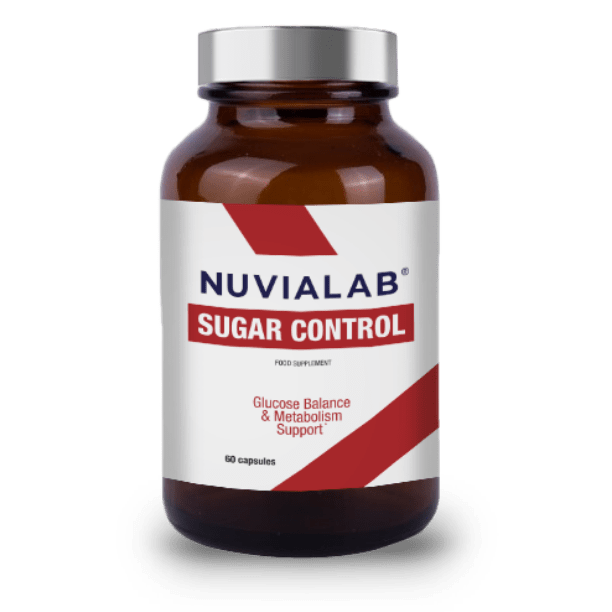
The worked example is NuviaLab Sugar Control. Its label delivers 14 mg of vitamin B6 a day — above EFSA's tolerable upper limit of 12 mg/day — and its panel warns medicated users to consult a doctor. Its FAQ, meanwhile, states the product "does not cause any side effects". This article quotes that claim and contradicts it from the maker's own panel.
Organised by mechanism, fastest harm first, here is the honest side-effect file for the whole category — what is common, what is serious, who should not take these products at all, and what to do when something feels wrong.
The Fast Harm: Blood Sugar Dropping Too Low
Can a supplement cause low blood sugar on its own? Calibrate carefully. For a healthy, unmedicated adult eating normally, the risk from a formula of this type is low — the ingredients' glucose effects are modest, and a functioning pancreas compensates. This is not a category that typically floors a healthy person's glucose.
The risk becomes real where a second glucose-lowering force exists: insulin, sulfonylureas, prolonged fasting, very-low-carbohydrate regimens, or heavy alcohol use. In those settings the supplement's modest effect is added to a system with less margin, and lows arrive that the primary cause alone might not have produced.
The symptoms, the 70 mg/dL threshold and the 15-gram response are set out in our metformin and insulin combination guide — read it before combining anything, rather than after a first episode teaches the list the hard way.
The Common Harm: Digestive Upset
For most buyers, the side effect they will actually meet is digestive. Across formulas of this profile — botanical extracts, bitter compounds, minerals — the recurring reports are nausea, stomach upset, bloating, loose stools, headache and dizziness. These are ingredient-class effects: concentrated plant extracts on an ordinary stomach, often taken before food.
Reader reports about this specific product describe the same digestive pattern. We label those for what they are — anecdote-grade accounts from review pages, unverified and uncounted. No incidence rate for Sugar Control exists anywhere, because no trial or surveillance programme has measured one, and any page quoting you a percentage of users affected is inventing it.
Practical handling is mundane: take the product with food and water as directed, do not exceed the stated dose, and treat persistent digestive symptoms as a stop signal rather than an adjustment period. A supplement whose plausible benefit is modest does not earn weeks of nausea in exchange.
Part of the difficulty is that blood-sugar problems bring their own digestive noise. Irregular meals, changing readings and the condition itself can all unsettle the stomach. A supplement effect therefore lands on ground that was never quiet to begin with.
Timing is the first clue worth using. Symptoms that begin only after a product is started, follow its doses through the day, and fade when it is paused point toward the product. Symptoms that predate it, or ignore its schedule entirely, point elsewhere.
The meal relationship helps separate the two further. A botanical taken before food that reliably produces nausea on an empty stomach, and far less with food, is behaving like an irritant. Distress tied instead to particular meals suggests the meal deserves scrutiny first.
Dose behaviour is another honest test. An effect that worsens when the stated dose is exceeded, and eases when the product is taken exactly as directed with food and water, is telling a coherent story. Random symptoms with no dose pattern tell a weaker one.
None of these clues settles the question alone, and none needs to. Their job is narrower: to stop every uncomfortable week being blamed on the newest bottle, and to stop a genuinely irritating product hiding behind the condition's background noise indefinitely.
When the pattern stays ambiguous, the cleanest experiment is subtraction. Pause the product, keep everything else as steady as possible, and watch whether the symptoms follow the pause. Changing two things at once destroys the information the pause was meant to provide.
Keeping notes is what makes these distinctions usable rather than theoretical. Even brief dated entries — what was taken, what was eaten, what was felt — let the pattern emerge across weeks. Without notes, the loudest recent symptom tends to rewrite the whole history.
The Slow Harm: Vitamin B6 and Your Nerves
The side effect with the longest fuse in this formula is vitamin B6. Sugar Control's panel states 14 mg per daily serving. EFSA's tolerable upper intake level for adults is 12 mg/day — so the label dose exceeds the European limit before a single milligram from food, a multivitamin, or an energy drink is added.
Chronic B6 excess injures sensory nerves. The symptom pattern is peripheral neuropathy: tingling, pins-and-needles and numbness in the hands and feet, in the stocking-glove distribution, sometimes with burning pain and unsteadiness. It develops over months of excess — which is precisely why a daily supplement, taken faithfully, is the exposure pattern that produces it.
One cruelty deserves emphasis for this exact audience. Numb, tingling feet in a person with blood-sugar problems will be read — by the person and possibly by their clinician — as diabetic neuropathy. A supplement-induced nerve injury wearing the diagnosis of the condition the supplement was bought to help is the worst outcome in this file, and it is entirely avoidable. Our B6 limit explainer runs the complete audit, including why the American limit disagrees.
Recovery, when it comes, does not arrive as a switch being flipped back. The injury built slowly over months of excess, and improvement after stopping follows the same unhurried logic. Feeling no better in the first weeks is therefore expected, not exculpatory.
That slowness is exactly why early stopping matters so much. Every additional month of exposure is another month the nerves must later recover from, if they fully can. Stopping at the first persistent tingling protects far more function than stopping at constant numbness.
Improvement also tends to be uneven rather than tidy. Sensation may return in patches, good days may alternate with worse ones, and progress is easier to judge across months than across weeks. Judging recovery by a single week invites the wrong verdict either way.
The partial character of recovery deserves plain language. Stopping removes the cause; it does not rewind the injury to zero. Some improvement is a realistic hope, complete restoration is not a promise any honest account of this harm should make to anyone.
This asymmetry shapes the whole risk calculation. A benefit that can be paused and resumed at will is being weighed against a harm that may only partly reverse. That is why the dose line on the panel deserves attention before symptoms, not after.
It also explains the value of counting a stack early. The exposure that matters is the total across every product, taken day after day. Finding an above-limit total while it is still just arithmetic is the cheapest version of this entire lesson.
Patience after stopping is therefore part of the treatment, not a sign it failed. The reasonable course is to remove the excess, keep the exposure removed, and judge change over the longer horizon the injury itself was built on.
Allergic Reactions
Botanical blends carry botanical allergens. A nine-ingredient plant formula offers nine opportunities for individual sensitivity, and reactions — rash, itching, swelling — are reported anecdotally across the category. Again, the honest epistemic label: anecdotes establish possibility, not probability.
What allergy means operationally is simpler than the rest of this article. Any new product followed by a spreading rash, lip or facial swelling, or breathing difficulty is an emergency-grade stop: discontinue, and treat swelling of the face or airways as a medical emergency, not a wait-and-see. Milder, delayed rashes are a discontinue-and-discuss item for the next clinician visit.
Who Should Not Take Blood Sugar Supplements
Start with the panel's own exclusions, because the maker printed them: Sugar Control's caution panel excludes children and women who are pregnant or breastfeeding. Those are the manufacturer's words and they are not softened here.
The class-level additions follow from the mechanisms above. Anyone using insulin or a sulfonylurea sits inside the maker's doctor warning, quoted in full in the next section.
Anyone with a history of severe hypoglycaemia has already demonstrated the outcome this category can aggravate. People with liver or kidney disease clear supplements through organs that are already compromised — a clinician conversation, not a purchase. And anyone already taking a B6-containing stack should count the total before adding 14 more milligrams.
Note the structure of that list: the panel's exclusions first, class reasoning second, each labelled as which. Conflating the two — presenting our reasoning as the maker's words, or the maker's exclusions as optional — is how safety information gets corrupted as it travels between pages.
"Does Not Cause Any Side Effects": One FAQ vs Its Own Label
Now the contradiction, in the maker's own documents. The FAQ states the product does not cause any side effects and is completely safe. The caution panel states: "In people using insulin therapy or oral hypoglycaemic drugs consult a use of the product with a doctor." The same panel instructs users not to exceed the recommended dose. And the same panel prints a vitamin B6 dose of 14 mg — above EFSA's 12 mg/day upper limit.
A product that cannot cause side effects does not need a medication warning, a dose ceiling, or exclusions for children and pregnancy. The panel behaves like a document written by people who know the formula has effects. The FAQ behaves like a document written by people selling it. When the two disagree, the panel is the one regulators require — and the one to believe.
This is not a quirk of one maker. The "no side effects" sentence is this category's standard furniture, and it should be read everywhere as what it is: a claim no pharmacologically active product can make, printed by the only party with a financial reason to make it.
What to Do if Something Feels Wrong
The stop rules are short. Stop for: symptoms of low blood sugar that recur; tingling or numbness in hands or feet that persists; a spreading rash or any swelling; digestive symptoms that continue beyond the first days rather than settling. A supplement trial is reversible by definition — stopping is always available and rarely costly.
Some symptoms are a doctor visit, not a wait-and-see: a severe hypo episode, fainting, facial or airway swelling, numbness that progresses, or any symptom in a medicated user that coincides with glucose readings outside their usual range. Bring the product and its panel. Clinicians manage these conversations well when they can see the actual label — including, in this case, the B6 line.
And report honestly to yourself. The point of a measured trial is a verdict; a side effect filed under "probably nothing" for six months is how a slow harm like B6 neuropathy gets its head start.
Keeping a symptom diary that is actually useful
A symptom diary turns worry into evidence, but only if it records the right fields. Four columns do most of the work: the date, what was taken and how much, what was felt and when, and any glucose reading taken alongside it.
Write entries on the day, not from memory at the weekend. Timing is the information memory destroys first: whether nausea followed the capsule or the meal, whether tingling was worse at night, whether a low feeling matched a low reading or neither.
Record the ordinary details that feel too dull to matter. Meals skipped, alcohol, poor sleep, a new product started or an old one finished all belong in the margin. Side effects are judged against context, and context is precisely what gets forgotten.
Keep the diary boringly consistent for the whole trial. The same brief format every day beats a detailed account on bad days and silence on good ones. A record with gaps invites exactly the selective memory the diary exists to correct.
Bring the diary to any clinician conversation, alongside the product itself. A dated record lets a clinician separate a pattern from an anecdote in minutes. It also shows when symptoms began relative to starting, which is often the decisive fact in the room.
Finally, decide in advance what the diary would need to show for the trial to stop. Writing that threshold down while calm prevents the slow negotiation in which each new symptom gets explained away because stopping feels like admitting defeat.
Our Verdict
Blood sugar supplements are not dangerous products for most unmedicated adults — their common harms are digestive and their serious harms are concentrated in identifiable groups: the medicated, the fasted, and the long-term stackers of high-dose B6. That is a manageable risk file, provided it is read.
What is not manageable is buying from the FAQ instead of the label. One document in this product's paperwork says "no side effects"; the other document lists a medication warning, a dose ceiling and an above-limit vitamin dose. The second document is the truth. Judge every product in this category by which of its papers you are being shown.
Frequently Asked Questions
Can a blood sugar supplement cause low blood sugar by itself?
For a healthy, unmedicated adult eating normally, the risk is low — the ingredients' effects are modest and a working pancreas compensates. The risk becomes real with insulin, sulfonylureas, prolonged fasting, very-low-carb regimens or heavy alcohol. That is why the combination question, not the supplement alone, is where this category's serious harm lives.
What are the most common side effects?
Digestive ones: nausea, stomach upset, bloating, loose stools, plus headache and dizziness in reader reports across the category. For this specific product, reports are anecdote-grade only — no trial or surveillance has measured an incidence rate, and any percentage quoted for it anywhere is invented. Take the product with food and water, and treat persistent symptoms as a stop signal.
Why is vitamin B6 in the side-effect list?
Because the dose crosses a regulatory line. Sugar Control provides 14 mg of B6 a day; EFSA's tolerable upper limit is 12 mg/day before food. Chronic excess causes sensory peripheral neuropathy — tingling and numbness in hands and feet — which in this audience can be mistaken for diabetic neuropathy. The full audit is in our B6 limit explainer.
Who should not take blood sugar supplements at all?
The panel itself excludes children and pregnant or breastfeeding women. Class-level: insulin and sulfonylurea users sit inside the maker's doctor warning; people with a history of severe hypoglycaemia, or liver or kidney disease, need a clinician conversation first; and anyone already taking B6 from other products should count their total before adding this label's 14 mg.
The maker says this product has no side effects. Why do you say otherwise?
Because the maker's own caution panel says otherwise: it carries a medication warning ("In people using insulin therapy or oral hypoglycaemic drugs consult a use of the product with a doctor"), a do-not-exceed instruction, and an above-limit B6 dose. When a maker's FAQ and its panel disagree, we print both and score the panel as the credible document.
Last reviewed: October 2026. This article is educational and is not medical advice.
