
- Quick Answer
- Two Systematic Reviews, Opposite Conclusions
- What 'Low Certainty' Actually Does to a Number
- The Trial Where the Drug Separated and the Botanical Arms Didn't
- How Much Bitter Melon Did the Studies Use?
- One Name, Several Different Interventions
- The Standardised Extract and Its Maker Percentages
- Safety Notes Specific to Bitter Melon
- What Bitter Melon Cannot Do
- What a Decisive Trial Would Have to Look Like
- Our Verdict
- Frequently Asked Questions
- Does bitter melon lower blood sugar?
- How much bitter melon did the studies use?
- Is bitter melon as effective as diabetes medication?
- What is charantin, and does standardisation matter?
- Who should avoid bitter melon supplements?
- Read This Next
Disclosure: This article contains affiliate links. If you buy through them, we may earn a commission at no extra cost to you. It never changes our conclusions.
Quick Answer
Bitter melon has the largest randomised-trial file of any blood-sugar botanical — and the file contradicts itself. A 2025 meta-analysis of 25 trials found statistically significant improvements in fasting glucose, HbA1c and insulin resistance, graded low-to-very-low certainty. A 2024 systematic review of substantially the same literature concluded the glucose-lowering effect cannot be determined.
The dose gap is the second half of the answer. The trials behind those pooled numbers used 2–4 grams a day of bitter melon powder or juice. The label that anchors this audit — NuviaLab Sugar Control — lists 500 mg of a standardised extract, 0.5% of it charantin. Extract and powder are different materials, and no honest arithmetic converts one into the other.
Best for: unmedicated readers curious about the single most-studied botanical in the category, at food-or-powder scale. Not for: anyone expecting a 500 mg extract capsule to reproduce what 2–4 grams did in trials — or anyone medicated, for whom the combination rules apply.
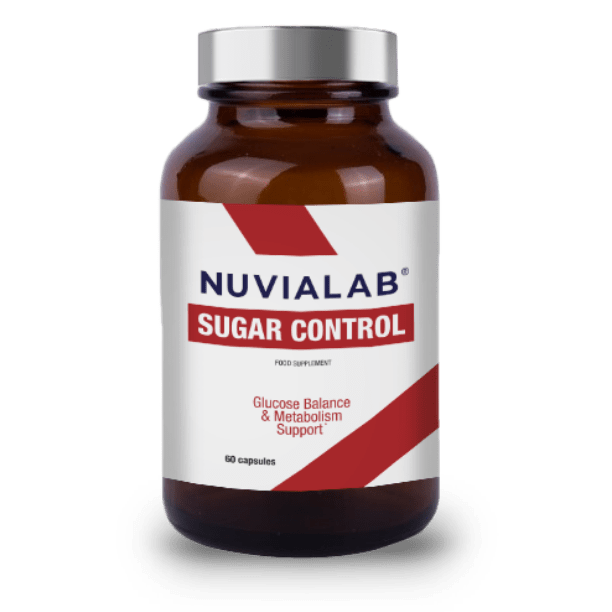
Our Recommendation — NuviaLab Sugar Control
Score: 5.2/10 · Best for: adults not on diabetes medication who know their numbers and want a fully disclosed formula they can judge with a follow-up blood test. Main caution: vitamin B6 at 14 mg a day exceeds EFSA's 12 mg upper limit, and the maker's panel warns people on insulin or oral hypoglycaemic drugs to consult a doctor first. Fair trial: three months — the three-bottle pack at $111.98 delivered covers one HbA1c cycle.
Two Systematic Reviews, Opposite Conclusions
Start with the strongest evidence for. Mkhize et al. 2025, in Metabolism Open (PMC12630335), pooled 25 randomised trials across 34 sub-studies. The pooled effects were statistically significant: fasting blood glucose SMD −0.46, HbA1c SMD −0.57, and HOMA-IR (insulin resistance) −0.52. Standardised effects around half a unit are not trivial — if they hold.
The same review grades its own certainty low to very low, and the reasons are structural: small trials, short durations, varied preparations, and risk-of-bias problems across the file. A significant pooled effect with very-low certainty means the true effect could be substantially different from the pooled one — in either direction.
Now the other reading. A 2024 systematic review in Frontiers in Nutrition (PMC10808600) worked through the randomised evidence and concluded that whether bitter melon lowers glucose cannot be determined. The Cochrane collaboration's assessment of bitter melon for type 2 diabetes (Ooi et al.) reached the older, sterner version: evidence insufficient to recommend it.
Three serious readings, three shades of no. The pattern is familiar in botanical literature: the ingredient is not inert, the trials are not good, and the honest position is that a real but unquantified effect probably exists. Any page quoting one pooled number without its certainty grade is selling you half a review.
What 'Low Certainty' Actually Does to a Number
Certainty grading is the part of a systematic review most summaries quietly drop, and it is the part that changes what the headline number is allowed to mean. A pooled effect is an average of what the included trials reported. A certainty grade is a separate judgement about how much that average deserves to be trusted. The two travel together, or the number travels dishonestly.
Low certainty, in the framework these reviewers use, means the true effect may be substantially different from the estimate. Very low certainty goes further: the estimate is best treated as a rough indication that something was measured, not as a measurement itself. A significant result can survive that grading and still be weak, because significance and certainty answer different questions.
Significance asks a narrow question: if there were no real effect, how surprising would results at least this large be? It says nothing about whether the trials were run well enough for their results to be believed. Small trials with bias problems can produce significant pooled numbers precisely because pooling adds their results together without repairing how each one was produced.
That is why the downgrade reasons named in this review matter more than the decimals. Small trials swing widely around the truth. Short durations cannot show whether an effect persists. Varied preparations mean the pooled trials were not quite testing the same intervention. Risk-of-bias problems mean some of the inputs may be flattering the ingredient for reasons unrelated to the ingredient.
So read the 2025 pooled numbers the way their own authors graded them: as the current best average of a weak file, with wide room for the truth to sit on either side of it. That reading is not a dismissal. It is the difference between an ingredient that is probably doing something and a number a buyer can plan around.
The Trial Where the Drug Separated and the Botanical Arms Didn't
One trial deserves individual attention because it contains the comparison the whole category avoids. Ninety-five patients were randomised for ten weeks to bitter melon powder at 2 g/day, bitter melon at 4 g/day, or the diabetes drug glibenclamide at 5 mg/day. Note first what it lacks: there was no placebo arm and no untreated control.
HbA1c and fasting glucose fell in all three arms from baseline. That is the finding as the review ecosystem retails it — bitter melon "worked as well as" a drug. The between-group analysis tells the other half: on the two-hour oral glucose tolerance test, only the glibenclamide arm improved significantly. The botanical arms' falls from baseline, without a placebo comparison, cannot be separated from regression to the mean, trial participation effects, and time.
We describe this trial without a formal citation deliberately: its authorship could not be verified to our standard at drafting, and an unverifiable citation is worse than none. The methodological lesson does not depend on the byline. Within-group improvement is the weakest currency in trial evidence, and it is the currency most bitter melon marketing is printed in.
How Much Bitter Melon Did the Studies Use?
The dose record, stated plainly: 2–4 grams a day of powdered fruit in the positive trials; fresh juice preparations in some traditional-use trials; ten-week to four-month durations. The 2 g arm of the trial above produced its (placebo-uncontrolled) falls; the 4 g arm did not clearly do better.
One Name, Several Different Interventions
The dose record also hides a second problem: 'bitter melon' in this literature is not one intervention. Trials and traditional use have given the fruit as fresh juice, as dried powder, as cooked fruit eaten as food, and as concentrated extract. Those forms share a plant and a name. They do not share a composition, and treating them as interchangeable is the literature's original sin.
Juice is the whole fruit, pressed — water, fibre remnants, bitter compounds and all, taken in the volumes a drink allows. Powder is the dried fruit ground down, which concentrates by removing water but keeps the fruit's full matrix in roughly its original proportions. Cooking changes the material again, because heat and the rest of the meal become part of what is actually consumed.
An extract is a different kind of object again. Extraction selects: a solvent pulls some constituents out of the fruit and leaves others behind, and standardisation then guarantees one chosen marker within that selection. The result can be more consistent than powder while being less similar to the fruit — consistent and representative are different virtues, and a label can honestly claim the first while implying the second.
This is why preparation belongs in every sentence about dose. Two to four grams describes powder and juice trials; it is not a unit that extracts can be measured in without a conversion nobody has published. When reviews pool these forms together, the pooled average describes a mixture of interventions — one more reason the certainty grades in the previous section land where they do.
Now the label. Sugar Control's panel lists 500 mg of Momordicin® bitter melon extract standardised to 0.5% charantin — which means 2.5 mg of charantin per daily serving. Charantin is one named constituent family in a fruit that also contains polypeptide-p and a crowd of cucurbitane compounds; standardising to one marker and quoting its mass tells you almost nothing about equivalence to the whole fruit.
So the comparison cannot be completed, and we will not fake it: 500 mg of extract is not "a quarter of the 2 g dose", because extract concentration ratios for this product are not published, and because the trials' material was the whole fruit, not a charantin fraction.
What can be said is that the formats differ by an order of magnitude in mass and by kind in composition — read the full audit on our NuviaLab Sugar Control page, where this gap is one of the scored findings.
The Standardised Extract and Its Maker Percentages
Momordicin® is a branded extract, and branded extracts arrive with branded numbers. The maker's materials for this ingredient family relay striking figures — glucose-uptake improvements of 86%, GLUT4-related measures of 73%. These are preclinical numbers: cell and mechanism work, generated or commissioned by the ingredient's owner.
We give them zero evidentiary weight, for two independent reasons. Preclinical effect sizes do not survive contact with human digestion, dosing and metabolism — the history of this category is a graveyard of 80-per-cent cell results and 0.3-per-cent HbA1c results. And a percentage without a human trial behind it, supplied by the party selling the ingredient, fails the most basic source test.
The extract may still be a perfectly reasonable formulation choice — standardisation at least means the capsule contains a consistent something. But consistency is a manufacturing virtue, not an efficacy finding, and the distance between the two is exactly where this category's marketing lives.
Safety Notes Specific to Bitter Melon
Bitter melon's glucose activity cuts both ways: in medicated users it adds to drug effects, which is why this ingredient sits inside the combination warning in our metformin and insulin guide. The maker of Sugar Control prints that warning on its own panel, and bitter melon is one of the ingredients it is there for.
The traditional-use literature adds cautions worth naming at class level: gastrointestinal upset is the common report; bitter melon seed preparations carry their own toxicology (vicine-type compounds) that fruit-pulp products do not share; and pregnancy is a standard exclusion in the herb's traditional cautions, echoed by Sugar Control's panel excluding pregnant and breastfeeding women.
None of this makes bitter melon dangerous at food intakes — it is a vegetable across much of Asia. It makes concentrated, daily, indefinite extract use a decision rather than a default, particularly beside medication.
What Bitter Melon Cannot Do
It cannot replace a drug — the trial above shows a drug separating from it on the endpoint with a proper comparison, and the wider category record includes a clinician's verdict on gymnema-plus-bitter-melon substitution that we quote in our efficacy hub: "Gymnema and bitter melon cannot replace insulin."
What a Decisive Trial Would Have to Look Like
It is worth describing the trial that would settle this, because its absence explains the whole file. It would start with a placebo arm: identical capsules, neither group knowing who received what, so that improvement from baseline could finally be separated from the effects of being enrolled, monitored and hopeful. Without that comparison, every fall in readings remains ambiguous, however large it looks.
It would use gram doses of a defined preparation — the powder at the scale the existing positive trials used, described precisely enough for another team to repeat it. That single choice would end the conversion problem by refusing to create it: the intervention tested would be the intervention described, in the material and the amount the earlier literature actually points to, if it points anywhere.
Its endpoint would be HbA1c, measured the same way at the start and the end, because HbA1c is the outcome the existing reviews argue about and the one that summarises months rather than mornings. Fasting readings can support it, but a decisive trial cannot rest on the noisiest measure in the file while the summary measure sits in a drawer.
And it would run long enough for that endpoint to mean something — months, not weeks — with enough participants that a modest effect could be distinguished from chance rather than argued about afterwards. None of these requirements is exotic. They are the ordinary furniture of a drug trial, listed here only because the botanical file, across decades, has so rarely assembled them in one room.
It cannot be credited with the pooled SMD numbers at capsule doses — those numbers belong to gram-quantity powder trials. And it cannot be declared ineffective either: three major readings disagree because the trials are weak, not because the fruit is inert. Holding "probably something, unquantifiably" is less satisfying than either headline. It is also the only position the evidence supports.
Our Verdict
Bitter melon is the most-studied botanical in this category and still resolves to a shrug with error bars: pooled significance at low certainty, a null reading from a second systematic review, insufficient-evidence from Cochrane, and a flagship comparative trial whose honest sentence is "the drug worked; the botanical arms improved from baseline, as uncontrolled arms do."
At 2–4 grams of powder a day, inside a measured three-month trial, an unmedicated reader is running the experiment the literature actually describes. At 500 mg of a charantin-standardised extract, they are buying the reputation of that experiment at a different material and a fraction of the mass. Sugar Control prints its numbers, so the gap can be stated — which remains the most creditable thing about it.
Our Recommendation — NuviaLab Sugar Control
Score: 5.2/10 · Best for: adults not on diabetes medication who know their numbers and want a fully disclosed formula they can judge with a follow-up blood test. Main caution: vitamin B6 at 14 mg a day exceeds EFSA's 12 mg upper limit, and the maker's panel warns people on insulin or oral hypoglycaemic drugs to consult a doctor first. Fair trial: three months — the three-bottle pack at $111.98 delivered covers one HbA1c cycle.
Frequently Asked Questions
Does bitter melon lower blood sugar?
Probably, modestly, on low-certainty evidence. A 2025 meta-analysis of 25 trials (PMC12630335) found significant pooled improvements in fasting glucose, HbA1c and insulin resistance, graded low to very low certainty. A 2024 systematic review concluded the effect cannot be determined, and Cochrane found evidence insufficient to recommend it. All three readings are in this article, with the reasons for the disagreement.
How much bitter melon did the studies use?
Two to four grams a day of powdered fruit, typically for ten weeks to four months. Sugar Control's label lists 500 mg of extract standardised to 0.5% charantin (2.5 mg charantin) — a different material at a fraction of the mass, with no published conversion between the two. Claims that the capsule reproduces the powder trials are not supported by any arithmetic we can verify.
Is bitter melon as effective as diabetes medication?
No. In the comparative trial described here, HbA1c fell in all arms from baseline, but only the glibenclamide arm improved significantly on the glucose tolerance test — and there was no placebo group to validate the botanical arms' falls. Bitter melon is not a substitute for metformin, glibenclamide or insulin, and combining it with them belongs in a doctor conversation.
What is charantin, and does standardisation matter?
Charantin is a mixture of steroidal compounds used as bitter melon's standardisation marker — the measurable constituent a manufacturer guarantees, here 0.5% of the extract. Standardisation guarantees consistency between capsules; it does not establish that the marker is the active principle, nor equivalence to the whole fruit used in trials. It is a manufacturing virtue, not an efficacy result.
Who should avoid bitter melon supplements?
Medicated users without medical clearance — its glucose activity adds to drug effects. Pregnant and breastfeeding women are excluded on Sugar Control's own panel, consistent with the herb's traditional cautions. And anyone expecting trial-level effects should note the trials used grams of powder: at extract-capsule scale, the studied effect is not on offer at all.
Last reviewed: October 2026. This article is educational and is not medical advice.
