
- Quick Answer
- Step 1: Pick the Precursor Form
- Step 2: Run the Label Checks
- What About a "Budget NMN"?
- Is This NAD Supplement a Scam? A 30-Second Test
- Where Is the Best Place to Buy?
- Form-by-Form Shopping Notes
- The Certificate Question: Testing, and What a Real One Shows
- Subscriptions, Guarantees and the Fine Print That Prices the Experiment
- A Worked Example: Auditing One Real Label
- Buying for Someone Else, and Other Edge Cases
- Frequently Asked Questions
- What is the best supplement to increase NAD levels?
- How much should a NAD+ supplement cost per month?
- Does a higher price mean better quality here?
- Read This Next
Disclosure: This article contains affiliate links. If you buy through them, we may earn a commission at no extra cost to you. It never changes our conclusions.
Quick Answer
Choosing a NAD+ supplement means choosing a precursor form first (NMN, NR, niacin, nicotinamide or trigonelline), then checking three things: the amount per serving is printed on the label, the price per month is sane for that form, and the seller makes no claims the science cannot carry.
The form with the most human data is not always the best value, and the cheapest option — plain niacin. Has the longest track record of all. This guide walks through each check. For the head-to-head science, see our precursor comparison.
Step 1: Pick the Precursor Form
You cannot swallow NAD+ itself usefully — the body builds it from precursors. Each form enters the pathway at a different point, with different evidence and different side-effect profiles. Our detailed comparison covers the science. The short version for shoppers is in the checks table below.
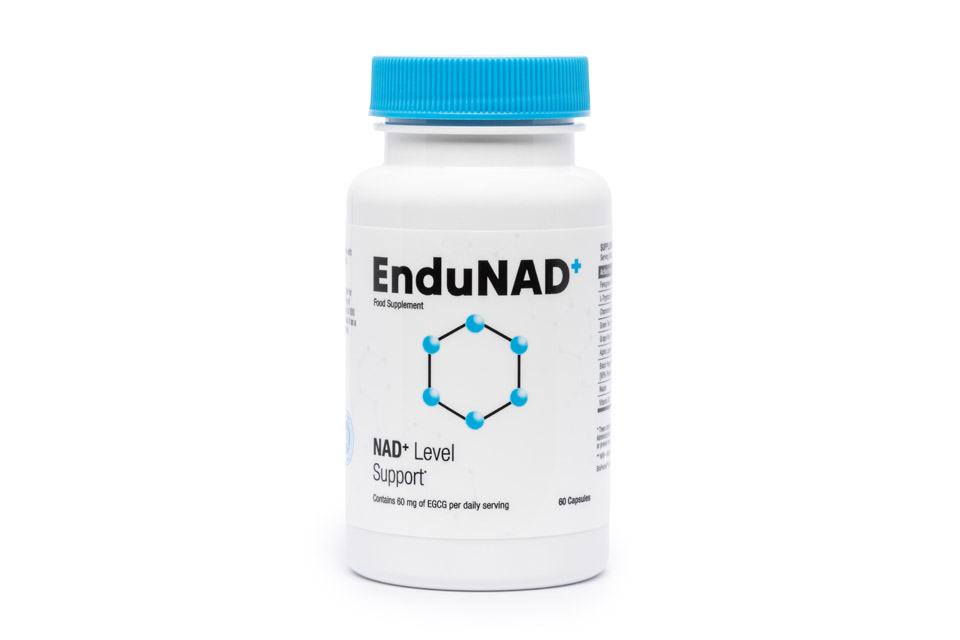
One example of a newer route is EnduNAD, which pairs trigonelline (a fenugreek/coffee compound shown in 2024 preclinical research to act as a precursor) with a substantial 250 mg of niacin — an old, proven precursor — in one capsule.
Step 2: Run the Label Checks
| What to check | Why it matters | Red flag |
|---|---|---|
| Precursor form named precisely | "Vitamin B3" alone could be niacin, niacinamide or a blend — they behave differently | Vague "B3 complex" with no form stated |
| Amount per serving printed | Trials use specific doses; an unprinted amount cannot be compared with any study | Proprietary blends with no amounts |
| Standardisation of botanical precursors | Trigonelline content depends on the extract — look for a % on the label | "Fenugreek extract" with no percentage |
| Price per month at the directed dose | Bottle prices hide the real cost when doses differ (1 vs 4 capsules a day) | Cheap bottle that lasts 10 days at full dose |
| Money-back guarantee | Precursors are a months-long experiment; a guarantee de-risks the first order | Big outcome claims + no guarantee at all |
| Claims language | Honest sellers describe a pathway, not a transformation | "Reverse ageing", "feel 20 again", before/after photos |
| Sold through an official channel | Marketplace listings of popular longevity brands are frequently counterfeit | Deep-discount marketplace listings of a premium brand |
What About a "Budget NMN"?
NMN prices have fallen, but the cheapest listings are where quality problems concentrate: under-dosed capsules, NMN swapped for nicotinamide, and no stability testing (NMN degrades in heat). A budget NMN from a brand that publishes amounts and batch testing is a reasonable buy.
An anonymous marketplace listing at a third of the going rate is a gamble, not a saving. Our NMN-specific buying guide covers purity testing in depth.
Is This NAD Supplement a Scam? A 30-Second Test
Three questions catch most of the bad actors in this category. Does the page promise age reversal, disease treatment or dramatic visible change? Does it hide the precursor form or the amount? Is the "discount" structured so the real monthly cost is unclear? One yes is a warning. Two or more, walk away.
Legitimate products in this space — including the ones we score in the 6s — sell a plausible pathway and a transparent label, nothing more.
Where Is the Best Place to Buy?
The maker's official website, every time. It is the only channel where authenticity, the current formula and any guarantee are certain — which is why every product page on this site links to the official store (for example, EnduNAD's official channel) rather than to marketplace listings.
Form-by-Form Shopping Notes
NR is usually sold as a patented chloride salt under branded licences — which is a quiet quality signal (identity is controlled) and a price floor (licences cost money). The trial literature's doses cluster at 300–1,000 mg/day. Products offering 100 mg capsules are selling below the studied range and should be priced as such.
NMN adds two wrinkles: chemical stability (it degrades with heat and moisture, making storage and manufacturing quality real variables) and a contested regulatory history in the US, where its status as a lawful supplement ingredient has been debated in recent years — a further reason to buy from accountable brands rather than anonymous listings.
Niacin shopping is simpler and older: immediate-release nicotinic acid is the studied form. "flush-free" versions typically substitute inositol hexanicotinate, which releases little usable niacin (see the safety guide). And sustained-release forms carry their own higher liver caution at big doses — the plain immediate-release tablet is, counterintuitively, the best-documented choice.
Nicotinamide (niacinamide) is a legitimate B3 but a different purchase: no flush, salvage-pathway entry, and a profile that should be chosen deliberately, not substituted silently by a "B3" label. Trigonelline arrives only inside formulas so far.
The label line to demand is the extract's standardisation — EnduNAD's "fenugreek extract standardised to 2% trigonelline, 300 mg" is the correct format, because it lets you compute the actual trigonelline delivered (~6 mg) and notice that the formula's proven NAD-raising workhorse is its 250 mg of niacin.
The Certificate Question: Testing, and What a Real One Shows
For branded NMN/NR, third-party testing is the difference between a precursor and a hope. A meaningful certificate of analysis (CoA) names the batch, the testing laboratory, the assay result for the claimed compound (identity and purity), and heavy-metal/microbial screens. Brand websites that publish batch CoAs — or submit to recognised certification programmes.
Are doing the thing counterfeiters cannot cheaply imitate. What does not count: a "tested" seal with no lab named, a CoA for a different product or an undated "typical" result, and marketplace "verified" badges, which verify the transaction, not the capsule.
This category's counterfeit pressure is real precisely because the legitimate products are expensive and the powders are white and anonymous. The official-channel rule in the next section is the practical defence.
Subscriptions, Guarantees and the Fine Print That Prices the Experiment
NAD+ products are sold as subscriptions because the biology demands months (see the timeline article) — which makes the commercial terms part of the product. Check four things before the first order: the renewal price (introductory offers that double at renewal are common). Cancellation friction (a subscription cancellable only by phone in business hours is a cost, priced in your time).
The guarantee's actual text (days counted from order or delivery? empty-bottle returns allowed? shipping both ways on you?). And whether a guarantee exists at all.
That last check is where a product like EnduNAD loses points in our scoring: its maker publishes no money-back guarantee, so the 8–12 week fair trial our other articles recommend is funded entirely by the buyer.
A guarantee is not a nicety in a category whose benefits are unproven — it is the seller sharing the risk their own marketing creates.
A Worked Example: Auditing One Real Label
Apply this guide's checks to the product this site reviews, line by line. EnduNAD: precursor forms named precisely (fenugreek extract standardised to 2% trigonelline + niacin as niacinamide) — pass.
Amounts printed for every ingredient, including the supporting cast (tryptophan 200 mg, chamomile 150 mg, green tea 150 mg, grape extract 50 mg, ALA 50 mg, B6 2.8 mg, BioPerine 2 mg) — pass, and rarer than it should be.
Dose maths transparent (60 capsules, 2/day = one month per bottle. $53.99 single, better per-bottle on multi-packs) — pass. Claims on the maker's page lean on pathway language rather than transformation promises — mostly pass. Money-back guarantee: none published — fail, and a scored deduction in our 6.4/10.
Sold via its official website with the geotargeted offers our product page links to — pass. That is what an audit looks like when it is finished: not a vibe, a checklist with two columns.
And the discipline transfers to any label in the category, including the premium NMN brands, several of which fail the amounts or guarantee rows that this mid-priced formula passes.
Buying for Someone Else, and Other Edge Cases
Gifting: a NAD+ supplement is a months-long, flush-capable experiment — gift the first bottle only with the timeline article attached, so the recipient judges it fairly instead of binning it at week two. Buying two precursors "to compare": run them sequentially, never simultaneously. A month of overlap destroys the comparison you paid for.
Travel and storage: NMN's heat sensitivity makes the bathroom cabinet and the car glovebox genuinely bad storage. Cool and dry is a label instruction, not a fussiness. Already taking a multivitamin or B-complex: add up the B3 across everything before adding a niacin-based formula — totals are what the safety guide's dose ceilings govern.
Frequently Asked Questions
What is the best supplement to increase NAD levels?
For proven NAD+ raising per dollar, niacin has the longest human track record. NR and NMN have the most modern trial attention; trigonelline is the newest and least proven in humans. The best choice depends on budget and tolerance for flushing — the comparison article breaks it down.
How much should a NAD+ supplement cost per month?
Roughly $30–$60 a month covers most legitimate options, from niacin-based formulas at the low end to branded NMN/NR at the top. Far above that, you are paying for marketing. Far below, check the dose maths.
Does a higher price mean better quality here?
No. Price in this category tracks branding more than evidence — a $54 niacin/trigonelline formula and a $90 NMN product can sit on comparable (early) science. Judge the label, not the price tag.
Last reviewed: November 2026. This article is educational and is not medical advice.
