
- Quick Answer
- What NAD+ Is, and Why Levels Fall
- Claim by Claim: What Has Actually Been Tested
- Does a NAD Supplement Help With Energy?
- Will NAD+ Supplements Reverse Aging or Make You Look Younger?
- So Is NAD Supplementation Worth It?
- Can You Test Your NAD+ Level?
- Why Raising a Biomarker Is Not the Same as Slowing Ageing
- What the Trials Actually Measured (and Why It Matters)
- The Muscle Story: the One New Thread Worth Watching
- Why the Animal Studies Don't Settle It
- Who Might Reasonably Experiment — and Who Is Buying Nothing
- What Would Change This Verdict
- A Stronger Alternative in This Category
- Frequently Asked Questions
- Do NAD+ supplements really work?
- How long before I would notice anything?
- Are NAD+ supplements safe to try while the science develops?
- Can I test whether my NAD+ supplement is working?
- Do NAD+ supplements help with muscle?
- Read This Next
Disclosure: This article contains affiliate links. If you buy through them, we may earn a commission at no extra cost to you. It never changes our conclusions.
Quick Answer
NAD+ supplements do one thing reliably: they raise NAD+ levels. Human trials of the individual precursors — nicotinamide riboside (NR), NMN and niacin — consistently show higher NAD+ in blood or tissue after supplementation.
What they have not yet shown is the outcome people actually buy them for: no trial has demonstrated reversed ageing, restored youth, or a clear cognitive benefit in healthy humans.
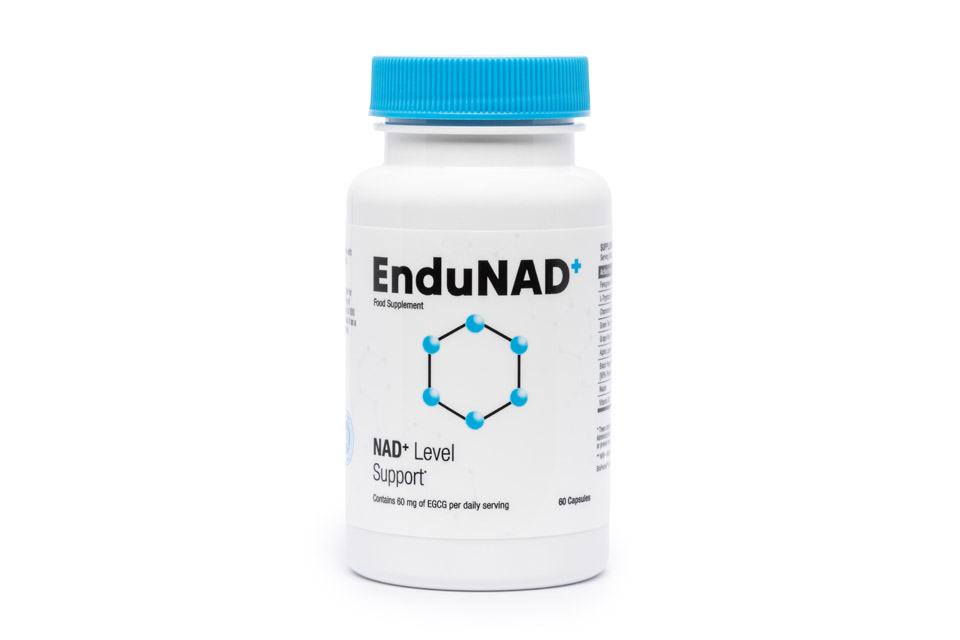
So the honest verdict is: the mechanism is real, the biomarker moves, and the headline promises remain unproven. Anyone weighing a purchase should read our breakdown of EnduNAD — a trigonelline + niacin formula we scored 6.4/10 — alongside this evidence check.
Our Recommendation — EnduNAD
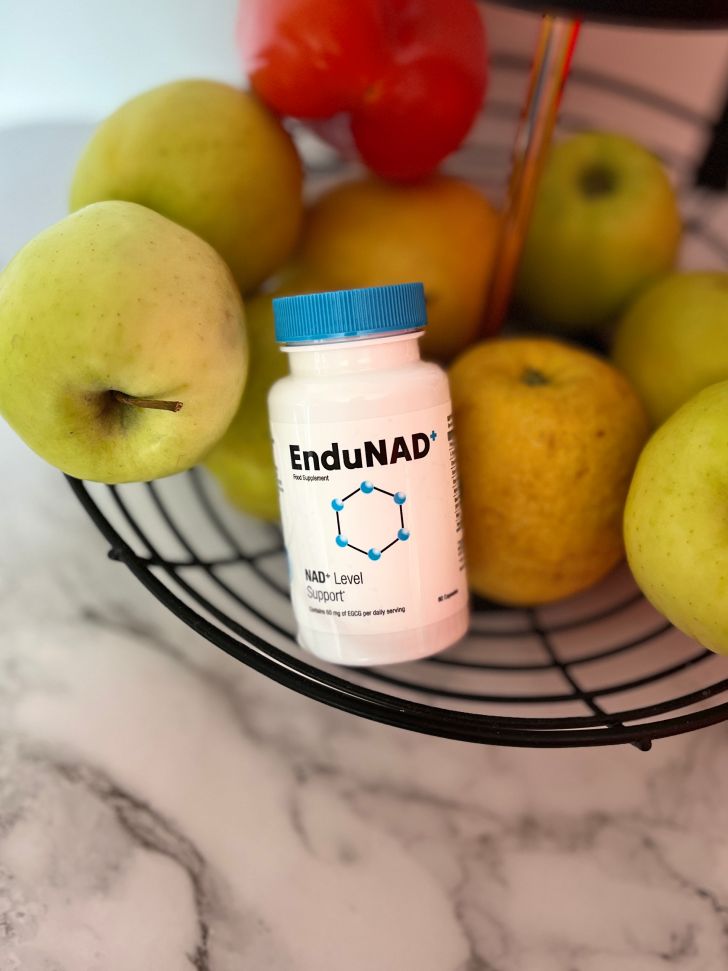
Score: 6.4/10 · Best for: a niacin-based NAD+ formula whose label prints every dose — 250 mg niacin plus 300 mg of a fenugreek extract carrying about 6 mg of trigonelline, across 2 capsules a day. Main caution: the maker publishes no money-back guarantee, and the trigonelline half of the formula rests on preclinical and early human evidence — blood NAD+ rises are shown; outcome benefits are not. Fair trial: 8–12 weeks at the label dose — the 3-bottle pack is $145.77 plus $12 shipping, and none of it is recoverable if it does nothing for you.
What NAD+ Is, and Why Levels Fall
NAD+ (nicotinamide adenine dinucleotide) is a coenzyme every cell uses for energy production, DNA repair and sirtuin activity. Levels decline with age in multiple tissues — that part of the story is well established, and it is the legitimate premise behind the whole supplement category. The leap the marketing makes is assuming that pushing the number back up restores youthful function.
That second step is exactly what trials have not yet confirmed.
Claim by Claim: What Has Actually Been Tested
| Popular claim | What human evidence shows | Status |
|---|---|---|
| "Raises NAD+ levels" | Confirmed for NR, NMN and niacin in multiple human trials measuring blood or muscle NAD+ | Supported |
| "More energy" | Trials in healthy adults mostly show no clear improvement in measured energy or exercise outcomes; benefits seen mainly in specific patient groups (e.g. niacin in mitochondrial myopathy) | Unproven for healthy users |
| "Improves thinking and memory" | Small, early studies; no robust trial showing cognitive improvement in healthy people | Unproven |
| "Reverses ageing / makes you look younger" | No human trial has demonstrated age reversal or visible rejuvenation from any NAD+ precursor | Not supported |
| "Supports muscle function" | Trigonelline improved muscle function in aged animals in 2024 preclinical research; human confirmation pending | Early / preclinical |
Does a NAD Supplement Help With Energy?
This is the most common reason people buy these products, and the most disappointing evidence. In trials of healthy, active adults, NR and NMN have generally not produced clear improvements in strength, endurance or perceived energy versus placebo. Where positive signals exist, they tend to appear in people with a deficiency state or a specific condition.
Not in healthy users chasing optimisation. Some users do report feeling better. Placebo responses in energy trials are large, which is precisely why the controlled data matters.
Will NAD+ Supplements Reverse Aging or Make You Look Younger?
No — not on current evidence. "Reversed ageing" claims trace back to animal studies (often genuinely interesting ones, in worms, flies and mice) and to marketing that skips the species gap. Human trials so far measure biomarkers over weeks, not ageing over years. Skin appearance, grey hair and the mirror test have no supportive trial data at all.
Our comparison of the four precursor forms — NMN vs NR vs niacin vs trigonelline — shows what each form has actually demonstrated in humans.
So Is NAD Supplementation Worth It?
It depends on what you are buying. If you want a supplement with a real, measurable biochemical effect and you accept that the long-term payoff is a bet on early science, a transparently labelled precursor at a sane price is a defensible experiment — our buying guide lists the label checks that matter.
If you want proven anti-ageing results, the honest answer is that they do not exist yet in this category, at any price. The best-evidenced levers for the same pathway cost nothing: see how to raise NAD+ levels naturally.
Can You Test Your NAD+ Level?
Consumer blood tests for NAD+ exist, but they are not standardised or validated for deciding whether to supplement or whether a supplement "worked". Levels also vary by tissue — a blood value is not a muscle or brain value. For now, testing is a curiosity, not a decision tool. No major guideline recommends it.
Why Raising a Biomarker Is Not the Same as Slowing Ageing
The central misunderstanding in this category deserves its own section, because every other claim hangs off it. NAD+ decline with age is real and measurable. Precursors reliably reverse the measurement — blood NAD+ rises, in trial after trial.
But between "the number went back up" and "the ageing process slowed" lies the entire unresolved science: ageing is not one pathway, NAD+ feeds hundreds of reactions, and no one yet knows whether forcing the coenzyme higher in a healthy older body changes the outcomes that define ageing — strength, cognition, disease onset, lifespan.
Medicine has been burned by surrogate endpoints before (drugs that beautifully improved a lab value while outcomes stayed flat, or worsened). The correct mental model for a NAD+ supplement today is therefore: a demonstrated biochemical intervention in search of its outcome data. That is not a dismissal — many now-standard interventions began exactly there.
But it fixes the price of the bet and the tone of the claim: early-stage, interesting, unproven where it matters most.
What the Trials Actually Measured (and Why It Matters)
Read the human precursor literature with one question — what was the primary outcome? — and its shape clarifies. Most NR and NMN trials were designed to prove the biomarker moves safely: they measure blood NAD+ metabolites, safety labs and tolerability, with functional outcomes (walk tests, strength, cognition batteries) as secondary or exploratory measures, in samples of dozens, over 4–12 weeks.
A minority targeted a specific condition — niacin in mitochondrial myopathy (Pirinen 2020, where NAD+ rose in blood and muscle and some functional measures improved in a genuinely deficient population) is the standout, precisely because the population had something to correct. The pattern generalises across this whole site: corrections are provable. Enhancements are not (yet).
A deficient system restored toward normal is a measurable event. A normal system pushed above normal has repeatedly failed to show benefits in this category's trials. Healthy buyers are, by definition, in the second group. Which is why our verdict is cooler than the category's advertising and warmer than its debunkers: the biology is real, the use-case is speculative.
The Muscle Story: the One New Thread Worth Watching
If any outcome claim in this category has momentum, it is muscle — and it arrives via the newest precursor. The 2024 Nature Metabolism research on trigonelline reported three linked findings: trigonelline is an NAD+ precursor. Its levels in blood track with muscle strength and mitochondrial function in older adults. And supplementing it improved muscle function in aged animals.
Each link deserves its weight class: the first is chemistry, the second is correlation in humans (interesting, not causal), the third is animal evidence (promising, not transferable). Meanwhile the established precursors' own muscle data in healthy adults — strength and body-composition outcomes in NR/NMN trials — has been mostly null.
So the muscle file today reads: one fresh preclinical thread (trigonelline), one correction-context positive (niacin in myopathy), and a shelf of nulls in healthy users. A formula like EnduNAD — trigonelline plus a proven NAD-raiser in niacin. Is a reasonable commercial expression of that file.
It is not, yet, a demonstrated muscle product, and our 6.4/10 prices exactly that gap.
Why the Animal Studies Don't Settle It
The NAD+ field's foundational excitement is animal: worms living longer, mice regaining youthful muscle and cognition markers, metabolic rescue in disease models. Three translation gaps explain why this site discounts them. Dose: animal precursor doses, scaled to humans, often exceed supplement ranges severalfold.
Distance: a mouse's NAD+ system, lifespan and disease spectrum differ from a human's in precisely the pathways being claimed. Selection: animal literature publishes its rescues. The unglamorous failures rarely become the charts on sales pages. None of this makes the animal work worthless.
It generated the hypotheses the human trials are now testing, and the trigonelline thread may yet be its best product. It makes animal work hypothesis-grade: a reason to run human trials, never a reason to quote lifespan language at a shopper.
Who Might Reasonably Experiment — and Who Is Buying Nothing
The reasonable experimenter: a healthy adult over ~45, already covering the proven basics (training, sleep — see the natural levers), buying a transparently labelled precursor at a sane monthly price, with a written baseline (energy, sleep, training performance) and a judgement date 8–12 weeks out.
That person is buying a fair test of an early-science bet, and this site's guides exist to keep the test fair. The person buying nothing: anyone expecting reversal of visible ageing, treatment of a disease, or a substitute for the lifestyle inputs — at any price, in any precursor, including the expensive ones.
And the under-30 buyer deserves a specific note: NAD+ decline by that age is modest, the theoretical upside is smallest, and the exposure horizon (decades of daily use of an unstudied-long-term compound) is longest — the least favourable ratio in the category, examined in our safety guide.
What Would Change This Verdict
Audits should name their update triggers. Ours: (1) a randomised trial of any precursor in healthy older adults, powered for a functional primary outcome (strength, cognition, metabolic health), positive against placebo. (2) human trigonelline supplementation data moving it from preclinical to clinical. (3) multi-year safety follow-up on any form. Any one of these rewrites this article's Quick Answer.
Until then, the verdict stands as the evidence built it: mechanism demonstrated, biomarker delivered, outcomes pending. And a category worth entering, if at all, with your eyes at exactly that setting.
A Stronger Alternative in This Category
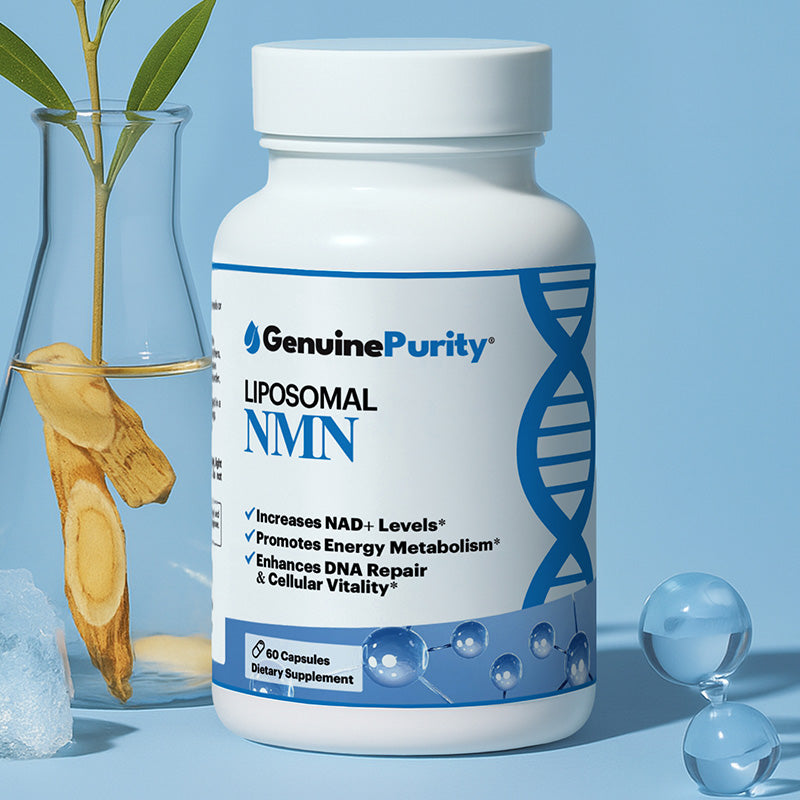
The stronger alternative: GenuinePurity NMN · 7.0/10A single active at a published 250 mg dose and 96% purity, with a published batch certificate and a 97-day money-back guarantee — where EnduNAD publishes no guarantee at all.
Our Recommendation — EnduNAD
Score: 6.4/10 · Best for: a niacin-based NAD+ formula whose label prints every dose — 250 mg niacin plus 300 mg of a fenugreek extract carrying about 6 mg of trigonelline, across 2 capsules a day. Main caution: the maker publishes no money-back guarantee, and the trigonelline half of the formula rests on preclinical and early human evidence — blood NAD+ rises are shown; outcome benefits are not. Fair trial: 8–12 weeks at the label dose — the 3-bottle pack is $145.77 plus $12 shipping, and none of it is recoverable if it does nothing for you.
Frequently Asked Questions
Do NAD+ supplements really work?
They raise NAD+ levels — that is demonstrated in human trials of NR, NMN and niacin. Demonstrated improvements in energy, cognition or ageing in healthy humans have not followed yet.
How long before I would notice anything?
Trials typically run 4–12 weeks; any subjective effect is usually assessed over that window. We cover realistic timelines in how long NAD+ supplements take to work.
Are NAD+ supplements safe to try while the science develops?
The precursors are generally well tolerated in trials, with form-specific cautions — niacin flushing is the classic one. See our safety breakdown before starting.
Can I test whether my NAD+ supplement is working?
Only the biomarker, imperfectly: consumer NAD+ blood tests exist but are not standardised, and blood levels do not report muscle or brain levels. The practical test is the written-score protocol in our timeline guide — baseline scores, 8–12 weeks, judge late.
Do NAD+ supplements help with muscle?
Not demonstrably yet in healthy humans. The live thread is trigonelline's preclinical muscle data and niacin's correction-context results — promising directions, no healthy-user outcome trial. Training remains the proven muscle intervention, and it defends the NAD+ system itself.
Last reviewed: November 2026. This article is educational and is not medical advice.
