
- Quick Answer
- The Timeline, Stage by Stage
- How Long Does NMN Take to Work?
- Does the Precursor Change the Timeline?
- How Long to Increase NAD Levels — and Keep Them There?
- Week by Week: Reports vs Records
- Why the First Fortnight Feels Like Something (Usually)
- The Washout: How Fast It All Reverses
- Judging One Bottle Fairly: the Protocol
- Timelines by Goal: the Honest Row for Each Promise
- Frequently Asked Questions
- How long does it take NAD supplements to work?
- How long until I notice effects?
- What if I feel nothing after a month?
- Read This Next
Disclosure: This article contains affiliate links. If you buy through them, we may earn a commission at no extra cost to you. It never changes our conclusions.
Quick Answer
Two different clocks are running. The biochemical clock is fast: in human trials, NAD+ levels in blood typically rise within 2–4 weeks of daily supplementation with NR, NMN or niacin. The "do I feel anything" clock is slower and far less certain.
Trials that run 8–12 weeks still often show no measurable difference from placebo in healthy adults' energy or performance. A fair trial of any NAD+ product is one full bottle (about a month) at the directed dose. A fair expectation is a raised biomarker, not a transformation.
The Timeline, Stage by Stage
| Period | What the evidence supports | What people often report |
|---|---|---|
| Days 1–7 | NAD+ begins rising; niacin users may flush from dose one | Mostly nothing — or flush, if niacin-based |
| Weeks 2–4 | Blood NAD+ measurably elevated in precursor trials | Subjective energy/sleep reports — placebo-sized in trials |
| Weeks 8–12 | Window used by most outcome trials; results in healthy adults are mixed to null | The point by which a personal verdict is reasonable |
| Beyond 12 weeks | Long-term outcome data in healthy humans essentially does not exist | Continuation is a judgement call, not an evidence-based one |
How Long Does NMN Take to Work?
NMN trials showing NAD+ increases generally run 4–12 weeks, with blood levels rising well before any outcome could plausibly change. The trials that measured outcomes people care about (walking capacity, sleep quality scores, metabolic markers) used 8–12 week windows — and produced mixed results.
If a seller promises NMN effects in days, they are describing the biomarker, not a benefit.
Does the Precursor Change the Timeline?
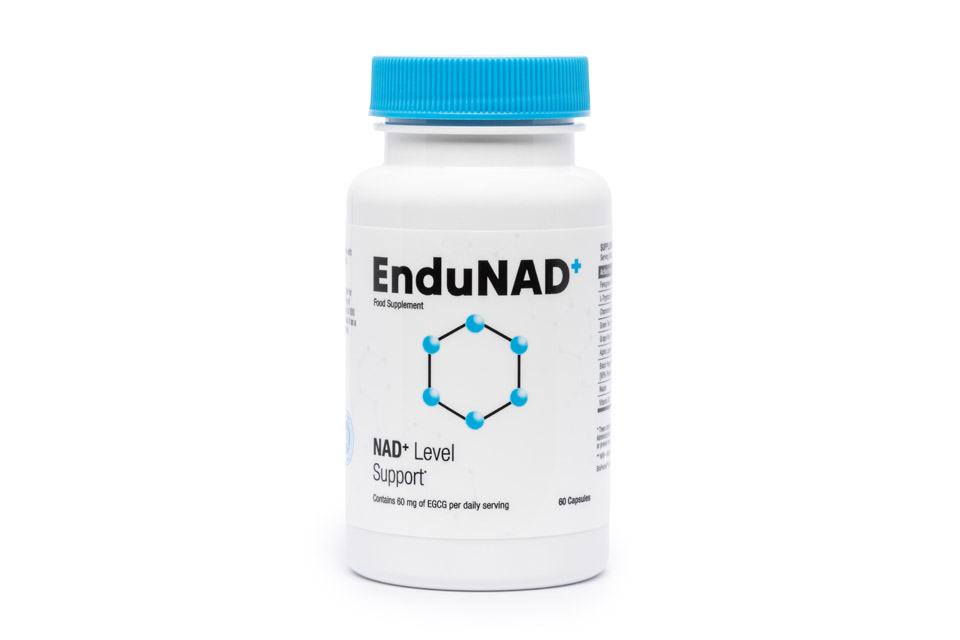
Not in any way trials have separated. Niacin's NAD+ rise is documented over similar weeks-long windows. Trigonelline has no human timeline data yet — for a formula like EnduNAD, the maker suggests judging over a full bottle, which matches the category's trial logic even though the product itself is untested.
We lay out the form-by-form differences in our precursor comparison.
How Long to Increase NAD Levels — and Keep Them There?
NAD+ elevation lasts only while you supplement (and for a short washout after). Trials consistently show levels returning toward baseline after stopping. That is the commercial reality of the category: it is a subscription to a biomarker, which is why price per month and any money-back guarantee matter — both are checked in our buying guide.
Lifestyle levers work on the same ongoing basis. See raising NAD+ naturally.
Week by Week: Reports vs Records
Week 1. The record: precursor absorption and early NAD+ metabolite rises begin within days. Niacin takers meet the flush immediately and learn their tolerance.
The reports: a minority describe better sleep or energy within the first week — a timeframe in which no trial has demonstrated an outcome separation from placebo, and in which expectancy is at its maximum (new purchase, new ritual, symptoms freshly attended to). Weeks 2–4. The record: blood NAD+ is measurably elevated in the precursor trials.
This is the window sellers quote, accurately, as "levels rise in as little as two weeks" — a biomarker sentence wearing an outcome costume. The reports: this is when testimonials are written. Weeks 5–8. The record: the earliest window in which outcome trials even look. In healthy adults, what they have found is mostly the absence of clear effects.
The reports: users who feel nothing begin quietly stopping — the silent majority no review page samples. Weeks 8–12. The record: the full trial window. A fair personal judgement is now possible, and ours is the protocol in the next section.
Holding both columns at once — respecting that the record is thin while reports are loud — is the entire skill this article teaches.
Why the First Fortnight Feels Like Something (Usually)
Energy and ageing-anxiety are the two most placebo-responsive territories in supplement research, and a NAD+ purchase concentrates every amplifier: a meaningful price (which raises expectancy), a daily ritual (which structures attention), enrolment at a personal low point (fatigue that prompted the purchase regresses toward its mean on its own), and community narratives that supply the vocabulary for improvement before it is felt.
None of this makes early positive reports dishonest — expectancy produces real neurochemical change and real felt improvement. The theanine file in our stress set contains a trial where placebo matched the ingredient at −17.9% on the primary scale, and the calm those placebo users felt was genuinely felt. It makes early reports unattributable.
The practical consequence is asymmetrical and worth memorising: a strong week-one feeling is weak evidence the product works, while a flat week eight — with sleep, workload and training held roughly constant — is reasonably strong evidence it is not working for you. Judge late, not early.
The Washout: How Fast It All Reverses
Stopping data is scarcer than starting data, but the direction is consistent: NAD+ elevation is a maintained state, not a permanent upgrade. After cessation, precursor trials' follow-ups show metabolite levels drifting back toward baseline over days to weeks — the body treats the extra NAD+ as throughput, not as a repaired system. Three implications.
First, the category's economics are subscription economics by biology, not just by marketing: the monthly cost in our buying guide is the honest unit of comparison. Second, cycling or "loading then maintaining" has no trial basis — no study has shown a lower maintenance dose preserving peak levels or any benefit.
Third, an interruption (travel, a forgotten order) is not a lost investment. Levels simply return to where your own production — the part exercise defends — holds them.
Judging One Bottle Fairly: the Protocol
Steal the discipline our other sets use. Before the first capsule: write down 1–10 scores for the two things you are actually buying for (most commonly: afternoon energy, sleep quality, training recovery) plus one objective marker if you have one (a fixed weekly workout's performance, a resting heart-rate trend).
During: change nothing else major — no new training programme, no caffeine overhaul in the same month, or attribution dies. Note the flush pattern if niacin is in the formula (it should ease over 1–2 weeks. See the safety guide). At week 4: an interim glance only. Biomarker time, not verdict time.
At weeks 8–12: compare scores against baseline with the sceptic's discount (one point = noise and expectancy's home range. Two sustained points = a result worth renewing). Then decide in writing: renew, switch precursor, or stop. A NAD+ product judged this way costs one honest experiment. Judged by week-one feelings, it costs a subscription.
Timelines by Goal: the Honest Row for Each Promise
| Goal | Biomarker timeline | Outcome timeline (evidence) |
|---|---|---|
| "More energy" | NAD+ up by weeks 2–4 | No reliable effect demonstrated in healthy adults at any duration tested |
| Exercise performance | As above | Mostly null in healthy-adult trials over 6–12 weeks |
| Cognition | Blood NAD+ is not brain NAD+; tissue timing unknown | No demonstrated improvement in healthy adults |
| Skin / appearance | — | No human trial evidence exists for visible outcomes |
| Muscle support | As above | Preclinical promise (trigonelline); human confirmation pending — see our evidence overview |
Frequently Asked Questions
How long does it take NAD supplements to work?
NAD+ levels: typically 2–4 weeks of daily use in trials. Noticeable benefits: unproven at any duration in healthy adults — judge a product over 8–12 weeks and expect subtlety.
How long until I notice effects?
If effects are felt, users usually report them in the first month. Controlled trials caution that early perceived effects match placebo responses, so treat the first fortnight's impressions lightly.
What if I feel nothing after a month?
That is the most common outcome in the trial literature for healthy users. Options: complete an 8–12 week trial before deciding, switch precursor form, or stop — your NAD+ will have risen regardless of whether you felt it.
Last reviewed: October 2026. This article is educational and is not medical advice.
