
- Quick Answer
- Side Effects at a Glance
- How Do I Avoid Niacin Flush?
- Is It Safe to Take NMN or NR Every Day?
- Who Should Avoid NAD+ Supplements?
- Drug Interactions
- The Cancer Question, Stated as Carefully as It Deserves
- The Interaction Table
- EGCG and the Green-Tea Line in Formulas
- What "No Long-Term Data" Actually Means (and Doesn't)
- Quality Failures Are Safety Failures
- Frequently Asked Questions
- Are NAD supplements safe?
- Is taking NAD+ dangerous?
- What are the side effects of NAD supplements?
- Read This Next
Disclosure: This article contains affiliate links. If you buy through them, we may earn a commission at no extra cost to you. It never changes our conclusions.
Quick Answer
In human trials, NR, NMN and niacin have been generally well tolerated at studied doses, with no serious safety signal so far. "Generally well tolerated in short trials" is not the same as "proven safe for years of use". Long-term data does not exist yet.
The predictable issues are form-specific: niacin flushes, high chronic niacin doses need liver awareness, and several groups should not self-prescribe at all (pregnancy, active illness, medication users). The details, precursor by precursor, are below.
Side Effects at a Glance
| Precursor | Common effects in trials/reports | Dose cautions |
|---|---|---|
| NR | Mild nausea, digestive upset, headache in a minority | Well tolerated to 1,000–2,000 mg/day in safety trials |
| NMN | Generally minimal; occasional digestive effects | Trial range 250–1,250 mg/day; long-term data absent |
| Niacin | Flushing (heat, redness, itching), GI upset | Sustained high doses: liver, glucose and uric-acid awareness |
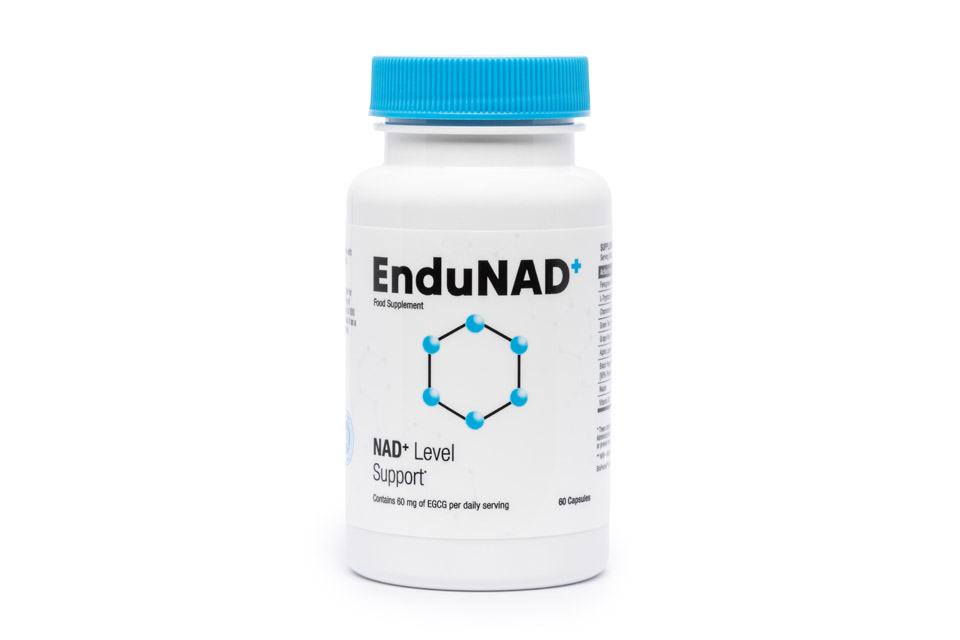
| Trigonelline formulas (e.g. EnduNAD) | No product-level safety data; profile driven by companions — EnduNAD's niacin (250 mg) and its 60 mg EGCG | Maker excludes pregnancy/breastfeeding; not on an empty stomach |
How Do I Avoid Niacin Flush?
The flush is a prostaglandin-driven skin reaction to nicotinic acid — uncomfortable, rarely dangerous, and the #1 reason people quit nicotinic-acid products. One formula often filed here by mistake: EnduNAD — its B3 is niacinamide, the non-flushing form, so this section is not about it.
What actually helps: start at a partial dose for the first week, always take it with food, avoid alcohol and hot drinks around the dose, and know that tolerance usually builds over 1–2 weeks of consistent use.
"Flush-free niacin" products substitute inositol hexanicotinate, which evidence suggests releases little usable niacin — the flush-free version may also be effect-free.
Is It Safe to Take NMN or NR Every Day?
Daily use for the 4–12 weeks of typical trials: yes, tolerated. Daily use for years: unknown — no precursor has multi-year human safety follow-up. Prudent practice is trial-range doses, one precursor at a time (not stacked B3 forms), and a medication review with a clinician if your situation changes.
Our dosage guide sets out the ranges trials actually used.
Who Should Avoid NAD+ Supplements?
Pregnancy and breastfeeding: no safety data; makers exclude it — avoid. People with active cancer or in treatment: NAD+ metabolism is an active area of cancer research. This is a discuss-with-your-oncologist category, not a self-experiment. Liver disease: high-dose niacin is the wrong experiment. Diabetes or gout: niacin can nudge glucose and uric acid — medical supervision first.
Under-30s: NAD+ decline is modest at that age, the benefit case is weakest, and the decades-long exposure is longest — the least favourable risk/benefit in the category (more in our evidence overview). For over-50s — the group with the clearest rationale — trials show the same tolerability as younger adults.
Drug Interactions
Documented interaction data for precursors is thin, but sensible cautions exist: niacin can add to the effects of blood-pressure medication and interact with diabetes medication (via glucose), statins (combined liver/muscle monitoring is standard medical practice), and blood thinners are a general caution with several longevity-stack botanicals.
BioPerine-containing formulas (EnduNAD included) deserve a specific mention: piperine increases the absorption of many compounds, which is its purpose — and exactly why medication users should clear such formulas with a pharmacist first.
The Cancer Question, Stated as Carefully as It Deserves
Because it is the search query behind a real share of this article's readers, it gets its own section and its most disciplined wording. The facts: NAD+ metabolism is deeply involved in cell energy and DNA repair, in healthy cells and in cancer cells alike.
Researchers actively study NAD+ pathways as potential cancer-treatment targets (including drugs designed to lower NAD+ in tumours). And there is no human evidence that taking a NAD+ precursor causes cancer — and also no long-term human data that could rule the theoretical question closed.
The rational synthesis is the one oncologists themselves give: for a healthy person, this is an unresolved theoretical file, not a demonstrated risk. For a person with active cancer or in treatment, manipulating a pathway their oncology team is actively thinking about is a decision that belongs to that team, full stop.
Anyone who tells you more than this — in either direction, reassurance or alarm — is exceeding the evidence, and the excess is the tell.
The Interaction Table
| Medication / situation | Precursor concern | Standing advice |
|---|---|---|
| Statins | Niacin + statin combinations were used medically with liver/muscle monitoring; additive caution at supplement niacin doses | Disclose to prescriber; do not self-combine high-dose niacin |
| Blood-pressure medication | Niacin's vasodilation can add to pressure-lowering | Prescriber/pharmacist conversation before niacin formulas |
| Diabetes medication | Niacin can raise glucose modestly at higher doses | Medical supervision; glucose monitoring if combined |
| Gout / uric-acid medication | Niacin can raise uric acid | Avoid high-dose niacin; clinician first |
| Any medication + BioPerine formulas | Piperine increases absorption of many drugs — the dose you absorb may rise | Pharmacist check before formulas like EnduNAD (BioPerine 2 mg) |
| Alcohol (regular, heavy) | Additive liver load with high-dose niacin; alcohol also drains NAD+ directly | The combination undermines both safety and purpose |
The table's pattern is the article in miniature: NR and NMN occupy few cells because their interaction file is thin (which means unstudied, not cleared), while niacin — the most human-exposed precursor — carries the most specific, dose-driven cautions. Thin files and thick files are both information. Only treating a thin file as a clean bill is an error.
EGCG and the Green-Tea Line in Formulas
Combination formulas import their companions' safety files, and one companion in this wave deserves quantification. Green-tea extract's EGCG carries a documented liver caution at high supplemental doses — European food-safety assessment puts the concern at intakes around 800 mg of EGCG per day and above, and responsible makers print that caution.
EnduNAD's maker does, alongside its actual content of 60 mg/day — more than tenfold below the caution line. That is the correct way to read every supporting ingredient in a formula: not "contains green tea extract" but "contains X mg of the compound the caution is about" against the threshold where the caution lives.
The same arithmetic applies to its B6 (2.8 mg against supplement-stacking ceilings discussed in our other sets) and to BioPerine above. A formula's safety is a sum of such quotients. Which is why printed amounts, the obsession of our buying guide, are a safety feature and not a marketing preference.
What "No Long-Term Data" Actually Means (and Doesn't)
Three misreadings of the long-term gap circulate, and this article rejects all of them. "No data = dangerous" — false. Absence of evidence is not evidence of harm, and the precursors' short-term human record plus (for niacin) decades of medical exposure are genuinely reassuring within their dose ranges. "No data = safe, it's just vitamins" — false in the other direction.
NR and NMN are pharmacologically active at supplement doses, and their multi-year profile in healthy people is simply unwritten. "Animal lifetime studies fill the gap" — the translation discounts from our evidence overview apply to safety exactly as to efficacy.
The honest posture is periodic re-judgement: a precursor taken in assessed 8–12 week blocks, with doses inside trial ranges and a medication review whenever your prescriptions change, keeps a healthy adult on the right side of everything currently known — which is all anyone can currently offer.
Quality Failures Are Safety Failures
The last safety layer is manufacturing. In an expensive, fashionable category, the documented failure modes are under-dosed capsules (a safety issue inverted: users escalate doses of products that were never what the label said), substitution of cheaper B3 forms for NMN, and untested marketplace stock exposed to heat.
Each covered as a buying problem in our buying guide and restated here because the consequence is the same: you cannot apply this article's dose cautions to a product whose contents are unverified. The defences rhyme across this site: official channels, batch testing, printed amounts, a maker with an identity.
Safety in supplements is mostly not pharmacology — it is supply chain.
Frequently Asked Questions
Are NAD supplements safe?
At trial doses over trial durations, yes for most healthy adults — with form-specific fine print (flush, dose ceilings). Long-term safety is unstudied, not proven dangerous or proven safe.
Is taking NAD+ dangerous?
No danger signal has emerged in human trials of the precursors. The honest gaps are duration (years) and special populations (pregnancy, illness), where the answer is "don't self-prescribe".
What are the side effects of NAD supplements?
Mostly mild: nausea or digestive upset for some NR/NMN users, and flushing for niacin. Serious adverse events have not been a feature of the published trials.
Last reviewed: November 2026. This article is educational and is not medical advice.
