
- Quick Answer
- What Synephrine Is
- Synephrine vs Ephedrine: Is It Just a Weaker Ephedra?
- Does Synephrine Actually Help Weight Loss?
- Reading the Blood-Pressure Numbers Fairly
- The Blood-Pressure and Heart Record
- What Are the Side Effects of Bitter Orange?
- Who Should Never Take Bitter Orange?
- Not All "Synephrine" on a Label Is the Same Molecule
- Synephrine and Exercise: The Pre-Workout Problem
- Is Synephrine Banned in Sport — and Can You Trust the Amount on the Label?
- The Piperinox Problem
- Bitter Orange in Crave Burner
- Frequently Asked Questions
- Is synephrine a stimulant?
- Is synephrine the same as ephedra?
- Can I take synephrine with coffee?
- How long do synephrine's effects last?
- What dose of synephrine is safe?
- What should I do if a synephrine product makes me feel unwell?
- Who Should Buy Piperinox — and Who Should Skip It
- Read This Next
Disclosure: This article contains affiliate links. If you buy through them, we may earn a commission at no extra cost to you. It never changes our conclusions.
Quick Answer
Synephrine is a real stimulant with a real blood-pressure signal. Pooled across 18 placebo-controlled trials in the Koncz et al. 2022 meta-analysis, it produced no significant weight-loss benefit, and prolonged use raised systolic blood pressure by 6.37 mmHg and diastolic by 4.33 mmHg compared with placebo.
That is the studied record at known doses. Piperinox — which contains bitter orange — discloses no dose at all, so none of the studied ranges can be confirmed or excluded for this product. Best for: anyone with blood-pressure, heart, thyroid or anxiety concerns — read before any synephrine product. Piperinox scores 4.4/10 in our review.
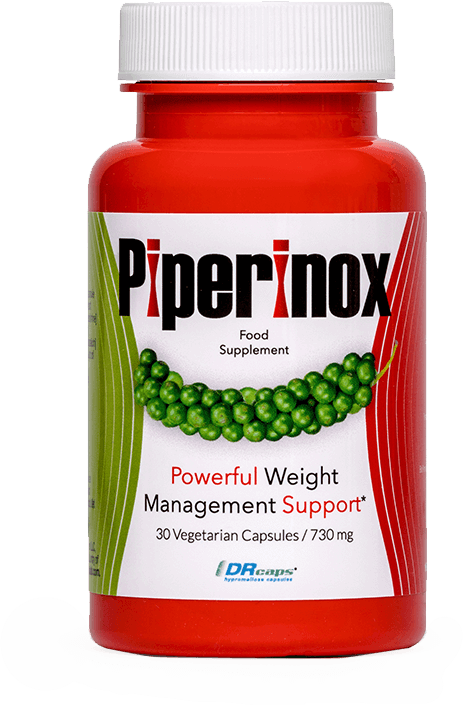
Our Recommendation — Piperinox
Score: 4.4/10 · Best for: adults who want a simple one-capsule-a-day thermogenic and are untroubled by undisclosed doses. Main caution: the panel lists ingredient names only — a delayed-release capsule of an unknown dose is still an unknown dose — and no money-back guarantee is published. Fair trial: the three-bottle pack at $33.33 a bottle — the honest trial length, per our full audit below.
What Synephrine Is
Bitter orange (Citrus aurantium) is a citrus fruit too sour to eat, used for centuries in traditional medicine and marmalade. Its peel and unripe fruit contain p-synephrine, an alkaloid that acts on adrenergic receptors — the same receptor family targeted by adrenaline and by the decongestant phenylephrine.
That mechanism is the whole story in one sentence. Adrenergic stimulation constricts blood vessels and speeds the heart; it is also what raises metabolic rate slightly. Synephrine's proposed benefit and its documented risks are the same pharmacology read from two directions.
Context matters for dose. Bitter orange in food — marmalade, flavouring, the occasional Seville orange juice — delivers trace synephrine, and regulators treat those food-level exposures as unremarkable. A concentrated extract capsule is a different exposure by orders of magnitude, and it is the extract form that fills supplement labels.
The National Center for Complementary and Integrative Health (NCCIH) summarises the ingredient's status plainly: bitter orange has not been clearly shown to help with any health purpose, and its effect on body weight is unclear. That is the federal starting point before any individual study is considered.
Synephrine vs Ephedrine: Is It Just a Weaker Ephedra?
Synephrine entered the supplement market through a vacancy. When the FDA banned ephedra (ephedrine alkaloids) from dietary supplements in 2004 — after reports of strokes, heart attacks and deaths — formulators needed another adrenergic ingredient. Bitter orange extract, marketed as the "ephedra-free" alternative, filled the shelf space within a few years.
The two compounds are related but not identical, and the differences deserve precision rather than either panic or reassurance:
| Ephedrine (ephedra) | p-Synephrine (bitter orange) | |
|---|---|---|
| Mechanism | Strong, broad adrenergic stimulation | Weaker adrenergic stimulation, biased toward beta-3 receptors in test systems |
| Typical studied dose | ~20–150 mg/day in the banned products | ~10–53 mg in the trials pooled by Koncz 2022 |
| Blood-pressure effect | Clinically significant rises; cardiovascular events in case reports | Smaller rises; prolonged use +6.37/+4.33 mmHg vs placebo in the 2022 meta-analysis |
| US regulatory status | Banned from supplements by FDA final rule, 2004 | Never banned; sold freely, with regulator cautions |
The fair reading: synephrine is a weaker stimulant than ephedrine, not a safe one. "Natural ephedra substitute" was a marketing frame built on the family resemblance; the meta-analytic record shows a milder version of the same directional effects on blood pressure, with no demonstrated weight benefit to set against them.
It is also worth noting who argues the reassuring side. Much of the "synephrine is safe at usual doses" review literature is written by consultants to the ingredient industry.
Their trial readings are not worthless, but a reader should know the funding before weighing a reassurance — the same discipline we apply to maker-run efficacy trials elsewhere on this site.
Does Synephrine Actually Help Weight Loss?
The Koncz et al. 2022 meta-analysis (Nutrients) pooled 18 placebo-controlled human trials of p-synephrine — the most complete accounting available. Its efficacy conclusion is one line: weight loss in the synephrine groups was non-significant after prolonged treatment, and body composition did not change.
That verdict deserves emphasis because it is stronger than "unproven". These were trials at declared doses, run long enough to detect an effect, pooled by researchers with no product to sell. The pooled answer was that there is no significant weight benefit to detect.
Older individual trials sometimes quoted for efficacy carry a known statistical flaw, flagged in the Drugs.com monograph critique: within-group weight changes (the synephrine group lost weight from its own baseline) presented as if they were advantages over placebo, when the between-group comparison — the only one that isolates the ingredient — was not significant.
Acute studies do show synephrine nudging resting metabolic rate upward for a few hours — single-dose experiments report rises on the order of tens of kilocalories. That is a laboratory measurement, not a weight outcome.
The meta-analysis is precisely the bridge between the two: whatever the acute nudge is worth, it did not survive translation into significant fat loss across the prolonged trials.
Reading the Blood-Pressure Numbers Fairly
What does a 6.37 mmHg systolic rise mean in practice? For a healthy adult sitting at 115 mmHg, it is a nudge within normal variation — measurable, not alarming. Blood pressure is not linear in its risks, though, and the same absolute rise lands very differently at the top of the range.
For a reader at 138 mmHg — high-normal, often untreated and frequently undiagnosed — a sustained 6 mmHg rise crosses the 140 threshold that defines hypertension in most guidelines. The pooled figure is an average across trial participants; individual responses vary, and some users will sit well above the average.
This is why the contraindication list is not boilerplate. A stimulant whose pooled effect is "modest on average" can still be the wrong drug for the specific person holding the bottle — and roughly a third of adults with hypertension do not know they have it. An undisclosed dose removes the last screening step the buyer could perform alone.
The Blood-Pressure and Heart Record
The safety half of Koncz 2022 is the mirror image. In the pooled prolonged-use trials, systolic pressure rose 6.37 mmHg (95% CI: 1.02–11.72) and diastolic 4.33 mmHg (95% CI: 0.48–8.18) in the synephrine groups compared with placebo. For a population average that is modest; for an individual already hypertensive, it is the wrong direction at a meaningful size.
Single-dose studies in the monograph record show the acute pattern: blood pressure and heart rate rising within an hour of a 49–214 mg dose and staying elevated for up to five hours in some measurements. The effect is temporary, repeatable and dose-related — which is why undisclosed doses are a safety issue rather than a paperwork issue.
Case reports add the severe end of the spectrum: chest pain, fainting, and cardiac events in users of bitter-orange products. Fairness requires the confound to be stated — many of those reports involve multi-ingredient products, often with caffeine stacked alongside, so synephrine alone cannot be assigned every event. The pattern is nonetheless consistent with the mechanism.
The WebMD bitter orange monograph states the regulatory-medical position without decoration: bitter orange is possibly unsafe at medicinal doses, and taken with stimulants such as caffeine it may raise the risk of high blood pressure, fainting, heart attack and stroke. That is the mainstream summary a buyer should start from.
What Are the Side Effects of Bitter Orange?
The commonly reported effects follow the mechanism: faster heart rate, raised blood pressure, palpitations, headache, anxiety, restlessness and insomnia. Photosensitisation — increased skin sensitivity to sunlight — is documented for bitter orange compounds, a quirk inherited from its citrus chemistry.
Rarer reports include chest pain and fainting. Users who experience palpitations, chest tightness or unusual breathlessness on any synephrine product should stop and seek medical assessment rather than dose down and continue; stimulant cardiac symptoms are not a "push through it" category.
One practical point is routinely missed: these effects are additive with everything else adrenergic in a day. Coffee, energy drinks, decongestants containing pseudoephedrine, and pre-workouts all push the same system. A capsule that looks modest alone may be the third stimulant in the stack — which is the subject of our total-stimulant-load article.
Who Should Never Take Bitter Orange?
The monograph contraindication list is specific, and we reproduce it because Piperinox's own FAQ answers its safety question with the phrase "completely safe… well tolerated even by people with high sensitivity". Against this list, that sentence cannot stand:
- Hypertension — the pooled record shows pressure rising, not holding steady.
- Heart disease or tachyarrhythmia — adrenergic stimulation is the wrong input for an irritable heart.
- Hyperthyroidism — thyroid excess already drives heart rate and pressure upward.
- Narrow-angle glaucoma — adrenergic agents can raise intraocular pressure.
- MAOI and certain antidepressant users — monoamine interactions can amplify pressor effects.
- Anyone facing surgery — monographs advise stopping at least two weeks beforehand.
- Pregnancy and breastfeeding — no safety data; stimulant exposure is not a reasonable experiment.
Note the shape of the list: it is dominated by exactly the people a "high sensitivity" reassurance would attract and reassure. Sensitivity to stimulants is not a marketing segment. For this ingredient, it is close to a contraindication profile.
Not All "Synephrine" on a Label Is the Same Molecule
A further label problem hides in the chemistry. Bitter orange naturally contains p-synephrine. Its positional cousin m-synephrine — better known as the drug phenylephrine — does not occur in the fruit in meaningful amounts, yet analyses of supplements have found it in products, pointing to synthetic addition rather than extraction.
The distinction matters because m-synephrine is the stronger pressor agent. A label reading simply "synephrine" does not tell the buyer which molecule, or how much of it, the capsule holds. Piperinox's label goes one step further into opacity: it names only "bitter orange fruit extract", leaving even the synephrine type unstated.
Bitter orange also carries octopamine, a second trace amine with its own stimulant activity, which is why Health Canada's ceiling is written for synephrine and octopamine combined. Single-ingredient thinking understates what a whole-fruit extract delivers.
Synephrine and Exercise: The Pre-Workout Problem
Synephrine's other habitat is the pre-workout tub, where it is deliberately combined with caffeine and taken immediately before maximal cardiovascular effort. France's food-safety agency ANSES has advised against combining synephrine with caffeine and against using it around exercise — the two conditions pre-workout use creates by design.
The reasoning is additive load. Exercise raises heart rate and blood pressure on its own; caffeine adds a stimulant layer; synephrine adds an adrenergic one. Each has been studied mostly alone. The stack — which is how the products are actually used — is the least studied and most physiologically loaded version.
Piperinox is not a pre-workout, but its directions place it between meals with no timing restriction relative to training, and its panel pairs synephrine with guarana caffeine in the same capsule. A user who trains after a dose is running the ANSES-flagged combination without ever choosing to.
Is Synephrine Banned in Sport — and Can You Trust the Amount on the Label?
Synephrine is a banned stimulant on the NCAA list: a collegiate athlete testing positive faces the same process as for any prohibited stimulant. An ingredient mild enough to be sold in a supermarket fat burner is simultaneously prohibited in college sport — both facts are true, and the second one tells athletes what the first conceals.
Label reliability compounds the problem. NCCIH notes FDA testing that found substantial discrepancies between the synephrine amounts some products declared and what laboratory analysis measured. Independent analyses of the category have also found products adulterated with synthetic stimulant amines not present in any citrus fruit.
For an athlete, or anyone who needs to know their exposure, this creates a hierarchy of bad options. A declared dose may not match the contents. An undeclared dose — Piperinox's arrangement — removes even the possibility of checking. The undisclosed-amount product is the worst version of an already unreliable category.
The Piperinox Problem
Assemble the studied map this article has drawn. Trials used roughly 10–53 mg of synephrine. Prolonged use at studied doses raised blood pressure significantly versus placebo. Efficacy for weight loss was not significant. Contraindications cover a long list of common conditions.
Now place Piperinox on that map. As our Piperinox review documents, the label prints no bitter orange amount at all — not the extract weight, not a standardisation percentage, not a synephrine figure. The reader cannot place this product anywhere on the safety map: not at the bottom of the studied range, not above it, nowhere.
Meanwhile the maker's FAQ, as quoted in our review, describes the product as "completely safe" and "well tolerated even by people with high sensitivity". We flag that as a maker claim, contradicted in direction by the pooled trial record and by the monograph contraindication list reproduced above. It is the single most irresponsible sentence in this product's file.
Our score of 4.4/10 is not a judgement that synephrine is uniquely dangerous. At declared low doses, for a healthy adult, the record is one of modest effects and modest risks.
It is a judgement that selling an adrenergic stimulant with no dose, no warnings and a blanket safety reassurance removes every tool a buyer needs to use it sensibly.
A disclosed-dose synephrine product, sold with the monograph contraindications printed on its page, would be a different review — and several exist in this category, which makes the choice visible. Piperinox's maker chose the opposite on every count, and the score follows that choice rather than the molecule.
Our Recommendation — Piperinox
Score: 4.4/10 · Best for: adults who want a simple one-capsule-a-day thermogenic and are untroubled by undisclosed doses. Main caution: the panel lists ingredient names only — a delayed-release capsule of an unknown dose is still an unknown dose — and no money-back guarantee is published. Fair trial: the three-bottle pack at $33.33 a bottle — the honest trial length, per our full audit below.
Bitter Orange in Crave Burner
Crave Burner discloses bitter orange extract 100 mg at 6% synephrine — 6 mg of synephrine a day, below the 10–53 mg trial range and below Health Canada's 30 mg/day ceiling for synephrine plus octopamine. Unlike Piperinox, the dose is printed, so the exposure can be checked; our Crave Burner review scores it 6.5/10.
Frequently Asked Questions
Is synephrine a stimulant?
Yes. It is an adrenergic agonist — it stimulates the same receptor system as adrenaline, more weakly. Its presence on the NCAA banned list and its measurable blood-pressure effects both follow from that classification. "Stimulant" is not a slur here; it is the mechanism.
Is synephrine the same as ephedra?
No — family, not twin. They share adrenergic pharmacology, but ephedrine is the stronger, broader stimulant, and it was banned from US supplements in 2004 after cardiovascular deaths. Synephrine was never banned. The honest comparison is a weaker stimulant with a milder version of the same risk direction, and no demonstrated weight benefit.
Can I take synephrine with coffee?
Caffeine stacks a second stimulant load on the same cardiovascular system, and many of the serious case reports involve exactly this pairing. If you use a synephrine product at all, adding caffeine narrows the safety margin the pooled trials measured. Our stacking article works through the totals in detail.
How long do synephrine's effects last?
Single-dose studies show blood pressure and heart rate elevated for up to about five hours after a dose, with the peak in the first one to two hours. The stimulant feel fades on a similar schedule.
That window is why timing relative to training, caffeine and bedtime matters — and why a delayed-release capsule, which shifts release later, does not shorten the exposure.
What dose of synephrine is safe?
No dose has been established as safe-and-effective, because the effective half of that pairing is missing. The pooled trials found no significant weight benefit at any studied dose.
Health Canada has used 30 mg/day as a ceiling for synephrine plus octopamine in its natural-health-product rules — a regulatory ceiling, not an endorsement, and one an undisclosed-dose product cannot be checked against.
What should I do if a synephrine product makes me feel unwell?
Stop it, and treat the symptoms as information rather than weakness. A racing or irregular-feeling heart, chest tightness, unusual breathlessness, or a severe headache on a stimulant's timing are stop signals — and the chest symptoms on that list merit prompt medical assessment, not a wait-and-see.
Do not re-challenge yourself with a smaller dose to test the conclusion: the product's dose was never known in the first place, so the experiment has no controlled variable to adjust.
Who Should Buy Piperinox — and Who Should Skip It
Buy it if you are a healthy adult with normal blood pressure, you take no interacting medication, you are not a tested athlete, and you accept a once-a-day thermogenic whose stimulant doses you cannot know or check.
Skip it if you appear anywhere on the contraindication list above — hypertension, heart conditions, thyroid problems, glaucoma, MAOI or antidepressant use, upcoming surgery, pregnancy — or if you compete in NCAA sport.
Skip it, too, if the maker's "completely safe" reassurance is doing any work in your decision: this article is the record it contradicts, and the record is not close.
Last reviewed: November 2026. This article is educational and is not medical advice.
