
- Quick Answer
- The Trial Record vs the Case-Report Record
- What Regulators Did in 2025–26
- France: warning, then suspension
- Canada and Malaysia: label warnings built on the same file
- The Older Record, for Proportion
- Symptoms That Mean Stop and Seek Care
- Can garcinia interact with antidepressants or other medicines?
- Who Should Avoid It Entirely
- What This Means for a Garcinia-Containing Product
- Frequently Asked Questions
- Can garcinia cambogia damage your liver?
- How soon after starting can liver injury appear?
- Is the extract riskier than eating the fruit?
- Who Should Buy a Garcinia-Containing Product — and Who Should Skip It
- Read This Next
Disclosure: This article contains affiliate links. If you buy through them, we may earn a commission at no extra cost to you. It never changes our scores or conclusions.
Quick Answer
In short trials, garcinia is tolerated well — mostly mild stomach effects, and a 2025 meta-analysis of 444 trial participants found no significant effect on liver enzymes. Against that stands a case-report record of rare, unpredictable liver injury, including transplants and deaths, serious enough that regulators in four jurisdictions acted in 2025–26.
Both records are true because they measure different things. Trials detect common harms in hundreds of people over weeks. The liver injury is idiosyncratic — rare, not dose-dependent, and invisible to trials of that size. Which is why "the dose is low" is not a safety argument for this ingredient.
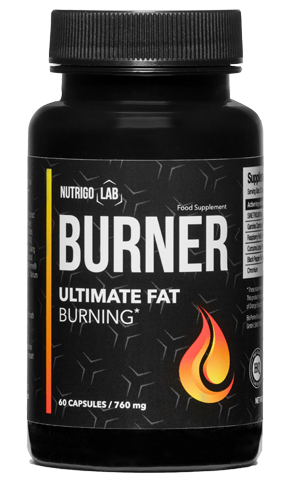
Best for: anyone with a liver history, anyone on regular medication, and anyone who has read a maker's "no known side-effects" claim and wants it checked. It contains branded garcinia (Citrin) — its maker's FAQ claims "no known side-effects"; this page is why we don't repeat that. Nutrigo Lab Burner scores 5.0/10 with us.
Our Recommendation — Nutrigo Lab Burner
Score: 5.0/10 · Best for: adults who want a non-stimulant-style fat-burner adjunct with named, branded ingredients — alongside diet and exercise, not instead of them. Main caution: the printed ingredient amounts sum to more than the capsule weighs — the maker's own numbers conflict — and no money-back guarantee is published. Fair trial: the three-bottle bundle at $33.33 a bottle, alongside diet and exercise — the trial the evidence describes; the six-bottle pack is the cheapest continuation, after a completed trial.
The Trial Record vs the Case-Report Record
Start with the reassuring half, stated fairly. Across garcinia's randomised trials, adverse effects were mostly gastrointestinal — nausea, stomach discomfort, headache — and modestly more common than on placebo. A 2025 systematic review of nine trials and 444 participants (Journal of Nutritional Science) found no significant effect of garcinia on the liver enzymes ALT or AST versus control groups.
Now the other half. The US Drug-Induced Liver Injury Network (DILIN) adjudicated 22 cases of liver injury from garcinia, taken alone or with green tea, among its enrolled patients: onset ran from 13 to 223 days after starting (median 51 days), 91% of the patients were hospitalised, one died and one required a transplant.
A genetic marker, HLA-B*35:01, appeared far more often in the garcinia cases than in comparison groups — a fingerprint of an immune-mediated, idiosyncratic reaction.
A 2025 review of the hepatotoxicity literature counted more than 200 liver-injury adverse events in reporting databases and 34 published case reports, among them one death and nine liver transplants, with 17 cases scoring possible-to-highly-probable causality. In one case, restarting the product reproduced the injury — the closest thing case medicine has to proof.
These records do not contradict each other; they interlock. An injury that strikes perhaps one user in tens of thousands, unpredictably, will never appear in trials of a few hundred. It appears exactly where it has appeared: in case reports, transplant registries and regulator files. The trial record tells you garcinia is not commonly toxic. The case record tells you it is not harmless. Both belong in the decision.
What Regulators Did in 2025–26
Until recently, consumer coverage of garcinia safety stopped at the case reports. The regulator wave of 2025–26 is the part of the record almost no consumer page has caught up with.
France: warning, then suspension
France's food-safety agency ANSES built a 69-page scientific opinion on 38 adverse events reported between 2009 and early 2024 — liver, cardiac, digestive, psychiatric and muscle effects — including a death from fulminant hepatitis in a 71-year-old woman that the agency judged very likely linked to her garcinia supplement.
ANSES advised consumers not to consume garcinia supplements at all, and in April 2025 France suspended the sale of garcinia-containing food supplements for a year; the suspension was subsequently renewed.
Canada and Malaysia: label warnings built on the same file
Health Canada's summary safety review (September 2025) found a possible link between garcinia/HCA products and hepatotoxicity that could, rarely, lead to serious outcomes. It ordered the monographs updated and expects labels to carry the warning signs of liver injury and advice to stop and consult a professional if they appear.
Malaysia's NPRA safety alert (2026), built partly on the Canadian review and the DILIN series, states the key pharmacological fact plainly: the liver injury appears idiosyncratic — not dependent on dose or duration — with unpredictable onset. Australia's TGA reached the same destination by its own route, concluding a rare risk of liver injury and requiring liver-harm warning labels, with the labelling changes commencing in March 2025.
Four jurisdictions, one pattern: nobody banned the ingredient outright on this evidence, and nobody left it alone either. Rare-but-serious, unpredictable, labelled — that is the regulators' collective verdict, and it is more useful than either "safe" or "dangerous."
The Older Record, for Proportion
The 2025–26 wave had a rehearsal. In 2009, the FDA warned on Hydroxycut products after 23 reports of liver damage, including one death and one liver transplant, and the products were recalled and reformulated. Those were multi-ingredient formulas; garcinia was among the ingredients in some, and attribution was shared across the blends — the episode indicts the era's fat-burner formulations more than any single plant.
We include it for two reasons. It shows the liver signal around this product category is not new, only newly organised. And it shows the limits of the case method in the other direction: in a multi-ingredient product, a case report cannot name the culprit. The garcinia-alone cases in the DILIN series — five of the 22 involved garcinia by itself — are the ones that carry the ingredient-specific weight.
Symptoms That Mean Stop and Seek Care
Liver injury from supplements typically announces itself the way other hepatitis does. If you take any garcinia-containing product and develop these, stop the product and seek medical care promptly — and tell the clinician about the supplement, because patients often do not volunteer it:
- Yellowing of the skin or the whites of the eyes
- Dark, tea-coloured urine
- Unusual, persistent fatigue
- Nausea or vomiting that does not settle
- Pain in the upper-right abdomen
- Pale stools or unexplained itching
The DILIN cases arose a median of 51 days after starting — not the first week, and not only after months. The window to respect is the whole period of use and the weeks after stopping.
Can garcinia interact with antidepressants or other medicines?
Garcinia's interaction record is case-based, like its liver record, and the most serious entry is serotonergic. Interaction references record a patient who developed serotonin syndrome on garcinia 1,000 mg daily alongside escitalopram, an SSRI antidepressant taken uneventfully for a year before garcinia was added. Serotonin syndrome — agitation, confusion, rapid heart rate, fever — is a medical emergency, and the case is why antidepressant users are told to clear garcinia with their prescriber first.
The monograph record adds cautions rather than certainties: a theoretical bleeding-risk addition alongside anticoagulant and antiplatelet drugs such as warfarin and aspirin; possible effects on blood sugar that matter for diabetes medication; and the general rule that stacking garcinia with other potentially liver-toxic drugs or supplements multiplies an unquantifiable risk.
Treat the list as a referral, not a verdict. If you take any regular prescription medicine, the interaction check belongs to your pharmacist, who can see your actual list — no article can.
Who Should Avoid It Entirely
- Anyone with liver disease or a previous supplement-related liver injury — the idiosyncratic mechanism gives no safe-dose workaround.
- Regular alcohol users — several regulators' warnings single out alcohol during use; Malaysia's alert advises avoiding it outright.
- People on antidepressants or other serotonergic medicines — per the documented serotonin-syndrome case.
- People on warfarin or other anticoagulants, and transplant patients on immunosuppressants — interaction stakes too high for a case-report-level evidence base.
- Pregnancy and breastfeeding — no safety record exists to consult.
- Anyone unwilling to stop at the first symptoms — the cases that ended in transplant were, in part, cases where use continued through early warning signs.
What This Means for a Garcinia-Containing Product
Return to the product this site reviews, Nutrigo Lab Burner. Its garcinia is the branded Citrin form at a printed 150 mg per capsule — a low dose by trial standards. Against a dose-dependent harm, that would count for something. Against this harm, it does not: the regulators' own assessments describe the injury as idiosyncratic, and an idiosyncratic reaction does not ask how many milligrams you took.
What the maker prints on the subject is worse than silence. Its FAQ answers the side-effects question: "Absolutely! There are no known side-effects." Against 22 adjudicated DILIN cases, a French suspension, and four jurisdictions' label warnings, that sentence cannot be printed honestly about a garcinia-containing product in 2026. We flag it as a maker's claim, and it is one of the reasons this product's safety sub-score sits where it does.
The balanced conclusion is not panic. Millions of garcinia doses are taken without incident; the injury is rare. It is that the ingredient carries a small, unpredictable, serious risk that its sellers are obliged to disclose and its buyers are entitled to know — and that "rare" is a fact about frequency, not about what happens to the person it happens to.
Our Recommendation — Nutrigo Lab Burner
Score: 5.0/10 · Best for: adults who want a non-stimulant-style fat-burner adjunct with named, branded ingredients — alongside diet and exercise, not instead of them. Main caution: the printed ingredient amounts sum to more than the capsule weighs — the maker's own numbers conflict — and no money-back guarantee is published. Fair trial: the three-bottle bundle at $33.33 a bottle, alongside diet and exercise — the trial the evidence describes; the six-bottle pack is the cheapest continuation, after a completed trial.
Frequently Asked Questions
Can garcinia cambogia damage your liver?
Rarely, yes — documented well enough that the US liver-injury network has adjudicated 22 cases and four jurisdictions required warnings or suspensions in 2025–26. Most users experience nothing of the kind. The injury is idiosyncratic: unpredictable, not dose-dependent, and usually reversible when the product is stopped early.
How soon after starting can liver injury appear?
In the DILIN series, onset ranged from 13 to 223 days after starting, with a median of 51 days; regulators note reports from a few weeks to many months. There is no early "safe window" — the symptom list above applies for the whole period of use.
Is the extract riskier than eating the fruit?
They are different exposures. Trials and injury cases alike involve concentrated rind extracts at gram-level daily doses; the fruit eaten as food delivers a fraction of that. The safety record in this article belongs to supplements, not to the fruit in a diet.
Who Should Buy a Garcinia-Containing Product — and Who Should Skip It
Buy it if you have no liver history, take no serotonergic or anticoagulant medication, do not drink regularly — and you choose it with the regulator record read, the symptom list known, and a commitment to stop at the first warning sign.
Skip it if any item on the avoid list above is you; if the product's maker claims "no known side-effects" (a maker who prints that sentence has told you how they handle safety information generally); or if a roughly one-kilo pooled benefit does not justify, for you, a rare but serious risk. That trade is personal, and it is legitimate to price it at zero.
Our verdict: garcinia is a low-frequency, high-severity safety story that the industry spent a decade under-reporting and regulators spent 2025–26 correcting. Take it, if at all, the way the regulators' labels now instruct — informed, watchful, and ready to stop.
Last reviewed: October 2026
