
- Quick Answer
- What Is BioPerine, and How Is It Different From Regular Piperine?
- How Does Piperine Increase the Absorption of Other Ingredients?
- Does Piperine Help You Lose Weight?
- How Much Piperine Is a Normal Supplemental Dose?
- Can Piperine Change How Your Medicines Are Absorbed?
- Why "Enhances Absorption" Sells So Well
- So What Is Piperine Actually For in a Fat Burner?
- Frequently Asked Questions
- Is black pepper extract the same as eating black pepper?
- Does piperine burn fat directly?
- Why is piperine in so many supplements?
- Can piperine interfere with medication?
- Who Should Buy Piperinox — and Who Should Skip It
- Read This Next
Disclosure: This article contains affiliate links. If you buy through them, we may earn a commission at no extra cost to you. It never changes our conclusions.
Quick Answer
Piperine's one solid human finding is absorption, not fat loss. In a small 1998 study, it raised the blood levels of a companion compound dramatically; its weight-loss evidence, by contrast, is rodent work at doses supplements do not match.
No human trial has ever tested piperine alone for weight loss. And Piperinox — the fat burner named after this ingredient — does not disclose its piperine dose at all.
So even the absorption effect cannot be confirmed for this product. Best for: readers who see BioPerine on every label and want to know what it actually does. Piperinox scores 4.4/10 in our review.
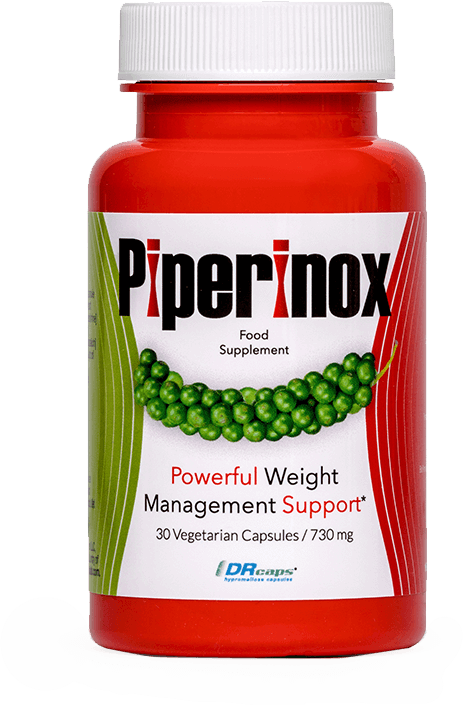
Our Recommendation — Piperinox
Score: 4.4/10 · Best for: adults who want a simple one-capsule-a-day thermogenic and are untroubled by undisclosed doses. Main caution: the panel lists ingredient names only — a delayed-release capsule of an unknown dose is still an unknown dose — and no money-back guarantee is published. Fair trial: the three-bottle pack at $33.33 a bottle — the honest trial length, per our full audit below.
What Is BioPerine, and How Is It Different From Regular Piperine?
BioPerine is a branded black pepper extract made by Sabinsa, standardised to at least 95% piperine — the alkaloid that makes pepper hot. Piperinox's label lists it first among its seven ingredients, under its full trademarked name: "BioPerine® Black Pepper Fruit Extract".
The distinction between "BioPerine" and generic piperine is a trademark and a standardisation guarantee, not a different molecule. A label printing generic "black pepper extract" promises neither the extract's strength nor its piperine content. A BioPerine listing at least names a defined raw material.
What neither listing tells you, on its own, is the amount. Standardisation describes what fraction of the extract is piperine; it says nothing about how many milligrams of extract the capsule holds. That gap between a defined ingredient and an undefined dose runs through this entire article.
Piperine itself has been studied for decades, mostly as a pharmacological tool. Researchers use it because it interferes with the machinery the body uses to process foreign compounds. That interference is the source of both its genuine usefulness and its one real caution.
For scale: black pepper itself is typically around 5–9% piperine by weight. A gram of pepper — far more than a meal carries — holds perhaps 50–90 mg of the compound in its natural matrix, released slowly through digestion. A standardised 95% extract compresses that chemistry into a 5–20 mg dose designed to act at once.
How Does Piperine Increase the Absorption of Other Ingredients?
The landmark study is Shoba et al. 1998, published in Planta Medica. The researchers gave healthy human volunteers 2 g of curcumin — a compound the body normally absorbs very poorly — with and without 20 mg of piperine.
Curcumin alone produced serum levels that were undetectable or very low in those volunteers. Adding the 20 mg of piperine raised curcumin bioavailability by 2,000% compared with the same 2 g curcumin dose taken without it — a twenty-fold increase in what reached the blood.
In the rat arm of the same study, 20 mg/kg of piperine raised curcumin bioavailability by 154% compared with curcumin alone. The human figure is the famous one, but both arms point the same way: piperine changes how much of a companion compound survives the journey into circulation.
The mechanism is understood. Piperine inhibits glucuronidation — a liver and gut-wall process that tags compounds for disposal — and it interferes with P-glycoprotein, a pump that pushes absorbed substances back into the intestine. Block the disposal routes, and blood levels of the companion compound rise.
Sabinsa's BioPerine studies page collects further examples from its own research programme: piperine co-administered with coenzyme Q10 raised CoQ10 blood levels by roughly 30% compared with CoQ10 given alone, and similar absorption gains are reported for beta-carotene and vitamin B6. These are the maker's own summaries, and we treat them as such.
Two qualifications matter before this becomes a sales point. First, higher blood levels are a pharmacokinetic measurement, not a health outcome: no study shows that boosting a nutrient's blood level twenty-fold makes anyone twenty-fold healthier. Second, the effect is dose-dependent — Shoba's result belongs to 20 mg of piperine, a specific, stated dose.
Follow-up work over the years has complicated the picture further. Absorption enhancement varies by compound, by person and by what else is in the gut at the time. The honest summary is narrow: piperine, at around 20 mg, reliably raises the blood levels of certain co-administered compounds. Everything beyond that sentence is extrapolation.
It is also worth separating the two kinds of study in this literature. Pharmacokinetic studies — Shoba's design — measure blood concentrations over hours, in small groups of healthy volunteers. They are the right tool for the question they ask, and they answer it well.
Outcome studies — does anyone lose weight, feel better, live longer? — are the tool for the questions supplement buyers actually ask. For piperine, that second shelf is essentially empty. The ingredient has been measured entering the blood alongside other compounds for over twenty-five years, and almost never measured doing anything for the person swallowing it.
Does Piperine Help You Lose Weight?
Against that one well-documented trick, set the claim that brings piperine into fat burners. The direct evidence for piperine as a fat-burning agent comes from rodent studies, typically at 20–40 mg of piperine per kilogram of body weight — doses that, scaled to a human, would run into the grams, hundreds of times a supplement serving.
In those animal studies, piperine influenced fat-cell formation and lipid handling in ways researchers describe as anti-adipogenic. Cell-culture work shows similar signals. Neither type of study is a human weight-loss trial, and no human weight-loss trial of piperine — at any dose — exists in the published record we could find.
The leptin-and-ghrelin framing sometimes attached to piperine fares no better. Piperinox's own site presents its formula through appetite-hormone and lipolysis language; that is the maker's framing of its ingredient list, attributed here as a claim, not a finding. No human study has measured piperine changing appetite hormones at supplement doses.
Review articles on piperine sometimes blur this line, moving from rodent data to supplement implications in a single paragraph. Read carefully, the reviews concede the gap: the human literature on piperine is a pharmacokinetics literature. It answers "how much gets in?" — not "how much weight comes off?"
So the audit is short. Piperine's proven role is absorption support. Its weight-loss role is a hypothesis assembled from animal doses nobody sells and cell studies nobody can eat. A formula that names itself after piperine is naming itself after the supporting actor, not an engine.
How Much Piperine Is a Normal Supplemental Dose?
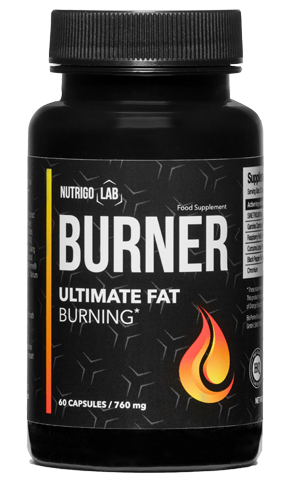
Typical piperine doses in supplements run 5–20 mg per day, and Shoba's landmark result sits at the top of that range. In our Set V audit, Nutrigo Lab Burner prints its BioPerine amount openly: 10 mg per capsule, a checkable, mid-range figure.
Piperinox, named after this ingredient, prints nothing. As our full Piperinox review records, the label lists seven ingredient names and one number — 730 mg, the weight of the whole capsule, shell contents and excipients included. No amount is published for the piperine or for anything else.
That means the reader cannot confirm the namesake ingredient is present at even the bottom of the normal 5–20 mg range. It could be 20 mg. It could be 2 mg, a dusting included so the name can go on the bottle. The label is silent, and silence is not a dose.
The ceiling arithmetic shows how much room the silence covers. The capsule's total contents weigh at most 730 mg, shared between seven listed ingredients plus excipients. Even in the impossible case where piperine were half the fill, the dose would be unremarkable; in the realistic case, it shares the capsule with two stimulant extracts and four other ingredients.
Listing order offers one clue, and only one. Piperinox names BioPerine first, which in a descending-order list would suggest it is the largest single component by weight. But the maker does not present its list as a formal proprietary-blend panel, and "largest of seven undisclosed amounts" still leaves every actual number unknown.
This matters more for piperine than for most ingredients, because its one proven effect is steeply dose-dependent. An absorption enhancer at a homeopathic quantity enhances nothing. The entire evidence-based reason to include piperine evaporates if the dose is trivial — and trivial is precisely what an undisclosed dose may be.
Can Piperine Change How Your Medicines Are Absorbed?
The mechanism that raises curcumin levels does not check what it is enhancing. Piperine's inhibition of drug-metabolising enzymes (including CYP3A4) and the P-glycoprotein pump applies to prescription medicines travelling the same routes — which is why the interaction literature treats piperine as a caution, not just a feature.
Compounds handled by those pathways include many common drug classes: certain blood-pressure medicines, statins, immunosuppressants and anticoagulants among them. Warfarin-class cautions appear in the interaction reviews for exactly this reason — a bioenhancer can push a carefully calibrated drug dose higher than prescribed.
None of this makes 5–20 mg of piperine dangerous for a healthy, unmedicated adult; the doses in food and ordinary supplements are modest. It does mean the phrase "absorption enhancer" should be read as a warning label by anyone on regular medication. Enhancing absorption is only a benefit when you chose what gets absorbed.
For Piperinox specifically, the interaction question inherits the dose problem. A buyer on medication cannot weigh the bioenhancer risk because the bioenhancer's amount is one of the seven numbers the maker declines to publish. The pharmacist conversation this product requires starts from a label that cannot answer its first question.
Why "Enhances Absorption" Sells So Well
Absorption claims occupy a convenient gap in supplement regulation. A maker cannot legally promise weight loss without evidence, but "supports the absorption of nutrients" describes a mechanism — and piperine genuinely has one. The claim is printable, defensible and almost impossible for a buyer to test at home.
It also upgrades every other ingredient on the label rhetorically. A formula with piperine can imply that its ordinary ingredients work harder than the same ingredients elsewhere. Whether they do depends on the piperine dose, the ingredient and the person — three variables the claim never mentions.
Our review position is simple: credit the mechanism where the dose is printed and in range, as with Burner's disclosed 10 mg. Decline to credit it where the dose is a secret.
Piperinox asks for the credit while keeping the secret, which is why its namesake ingredient earns it so little in our scoring. The fix would cost the maker one printed number.
So What Is Piperine Actually For in a Fat Burner?
The honest answer is support work. In a disclosed-dose formula, piperine's job is to raise the uptake of the ingredients around it — a legitimate, evidence-backed supporting role, provided the dose is in the studied range and the ingredients around it have evidence worth amplifying.
It is not the fat-burning engine. It does not raise metabolic rate in humans at supplement doses, it has no human weight-loss trial behind it, and its appetite-hormone story is maker narrative. A formula leaning on piperine for its headline is leaning on the weakest leg of its own ingredient list.
Piperinox leans exactly there: the product is named for the absorption aid, while the ingredients that would actually drive a thermogenic effect — the stimulants — sit undisclosed beside it. That inversion, headline support act and invisible engine, is the core of its 4.4/10 score.
Our Recommendation — Piperinox
Score: 4.4/10 · Best for: adults who want a simple one-capsule-a-day thermogenic and are untroubled by undisclosed doses. Main caution: the panel lists ingredient names only — a delayed-release capsule of an unknown dose is still an unknown dose — and no money-back guarantee is published. Fair trial: the three-bottle pack at $33.33 a bottle — the honest trial length, per our full audit below.
Frequently Asked Questions
Is black pepper extract the same as eating black pepper?
No — the doses are orders of magnitude apart. A heavy hand with the pepper mill delivers a few milligrams of piperine across a whole meal. Shoba's study used 20 mg of purified piperine in a single dose, and supplement extracts are concentrated to at least 95% piperine. Culinary pepper is a flavouring; the extract is a pharmacological tool.
Does piperine burn fat directly?
There is no human evidence that it does. The fat-related findings come from rodent studies at 20–40 mg/kg and from cell cultures. Piperine's only demonstrated human effect is raising the blood levels of compounds taken with it.
Why is piperine in so many supplements?
Because it is cheap, patented in its branded form, and performs one real, measurable pharmacokinetic trick. "Enhances absorption" is also a claim a maker can print without running a weight-loss trial. Its ubiquity reflects its usefulness to formulators — and its convenience to marketers — more than any fat-burning evidence.
Can piperine interfere with medication?
It can in principle, because it inhibits enzymes and transport pumps that many medicines rely on for their normal clearance. Anyone taking regular prescription medication — particularly anticoagulants, immunosuppressants, statins or blood-pressure drugs — should show the product to a pharmacist first. With an undisclosed dose, as in Piperinox, that conversation is harder, not easier.
Who Should Buy Piperinox — and Who Should Skip It
Buy it if you want the simplest possible thermogenic routine — one capsule a day, a full month per bottle at the lowest monthly cost in its wave — and you are genuinely untroubled by a formula whose doses, piperine included, are entirely undisclosed.
Skip it if you take regular medication a bioenhancer could interact with, if you have high blood pressure or caffeine sensitivity (its two stimulants are also undisclosed), or if you expect the namesake ingredient to be verifiably dosed. On this label, nothing is verifiably dosed.
Last reviewed: October 2026. This article is educational and is not medical advice.
