
- Quick Answer
- What Is a Thermogenic Fat Burner — and How Does Thermogenesis Work?
- A Short History of the Category: From Ephedra to Blends
- The Mechanism Classes, Graded
- Stimulant thermogenics: caffeine and synephrine
- Capsaicinoids: the pepper route
- Green tea and the catechin question
- Polyphenol and botanical thermogenics
- How Many Extra Calories a Day Do Thermogenics Actually Burn?
- The Measurement Problem: Chambers, Scales and Mirrors
- Do Fat Burners Work Without Exercise or Diet?
- Can the Jitters From a Thermogenic Actually Make You Move Less?
- The Ritual Effect, Priced Honestly
- The Second Claim: Appetite
- What a Fair Self-Test Looks Like
- Safety Is a Mechanism Too
- The Scorecard: Every Common Thermogenic Ingredient, Graded
- Reading a Thermogenic Label
- Who Thermogenics Are and Are Not For
- Frequently Asked Questions
- How fast do thermogenics work?
- Do thermogenics target belly fat?
- How do thermogenics compare with prescription weight-loss drugs?
- Do I need to cycle a thermogenic?
- Can a thermogenic work while I sleep?
- Is a stronger "kick" a sign a thermogenic is working?
- Who Should Buy Piperinox — and Who Should Skip It
- Read This Next
Disclosure: This article contains affiliate links. If you buy through them, we may earn a commission at no extra cost to you. It never changes our conclusions.
Quick Answer
Thermogenesis is real and small. The honest translation of the whole thermogenic category is a few dozen extra kilocalories a day in good trials — a nudge that only matters inside a calorie deficit, and only from ingredients at studied doses.
A thermogenic cannot outrun intake, target belly fat, or substitute for the deficit itself. Best for: anyone deciding whether a thermogenic deserves a place next to diet and training, not instead of them. Piperinox, this set's worked example, scores 4.4/10 — a plausible roster whose every dose is undisclosed.
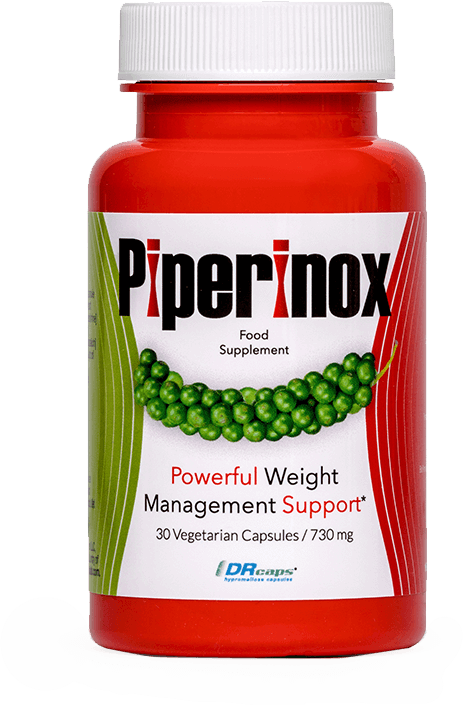
Our Recommendation — Piperinox
Score: 4.4/10 · Best for: adults who want a simple one-capsule-a-day thermogenic and are untroubled by undisclosed doses. Main caution: the panel lists ingredient names only — a delayed-release capsule of an unknown dose is still an unknown dose — and no money-back guarantee is published. Fair trial: the three-bottle pack at $33.33 a bottle — the honest trial length, per our full audit below.
What Is a Thermogenic Fat Burner — and How Does Thermogenesis Work?
Thermogenesis is heat production, and heat is where calories go. Every day, your body spends energy in three main ways: keeping you alive at rest (resting metabolic rate), moving around, and digesting food. Thermogenic supplements claim to raise the first and third of those — to make the resting machinery burn a little hotter.
The biology offers three genuine routes. The first is diet-induced thermogenesis: digesting food itself costs energy, roughly a tenth of what you eat, and some compounds — capsaicin is the studied example — nudge that cost upward after a meal.
The second route is brown adipose tissue, a specialised fat that burns fuel to make heat via a protein called UCP1. Adults carry small amounts of it. Cold exposure activates it reliably; supplements claim to, with far weaker evidence, and the amounts involved in adult humans are small to begin with.
The third route is the one most fat burners actually use: central stimulation. Caffeine and synephrine push the sympathetic nervous system, which raises heart rate, alertness and — as a side effect of the arousal — energy expenditure. Calling this "thermogenesis" is technically defensible and commercially convenient: it rebrands a stimulant effect as a metabolic one.
None of these routes is imaginary. The question is never whether thermogenesis exists; it is how many kilocalories a day a given ingredient, at a given dose, adds — and whether that number survives contact with appetite, adaptation and an ordinary kitchen.
One more piece of physiology frames everything that follows: adaptive thermogenesis. When you diet, resting expenditure falls by more than the lost weight predicts.
The body defends its stores by running cooler — typically by an extra 5–15% beyond the change in body mass, in people who have lost significant weight. Dieters experience this as the plateau.
Thermogenic marketing quietly promises to cancel that adaptation. The arithmetic does not cooperate: the adaptation is measured in hundreds of kilocalories at meaningful weight losses, the supplements in dozens.
A thermogenic can offset a slice of the plateau's edge. It cannot repeal the physiology that creates it, and any copy implying otherwise has confused the two scales this article keeps separating.
A Short History of the Category: From Ephedra to Blends
Thermogenics have a regulatory biography, and it explains the modern label. The 1990s category was built on the ECA stack — ephedrine, caffeine and aspirin — a combination with genuine, measurable effects on energy expenditure and weight, and a genuine record of cardiovascular harm.
When the FDA banned ephedra from supplements in 2004, the category did not shrink; it substituted. Synephrine replaced ephedrine, guarana and green tea replaced declared caffeine, and proprietary blends replaced panels. Each substitution preserved the marketing while weakening either the effect, the transparency, or both.
The ephedra era is worth remembering for one analytical reason: it is the control condition for the whole category. The strongest legal thermogenic stack ever sold produced, in its best trials, a few pounds of extra loss over months — alongside the adverse-event record that ended it. Every modern product is pharmacologically weaker than that benchmark.
So when a contemporary blend implies results beyond the ECA era's, the claim fails history before it fails pharmacology. The honest category story is decline-and-obscure: weaker stimulants, hidden doses, larger adjectives. A buyer who knows the history reads today's labels with the right default suspicion.
The Mechanism Classes, Graded
Stimulant thermogenics: caffeine and synephrine
This is the only class with reliable, measurable acute effects on resting metabolic rate. Caffeine at ordinary doses raises energy expenditure measurably for a few hours. Synephrine does the same more weakly, through adrenergic receptors — and, per the 2022 meta-analysis covered in our synephrine article, without producing significant weight loss across its prolonged trials.
The class's strength is also its ceiling. The same arousal that burns extra kilocalories raises blood pressure and heart rate, disturbs sleep at the wrong hour, and adapts: the body habituates, and the acute effect shrinks with daily use. A stimulant thermogenic is borrowing against a system that charges interest.
Dose is destiny here. Caffeine's thermogenic effect is one of the most reproducible findings in nutrition science — at declared doses, in declared amounts of coffee or tablets. A blend that hides its caffeine behind guarana, and its synephrine behind "bitter orange extract", has removed the one variable that determines which side of the effect line it sits on.
Capsaicinoids: the pepper route
Capsaicin and its non-pungent cousins, the capsinoids, activate TRPV1 receptors and produce small increases in energy expenditure and fat oxidation, with a modest appetite-dampening effect at the following meal in several trials.
The best pooled accounting is the 2023 British Journal of Nutrition meta-analysis: across 15 randomised trials with 762 overweight or obese adults, capsaicin groups lost 0.51 kg more body weight than control groups, with BMI down 0.25 kg/m² and waist circumference down 1.12 cm versus controls. The authors' own word for these effects was "rather modest".
Energy-expenditure reviews of the capsaicinoid family converge on the same scale: pooled acute increases in the region of a few dozen kilocalories per day, concentrated in people with higher BMI. That is a real effect — and it is roughly the caloric content of half an apple, earned daily, under trial conditions with declared doses.
Green tea and the catechin question
Green tea extract deserves its own paragraph because it is the botanical most often promoted from "weak" to "proven" in marketing copy. Its catechins, principally EGCG, inhibit an enzyme that breaks down noradrenaline, theoretically prolonging caffeine's thermogenic signal. The combination has been meta-analysed repeatedly.
The pooled results are instructive in both directions. Caffeine-plus-catechin mixtures show small energy-expenditure increases in chamber studies and small weight effects in trials — on the order of a kilogram or so over twelve weeks in the more favourable analyses, with substantial heterogeneity and evidence that habitual caffeine intake blunts the effect.
Note what the honest version of even this best botanical case looks like: a kilogram-scale effect, entangled with caffeine, fading in habitual coffee drinkers. Piperinox does not contain green tea — but dozens of its competitors do, and they are routinely sold with language this evidence cannot support.
Polyphenol and botanical thermogenics
The third class — green tea catechins, citrus polyphenols, assorted botanical extracts — has the weakest human record. Green tea extract shows small pooled effects heavily entangled with its caffeine content. Citrus polyphenol blends such as SINETROL rest on maker-run trials. Most remaining botanicals have animal or test-tube thermogenesis data and no human weight trials at all.
Piperine belongs here too, whatever the label implies: its human evidence is absorption pharmacokinetics, covered in our piperine article. A botanical's presence in a thermogenic is often a roster decision — the ingredient is recognisable and cheap — rather than an evidence decision.
The grading pattern across all three classes is consistent. Effects shrink as evidence quality rises. The ingredients with the best trials have the smallest honest claims; the ingredients with the largest claims have no trials. That inverse relationship is the single most useful thing a fat-burner buyer can learn.
How Many Extra Calories a Day Do Thermogenics Actually Burn?
Marketing prefers percentages because percentages hide the base. Competitor pages in this category quote metabolic-rate boosts in ranges like 3–11% — figures we treat as competitor-only claims, since they are rarely tied to a named trial — but the conversion exercise is instructive even on their own terms.
Take a resting metabolic rate of 1,600 kcal/day, typical for a smaller adult. Three percent of that is 48 kcal/day.
Eleven percent is 176 kcal/day — a figure no thermogenic ingredient has sustained in a controlled trial, and one that would show up unmistakably in weight data if it were real and durable. It does not, which is how we know the top of that range is fiction.
The trial-supported end is the bottom of the range and below it: a few dozen kilocalories, acutely, partly habituating away over weeks. Against a daily intake that varies by hundreds of kilocalories with appetite, schedule and mood, an extra 30–50 kcal of expenditure is a rounding error with a mechanism.
None of this makes the effect worthless. Inside a carefully held deficit, a small daily nudge compounds: 40 kcal/day is, in pure arithmetic, about 14,600 kcal over a year.
But the arithmetic assumes no compensation — and compensation, through hunger and reduced spontaneous movement, is exactly what bodies do. Trials, which capture the net of all that, land at fractions of a kilogram.
So translate every claim you meet. "Boosts metabolism" → by how many kilocalories, measured how, for how long, at what dose, in whom? A claim that cannot survive those five questions is not a smaller truth. It is a different genre of statement: advertising.
The Measurement Problem: Chambers, Scales and Mirrors
Part of the confusion around thermogenics is that its evidence comes in three currencies that do not convert cleanly. Metabolic-chamber studies measure kilocalories over hours. Trials measure kilograms over weeks. Buyers measure mirrors over days. The numbers shrink at every conversion.
A chamber study can detect a 40 kcal/day expenditure rise with precision — and a free-living human will erase it with a slightly larger lunch, unconsciously, by Thursday. This is not a flaw in the chamber studies. It is a property of energy balance in organisms that defend their weight.
The kilogram trials are therefore the only currency worth banking, and across the category they read consistently: fractions of a kilogram for capsaicinoids, nothing significant for synephrine, a kilogram-scale signal for caffeine-catechin combinations, nothing at all for most single botanicals.
When a product cites a chamber percentage on its bottle, ask for its kilogram trial. The silence that follows is the review.
Mirrors, finally, are the worst instrument of the three. Early "results" on any stimulant product are dominated by water shifts, glycogen, appetite-suppressed under-eating and the motivation spike of having started something. Week-one transformations measure enthusiasm. The trials' months-scale fractions of a kilogram measure the product.
Do Fat Burners Work Without Exercise or Diet?
This is the shared generic question of the whole category, and it deserves a head-on answer: no — not in any sense a buyer would recognise as working.
Every positive trial in this article ran alongside dietary control. The capsaicin trials measured their half-kilogram against control groups eating comparable diets. The SINETROL trials prescribed a calorie-controlled diet to both arms. Strip the diet away and the intervention is a few dozen kilocalories pushing against unrestricted intake — a garden hose against a reservoir.
The physiology agrees. Without a deficit, there is no fat loss for a thermogenic to accelerate; fat oxidation can rise transiently while fat mass stays unchanged, because the oxidised fat is simply replaced at the next meal.
"Burns fat" in the acute, biochemical sense and "reduces body fat" in the mirror sense are different claims, and only the first is ever demonstrated.
Exercise matters for a separate reason: it is the only lever in this discussion that moves energy expenditure by hundreds of kilocalories, preserves muscle during a deficit, and improves the metabolic markers thermogenics gesture at. A capsule that adds 40 kcal is not competing with a training session that adds 400. It is, at best, decorating one.
Our verdict on the category follows from this. A thermogenic is a minor accessory to a deficit — defensible as such, fraudulent as a substitute. Any product whose marketing inverts that order is telling you which of the two it expects to do the work: your hope.
Can the Jitters From a Thermogenic Actually Make You Move Less?
Two adaptations erode even the modest trial effects over time. The first is pharmacological tolerance. Caffeine's alerting and metabolic effects blunt within days to weeks of daily use as adenosine receptors upregulate; synephrine's adrenergic push meets a similarly adapting system. The dose that felt strong in week one is maintenance by week six.
The second adaptation is behavioural and sneakier: NEAT — non-exercise activity thermogenesis, the fidgeting, standing, stair-taking background burn of a day. Stimulation can cut both ways here; a wired morning can be followed by a crashed, sedentary afternoon.
Several researchers suspect part of the stimulant effect is clawed back exactly this way, which would help explain why acute expenditure studies overpromise against long-term weight trials.
Appetite compensation completes the triangle. A stimulant blunts hunger for a few hours; the rebound often arrives in the evening, larger. Trial designs with controlled meals suppress this effect. Free-living buyers experience it in full — which is why real-world results trail trial results even for honestly dosed products.
The practical consequence is a cycling question with no clean answer. Breaks restore stimulant sensitivity but surrender the (small) effect during the break. Continuous use keeps a habituated effect. Either way, the long-run contribution stays in the same small band the trials measured.
The Ritual Effect, Priced Honestly
An audit this sceptical should concede the one benefit that survives it: ritual. A capsule taken each morning is a daily recommitment device. People who start a product often simultaneously start the diet, the walking and the food diary — and attribute the combined result to the capsule.
Adherence is the master variable in weight loss; most diets fail by abandonment, not by arithmetic. If a $30 bottle keeps a person executing a deficit for twelve weeks, the bottle has delivered value — through behaviour, not thermogenesis.
The effect is real. It is also available from any ritual, including entirely free ones such as a morning walk taken at the same time each day.
The commercial problem is pricing. Ritual value justifies a modest price for a pleasant routine; it does not justify drug-level claims, drug-level prices, or hidden stimulant doses. When we score a thermogenic, we are scoring the pharmacology and the label. The ritual, the buyer supplies free of charge.
The Second Claim: Appetite
Thermogenic marketing usually runs two claims in parallel — burn more, eat less — and the second deserves its own audit, because appetite effects and expenditure effects have different evidence and different failure modes.
Caffeine's appetite effect is real but brief and unreliable: some acute studies show reduced intake at the next meal, others show none, and the effect does not clearly persist across a day.
A stimulant that suppresses lunch and rebounds at dinner has rearranged intake, not reduced it — the pattern free-living users report and controlled-feeding studies are designed not to see.
Capsaicin's appetite data are somewhat better behaved: the pooled literature shows modest reductions in subsequent energy intake at studied doses, one reason the capsaicinoid kilogram figures, while small, are at least consistently signed. Even here, adaptation applies — regular chilli eaters show blunted responses, and the effect size is a snack, not a meal.
Synephrine's appetite claim rests on the adrenergic mechanism and little direct human measurement. And the dedicated appetite ingredients sometimes added to thermogenics — fibres, chromium, garcinia — carry their own files, audited elsewhere in this programme; none transforms the category's arithmetic.
The buyer's translation: expect, at best, a few hours of blunted hunger from the stimulant component. Plan the deficit as if the capsule did nothing for appetite, because across a full day, the honest average is close to that. Any product whose appetite claims are doing the heavy lifting in its advertising is advertising its weakest evidence.
What a Fair Self-Test Looks Like
If you trial a thermogenic anyway — a defensible choice at a declared dose — run it like the trials do, because the category's effects are small enough to be invisible to casual impression.
Fix the background first: two weeks of stable diet and training before starting, so the product is the only new variable. Weigh under identical conditions several times a week and judge the four-week trend, never a single morning. Add a waist measurement weekly; it is crude, but it is the outcome the marketing promises.
Run twelve weeks — the duration of the better trials — before concluding anything. Record sleep quality and resting heart feel alongside; a product that costs you sleep is spending the deficit's most valuable asset, and that trade should be a decision, not a discovery.
Set the stop rules in advance: palpitations, chest symptoms, a clear blood-pressure rise, or sleep disruption that survives a timing change all end the experiment. And set the success bar at the trial scale — a kilogram beyond what the deficit alone was producing — so that a working product can actually pass it.
Most buyers will find the honest answer is "indistinguishable from the deficit alone". That is not a failed experiment. It is the category's measured effect size, confirmed in the only laboratory that matters to you, at the cost of one bottle rather than a subscription.
Safety Is a Mechanism Too
It is tempting to file safety separately from efficacy, but for thermogenics they are the same dial. The adrenergic stimulation that raises expenditure is the stimulation that raises blood pressure and heart rate; there is no formulation trick that keeps one and deletes the other. "Stronger thermogenic" and "gentler product" pull in opposite directions by pharmacology, not by manufacturing quality.
This is why the dose question returns as a safety question. A 10 mg synephrine dose and a 53 mg dose are different risk exposures wearing the same ingredient name, and the pooled blood-pressure signal — systolic up 6.37 mmHg with prolonged use versus placebo — was measured at declared doses. An undisclosed dose is an unplaceable risk.
Caffeine's version of the same point is the daily total. The FDA's consumer guidance anchors healthy adults at about 400 mg/day from all sources. A thermogenic that hides its caffeine behind guarana makes that budget unkeepable — our guarana article works the arithmetic — while a declared-dose product lets the buyer run the sum in seconds.
The category's severe-event record sits, as usual, at the stacked and adulterated end: multi-stimulant products, exercise, heat, undisclosed synthetic amines. Ordinary doses of ordinary ingredients in healthy adults are a modest-risk proposition. The risk concentrates exactly where transparency is absent — which is a reviewable property, and we review it.
The Scorecard: Every Common Thermogenic Ingredient, Graded
Hubs should end with the reference table the rest of the article argues for. This one compresses the set's ingredient audits — each row is expanded in its own article elsewhere in this programme — into the five questions that matter: what it is, what the human evidence shows, the studied dose, and what can go wrong.
| Ingredient | Human weight evidence | Studied dose | Main caution |
|---|---|---|---|
| Caffeine (incl. guarana) | Real acute expenditure effect; weight effect small and tolerance-limited | ~100–400 mg/day in studies | Sleep, anxiety, blood pressure; hidden totals |
| Synephrine (bitter orange) | Non-significant across 18 pooled placebo-controlled trials | ~10–53 mg in trials | Blood pressure +6.37/+4.33 mmHg with prolonged use vs placebo; NCAA-banned |
| Capsaicin / capsinoids | −0.51 kg vs control across 15 trials (762 adults) | ~2.5 mg capsaicin per meal in appetite studies | GI irritation; adaptation with regular use |
| Green tea catechins + caffeine | Small pooled effects, ~1 kg scale in favourable analyses | Varies; caffeine-entangled | Blunted in habitual caffeine users; rare liver reports for concentrated extracts |
| Piperine (BioPerine) | None for weight; absorption effect only | 5–20 mg (absorption studies) | Raises absorption of medicines as well as nutrients |
| Chromium | ~1.1 kg pooled in 2003 meta-analysis; not robust to one trial's removal | 600–1,000 µg/day in craving trials | Craving evidence is from psychiatric populations, not general dieters |
| Cinnamon / ginger | ~1 kg pooled for cinnamon at gram doses; ginger pilot-scale only | Cinnamon ≥2 g/day; ginger ~2 g in the pilot | Cassia coumarin and the liver at sustained gram doses |
Read the table's pattern rather than its rows. No ingredient reaches a large effect. The two with the most human data — caffeine and capsaicin — are also the two with the most mundane profiles. And every row's "studied dose" column is a number a label either prints or conceals.
That last column is where reviews earn their keep. A formula is not its ingredient list; it is its ingredient list multiplied by undisclosed or disclosed amounts. The scorecard grades the category.
Only a printed panel lets anyone grade a product — which is why Piperinox, whose seven ingredients occupy four rows of this table, still cannot be placed on it.
Reading a Thermogenic Label
Apply this article to the product this set audits. Piperinox's roster, as our full Piperinox review records, is a textbook thermogenic line-up on paper: BioPerine for absorption, bitter orange for synephrine, guarana for caffeine, cayenne for capsaicin, plus cinnamon, ginger and chromium at the margins.
Now try to place it on this article's effect-size table. Caffeine: amount unknown. Synephrine: amount unknown. Capsaicin: amount unknown, extract unnamed in strength. Every row requires a number, and the label supplies one number — 730 mg, the whole capsule's weight — for seven ingredients to share.
A thermogenic you cannot dose-place is not a product profile; it is a claim. The roster says the maker knows which ingredients belong in the category.
The missing panel says the buyer is not invited to check whether they are present at functional amounts — and in this category, presence at functional amounts is the entire difference between the trial results above and a flavoured placebo.
The label-reading protocol generalises. One: are amounts printed per ingredient? Two: do the printed amounts match the studied ranges this article cites? Three: can the stimulant total be summed? Four: is a money-back guarantee published, so a non-response costs you nothing? Piperinox fails the first check, which voids the next two, and publishes no guarantee to soften the fourth.
Run the same four checks across the category and a pattern emerges. The products that pass them tend to be boring: caffeine declared, doses mid-range, claims modest, guarantees printed.
The products that fail tend to be exciting: proprietary names, dramatic percentages, transformation language. In this category, boring is not a style. It is what the evidence looks like when a maker is willing to show it.
Who Thermogenics Are and Are Not For
The defensible user is narrow: a healthy adult, already running a real calorie deficit and training programme, with normal blood pressure, no stimulant sensitivity, and a preference for declared-dose products — who wants a small, honestly-sized nudge and will judge it over months.
Notice what that profile excludes: nobody is in it because of the capsule. The deficit, the training, the sleep and the patience are the programme; the thermogenic is an optional garnish on a plate that has to exist first.
Products are marketed in exactly the reverse order, which is the category's founding distortion and the reason hubs like this one have to be written at all.
The skip list is longer. Anyone with hypertension, heart disease, thyroid conditions or anxiety disorders. Anyone pregnant or breastfeeding. Anyone on medication that stimulants or piperine can interact with.
Tested athletes, for whom synephrine is a banned substance. And anyone whose plan is the capsule instead of the deficit — the product cannot carry that weight, and neither can any competitor.
Evening trainers deserve a specific mention: a stimulant thermogenic taken late trades tonight's sleep for today's session, and sleep loss measurably worsens next-day hunger and training quality. The stimulant-free category exists for this reader; it is weaker still, but it does not bill the night.
Gender-marketed formulas deserve one too. "Thermogenics for women" are typically the same stimulant architecture at slightly lower doses with added iron or B-vitamins and a different label colour. The physiology of thermogenesis is not meaningfully sex-specific at these effect sizes; the price difference, when one exists, is for the segmentation, not the science.
Finally, the under-18 and the underweight should not be in this category at all. Adolescents are a group regulators single out for caffeine caution, and a thermogenic's entire premise — spend more, eat less — is contraindicated for anyone whose problem is eating too little.
No label in this category markets to them honestly, and none should be used by them.
Our Recommendation — Piperinox
Score: 4.4/10 · Best for: adults who want a simple one-capsule-a-day thermogenic and are untroubled by undisclosed doses. Main caution: the panel lists ingredient names only — a delayed-release capsule of an unknown dose is still an unknown dose — and no money-back guarantee is published. Fair trial: the three-bottle pack at $33.33 a bottle — the honest trial length, per our full audit below.
Frequently Asked Questions
How fast do thermogenics work?
The stimulant sensation is same-day — that is pharmacology, not fat loss. Measurable fat change in the trials is a months-scale outcome: the capsaicin meta-analysis pooled trials of weeks to months for its half-kilogram. Anyone promising visible change in days is describing water, glycogen and hope.
Do thermogenics target belly fat?
No. Fat loss is systemic: a deficit draws on fat stores body-wide, in an order set by genetics and sex hormones, not by which capsule you took. Ingredients marketed as belly-fat burners are describing where buyers want loss, not where the loss occurs. Waist measurements in trials shrink because total fat shrinks.
How do thermogenics compare with prescription weight-loss drugs?
They are a different magnitude of intervention. GLP-1-class medicines produce double-digit percentage body-weight losses in their trials, with prescription-level side-effect profiles and medical supervision. Thermogenic supplements produce fractions of a kilogram in theirs. Any supplement implying equivalence with that class is misrepresenting both.
Do I need to cycle a thermogenic?
Cycling is practised widely and evidenced thinly. The rationale — restoring stimulant sensitivity — is physiologically plausible for the caffeine component, and breaks do restore the felt effect. No trial has compared cycled versus continuous use for weight outcomes. Treat cycling as a preference for managing tolerance and sleep, not as a protocol with data behind it.
Can a thermogenic work while I sleep?
"Night burner" products are thermogenics with the stimulants removed and sedative-adjacent ingredients added — which concedes this article's thesis from the other side.
Nothing burns meaningful fat during sleep beyond your resting metabolism, and any product strong enough to raise expenditure overnight would be strong enough to wreck the sleep that regulates tomorrow's appetite. Our Set V night-use article covers that category in full.
Is a stronger "kick" a sign a thermogenic is working?
It is a sign the stimulants are present. The felt intensity tracks caffeine and synephrine exposure, not fat oxidation, and tolerance makes the feeling fade while the (small) metabolic effect partly persists. Judging thermogenics by their kick systematically rewards the riskiest part of the formula.
Who Should Buy Piperinox — and Who Should Skip It
Buy it if you fit the narrow defensible profile above — healthy, deficit already running, stimulant-tolerant — and you accept that this particular thermogenic cannot be dose-placed against any trial in this article, because its maker publishes no amounts.
Skip it if you want the trial-sized effects this article documents: those belong to declared doses, and Piperinox declares none. Skip it also if you are on the safety list — blood pressure, heart, thyroid, anxiety, pregnancy, medication, tested sport — or if the deficit itself is not yet in place. Thermogenesis decorates a deficit. It has never replaced one.
Last reviewed: October 2026. This article is educational and is not medical advice.
