
- Quick Answer
- Three Stacks, Priced in Stimulants
- Why Nobody Has to Print the Sum
- The Stack, As Actually Practised
- The Earlier Case Files: Ephedra Taught This Lesson First
- How the Stack Is Sold
- The Documented Harm Record
- The Arithmetic Nobody Prints
- Interaction Red Flags
- Blood pressure and the medicated reader
- Yohimbine and the exotic amines
- Heat, fasted cardio and the morning stack
- Piperine's Quiet Role in a Stack
- Tested Athletes: The Stack as a Career Risk
- Heat, Hydration and the Third Variable
- Do You Build a Tolerance to Stimulant Fat Burners — and Should You Cycle Them?
- The Readers for Whom Stacking Is Not a Debate
- The Institutional Answer: What the Military Did
- If Something Goes Wrong: Reporting Is Part of the System
- If You Stack Anyway: The Harm-Reduction Protocol
- Frequently Asked Questions
- Can I take a fat burner and pre-workout on the same day at all?
- What are the warning signs I have stacked too much?
- Is a stimulant-free fat burner the safe stack partner?
- How bad is the stack if I am already a heavy coffee drinker?
- Can I just halve both doses and stack safely?
- Why do brands sell these products together if stacking is risky?
- Who Should Buy Piperinox — and Who Should Skip It
- Read This Next
Disclosure: This article contains affiliate links. If you buy through them, we may earn a commission at no extra cost to you. It never changes our conclusions.
Quick Answer
Stacking a fat burner with a pre-workout is common, marketed implicitly by both categories — and it is the scenario in which supplement stimulants have their documented body count. The problem is arithmetic: two products, each dosed as if it were your only stimulant source, summed by a body that cannot read labels.
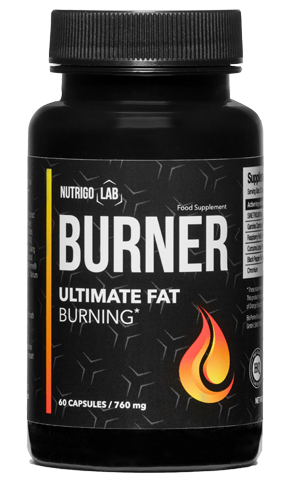
Undisclosed doses make the sum unknowable — Piperinox (4.4/10) hides both its synephrine and its caffeine. Best for: anyone who owns both products, or is about to. This is the danger-framed half of our stacking coverage; the stimulant-free stacking guide lives in our Nutrigo Lab Burner set.
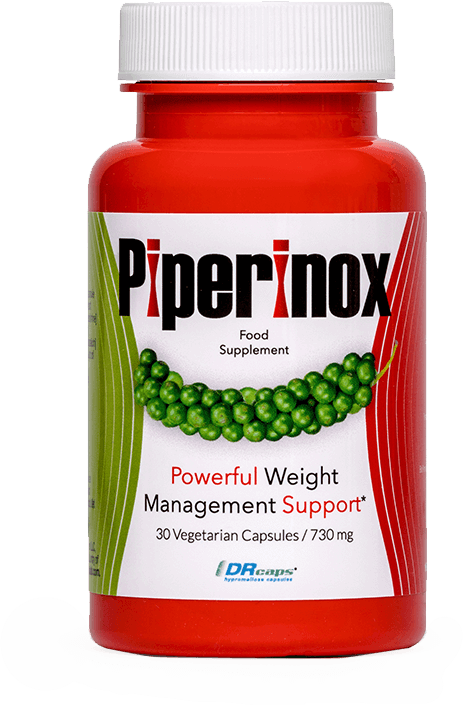
Our Recommendation — Piperinox
Score: 4.4/10 · Best for: adults who want a simple one-capsule-a-day thermogenic and are untroubled by undisclosed doses. Main caution: the panel lists ingredient names only — a delayed-release capsule of an unknown dose is still an unknown dose — and no money-back guarantee is published. Fair trial: the three-bottle pack at $33.33 a bottle — the honest trial length, per our full audit below.
Three Stacks, Priced in Stimulants
Abstraction hides the problem; scenarios expose it. Here are three ordinary days, costed with the declared figures where labels provide them and the honest unknown where they do not.
| Scenario | Components | Known caffeine | Unknown load |
|---|---|---|---|
| A: burner + coffee | Piperinox on waking; two coffees | ~190 mg | Piperinox's guarana caffeine (0–58 mg by capsule-weight bound) + all its synephrine |
| B: + pre-workout | Scenario A plus a 300 mg-caffeine pre-workout before training | ~490 mg | Same unknowns — plus any synephrine or yohimbine the pre-workout carries |
| C: + afternoon energy drink | Scenario B plus a 160 mg energy drink at 3 p.m. | ~650 mg | Same unknowns, now with a stimulant tail reaching into the night |
Scenario A is the stack almost nobody counts as one, and it already carries an unquantifiable synephrine exposure alongside its modest caffeine. For a healthy adult it is the most defensible of the three — defensible, note, in the way an unmeasured dose is ever defensible.
Scenario B crosses the FDA's 400 mg caffeine anchor on known quantities alone, before the unknowns are counted, and places the pre-workout's peak on top of training — the geometry of the documented harm cases, rebuilt entirely from legal, mainstream products.
Scenario C is where the second bill arrives: 650-plus mg of caffeine with an afternoon tail that reaches midnight, since caffeine's half-life runs five to six hours.
The stacker then sleeps badly, wakes depleted, and reaches for more stimulants — the loop that converts a training aid into a dependency architecture. Each day's stack is partly paying for the previous day's.
The table's most important column is the last one. In every scenario the unknown load is the same product with the same hidden label. Declared-dose products shrink that column to zero; Piperinox's design guarantees it can never be zeroed. A stack is only as computable as its least transparent member.
Why Nobody Has to Print the Sum
It is fair to ask how this situation is legal, and the answer is structural. Under the US dietary-supplement framework, products are not pre-approved for safety or efficacy; each label is judged on its own contents, and combination exposure across products is no manufacturer's assigned responsibility.
Proprietary-blend rules complete the design. The regulation that permits hiding individual amounts — 21 CFR 101.36(c) — was written for single products. Nothing in it contemplates the blender also selling the pre-workout, or the buyer summing the two. The stack lives in a genuine regulatory blind spot: real, common, foreseeable, and unowned.
Other jurisdictions close parts of the gap. Health Canada licenses natural products with dose-specific cautions — its synephrine ceiling is a licensing artefact — and ANSES's combination warnings show a regulator reasoning about stacks explicitly. The US market, where most of these products are designed, reasons product by product, and the buyer's body does the integration the framework declines to.
Until that changes, the sum is a self-service calculation. Reviewers can print the frameworks — the 400 mg anchor, the 30 mg synephrine ceiling, the ANSES combination warning — but the inputs must come from labels. Which returns the responsibility, one final time, to the makers who withhold them.
The Stack, As Actually Practised
Describe the typical cutting-phase morning honestly. A fat burner on waking, fasted. Coffee with breakfast. A pre-workout before the session, because the session matters. Perhaps an energy drink in the afternoon, because the morning's stimulants have worn into a trough. Four stimulant exposures, none of them extreme alone, layered by a person who thinks of them as four unrelated products.
Each category doses in isolation. The fat burner assumes it is the day's thermogenic. The pre-workout assumes it is the day's performance dose, and it is typically the most aggressive stimulant product in the stack — built for acute effect, often 300 mg of caffeine and upward, frequently with its own synephrine, yohimbine or exotic amines.
The body sums what the labels separate. Adrenergic load is cumulative: heart rate, blood pressure, temperature regulation and sleep architecture all experience the stack as one exposure. The categories' shared ingredients — caffeine above all, synephrine close behind — mean the stack is not diversity. It is duplication with different branding.
Manufacturers know this. The two categories are sold by the same companies, in the same bundles, to the same customers, with compatibility language that gestures at synergy and never prints a combined stimulant total.
The stack is not an accident of consumer behaviour. It is a merchandising outcome — and the arithmetic is left as an exercise for the reader's cardiovascular system.
The Earlier Case Files: Ephedra Taught This Lesson First
DMAA was the second time the market learned the stacking lesson. The first was ephedra. Through the 1990s and early 2000s, ephedrine-caffeine products — sold for weight loss and energy, used by athletes and dieters alike — accumulated a case record of strokes, heart attacks and deaths, disproportionately in young users and disproportionately around exercise.
The FDA's 2004 ban on ephedra in supplements — upheld in court — rested on that record. The regulatory logic is worth noticing: the agency did not need to prove each product lethal at label doses in isolation.
The combination of a potent stimulant, caffeine, exertion and a vulnerable-tail population was the hazard profile, and it is the same profile modern stacks reassemble with weaker parts.
Bitter orange's own case literature rhymes at lower volume: published case reports describe ischaemic stroke and myocardial infarction in young users of synephrine-containing products, typically involving exercise, additional stimulants, or both. Case reports cannot price a risk. They can and do identify the configuration in which harm appears — and it is this article's configuration.
The through-line across three decades and three ingredient generations is that the danger was never a molecule. It was a sum: stimulant load × exertion × heat × individual susceptibility, with labels that reported only the first term — and, in the proprietary-blend era, stopped reporting even that.
How the Stack Is Sold
Walk into the category's marketing and the stack is not a loophole; it is the product line. "Shred stacks", cutting bundles, and brand ecosystems that sell the burner, the pre-workout and the pump formula as a matched set are standard merchandising — with serving directions written as if each product were the customer's only purchase.
The synergy claim deserves specific scrutiny. No manufacturer of a burner-plus-pre-workout pair has published a trial of the combination — not for efficacy, not for safety. "Designed to stack" means designed to sell together. The pharmacology of the pairing has been tested only by the customer base, unmonitored, with adverse events surfacing through exactly the case-report channel described above.
Influencer protocols complete the circuit: the sponsored athlete's morning routine — burner, coffee, pre-workout — presented as professional practice. What the audience cannot see is the athlete's medical screening, their actual doses (often not the sponsor's retail formula), or the survivorship in who gets to post routines at all.
A reviewer cannot ban a bundle. But the bundle's existence is itself reviewable information: when a brand sells you two stimulant products in one box with no combined total printed anywhere, it has told you precisely how much of the stack's arithmetic it considers its responsibility. None.
The contrast worth holding onto is the pharmaceutical one. Combination medicines are required to study and label the combination.
Combination supplements are required to do neither — so the entire evidence base for the most common way these products are actually used consists of the case reports and incident databases this article draws on. The stack is the market's largest unplanned experiment, and its results section is a fraud-notifications page.
The Documented Harm Record
This category combination has a specific, regulator-documented history, and it should be stated without euphemism. The FDA's medication health fraud notifications for weight-loss products record the adulterated end of the market; the stimulant-stacking deaths, though, involved declared, legal-era products.
The clearest cases involve DMAA, a potent amphetamine-like stimulant once common in pre-workouts and fat burners. Two US soldiers died after using DMAA-containing products in connection with physical training; the deaths prompted a military review, removal of the products from military exchanges, and FDA warning letters in 2012–2013 declaring DMAA products adulterated, after which the ingredient left the legal market.
The pattern in those cases is the pattern this article exists to name: a strong stimulant, combined with caffeine, combined with hard exercise — heat, exertion and adrenergic drive stacking onto the same physiology.
DMAA is gone. The pattern is not, because the pattern is not an ingredient. It is a total-load scenario that any sufficiently aggressive stack can reconstruct with legal components.
Synephrine's own file, from the 2022 Koncz meta-analysis of 18 placebo-controlled trials, shows why "legal and weaker" is not "free of signal".
Prolonged synephrine use raised systolic blood pressure by 6.37 mmHg and diastolic by 4.33 mmHg versus placebo across the pooled trials. That is one ingredient, at declared doses, without exercise or a second product. Stacks multiply exposures; they do not average them.
Regulators have treated the combination itself as the hazard. France's ANSES has advised against combining synephrine with caffeine and against using such products around exercise — a direct regulatory statement about stacks, not about any single product. When a national agency warns about the combination, the combination is the unit of analysis. Buyers should adopt the same unit.
The Arithmetic Nobody Prints
Try to run the sum for our worked example, as a responsible stacker should. Start with the pre-workout: a declared-dose example might carry 300 mg of caffeine — a number its maker prints, because pre-workouts compete on it.
Add coffee: roughly 95 mg per cup, per the FDA's consumer guidance, which sets about 400 mg/day as the level not generally associated with negative effects in healthy adults.
Two coffees and the pre-workout already total about 490 mg — over the FDA's anchor before the fat burner enters the day. That is not an extreme morning. It is a normal one, assembled from products each behaving as designed.
Now add Piperinox. Its caffeine arrives via guarana at an undisclosed amount — our guarana article bounds it between near-zero and roughly 58 mg by the capsule's total weight, a range too wide to budget with.
Its synephrine arrives via bitter orange at an undisclosed amount, against a trial literature where doses of 10–53 mg move blood pressure measurably, and a Health Canada ceiling of 30 mg/day for synephrine that the stack may or may not cross.
The stacker's ledger therefore reads: 490 mg known caffeine, plus an unknown amount; zero known synephrine, plus an unknown amount; exercise on top. Every safety framework in this programme — the FDA's 400 mg anchor, the synephrine ceiling, ANSES's combination warning — requires the numbers the fat burner's label declines to provide.
Note also what the exercise term does to the comparison. The FDA's 400 mg anchor is written for ordinary daily life, not for maximal exertion in a calorie deficit.
A stack that merely matches a sedentary person's caffeine budget is not thereby matched to a training day; the anchor is a ceiling for the sum, not a target for it, and the training context argues for staying well beneath it.
This is the total-stimulant problem in its exact form. It is not that stacking is mysteriously dangerous. It is that one common category of product makes the stack's total literally uncomputable, while the other category doses as though the first did not exist.
The danger is manufactured by the labels, and it is removable by the labels — which is what makes it a reviewing matter rather than a mystery.
Interaction Red Flags
Blood pressure and the medicated reader
Add prescribed medication and the stack stops being a lifestyle question. Stimulant products sit badly with blood-pressure medication they pharmacologically oppose, with MAO inhibitors, with many antidepressants, and with thyroid treatment. The makers' own contraindication lists — printed even by companies like Piperinox's — name these combinations.
A stack doubles the exposure those lists were written for. Anyone medicated for blood pressure, mood, thyroid or heart rhythm should treat "fat burner plus pre-workout" as a clinician conversation, full stop — and should bring both labels, including the one that hides its doses, because that hiddenness is itself information the clinician needs.
Yohimbine and the exotic amines
Pre-workouts are the category's wild west: yohimbine — an alpha-2 antagonist with its own blood-pressure and anxiety profile — appears frequently, as do rotating cast members of novel stimulants that regulators chase years behind the market. Each addition multiplies interaction uncertainty against the fat burner's adrenergic base.
The reviewer's rule is simple: every additional stimulant class in a stack multiplies the unknown, it does not add to it. A fat burner plus a caffeine-only pre-workout is a computable risk for a healthy adult. A fat burner plus a five-stimulant pre-workout is an experiment with one subject and no protocol.
Heat, fasted cardio and the morning stack
The DMAA cases shared an accelerant: hard exercise, often in heat, often fasted. Fasted morning training on a fresh stimulant stack — peak adrenergic load meeting peak exertion with no food buffer — is the single most hazardous common configuration, and it is precisely the configuration cutting-phase culture recommends.
Heat deserves its own sentence. Stimulants raise metabolic heat production while training generates it; hot environments impair its dissipation. The stack that feels merely strong in an air-conditioned gym is a different exposure in a summer run. Environment is part of the dose.
Piperine's Quiet Role in a Stack
One ingredient in Piperinox adds a stacking dimension the stimulant arithmetic misses entirely. BioPerine — piperine — is an absorption enhancer: Shoba et al. 1998 showed 20 mg of piperine raising curcumin bioavailability twenty-fold in healthy volunteers, and the mechanism, inhibition of drug-metabolising enzymes and efflux pumps, is not selective about what it enhances.
In a stack, that cuts both ways unpredictably. Piperine can raise the absorbed fraction of co-ingested compounds — including, plausibly, the other products' ingredients and any medication taken nearby — by amounts nobody has measured for these combinations. The maker does not disclose Piperinox's piperine dose either, so even this interaction term is unquantified.
We raise this not as a documented harm — no stack-specific piperine harm is in the record — but as a structural point.
A product containing an absorption enhancer is the worst possible candidate for undisclosed formulation in a stacking culture: it can change the effective dose of everything taken with it, and its own dose is one of the hidden numbers.
The interaction generalises beyond supplements. Piperine's enzyme inhibition is the reason black pepper extracts carry cautions alongside prescription medicines whose blood levels depend on the same metabolic pathways.
A stacker who is also a patient — on a statin, a blood-pressure drug, an antidepressant — has a third column in the ledger, and neither product's label will ever compute it for them.
Our Piperinox review scored the product 4.4/10 on its own label. Read as a stack component — the way it will actually be used by a large share of its buyers — the opacity matters more, not less: every unknown in the product becomes an unknown in the total.
Tested Athletes: The Stack as a Career Risk
For competitive athletes the arithmetic has a second ledger. Synephrine is banned in NCAA competition — a fact from our synephrine article that acquires new weight here, because an athlete stacking a pre-workout with a fat burner may not know either product contains it: one may list "bitter orange" and the other a blend.
Undisclosed formulations are doubly dangerous in tested sport. A blend that hides amounts hides identities behind collective names, and the contamination record of the stimulant categories — products found to contain unlisted pharmaceutical-grade amines — means even a careful label-reader carries residual risk.
Anti-doping liability is strict: the athlete is responsible for what is in their body, however it got there.
The practical rule for tested athletes is the strictest in this article: no proprietary-blend stimulant products at all, stacked or solo. Third-party-tested, batch-certified products with full panels are the only category compatible with a testing regime — and Piperinox, with no amounts and no certification on its record, is outside it.
Heat, Hydration and the Third Variable
Exercise physiology adds a load the stimulant arithmetic understates. Hard training in a deficit already stresses fluid balance; caffeine at stack doses adds a mild diuretic effect and can mask the perception of effort and heat strain, letting an athlete run deeper into thermal debt before the warning signals register.
Dehydration then concentrates everything: a smaller plasma volume means the same stimulant dose is a higher effective exposure, and a hotter core means the adrenergic system is working against a narrower safety margin. The military cases that anchor this article's harm record occurred in exactly this compound environment.
None of this requires exotic ingredients. It requires a hot day, a hard session, a calorie deficit, mild dehydration and two mainstream products taken as directed. Risk in stacks is multiplicative across ordinary variables — which is why the honest unit of analysis is the whole day, not the individual capsule.
Do You Build a Tolerance to Stimulant Fat Burners — and Should You Cycle Them?
Stacks have a life cycle, and its direction is upward. Caffeine tolerance develops within one to two weeks of daily use; the fat burner's morning lift fades; the pre-workout's dose — printed in scoops that invite generosity — creeps. Each product is escalated to restore a feeling, and the feeling being chased is the stimulant effect, not the fat loss.
Dose creep defeats the harm-reduction arithmetic silently. The ledger a stacker computed in week one — 490 mg, say — is fiction by week six, when the pre-workout is heaped, the energy drink is large, and the burner is doubled on leg day.
Any honest stack protocol therefore includes a periodic reset: scheduled stimulant breaks that restore both sensitivity and the accuracy of the ledger.
The withdrawal cost of that reset — headache, fatigue, a flat week — is itself diagnostic information. A stack whose absence produces withdrawal symptoms has stopped being a training aid and become a maintenance habit. That transition, unnoticed, is how recreational stimulant use becomes structural.
Alcohol closes the loop for some users: evening drinking to come down from a day of stimulants, then a heavier stack to climb out of the morning after. Each leg of that cycle is individually common.
Together they are a pattern clinicians recognise, and no supplement label will ever warn about it — because no single product causes it. The stack, again, is the unit.
The Readers for Whom Stacking Is Not a Debate
Some readers should not reach the harm-reduction section at all, because for them the stack is contraindicated outright rather than merely risky.
Adolescents. Teen stimulant stacking — energy drinks plus pre-workout plus a burner bought online — is a documented emergency-department pattern, and paediatric guidance treats high-dose caffeine in adolescents as a harm in itself. Developing cardiovascular and sleep systems are not the substrate for adult cutting-phase pharmacology.
Pregnancy and breastfeeding. Caffeine guidance tightens sharply in pregnancy, synephrine has no safety file there at all, and no fat burner is indicated. A stack multiplies exposures in the population with the least data and the most at stake.
Anyone with an eating-disorder history. Appetite-suppressant stacking is a known relapse vector: the products pharmacologically assist restriction while marketing it as fitness. This is the stack's least discussed harm and, for the affected reader, its most serious one. The correct product recommendation here is none, and the correct referral is clinical.
Anyone whose resting blood pressure is already elevated. Recall the pooled synephrine signal — systolic up 6.37 mmHg with prolonged use versus placebo — and consider what it adds to a pressure that is already 140s before the pre-workout lands. For this reader the stack is not a calculated risk. It is an addition problem with a foreseeable answer.
The Institutional Answer: What the Military Did
The DMAA deaths produced the most instructive institutional response in the category's history. The US Department of Defense did not merely ban an ingredient. It removed DMAA products from military exchanges, reviewed supplement use across the services, and built a standing education and screening apparatus for supplement risk.
The military's reasoning is the stack logic of this article, institutionalised. Service members train hard, in heat, under sleep deprivation, with high supplement prevalence — the exact risk multipliers in the case files. An organisation responsible for those bodies concluded that individual label-reading was an insufficient control and intervened at the level of availability.
Civilian buyers have no quartermaster to protect them, which is the point of rehearsing the case. The population with the most supervision, the best medical support and the strongest institutional incentive still lost people to a legal stimulant stack. The unsupervised version of the same experiment runs daily, at larger scale, with weaker products but identical physiology.
If Something Goes Wrong: Reporting Is Part of the System
The safety record this article draws on exists because incidents were reported. Case reports, regulator databases and military reviews are all built from individual events that someone documented — and supplement adverse events are chronically under-reported, because users rarely connect a cardiac scare to a capsule stack, and clinicians rarely ask.
If a stack produces a serious event — palpitations requiring care, chest pain, collapse, a hospital visit — two actions matter.
First, stop everything and keep the products: the bottles, with their lot numbers, are evidence, and analysis of retained products is how adulteration gets proven. Second, report it through the FDA's Safety Reporting Portal, naming every product in the stack, not just the newest one.
That last detail is the stack problem in administrative form: reporting systems, like labels, are built product by product. Naming the combination when you report is the one place a buyer can force the total — the thing no label prints — into the official record.
If You Stack Anyway: The Harm-Reduction Protocol
Audits that only forbid are ignored; so here is the protocol for readers who will stack regardless, built from the frameworks this article cites.
One stimulant product per day-part, summed. Write the day's caffeine down — pre-workout, coffee, energy drinks, the fat burner's declared caffeine if it declares one — and hold the total at or under the FDA's ~400 mg anchor.
If the fat burner does not declare its caffeine, that is a reason to drop it from a stack, not to estimate generously in its favour.
Never debut a stack on a hard day. New combinations belong on rest days or light sessions first, in cool conditions, fed — the reverse of the fasted-heat configuration in the harm record. Palpitations, chest pain, unusual breathlessness or a racing that does not settle are stop signals, not toughness tests.
Separate the doses in time. A fat burner and a pre-workout taken together peak together. Spacing them by hours does not reduce the daily total, but it flattens the peak — and peak adrenergic load, meeting peak exertion, is the dangerous geometry.
Protect the night. Our timing coverage makes the sleep case in full; here it is enough to say a stack that borrows tomorrow's alertness to fund today's session is running a deficit no thermogenic repays. Stimulants after midday are the first thing to cut when sleep degrades.
Disclose the stack to your clinician and your training partners. The DMAA-era lesson written into military practice is that responders cannot treat what they do not know about. A training partner who knows what you took is a safety device. Secrecy is the stack's most removable risk factor — and the only one whose removal costs nothing at all.
Our Recommendation — Piperinox
Score: 4.4/10 · Best for: adults who want a simple one-capsule-a-day thermogenic and are untroubled by undisclosed doses. Main caution: the panel lists ingredient names only — a delayed-release capsule of an unknown dose is still an unknown dose — and no money-back guarantee is published. Fair trial: the three-bottle pack at $33.33 a bottle — the honest trial length, per our full audit below.
Frequently Asked Questions
Can I take a fat burner and pre-workout on the same day at all?
Healthy, unmedicated adults do, widely. The defensible version requires the arithmetic of this article: declared doses on both products, a summed caffeine total within the FDA's ~400 mg anchor, no exotic amine stack, spacing between doses, and no fasted training in heat. A fat burner with undisclosed stimulants — Piperinox included — fails the first requirement by design.
What are the warning signs I have stacked too much?
Palpitations or an irregular-feeling heartbeat, chest tightness or pain, breathlessness out of proportion to the effort, dizziness, tremor that does not settle, nausea, and a sense of overheating. Any of these during training means stop, cool down, and seek medical assessment for the cardiac ones. "Pushing through" is how the documented cases escalated.
Is a stimulant-free fat burner the safe stack partner?
It removes the duplication problem, which is the main one — that is the premise of our Set V stimulant-free stacking guide.
"Stimulant-free" is not a synonym for risk-free: check the label for synephrine hiding behind "bitter orange", yohimbine, and piperine's absorption interactions with medication. But a genuinely stim-free burner plus a declared-dose pre-workout is the only stack whose arithmetic closes.
How bad is the stack if I am already a heavy coffee drinker?
Heavy coffee use changes the stack in two directions at once. Tolerance blunts caffeine's felt effect — which tempts dose escalation — while the underlying exposure still counts toward the day's total. A four-coffee habit is roughly 380 mg of caffeine before any product is opened: the FDA's anchor is already spent, and everything in the stack is overage.
Tolerance is a change in perception, not in pharmacology; the blood-pressure and sleep effects do not habituate as completely as the alertness does. Heavy coffee drinkers are therefore the readers with the least headroom and the weakest internal alarm — the worst combination this article covers.
Can I just halve both doses and stack safely?
Halving declared doses is sound arithmetic — when the doses are declared. It works for a printed pre-workout and a printed fat burner: half plus half equals one, and the ledger closes.
It cannot work for Piperinox, because you cannot halve an unknown: "half of undisclosed" is still undisclosed. Dose-splitting is a transparency-dependent strategy, which is the stacking problem restated one final time.
Why do brands sell these products together if stacking is risky?
Because the categories are complements commercially and competitors pharmacologically, and only the commercial fact is the brand's problem. Bundle discounts raise basket size; the combined stimulant total appears on no label, in no advertisement and in nobody's terms of sale.
The sum exists in exactly one place — the buyer's body — which is why this article treats computing it as the buyer's first job.
Who Should Buy Piperinox — and Who Should Skip It
Buy it if it will be your only stimulant product: no pre-workout, modest coffee, healthy blood pressure, no interacting medication — and you accept that even solo, its synephrine and caffeine doses are numbers its maker will not tell you.
Skip it if you train with a pre-workout. That single fact converts Piperinox from an undisclosed dose into an undisclosed addition to a known load — the configuration this article's harm record is built from.
Skip it also with any blood-pressure, heart, thyroid or psychiatric medication, and skip every stack on fasted, hot, maximal days. Totals you cannot compute are risks you cannot manage.
Last reviewed: October 2026. This article is educational and is not medical advice.
