
- Quick Answer
- Do nighttime fat burners burn fat while you sleep?
- Does poor sleep change whether you lose fat or muscle?
- Sleep loss rewires next-day hunger
- Sleep loss changes what a diet removes
- How many hours before bed should you stop caffeine?
- How Caffeine Leaves the Body — and Why It Leaves Yours More Slowly
- Three Product Classes at Night
- Reading a 'Night Burner' Label, Ingredient by Ingredient
- Melatonin
- Valerian
- Magnesium
- L-Theanine
- GABA and 5-HTP
- The Product Readers Actually Own
- Evening Training Itself: Friend or Enemy of Sleep?
- A Practical Evening Protocol
- When Poor Sleep Is the Actual Problem to Fix
- Frequently Asked Questions
- Can I take a stimulant-free fat burner with melatonin?
- Will a stimulant-free burner keep me awake?
- When should an evening trainer take a fat burner?
- Do night fat burners burn fat while you sleep?
- Is decaf coffee safe at night?
- What about an afternoon energy drink?
- Who Should Buy a Stimulant-Free Fat Burner — and Who Should Skip It
- Read This Next
Disclosure: This article contains affiliate links. If you buy through them, we may earn a commission at no extra cost to you. It never changes our scores or conclusions.
Quick Answer
Yes — a genuinely stimulant-free fat burner can be taken at night without disturbing sleep, because nothing in it acts on sleep at all. But permissible is not the same as useful: no product burns meaningful fat while you sleep, and no trial shows an overnight fat-burning effect from any supplement.
The question usually hides one of two others. "Will it keep me awake?" — for a stimulant product, quite possibly; caffeine taken even 6 hours before bed cut measured sleep by over an hour in the controlled study below. "Will it work while I sleep?" — no; the honest benefit of night-friendly formulas is indirect: they do not wreck the sleep that regulates your appetite.
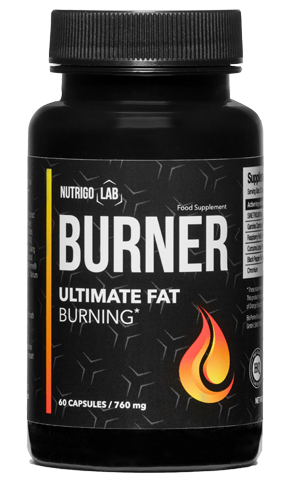
Best for: evening trainers and caffeine-sensitive readers. The product we review in this category, Nutrigo Lab Burner (5.0/10), lists no stimulant on its panel — and its maker directs it before lunch or before a workout, not at night. The label itself settles the timing question for that product.
Our Recommendation — Nutrigo Lab Burner
Score: 5.0/10 · Best for: adults who want a non-stimulant-style fat-burner adjunct with named, branded ingredients — alongside diet and exercise, not instead of them. Main caution: the printed ingredient amounts sum to more than the capsule weighs — the maker's own numbers conflict — and no money-back guarantee is published. Fair trial: the three-bottle bundle at $33.33 a bottle, alongside diet and exercise — the trial the evidence describes; the six-bottle pack is the cheapest continuation, after a completed trial.
Do nighttime fat burners burn fat while you sleep?
A small industry sells "nighttime fat burners" — capsules to swallow at bedtime that supposedly work the overnight shift. The marketing image is appealing: eight hours of passive fat loss, purchased for the price of a capsule. It deserves a direct answer before anything else in this article.
No trial shows it. There is no published human study in which a supplement taken at night increased overnight fat oxidation, overnight energy expenditure, or next-morning fat mass by any meaningful amount. The claim is not "unproven at the margins."
It is untested in its specific form and implausible in its general one: the metabolic ingredients in these products have effect sizes measured in tens of kilocalories across entire days of dieting, in the best trials, taken at studied doses during waking hours.
What night formulas actually contain gives the game away. Read the panels and the category divides into two: daytime stimulant-free formulas re-badged for the evening, and sedative-leaning blends built on melatonin, valerian, magnesium or L-theanine. Neither is a fat-burning mechanism. The first group does nothing at night that it would not do at noon. The second group is a sleep product with a weight-loss label.
There is, however, a real and defensible version of the night claim, and it runs in the opposite direction. Sleep loss makes people hungrier, makes dieting less effective, and changes what kind of tissue a diet removes. A product whose virtue is that it does not disturb sleep is protecting the single most underrated variable in weight management.
That reframing is the honest core of this entire article. The question "can I take a fat burner at night?" has a useful answer only once it is split into its real parts: what caffeine does to sleep and when; what sleep does to fat loss; and which of the three product classes on the shelf belongs anywhere near a bedtime.
Does poor sleep change whether you lose fat or muscle?
Sleep loss rewires next-day hunger
The classic experiment is small and controlled, which is why it has been cited for two decades. In Spiegel et al.'s 2004 study (Annals of Internal Medicine), 12 healthy young men spent two days restricted to 4 hours in bed and two days extended to 10 hours, under controlled food intake.
After the short-sleep condition, leptin — the satiety hormone — ran 18% lower in the sleep-restricted men than in the same men after sleep extension, while ghrelin, the hunger hormone, ran 28% higher. Rated hunger rose 24% and appetite 23% versus the extended-sleep condition, with the strongest increases — 33% to 45% — for calorie-dense, high-carbohydrate foods.
Twelve young men, two days, laboratory conditions: the study cannot carry the whole argument, and we do not ask it to. Its job is to establish direction and mechanism. The same research programme's free-living work found sleep curtailment increased calorie intake from snacks. Later studies have not all replicated the hormone shifts exactly, and the honest summary is that sleep loss reliably increases hunger and intake, with the hormone pattern as the leading explanation.
Now price that against a capsule. A stimulant burner taken too late costs you measurable sleep; the sleep loss then raises next-day hunger by a margin in the double-digit percentages in the controlled work. Against that, the burner's own metabolic contribution — tens of kilocalories in good trials — is not a trade. It is a rounding error with a marketing department.
Apply those figures to the evening specifically. In Spiegel et al. 2004, hunger was 24% higher in the 12 healthy young men after the four-hour bedtime condition than after the extended-sleep condition, on a rated hunger endpoint.
In the same study, appetite for calorie-dense, high-carbohydrate foods rose 33% to 45% in those 12 healthy young men under short sleep versus the long-sleep condition, on a rated food-appetite endpoint.
Those are precisely the foods within reach at night. The tired evening brain is not craving plain protein or vegetables in the controlled descriptions; it is pulled towards energy-dense, quickly eaten carbohydrate. Short sleep therefore loads the hardest eating hours with the strongest pull.
The timing compounds the effect. Hunger created by last night's short sleep meets a home environment after dinner, when meals are finished but food remains visible and available. A deficit built carefully all day can be undone in one unplanned half-hour.
What follows is behavioural reasoning, not trial data. Decision fatigue is a useful everyday description for the depleted feeling of late evening, even though researchers debate its exact form. Fewer decisions remain well defended after a day of restraint and work.
Kitchen proximity then does quiet damage. Food that requires a journey is easier to decline than food one room away, already bought and already liked. The evening kitchen removes friction at exactly the moment self-control feels most expensive.
The practical defence is a planned evening snack, chosen earlier and fitted inside the day's calories. A planned snack turns a nightly negotiation into a settled decision. It also separates genuine hunger, which the snack answers, from grazing, which it exposes.
A kitchen closing time works for the same reason. A simple stated hour, after which the kitchen is done except for water or the planned snack, removes repeated small decisions. Rules set while rested protect the hours when willpower is not.
Sleep loss changes what a diet removes
The second study is the one dieters should know by name. Nedeltcheva et al. 2010 (Annals of Internal Medicine) put 10 overweight adults through two 14-day periods of identical calorie restriction — once with 8.5 hours of sleep opportunity a night, once with 5.5 hours.
Total weight loss was similar. Its composition was not. With 8.5 hours of sleep, the dieters lost 1.4 kg of fat; with 5.5 hours, the same dieters lost 0.6 kg of fat — a 55% reduction in the proportion of weight lost as fat. Fat-free mass loss went the other way: 1.5 kg with full sleep versus 2.4 kg sleep-restricted, a 60% increase.
Read that again, because it inverts the usual supplement logic. The same diet, the same people, the same calories — and short sleep converted a fat-loss diet into a substantially muscle-losing one. Hunger rose in the short-sleep condition, resting metabolic rate fell, and the body oxidised less fat. Ten participants is a small sample, but the crossover design — each person as their own control — gives the result more weight than its size suggests.
This is the arithmetic that should govern every evening supplement decision. A product that protects sleep is defending the composition of your weight loss. A product that disturbs sleep is taxing it at a rate no legal capsule repays. When a "night burner" brags about overnight thermogenesis, it is selling you the tax and calling it the benefit.
How many hours before bed should you stop caffeine?
For stimulant products, the night question reduces to caffeine pharmacology, and caffeine pharmacology has one study that should end most arguments. Drake et al. 2013 (Journal of Clinical Sleep Medicine) gave 12 healthy sleepers a fixed 400 mg caffeine dose at three times: at bedtime, 3 hours before bed, and 6 hours before bed, against placebo.
Every caffeine timing disturbed sleep significantly versus placebo. The 6-hour result is the one to memorise: caffeine taken a full 6 hours before bedtime still reduced objectively measured sleep by more than an hour. Participants' own diaries largely failed to notice — the sleep loss was measured by monitors, not felt, which is why "I fall asleep fine after coffee" is weaker evidence than it sounds.
The mechanism is half-life. Caffeine's half-life in healthy adults averages around five hours and varies widely — roughly 3 to 7 hours across individuals, longer still with pregnancy, certain medicines and slower metabolism. Take 200 mg at 6 p.m. and a slow metaboliser may still carry the equivalent of a strong cup of tea's caffeine at midnight.
The working rule that follows from the Drake data is a minimum, not a guarantee: no caffeine within 6 hours of bed. Slow metabolisers, and anyone whose sleep is already light, should stretch it to 8–10 hours.
The FDA's caffeine guidance — about 400 mg a day as the amount not generally associated with negative effects for most adults — governs the day's total; the Drake rule governs its timing. Both apply to every caffeine source, including the ones hiding inside "herbal energy" blends, guarana and green-tea extracts on burner labels.
Notice what this means for the classic stimulant burner schedule. Many labels direct a second dose in the early afternoon, sized by people who have never read Drake.
A 2 p.m. dose of 200 mg is inside the 6-hour window for a 10 p.m. bedtime only just barely — and outside it, in effect, for anyone who metabolises slowly or sleeps at 9. The label's schedule and the sleeper's schedule are frequently in conflict, and the label never mentions it.
How Caffeine Leaves the Body — and Why It Leaves Yours More Slowly
Caffeine does not switch off. After absorption, the body clears it gradually, and the usual summary is a half-life averaging about five hours in healthy adults. Half the dose remains after that interval, half of what remains after the next, and so on.
That average hides wide variation between people. Some adults clear caffeine noticeably faster, while others carry it far longer. Two people drinking identical coffee at identical times can face very different caffeine levels at bedtime, through no difference in discipline or intention.
Most clearance happens in the liver, mainly through an enzyme system called CYP1A2. That enzyme does the central work of breaking caffeine down into smaller compounds the kidneys can remove. Anything that changes that enzyme's activity changes how long caffeine stays active.
Genetics explains part of the spread. People inherit different versions of the machinery that influences CYP1A2 activity, which is one reason family members often share a similar tolerance. Personal experience is a rough guide here, but it is not a measurement.
Pregnancy slows caffeine clearance substantially, and the slowing becomes more relevant as pregnancy progresses. Oral contraceptives also slow clearance in many users. Neither category is a minor footnote: both can turn an ordinary afternoon coffee into a meaningful bedtime exposure.
Some medicines slow clearance too, by interfering with the same liver pathway. Others can add their own alerting effect alongside caffeine. Because medicine lists change and combinations differ, a pharmacist is the right check for anyone taking regular prescription treatment.
Smoking runs the other way. Regular tobacco smoking speeds caffeine clearance, so smokers often process a dose faster than non-smokers. That faster clearance is not a health advantage, and stopping smoking can make a previously tolerated coffee habit feel stronger.
Age, liver health and habitual intake can also shape the picture, though none offers a simple home test. The practical method remains observational: move the last caffeine earlier for two weeks and watch sleep onset, night awakenings and morning alertness before judging.
This is why the Drake rule needs careful reading. In Drake et al. 2013, caffeine taken six hours before bed still disturbed objectively measured sleep in the studied sleepers. Six hours is therefore an observed population floor, not a personal guarantee.
Slow clearers should work with eight to ten hours instead. That longer window better reflects a slower half-life and a lighter sleeper's margin for error. When sleep matters to a diet, choosing the longer window costs nothing except an earlier last coffee.
The same logic applies to hidden sources. Guarana, green tea extract, yerba mate and energy drinks all feed the same clearance pathway. The liver does not care which label the caffeine arrived under, and neither does the sleep that follows it.
Tolerance deserves a separate warning. Feeling less jittery after caffeine does not prove the caffeine has left faster; tolerance mainly dulls the perceived signal. Sleep can still be shortened in people who insist they feel nothing, which is exactly what the Drake diaries showed.
Three Product Classes at Night
With the evidence in place, the shelf sorts itself into three classes with three different answers.
Stimulant burners: no. Anything with caffeine, guarana, green tea extract at meaningful doses, synephrine or similar adrenergic ingredients belongs to the morning. The Drake rule applies with full force, and undisclosed-dose blends are worst of all: you cannot time a dose you cannot state. If a stimulant product's label suggests an evening dose, the label is wrong in a way the trial record can demonstrate.
"Night formulas" with sedative ingredients: a different product, judged by different rules. Melatonin, valerian, hops, magnesium and L-theanine blends are sleep supplements wearing fat-burner packaging. Judge them as sleep products.
Melatonin is a hormone with timing and dose subtleties of its own and a thin long-term record at supplement doses; valerian's evidence is mixed; none of them has any fat-loss trial behind it. If you want a sleep aid, buy one honestly labelled, at a fraction of the price, and keep it out of the weight-loss budget.
Stimulant-free daytime formulas: permissible, and pointless to time-shift. A formula with no stimulant and no sedative does nothing to sleep in either direction. Taking it at night neither helps nor harms its effect, which depends on daily dosing over weeks, not on proximity to bed. The only reason to move such a product to the evening is routine — a dose you remember is worth more than a dose timed by theory.
The classification exercise itself is the practical skill here, because labels resist it. "Energy blend," "thermogenic complex" and "botanical matrix" are the costumes stimulants wear; guarana and green tea are caffeine with a leaf around it. If a panel will not tell you whether it contains a stimulant or how much, the night answer defaults to no.
Reading a 'Night Burner' Label, Ingredient by Ingredient
Open a typical night-burner panel and the cast repeats across brands. The names sound calm, natural and vaguely metabolic, but each ingredient deserves the same two questions. What does it do for sleep, honestly stated, and what fat-loss trial stands behind it?
Dose disclosure deserves attention before any ingredient does. Proprietary blends can list the cast while hiding each amount, leaving readers unable to judge whether anything reaches its studied range. A label that will not state doses has not earned a bedtime place.
Melatonin
Melatonin is a hormone the body makes to signal darkness, not a nutrient and not a metabolic agent. Supplements imitate that signal. It can help shift sleep timing, particularly where timing itself is the problem, rather than simply adding hours of sleep.
Label doses range widely, from fractions of a milligram to amounts far above what timing effects require. Timing usually matters more than dose: taken at the wrong hour, a larger dose mainly extends the signal into the morning. More is not automatically better.
Morning grogginess is the common cost readers report, alongside vivid dreams for some users. It remains a hormone taken nightly by many people, without long-term supplement-dose trials to match that habit. For fat loss specifically, melatonin has zero supporting fat-loss trials.
Valerian
Valerian is a traditional herbal sedative with a long history and a mixed, weak trial record for sleep. Some studies suggest small subjective improvements; objective sleep measures have been less convincing. Preparation quality also varies, which makes brand-to-brand comparisons unreliable.
Its honest place is as a possible mild sleep aid with inconsistent evidence. It does not raise energy expenditure, mobilise fat stores or alter appetite in any demonstrated way. For fat loss specifically, valerian has zero supporting fat-loss trials.
Magnesium
Magnesium is an essential mineral involved in hundreds of bodily processes, which makes it easy to market for almost anything. The credible sleep story is narrower: correcting a genuine deficiency may help someone whose low intake was part of the problem.
That deficiency-correction story is not a general sleep-drug effect for well-nourished adults. Nor does magnesium's role in normal metabolism make extra magnesium a fat-loss agent. For fat loss specifically, magnesium supplementation has zero supporting fat-loss trials.
L-Theanine
L-theanine is an amino acid from tea associated with calm alertness rather than sedation. People use it to take the edge off mental tension without the heaviness of a sedative. That calming reputation is the whole basis for its place here.
Calm is not thermogenesis. L-theanine does not sedate most users, does not raise metabolic rate in any demonstrated way, and should not be confused with a treatment for clinical anxiety. For fat loss specifically, L-theanine has zero supporting fat-loss trials.
GABA and 5-HTP
GABA appears on some panels because it is the brain's main inhibitory neurotransmitter. Swallowed GABA is a different matter: whether oral GABA reaches the brain in meaningful amounts remains doubtful. A molecule's role inside the brain does not prove a capsule delivers it there.
5-HTP raises a different concern. It feeds into serotonin production, so it carries a serotonergic caution for anyone taking antidepressants or other serotonergic medicines. That combination question belongs with a clinician or pharmacist, not with a supplement label's serving suggestions.
Neither ingredient supplies the missing fat-loss mechanism. GABA has zero supporting fat-loss trials, and 5-HTP has zero supporting fat-loss trials as a night-burner ingredient. Their presence signals a sleep or mood pitch, not a metabolic one.
Add the cast together and the category's secret is plain. These are sleep ingredients, some plausible and some doubtful, gathered under a fat-burner name and priced accordingly. A night burner is a sleep aid in costume, priced as a fat burner.
That does not make every ingredient worthless. It makes the label dishonest about what is being bought. Judge each ingredient as a sleep purchase, compare it with cheaper standalone sleep products, and keep it entirely out of the fat-loss budget.
Price completes the audit. Standalone melatonin, magnesium or theanine products are widely sold at a fraction of a branded night burner's monthly cost. Paying several times more for the same cast, at undisclosed doses, buys packaging and a promise, not ingredients.
The Product Readers Actually Own
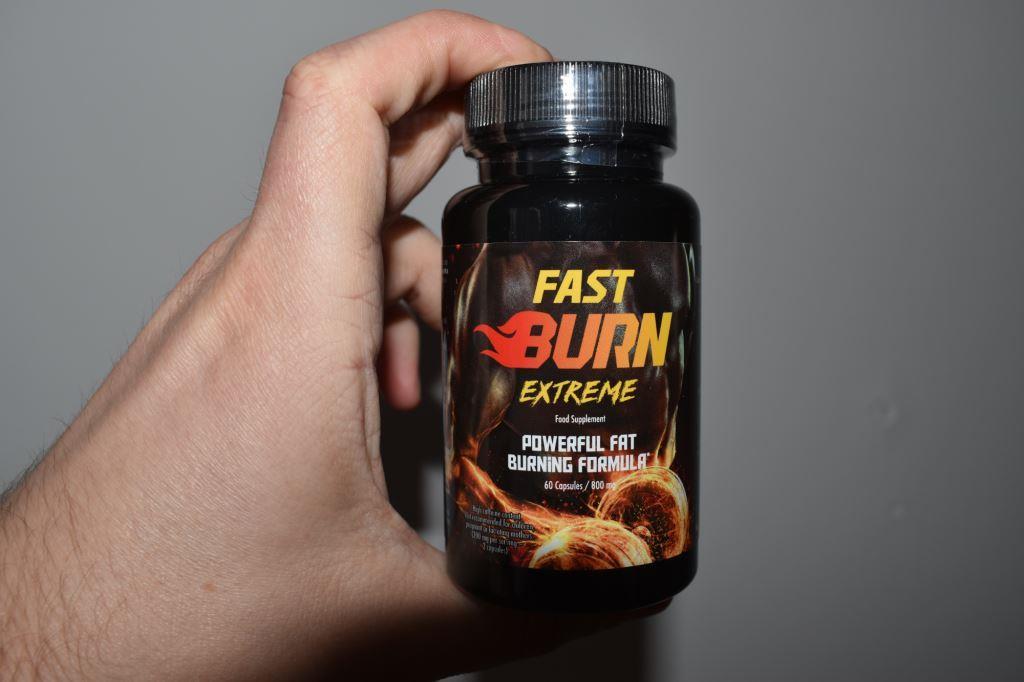
Run the classification on the stimulant-free burner our site reviews, Nutrigo Lab Burner. Its printed panel lists four ingredients — SINETROL Xpur, Citrin garcinia extract, raspberry extract and BioPerine — and no caffeine, guarana, green tea or other stimulant ingredient appears on it. It contains no melatonin or sleep ingredient either.
It therefore lands in the third class: a daytime formula that sleep science has no quarrel with. And its maker agrees with the classification — the directed use is 2 capsules a day, before lunch or before a workout, with 300 ml of water. Not at night. The question this article's title asks is one the label already answered.
Two honesty footnotes complete the picture. First, SINETROL itself is standardised with a small natural caffeine fraction — about 1–3% in the trial material — because the blend includes guarana seed extract. At the studied 900 mg daily dose, that is roughly 9–27 mg of caffeine, and taken before lunch it is pharmacologically finished long before bed for all but the slowest metabolisers.
Second, and larger: Burner's panel prints that SINETROL figure as 3,000 mg per capsule inside a capsule the maker itself describes at 740–760 mg, so the delivered dose — and with it, even that small caffeine fraction — cannot actually be verified for this product. Our full review runs that arithmetic. For the night question specifically, the conclusion survives the uncertainty: nothing on this panel is a sleep actor at any plausible dose.
So the practical answer for owners of this product is anticlimactic. Take it when the maker directs — before lunch or training. If your routine makes an evening dose the one you will actually remember, the sleep evidence gives you no reason to object. Just do not pay a "night burner" premium, to this brand or any other, for permission the pharmacology already granted free.
Evening Training Itself: Friend or Enemy of Sleep?
Evening training attracts suspicion it mostly does not deserve. Across the general evidence, regular exercise is associated with better sleep quality, deeper sleep and fewer complaints about insomnia. For most people, a finished workout is a friend of the night that follows.
Exercise raises body temperature, alertness and circulating stress hormones during the session itself. Those effects then unwind, and the later fall in body temperature can support sleepiness. The timing of that unwinding is why the hour after training feels different from training itself.
The usual disruptor in an evening session is not the workout. It is the pre-workout taken shortly before it, especially a high-caffeine formula with other stimulants. Readers often blame the training for a problem that began in the shaker bottle an hour earlier.
That distinction matters for the fix. Removing evening training sacrifices a proven health behaviour to protect sleep. Removing or moving the stimulant keeps the training and removes the pharmacological obstacle, which is the trade the caffeine evidence actually supports.
Very vigorous exercise ending immediately before bed is the narrower exception. For some people, hard intervals or maximal lifting finished minutes before lights-out can delay sleep onset. The effect is individual and inconsistent, but it is plausible and easy to test personally.
Where possible, finish hard sessions an hour or more before bed. That buffer lets temperature, heart rate and alertness settle before the bedroom. It also leaves room for food, a shower and the ordinary wind-down that signals the day has ended.
Light evening movement sits in a different category. Walking, easy cycling, mobility work and gentle stretching do not carry the same arousal load as maximal training. For many people they help close the day, and there is no reason to fear them.
Consistency helps too. Training at a similar evening time on similar days lets the body anticipate both effort and recovery. A chaotic schedule, with occasional very late sessions, gives sleep no stable pattern to attach to and makes any single night hard to judge.
Evening trainers should therefore audit three things separately: the session's intensity, its finishing time and its supplements. Most will find the supplement is the problem, the finishing time is adjustable, and the training itself deserves to stay exactly where it fits their life.
There is also an appetite angle worth noting honestly. A hard evening session can blunt hunger briefly, then return it later, closer to bed. Planning the post-training meal earlier in the evening stops that returning hunger from becoming an unplanned second dinner.
A Practical Evening Protocol
For readers who train after work, the evidence above assembles into a schedule. Work backwards from bedtime, not forwards from the workout.
Set the caffeine curfew first. Bedtime minus 6 hours is the floor; minus 8–10 hours if you are a slow metaboliser, take medicines that slow caffeine clearance, or simply sleep lightly. Everything caffeinated — pre-workout, burner, coffee, energy drinks, strong tea — lives before that line. An 8 p.m. training session and a 200 mg pre-workout cannot both be had with a 10:30 bedtime; choose, and choose sleep.
Place the stimulant-free dose where the maker put it. For a formula like Burner, that is before lunch or before the session. The ingredients' trials dosed during the day, alongside meals and diet control; there is no evidence — none — that an evening dose of a metabolic ingredient outperforms a midday one.
Fill the evening with the things that measurably matter. The Nedeltcheva result says the composition of your weight loss is being decided by sleep duration. A consistent bedtime, a dark and cool room, screens down in the last hour, and alcohol kept away from the evening — alcohol fragments sleep architecture even when it shortens sleep onset — each do more for fat loss than any capsule timed to the minute.
Treat evening hunger as a planning problem, not a supplement gap. Protein and fibre placed at dinner, a planned evening snack inside the day's calories, and a kitchen that closes at a set time address the exact hours when sleep loss drives intake. Our article on controlling hunger and cravings at night, in the rail below, works that problem in full.
When Poor Sleep Is the Actual Problem to Fix
One signposting paragraph, because it matters more than any product in this article. Loud habitual snoring, witnessed pauses in breathing, waking with headaches, or sleepiness that survives adequate hours in bed are the classic presentation of obstructive sleep apnea — a common, treatable condition that also drives weight gain and resists dieting.
No burner, night formula or stimulant-free capsule touches it, and months spent optimising supplement timing around untreated apnea are months spent on the wrong variable. If that description sounds familiar, the productive purchase is a doctor's appointment and a sleep study. Everything else in this article is fine-tuning by comparison.
Our Recommendation — Nutrigo Lab Burner
Score: 5.0/10 · Best for: adults who want a non-stimulant-style fat-burner adjunct with named, branded ingredients — alongside diet and exercise, not instead of them. Main caution: the printed ingredient amounts sum to more than the capsule weighs — the maker's own numbers conflict — and no money-back guarantee is published. Fair trial: the three-bottle bundle at $33.33 a bottle, alongside diet and exercise — the trial the evidence describes; the six-bottle pack is the cheapest continuation, after a completed trial.
Frequently Asked Questions
Can I take a stimulant-free fat burner with melatonin?
There is no interaction study of any specific burner formula with melatonin, so nobody can promise the combination is studied — only that no ingredient on a panel like Burner's has a known melatonin interaction. If you take melatonin regularly, or any prescription sleep or anxiety medicine, that is a pharmacist question, not a label question.
Will a stimulant-free burner keep me awake?
Nothing in the class acts on sleep: no stimulant to excite, no sedative to blunt. Two honest exceptions — expectation itself can lighten sleep when you are monitoring for an effect, and a formula whose panel hides its ingredients cannot be cleared of containing a stimulant. Judge the label, not the category name.
When should an evening trainer take a fat burner?
A stimulant-free one, at the maker's directed time — for Burner, before lunch or before the workout. A stimulant one, effectively never: a pre-session dose for an evening workout lands inside the 6-hour caffeine window before any normal bedtime. Evening trainers are the strongest case for the stimulant-free category.
Do night fat burners burn fat while you sleep?
No trial shows any supplement increasing overnight fat burning. The night formulas on sale are either daytime formulas re-badged, or sedative blends with no fat-loss evidence. The genuine overnight variable is sleep itself — its duration decides how much of a diet's loss is fat, per Nedeltcheva 2010.
Is decaf coffee safe at night?
For most people, yes, with a small qualification. Decaf is not completely caffeine-free: a cup still carries a few milligrams of caffeine, a small fraction of what regular coffee delivers. It is made from coffee beans with most, not all, of the caffeine removed before brewing.
The highly caffeine-sensitive are the exception worth respecting. If small exposures reliably lighten your sleep, treat late decaf like any other stimulant source and move it earlier. For everyone else, decaf removes the main obstacle while keeping the warmth, ritual and flavour of an evening cup.
What about an afternoon energy drink?
Apply the same six-hour rule, because the caffeine does not know it arrived in a can. A mid-afternoon energy drink still has roughly half its caffeine aboard at bedtime for an average clearer, and more for a slow clearer. Many cans carry coffee-level doses.
So judge the stated milligrams, not the can's size or sweetness. It also counts in the day's budget exactly like coffee, alongside any burner, pre-workout or tea. Moving it to late morning preserves most of the lift without borrowing from the night.
Who Should Buy a Stimulant-Free Fat Burner — and Who Should Skip It
Buy it if you train in the evening, you are caffeine-sensitive, or your sleep is the thing you are protecting — and you take it at the maker's daytime directed time, with trial-sized expectations of a small metabolic nudge over 8–12 weeks.
Skip it if what you are actually shopping for is an overnight effect: it does not exist in any product, at any price, and paying for it funds the myth. Skip "night burner" formulas entirely — they are sleep aids in costume or daytime products in pyjamas. And skip any stimulant product whose evening dose a label suggests; Drake 2013 measured what that costs.
Our verdict: the night is the one shift supplements cannot work. Take the stimulant-free capsule at lunch, guard the 6-hour caffeine line like it is part of the diet — because the evidence says it is — and let sleep do the only overnight fat-loss work that has ever been demonstrated.
Last reviewed: October 2026
