
- Quick Answer
- What is Sinetrol Xpur and how does it work?
- The Dallas 2014 Trial, Read Closely
- How much Sinetrol was used in the clinical trials?
- The results, with their comparators
- What the abstract does not give you
- The Supporting Trials — and Their Size
- The Korean randomised trial
- A small pilot in men
- A 16-week trial, and a dose–response study that cannot prove efficacy
- Who Ran This Research?
- Is Sinetrol safe — and does Sinetrol interact with medications?
- The Dose Problem on Real Labels
- Our Verdict: What a Buyer Can and Cannot Conclude
- What the Trials Did Not Measure
- How to Read a Sinetrol Claim on Any Label
- Frequently Asked Questions
- What dose of SINETROL was used in the trials?
- How long did the SINETROL trials run?
- Is SINETROL a stimulant?
- Does SINETROL reduce belly fat specifically?
- Has SINETROL been tested independently?
- Who Should Buy a SINETROL Product — and Who Should Skip It
- Read This Next
Disclosure: This article contains affiliate links. If you buy through them, we may earn a commission at no extra cost to you. It never changes our scores or conclusions.
Quick Answer
In the ingredient's flagship trial, 95 overweight adults took 900 mg of SINETROL a day for 12 weeks, and abdominal fat fell 9.73% in the SINETROL group versus 3.18% in the placebo group. That is a real result, from a real randomised trial.
Three qualifications decide what it is worth. Every trial behind this ingredient is run or funded by its maker, Fytexia, or a partner. No trial tests any finished product you can buy. And the endpoints were fat distribution — waist, hip, abdominal fat — not a headline body-weight figure.
Best for: readers checking the claim before paying for it. If a label's SINETROL dose cannot be verified, the trial result cannot be borrowed. Our audit of one such label is at the end of this article.
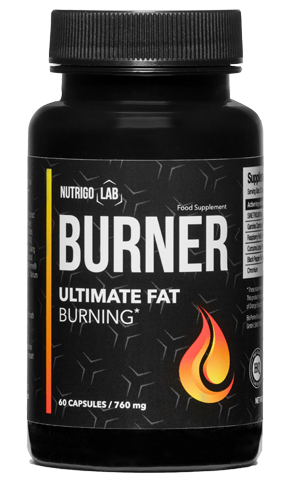
Our Recommendation — Nutrigo Lab Burner
Score: 5.0/10 · Best for: adults who want a non-stimulant-style fat-burner adjunct with named, branded ingredients — alongside diet and exercise, not instead of them. Main caution: the printed ingredient amounts sum to more than the capsule weighs — the maker's own numbers conflict — and no money-back guarantee is published. Fair trial: the three-bottle bundle at $33.33 a bottle, alongside diet and exercise — the trial the evidence describes; the six-bottle pack is the cheapest continuation, after a completed trial.
What is Sinetrol Xpur and how does it work?
SINETROL is a patented ingredient made by Fytexia, a French company that sells it to supplement brands. It is not a single molecule. Fytexia's technical specification describes a blend of extracts from grapefruit, sweet orange and blood orange, plus guarana seed extract, standardised for its polyphenol content — at least 20% flavanones, the citrus compounds the research focuses on.
Fytexia's published technical specification breaks the blend down by share. Grapefruit extracts account for 45%, guarana seed extract for 10%, sweet orange for 10%, and blood orange concentrate for 5%, with maltodextrin making up the remainder to 100%.
The same specification standardises the finished blend to at least 20% flavanones, the citrus polyphenols the maker's mechanism work focuses on. It also describes the trial extract as standardised to 1–3% natural caffeine, a fraction carried in by the plant extracts themselves.
At the studied 900 mg a day, that 1–3% fraction equals roughly 9–27 mg of caffeine daily. A product containing this blend should therefore never be described flatly as caffeine-free. For Nutrigo Lab Burner, the accurate statement is narrower: its panel adds no caffeine ingredient.
The proposed mechanism comes from laboratory work, and we label it as such. In a 2008 study by the ingredient's own researchers (Dallas et al., Phytomedicine), SINETROL inhibited an enzyme called cAMP-phosphodiesterase by 97% in isolated human fat cells, and fat release from those cells rose about six-fold against untreated cells.
That is test-tube work on extracted cells, not a measurement inside a living body. Blocking an enzyme that normally restrains fat breakdown is a plausible route to lipolysis. Plausible routes are cheap in this industry; what matters is whether the human trials that followed measured anything real. They did — with limits we will not skip.
One composition detail matters for later sections. Fytexia's materials describe the blend as containing a small amount of caffeine, and the extract used in the Korean trial was standardised to between 1% and 3% natural caffeine. At the studied 900 mg daily dose, that fraction works out to roughly 9–27 mg of caffeine a day.
That is less than a third of a cup of coffee, and it does not make SINETROL a stimulant ingredient in any practical sense. But it does mean "caffeine-free" is a claim about a finished product's panel, not about this blend's chemistry — a distinction that matters when we reach real labels below.
The Dallas 2014 Trial, Read Closely
The flagship study is Dallas et al. 2014, published in Phytotherapy Research. It is a 12-week, randomised, double-blind, placebo-controlled trial — the design this category usually promises and rarely delivers. Ninety-five healthy overweight adults took part: 47 received SINETROL-XPur and 48 received placebo, dosed twice daily with meals.
How much Sinetrol was used in the clinical trials?
The trial used 900 mg a day. Hold that number, because it is the only SINETROL dose with a full placebo-controlled trial behind it, and it is the yardstick every label should be measured against. Products that print more, less, or nothing at all are each making a different claim on this trial — most of them unearned.
The results, with their comparators
After 12 weeks, abdominal fat had fallen 9.73% in the SINETROL group of overweight adults versus 3.18% in the placebo group. Waist circumference fell 5.71% in the SINETROL group versus 1.56% in the placebo group. Hip circumference fell 4.71% versus 1.35% in the same two groups. All three differences were statistically strong (p < 0.0001).
Read those numbers the way an auditor would. The placebo group also lost abdominal fat and waist size — about a third as much — because trial participation itself changes behaviour. The ingredient's contribution is the gap between the two lines, not the larger number on its own. That gap is meaningful for a supplement ingredient. It is also a change in fat distribution measurements over 12 weeks, in 95 people, under study conditions.
What the abstract does not give you
Notice what is missing: a body-weight endpoint. The trial's headline measures are abdominal fat percentage, waist and hip circumference — not kilograms lost. Fytexia's own summaries of this research programme describe changes in body shape rather than dramatic weight loss, and that phrasing is accurate.
So the honest translation of the flagship result is narrower than the marketing that borrows it. In overweight adults over 12 weeks, 900 mg a day of this blend shifted where fat was carried and reduced waist and abdominal measurements more than placebo did. Anyone who converts that into "clinically proven to melt belly fat" has added words the trial never contained.
The trial also tracked safety markers. Inflammatory and oxidative markers improved in the SINETROL group, and lipid, liver and kidney panels were unchanged — a genuinely reassuring detail, in the small population and short window a 12-week trial offers.
The Supporting Trials — and Their Size
A flagship trial is one study. SINETROL's file has a handful of supporting studies, and their pattern matters as much as their results: every one of them sits inside the maker's orbit.
The Korean randomised trial
Park et al. (2020, Journal of Medicinal Food) ran a 12-week, double-blind, placebo-controlled trial in 100 overweight or obese Korean adults, using the same 900 mg daily dose. Body weight fell 1.81% in the SINETROL group versus 0.25% in the placebo group over the 12 weeks.
That gives the ingredient something the flagship trial lacked — an actual body-weight endpoint, pointing the same direction. It also came with industry involvement: the study formed part of a dossier prepared with Fytexia's Korean partner for that country's food-safety ministry. Direction consistent, independence limited.
A small pilot in men
An earlier pilot (Cases et al. 2015, International Journal of Food Sciences and Nutrition) put 25 overweight men on 900 mg a day for 12 weeks, alongside a normal-calorie diet. Waist circumference fell 7.4 cm in the SINETROL group versus 2.1 cm in the placebo group.
Twenty-five men is a pilot, not a proof. Its lead author was Fytexia's director of research and innovation. We count it as a supporting signal and nothing more — the same weight we would give any 25-person, maker-led study in this category.
A 16-week trial, and a dose–response study that cannot prove efficacy
A more recent 16-week trial of 77 adults on 900 mg a day found body fat percentage fell about 2 points more in the SINETROL group than in the placebo group, with three of its authors employed by Fytexia. Again: consistent direction, same sponsorship gravity.
The 2024 dose–response study is different in kind, and it is routinely miscited. It was open-label, enrolled 20 overweight volunteers, and compared 900 mg against 1,800 mg a day over 16 weeks — with no placebo group at all.
Without a placebo arm, that study can describe what changed inside each group and explore mechanisms, including gut-microbiota shifts. It cannot separate the ingredient's effect from time, expectation and study participation. When a label or a review cites it as evidence the ingredient "works," that is a design error, not a difference of opinion.
Who Ran This Research?
Follow the affiliations and a pattern forms. The lead author of the 2014 flagship trial, Constantin Dallas, works for Fytexia — the affiliation is printed on the paper itself. The pilot trial was led by Fytexia's research director. The Korean trial fed a regulatory dossier built with Fytexia's commercial partner. The 2024 study was sponsored by Fytexia.
Independent monographs have noticed. The NutraSmarts SINETROL monograph flags the lead author's employment by the maker in its own summary of the flagship trial — a small act of honesty most supplement content never performs.
Our position is the one we apply across this site: maker-run research is not fabricated research. The 2014 trial is properly designed — randomised, blinded, placebo-controlled, with a respectable sample for this category. But a file in which every study is connected to the seller caps the confidence any reader should place in it.
Independent replication — a university group with no Fytexia funding testing the ingredient — does not exist in the published record we could find. Until it does, SINETROL's evidence grades as "promising, maker-held." That is better than most fat-burner ingredients manage. It is not the same as settled.
Is Sinetrol safe — and does Sinetrol interact with medications?
Within the trials, the ingredient's short-term record is clean. The 2014 study reported no adverse-effect signal in its 95 overweight adults, and blood markers for liver and kidney function were unchanged over 12 weeks. The supporting trials report the same pattern.
Hold that beside its limits. A few hundred people, studied for 12–16 weeks, cannot detect rare reactions. "No adverse effects observed in the trial populations studied" is the accurate sentence; "proven safe" is not a sentence trial data of this size can support.
One interaction caution is generic but real. SINETROL is built on grapefruit and citrus extracts, and grapefruit compounds are the textbook example of a food ingredient that alters how the body processes certain medicines. The trial populations were healthy and unmedicated, so the trials say nothing about this.
If you take regular prescription medication — particularly anything your pharmacist has ever flagged against grapefruit — treat that as a question for the pharmacist before any citrus-extract supplement, this ingredient included. That is not a finding against SINETROL. It is the standard caution its evidence base cannot rule out.
The Dose Problem on Real Labels
Everything above rests on one number: 900 mg a day, the dose in every placebo-controlled trial. Now consider the label of the product our site reviews in this category, Nutrigo Lab Burner. Its printed panel lists SINETROL Xpur at 3,000 mg — per capsule.
The same maker's site text prints the capsule itself at 740 mg, and its bottle artwork reads 760 mg. A capsule cannot contain 3,000 mg of one ingredient inside a 740–760 mg total fill. The printed figure cannot be a per-capsule amount, and the maker nowhere explains what it is — a per-day figure, a misprint, or something else.
Follow the consequences. Taken literally, two capsules a day would deliver 6,000 mg — more than six times the studied dose, which is not reassuring but alarming, and physically impossible anyway. Taken as an error, the true SINETROL content is simply unknown, and an unknown dose cannot borrow a 900 mg trial.
This is why the dose audit is not pedantry. The trial result belongs to a verified 900 mg a day. A product whose delivered dose cannot be established from its own label has not earned the trial's numbers, whatever its ingredient list says. The ingredient is real. The evidence is real. The connection between this bottle and that evidence is what is missing.
Our Verdict: What a Buyer Can and Cannot Conclude
A buyer can conclude that SINETROL is one of the few fat-burner ingredients with a properly designed human trial behind it, that 900 mg a day for 12 weeks reduced abdominal fat and waist size more than placebo in overweight adults, and that the short-term safety record inside those trials is clean.
A buyer cannot conclude that any specific product delivers the studied dose, that the effect survives outside maker-run research, or that fat-distribution changes over 12 weeks translate into large weight loss. The trials measured centimetres and percentages of abdominal fat — modest, real, and routinely inflated in retelling.
The buying rule that follows is simple. The ingredient earns consideration only on a label that prints a verifiable amount near 900 mg a day. Where the amount is absent, hidden in a blend, or — as in the audit above — arithmetically impossible, you are not buying the trial. You are buying the trial's reputation, at a dose nobody can state.
What the Trials Did Not Measure
Start with the flagship. Dallas 2014 chose fat percentage and circumferences as its endpoints in 95 overweight adults over 12 weeks: abdominal fat, waist and hip. Body weight was not the headline measure, so the trial cannot answer the question most buyers actually ask first.
That choice matters for the belly-fat claim itself. A falling waist measurement and a falling abdominal fat percentage show that less fat was recorded around the middle. They do not show where, anatomically, that fat came from — under the skin, or deeper around the organs.
No SINETROL trial we could find used imaging-measured visceral fat as a primary endpoint. Visceral fat is the depot most often invoked in belly-fat marketing, and it is the one depot this research programme has not directly measured as its main outcome in any published trial.
Duration is the second gap. The placebo-controlled trials ran 12 weeks, and the longest studies in the file ran 16 weeks. Nothing in the published record tests the ingredient across a full year, or across the slower timelines on which real weight management succeeds or fails.
The third gap follows from the second. No trial included a maintenance phase after participants stopped taking the blend. Whether waist and abdominal measurements held, drifted back, or continued improving once dosing ended is simply unrecorded — the studies stop, and so does the knowledge.
The fourth gap is about who produced the evidence. Every trial in the file was run by, funded by, or connected to Fytexia or a commercial partner. That pattern does not make the reported results false, and the flagship design was methodologically sound on its own terms.
What the pattern removes is independent replication — a second research group, with no maker funding, repeating the experiment and finding the same result. Replication is how a promising finding becomes a settled one. For this ingredient, that step has not happened in the published record at all.
The practical effect is a confidence ceiling. A reader can reasonably trust the direction of the 12-week findings while discounting their size, because maker-run programmes rarely publish their weakest results. How large that discount should be is unknowable until an independent group runs the same trial.
How to Read a Sinetrol Claim on Any Label
Marketing borrows trial results wholesale. A label earns that borrowing only if it passes four checks a reader can perform in a shop or on a product page, using nothing more than the panel, the capsule weight, and basic arithmetic. Here is the checklist we apply.
First, the daily dose. Add up what the directions actually deliver in a day, not what one capsule claims. The studied amount is 900 mg a day. A label delivering materially less is testing a different, unstudied dose; a label delivering far more is doing the same.
Second, the material itself. The trials used the standardised Xpur-type blend, specified by its maker at at least 20% flavanones. A label that names SINETROL without any standardisation statement may contain the trademarked blend, a lookalike, or a smaller amount of it — the panel alone cannot distinguish them.
Third, the arithmetic test. Compare the printed amount of the ingredient per capsule with the maker's stated total capsule weight. An ingredient cannot weigh more than the capsule that contains it. When the printed figure exceeds the total fill, at least one of the two numbers is wrong.
Fourth, the funding disclosure. Check whether the product page, or the research it cites, states who paid for the trials behind the claim. Silence is itself information: as this article has shown, the SINETROL file is maker-run throughout, and a label that presents it as independent science misleads.
Applied to Nutrigo Lab Burner, the checklist stops at the first and third checks. Its panel prints SINETROL at 3,000 mg per capsule, while the maker describes the capsule itself at 740–760 mg. The ingredient figure cannot fit inside the stated capsule weight, so the arithmetic test fails outright.
Because that contradiction stands unresolved, the daily dose is unverifiable: a reader cannot establish whether the product delivers the studied 900 mg, a fraction of it, or several times it. On our checklist, an unverifiable dose means the trial result cannot be borrowed, whatever the ingredient list promises.
Our Recommendation — Nutrigo Lab Burner
Score: 5.0/10 · Best for: adults who want a non-stimulant-style fat-burner adjunct with named, branded ingredients — alongside diet and exercise, not instead of them. Main caution: the printed ingredient amounts sum to more than the capsule weighs — the maker's own numbers conflict — and no money-back guarantee is published. Fair trial: the three-bottle bundle at $33.33 a bottle, alongside diet and exercise — the trial the evidence describes; the six-bottle pack is the cheapest continuation, after a completed trial.
Frequently Asked Questions
What dose of SINETROL was used in the trials?
900 mg a day in every placebo-controlled trial — the 2014 flagship study, the Korean trial and the 16-week study alike. A 2024 open-label study also tested 1,800 mg a day, but with no placebo group it cannot show whether the higher dose works better.
How long did the SINETROL trials run?
Twelve weeks for the 2014 and Korean trials; 16 weeks for the later studies. There is no published trial of a year or longer, so nothing is known from controlled research about effects — or safety — beyond about four months.
Is SINETROL a stimulant?
It is not classed or sold as one, and nothing in its trial record shows stimulant effects. One nuance: Fytexia standardises the blend with a small natural caffeine fraction (the Korean trial's extract was specified at 1–3% caffeine), which at 900 mg a day amounts to roughly 9–27 mg — under a third of a cup of coffee.
Does SINETROL reduce belly fat specifically?
The flagship trial's strongest results were abdominal: abdominal fat fell 9.73% in the SINETROL group of 95 overweight adults versus 3.18% on placebo over 12 weeks. That is a measured shift in fat distribution under study conditions — not spot reduction you can target at will, and not a body-weight result.
Has SINETROL been tested independently?
Not that we could find. The lead author of the flagship trial is a Fytexia employee, the pilot was led by Fytexia's research director, and the remaining studies are maker-funded or maker-partnered. The designs are sound; the independence is absent, and we grade the evidence accordingly.
Who Should Buy a SINETROL Product — and Who Should Skip It
Buy it if the label prints a verifiable SINETROL amount at or near the studied 900 mg a day, you understand the expected effect is a modest shift in waist and abdominal fat over 12+ weeks alongside diet control, and you are not relying on it as your weight-loss plan.
Skip it if the product hides the amount in a proprietary blend or prints a figure that cannot survive arithmetic — you cannot borrow a trial for a dose nobody can state. Skip it, too, if you take medication your pharmacist has flagged against grapefruit, until you have asked them about citrus-extract supplements specifically.
Our verdict on the ingredient: the best-evidenced name in its category, held back by who funded the evidence and by labels that will not state a dose. Judge every SINETROL product by whether its panel lets you repeat the trial's 900 mg — most, including the one we review, do not.
Last reviewed: October 2026
