
- Quick Answer
- Why Don't Some Supplement Labels List the Amount of Each Ingredient?
- A Brief History of the Loophole
- How Dusting Works
- Reading a Blend: What Can Still Be Recovered
- The Worked Example: Piperinox
- Why Makers Choose Blends: The Honest Version
- Blends Are Not Just a Fat-Burner Problem
- What Full Disclosure Looks Like
- Frequently Asked Questions
- Are proprietary blends illegal or unregulated?
- Does a blend's ingredient order tell me anything?
- Why don't regulators require doses?
- Is a blend always a bad product?
- What should I look for instead when buying?
- Who Should Buy Piperinox — and Who Should Skip It
- Read This Next
Disclosure: This article contains affiliate links. If you buy through them, we may earn a commission at no extra cost to you. It never changes our conclusions.
Quick Answer
A proprietary blend is a legal label device: US rules let a maker list ingredients in descending order of predominance by weight, print only the blend's total weight, and withhold every individual amount. The rule was written to protect trade secrets; the category uses it to prevent dose audits.
Piperinox goes further than most — it prints no per-ingredient amounts and no blend subtotal, only the whole capsule's 730 mg. Best for: any supplement buyer, not just fat-burner buyers. Piperinox scores 4.4/10, and this article is the deepest single reason why.
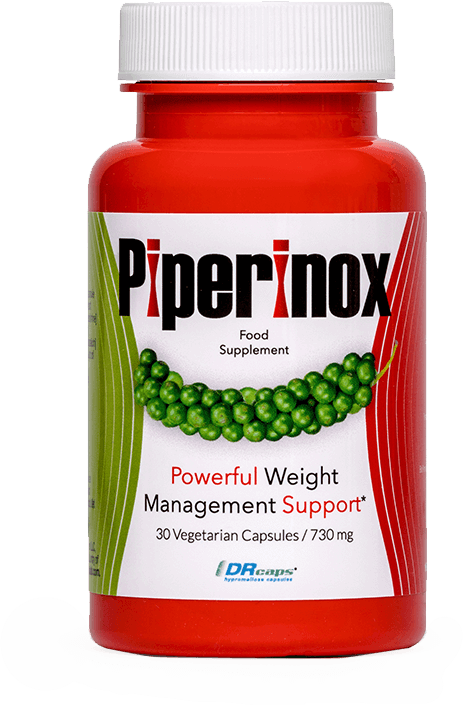
Our Recommendation — Piperinox
Score: 4.4/10 · Best for: adults who want a simple one-capsule-a-day thermogenic and are untroubled by undisclosed doses. Main caution: the panel lists ingredient names only — a delayed-release capsule of an unknown dose is still an unknown dose — and no money-back guarantee is published. Fair trial: the three-bottle pack at $33.33 a bottle — the honest trial length, per our full audit below.
Why Don't Some Supplement Labels List the Amount of Each Ingredient?
Start with the regulation itself, because most label criticism argues with marketing when it should be reading law. US supplement labelling rules — 21 CFR 101.36, the nutrition-labelling section for dietary supplements — govern how ingredients and amounts are declared in the Supplement Facts panel.
For a proprietary blend, section 101.36(c) permits the following arrangement: the blend gets a collective name, its ingredients are listed in descending order of predominance by weight, and the only quantitative figure that must appear is the total weight of the blend. The amount of each ingredient inside it may lawfully be omitted.
The stated rationale is trade-secret protection: a formula's proportions are the maker's intellectual property, and forcing their disclosure would hand competitors the recipe. Whatever one thinks of the argument for a functional food, note what it presumes — that the proportions are valuable. For most fat burners, the proportions are valuable chiefly because revealing them would end the conversation.
Two details of the rule matter for buyers. First, the descending-order requirement is real information: the first-listed blend ingredient outweighs the second, and so on down. Second, everything else is inference — the rule gives you an ordering and a total, and the distance between that and a dose is exactly as wide as the maker wants it to be.
A Brief History of the Loophole
The blend provision is a child of the 1994 Dietary Supplement Health and Education Act, the law that built the modern US supplement market. DSHEA's settlement was access in exchange for labelling: products could be sold without premarket approval, provided their labels carried the facts regulators specified.
Within that settlement, the blend rule was a negotiated exception. Industry argued that a formula's proportions were its crown jewels; regulators, focused on identity and safety information, conceded quantity for blends while requiring it for standalone nutrients. In 1994, with the category a fraction of its current size, the concession looked minor.
Three decades of market evolution inverted the judgement. Blends migrated from a niche format to the default architecture of the highest-margin categories — fat burners, pre-workouts, testosterone and nootropic formulas — precisely the categories where dose determines whether a product is pharmacology or theatre. The exception now swallows the products where the rule mattered most.
Reform proposals surface periodically and stall on the same trade-secret argument, now defended by a much larger industry. Whatever the eventual regulatory outcome, the interim reality is the one this article operates in: disclosure is voluntary, which makes it a competitive choice — and makes the makers who choose it identifiable, and the makers who refuse it answerable.
How Dusting Works
"Dusting" — also called label dressing or fairy dusting — is the practice the rule enables. A maker adds a trace quantity of an expensive, fashionable, evidence-carrying ingredient: enough to print its name on the label, far too little to reproduce the effect its trials measured.
The economics are transparent. A studied dose of a branded ingredient might cost more per capsule than the entire product retails for at bundle pricing. A dusting costs almost nothing and buys the same six words on the front of the bottle. The ingredient's trial file then does the selling for a dose that never experienced it.
This programme's audits are a catalogue of the pattern's fingerprints: a testosterone product shipping half the studied dose of its headline complex, a pre-workout whose beetroot ingredient delivers a twentieth of the trialled nitrate, a hair formula whose tocotrienols sit at an eighth of the tested amount.
Those were the honest cases — the amounts were printed, the gaps computable. Dusting inside a blend removes even the ability to compute.
The buyer's dilemma is asymmetry. The maker knows each amount to the milligram; their quality system requires it. The blend rule does not create ignorance — it allocates it, entirely to one side of the transaction. When a seller tells you a number would help competitors more than customers, ask why their competitors' curiosity outweighs your dose.
Reading a Blend: What Can Still Be Recovered
A blend label is not a total blackout, and a disciplined reader can extract more than makers expect. The exercise is worth teaching, because it converts suspicion into arithmetic.
Use the order. Descending predominance means the first ingredient is the largest single component and the last is the smallest. In a caffeine-bearing blend, the stimulant's position relative to fillers and cheap botanicals bounds what it can be.
Use the total. The blend's printed weight, divided against known studied doses, sets hard ceilings. If a blend totals 500 mg and its third ingredient was trialled at 900 mg, that ingredient is below its studied dose with mathematical certainty — no trust required.
Use the capsule. A capsule holds what it holds. Seven ingredients in a 730 mg capsule average about 104 mg each before excipients — a ceiling that silently disqualifies every gram-dose ingredient on the roster, as our spice article demonstrated with cinnamon and ginger.
Use the stimulant check. The one sum with safety frameworks attached — caffeine against the FDA's ~400 mg/day anchor, synephrine against Health Canada's 30 mg ceiling — either closes from the label or it does not. A blend that prevents it has failed the only audit with clinical consequences.
What cannot be recovered is the thing itself: the actual milligrams. These techniques bound a dose; they cannot state it. A review built on bounds can grade a label's transparency precisely — and must then confess that the product's pharmacology remains, by its maker's choice, ungradeable.
The Worked Example: Piperinox
Place the set's own product under this framework. As our Piperinox review records, the label lists seven ingredients — BioPerine black pepper extract, cinnamon bark extract, bitter orange fruit extract, ginger rhizome extract, cayenne pepper fruit extract, chromium, and guarana seed extract.
Now observe how far beyond the ordinary blend it goes. A standard proprietary blend at least prints the blend's total weight and orders its contents, giving the reader the two handholds of the previous section. Piperinox prints neither per-ingredient amounts nor a blend subtotal — only the capsule's overall 730 mg weight, excipients included.
The recovery techniques therefore degrade to their capsule form alone: 730 mg, seven ingredients, some excipients. The cinnamon cannot reach its studied 2 g. The ginger cannot reach its pilot's 2 g.
The chromium cannot be matched to Docherty's 600 µg or distinguished from a 25 µg garnish. The synephrine cannot be summed against any ceiling. Every article in this set ends at the same locked door, and this is the door.
It is worth being precise about the verdict this supports. Piperinox is not accused of containing nothing; a 730 mg capsule of seven botanicals contains something, at some doses, with some effects.
The accusation is narrower and, for a reviewer, decisive: the maker has made it impossible for anyone — buyer, clinician, or reviewer — to know which. In a category whose entire evidence base is dose-specific, unknowability is not a neutral property. It is the product profile.
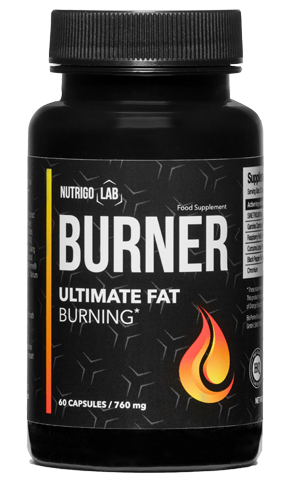
The comparison that damns it is internal to this programme. Nutrigo Lab Burner, scored a modest 5.0/10 in the same wave, prints every amount on its panel — including the panel inconsistency we flagged, which we could only flag because the numbers exist.
Transparency does not make a product good. It makes a product reviewable, and reviewability is the first thing a score is made of.
Why Makers Choose Blends: The Honest Version
Fairness requires stating the legitimate case, because it exists. A small maker with a genuinely distinctive ratio — discovered through real formulation work — faces competitors who could clone a disclosed panel in a quarter. For functional blends where the ratio is the invention, secrecy has a defensible logic.
Notice, though, what that case requires: a ratio worth stealing. It does not describe a seven-ingredient fat burner assembled from the category's standard roster, where every ingredient is a commodity and every studied dose is public. The trade-secret rationale protects innovation; applied to commodity formulas, it protects margins against arithmetic.
There is also a market-level defence: consumers, makers say, do not read panels. The programme you are reading is evidence against the strong version of that claim — but grant the weak one, and it cuts against the makers.
If buyers do not read panels, printing the amounts costs nothing in sales. The only audience disclosure actually threatens is reviewers. Secrecy aimed at reviewers is not a trade-secret strategy. It is a review-avoidance strategy, and it should be priced into scores as one.
One further motive deserves naming because buyers sense it without articulating it: optionality. A disclosed formula is a commitment — to ingredient costs, to supply contracts, to a specification that quality control must hold batch after batch.
An undisclosed blend can drift with commodity prices, substituting cheaper extracts as markets move, without a single label change. The secrecy protects not a recipe but a margin structure — including the freedom to quietly become a worse product than the one first reviewed.
Blends Are Not Just a Fat-Burner Problem
Piperinox is this article's worked example because it is this set's product, but the reader's shelf is the real subject.
The same device structures pre-workouts (where it hides the stimulant totals our stacking article needed), greens powders (where dozens of botanicals share a scoop-weight that cannot hold studied doses of any of them), and nootropic stacks (where ten ingredients share a capsule smaller than one studied dose of the first).
The audit skill transfers intact, because the device is identical in every aisle: recover the order, the total, and the container size; bound what can be bounded; name what cannot.
A buyer who learns the protocol on a fat burner owns it for every category the industry sells — which is the actual return on reading a labelling article to the end.
What Full Disclosure Looks Like
The alternative is not hypothetical; it is on shelves. Full-panel products print every ingredient's amount per serving, name the extract standardisations, and let any reader with the trial literature open perform the dose audit this set performs. Some add third-party testing on top — the ceiling of the current market's transparency.
The scoring gradient follows naturally. Full panel with amounts at studied ranges: auditable, scoreable on evidence. Full panel with weak doses: auditable, scoreable down on evidence — an honest failure. Blend with a total and an order: boundable, scoreable on transparency alone. Names only, no totals: unscoreable on evidence by construction, and capped accordingly.
Piperinox sits in the last tier, with the wave's joint-lowest product score as the consequence. Nothing about its ingredients forced that outcome; every number it withholds exists in a spreadsheet at its manufacturer. The 4.4/10 is, in the end, a score for a decision — the decision that you should not be able to check.
Our Recommendation — Piperinox
Score: 4.4/10 · Best for: adults who want a simple one-capsule-a-day thermogenic and are untroubled by undisclosed doses. Main caution: the panel lists ingredient names only — a delayed-release capsule of an unknown dose is still an unknown dose — and no money-back guarantee is published. Fair trial: the three-bottle pack at $33.33 a bottle — the honest trial length, per our full audit below.
Frequently Asked Questions
Are proprietary blends illegal or unregulated?
Neither. They are an expressly permitted labelling format under 21 CFR 101.36(c): ingredients in descending order of predominance by weight, with only the blend's total weight declared. The criticism in this article is not that makers break the rule — it is that the rule lets them withhold the one class of information, dose, on which all supplement evidence depends.
Does a blend's ingredient order tell me anything?
Yes, within limits. Order is by weight, so the first ingredient is the largest component and the last the smallest — useful for bounding fashionable ingredients listed at the tail. What order cannot tell you is the distance between positions: first may outweigh second tenfold or by a milligram. Order plus total gives bounds; neither gives doses.
Why don't regulators require doses?
The current rule is the residue of a trade-secret compromise: proportions were treated as a maker's intellectual property, and the supplement framework generally favours disclosure of identity over quantity for blends.
Other jurisdictions strike the balance differently. Until the US rule changes, the practical regulator of blend opacity is the buyer — which is why reviews score it as a product property.
Is a blend always a bad product?
No — it is always an unauditable one, which is a different statement. A blend could, in principle, contain excellent doses; its maker has simply declined to let anyone verify that, including after purchase.
Our position is transactional: unverifiable claims are worth less than verified ones, so blend products are scored on the transparency they offer, not the potency they might conceal.
What should I look for instead when buying?
Three things, in order. Amounts per ingredient, printed on the panel rather than promised in marketing. Standardisations named for the extracts that have them, so that a stated amount means the same thing across brands.
And a published money-back guarantee, so that when a product's effects cannot be verified in advance, the financial risk of finding out does not sit entirely with you. A label offering all three has done everything a label can do; the rest is the ingredient evidence itself, which is what the other eight articles in this set are for.
Who Should Buy Piperinox — and Who Should Skip It
Buy it if price and simplicity are your whole brief — one cheap capsule a day — and you are genuinely indifferent to knowing the dose of anything in it, having read this set's audits of what those doses decide.
Skip it if any ingredient's evidence is your reason for buying: piperine's, synephrine's, chromium's and the spices' files are all dose files, and this label answers none of them.
Skip it if you take medication piperine could interact with, if you stack stimulants, or if you compete in tested sport. A label that hides everything asks for trust it has not earned — decline the request.
Last reviewed: October 2026. This article is educational and is not medical advice.
