
- Quick Answer
- Where the Chromium Hypothesis Came From: Insulin
- The Trial the Whole Category Cites
- The Subgroup That Became the Headline
- The Binge-Eating Pilot
- Does Chromium Picolinate Cause Meaningful Weight Loss?
- Why Cravings Happen: The Machinery Chromium Is Asked to Fix
- Twenty Years After Docherty: The Replication That Never Came
- What Dose of Chromium Was Used in the Craving Studies?
- How a Dietitian Would Handle Sugar Cravings First
- Your Total Chromium: The Multivitamin Problem
- The "Blood Sugar Rollercoaster" Story
- Translating Chromium Label Claims
- The Comparison the GLP-1 Era Forced
- Piperinox's Chromium: The Unknowable Dose
- Frequently Asked Questions
- Does chromium reduce sugar cravings in healthy people?
- How much chromium did the studies use?
- Is chromium picolinate safe?
- Can I get the trial dose from food?
- How long would chromium take to affect cravings, if it works at all?
- Why do so many fat burners include chromium?
- Who Should Buy Piperinox — and Who Should Skip It
- Read This Next
Disclosure: This article contains affiliate links. If you buy through them, we may earn a commission at no extra cost to you. It never changes our conclusions.
Quick Answer
Chromium's craving evidence comes from psychiatry, not dieting. The key trial — 113 outpatients with atypical depression — missed its primary endpoints overall; appetite and craving items improved inside that specific population, which is not a dieter population.
For weight itself, the pooled effect is about 1.1 kg and disappears when one dominant trial is removed. Best for: readers whose sugar cravings arrive with low mood — and who want the population named before the claim. Piperinox scores 4.4/10; its chromium amount, like all its amounts, is undisclosed.
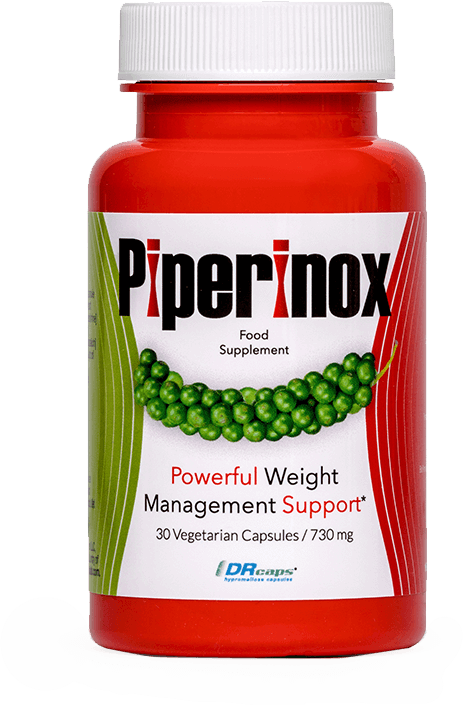
Our Recommendation — Piperinox
Score: 4.4/10 · Best for: adults who want a simple one-capsule-a-day thermogenic and are untroubled by undisclosed doses. Main caution: the panel lists ingredient names only — a delayed-release capsule of an unknown dose is still an unknown dose — and no money-back guarantee is published. Fair trial: the three-bottle pack at $33.33 a bottle — the honest trial length, per our full audit below.
Where the Chromium Hypothesis Came From: Insulin
Chromium's supplement career began in glucose metabolism, not cravings. In the 1950s, researchers identified a "glucose tolerance factor" in brewer's yeast that restored glucose handling in deficient animals, and chromium — in its trivalent form — was cast as the active element.
The deficiency framing survives in marketing long after it faded in nutrition science. Genuine chromium deficiency in free-living humans is vanishingly rare; it has essentially been documented in patients on long-term intravenous feeding without chromium. The average diet supplies enough that no deficiency syndrome exists for a supplement to correct.
European regulators have authorised two modest maintenance claims for chromium: it contributes to the maintenance of normal blood glucose levels, and to normal macronutrient metabolism.
Note the register — "contributes to the maintenance of normal" is the language of nutritional sufficiency, not of treatment, craving suppression or fat loss. Labels quote the existence of an authorised claim while letting readers hear a stronger one.
In diabetes, where the insulin hypothesis should show its largest effects, meta-analyses of chromium supplementation have found small reductions in fasting glucose and HbA1c in some pooled analyses and null results in others, with high heterogeneity and short trials. Even in the condition the mechanism targets most directly, the effect is contested and modest.
The craving hypothesis is a downstream branch of this tree: if chromium improves insulin signalling, and insulin dynamics touch brain glucose and serotonin pathways, perhaps craving — one specific, mood-linked kind of craving — responds.
Docherty tested exactly that branch, in exactly the population where it was most plausible. The branch held a secondary finding. It has never been load-bearing for general dieters.
The Trial the Whole Category Cites
Nearly every chromium-for-cravings claim on the internet traces back to one study, so it deserves to be read properly. Docherty et al., published in 2005 in the Journal of Psychiatric Practice, randomised 113 adult outpatients with atypical depression to chromium picolinate or placebo for eight weeks.
The dose was 600 µg of elemental chromium per day — a pharmacological dose, roughly ten times typical dietary intake, delivered as the picolinate salt. Keep the number; it becomes the article's measuring stick when we reach the products.
Atypical depression is not ordinary low mood. It is a defined subtype whose features include mood reactivity, increased appetite, weight gain and carbohydrate craving — which is precisely why chromium was trialled there. The researchers were treating a symptom cluster of a psychiatric diagnosis, not helping healthy people resist biscuits.
The headline result is the part marketing omits. On the trial's primary endpoints — the total depression score and the global improvement rating — chromium did not separate significantly from placebo in the full sample. By the standard trials are judged, this was a negative study.
What did move were appetite-related items: measures of appetite increase and carbohydrate craving improved on chromium within this atypical-depression population, in the evaluable patients and in a pre-specified high-craving subgroup. That is a real, interesting, secondary finding — in people whose cravings were a symptom of their depression.
Every word of that paragraph matters for the translation to supplements. Population: psychiatric outpatients with atypical depression. Endpoints: primary negative, appetite items positive. Dose: 600 µg/day of a named salt. Duration: eight weeks. Remove any one of those qualifiers and the claim being sold is no longer the claim that was studied.
The Subgroup That Became the Headline
The most-cited version of Docherty's result comes from its high-craving subgroup: 41 patients with strong baseline carbohydrate craving, in whom chromium responders reached 65% versus 33% on placebo on the overall depression response measure. Those are the percentages on the supplement blogs.
Subgroup findings are hypothesis-generators, not confirmations. A subgroup of 41 inside a 113-person trial whose primary endpoints were negative is exactly the statistical situation trialists warn about: slice a null result enough ways and one slice will look striking by chance alone.
The honest reading holds both truths at once. The subgroup signal is genuinely suggestive — it is biologically coherent, it aligns with the appetite-item results, and it justifies the follow-up research interest chromium still attracts. It is also unconfirmed by any large, dedicated craving trial in the twenty years since.
Notice the laundering path a finding travels. Trial: appetite items improve in depressed patients, primary endpoints negative. Press and reviews: "chromium reduces cravings in a clinical trial". Product copy: "clinically studied to crush sugar cravings". Each step deletes a qualifier, until a subgroup of psychiatric patients is doing sales work for a capsule aimed at healthy dieters.
Our rule — every percentage carries its population, comparator and endpoint in the same sentence — exists for precisely this case. Held to that standard, the Docherty finding is interesting and small. Released from it, it becomes whatever the label needs.
The Binge-Eating Pilot
The second study in the craving file is Sala et al. 2016, a pilot randomised trial of chromium picolinate in 24 adults with binge eating disorder, testing 600 and 1,000 µg/day against placebo for six months.
Its findings were mixed and modest: some glucose measures improved, binge frequency did not separate convincingly, and the authors framed the work as preliminary. Twenty-four participants is a pilot in the true sense — designed to test feasibility and generate estimates, not to settle efficacy.
Stack the craving file honestly and it is this: one negative-primary-endpoint trial in atypical depression with positive appetite items, and one small mixed pilot in binge eating disorder. No trial in healthy people with ordinary sugar cravings exists. The category's central claim has never been tested in the population the products are sold to.
That does not make the claim false. It makes it untested — a different verdict, and an important one, because untested claims at undisclosed doses are where supplement marketing lives most comfortably. The absence of the right trial is itself a finding a reviewer should report, not a gap to paper over with the nearest psychiatric study.
Does Chromium Picolinate Cause Meaningful Weight Loss?
Separate from cravings, chromium has been trialled for body weight directly, and the pooled answer is available. The 2003 meta-analysis by Pittler, Stevinson and Ernst combined the randomised trials of chromium picolinate for reducing body weight.
Across ten trials with 489 participants, the chromium groups lost about 1.1 kg more than the placebo groups over six to fourteen weeks. The authors' own conclusion used the words "doubtful clinical significance" — the right instinct for a number that size.
The robustness check is the decisive part. When the single largest, most favourable trial was removed from the analysis, the pooled effect fell to about 0.9 kg and its confidence interval crossed zero — meaning the remaining trials, taken together, could not distinguish chromium from placebo at all.
A category effect that lives or dies on one trial is not an effect; it is an anecdote with colleagues.
Later reviews have not rescued the number. The consistent picture across two decades is a pooled effect somewhere between zero and a kilogram, concentrated in short trials, at doses of a few hundred micrograms of the picolinate salt.
Against that record, "chromium burns fat" is not a claim with a small effect size. It is a claim the pooled evidence declines to make.
Why Cravings Happen: The Machinery Chromium Is Asked to Fix
Step away from the trials and consider the target itself, because "sugar cravings" is not one phenomenon and chromium could plausibly touch only one of its layers.
The first layer is homeostatic: genuine hunger, energy deficit, poor sleep — sleep loss alone reliably increases next-day appetite and sweet preference. The second is hedonic: cue-driven wanting, built by habit, advertising, stress and the sight of the biscuit tin, running on reward circuitry rather than need.
The third layer is the one Docherty's population represents: craving as a symptom, entangled with mood disorders, where carbohydrate intake is doing neurochemical self-medication. Chromium's hypothesised route — insulin sensitivity and downstream effects on brain glucose and serotonin — speaks to this layer and the homeostatic one, in theory.
A healthy dieter's 4 p.m. craving is usually layers one and two: a long lunch gap, a broken night, a stressful afternoon, a habitual cue. No mineral trial has shown an effect there, because no mineral trial has looked there.
The interventions with actual evidence for that craving are boring: protein and fibre at lunch, sleep, cue management, and not keeping the trigger in arm's reach.
This is the practical heart of the article. Chromium is being sold as a tool for a job it was never tested on, in people it was never tested in, at doses the sellers will not print. Each of those gaps alone would cap our enthusiasm. Together they define the claim's true status: a psychiatric subgroup finding, stretched past recognition.
Twenty Years After Docherty: The Replication That Never Came
A striking subgroup result in a defined population is an invitation to a confirmatory trial. In chromium's case, the invitation is two decades old and essentially unanswered — no large trial has retested chromium for carbohydrate craving, in atypical depression or in anyone else.
The research energy went elsewhere: small trials in polycystic ovary syndrome, depression adjunct studies, diabetes meta-analyses. The craving claim, commercially the most valuable one, was never the subject of a dedicated, adequately powered study. Buyers should sit with that asymmetry for a moment. The claim sells. The test would be easy to run. It has not been run.
There are innocent explanations — chromium is generic and unpatentable, so no sponsor profits from a definitive trial. But whatever the cause, the epistemic position is frozen at 2005: one trial, negative on its primaries, interesting on its secondaries, unreplicated.
A claim cannot grow stronger by being repeated on labels for twenty years. It can only grow more familiar, which is not the same thing.
Compare how this site treats ingredients with living evidence files — capsaicin's pooled trials refreshed in 2023, cinnamon's dose-response meta-analysis in 2020. Chromium's craving file has not been updated by new data in a generation. It is not that the evidence turned against it. It is that the evidence stopped.
What Dose of Chromium Was Used in the Craving Studies?
Not all chromium on labels is the same substance. The trial literature is overwhelmingly chromium picolinate — Docherty, the binge-eating pilot and the weight meta-analysis all used it. Other products use chromium chloride, nicotinate or "GTF" complexes, borrowing picolinate's file under a shared element name.
Doses matter in the same way. The craving trials used 600–1,000 µg/day of elemental chromium. Regulatory reference intakes for adults sit around 25–35 µg/day from diet. A supplement can therefore be anywhere on a forty-fold range — 25 µg of nutritional garnish or 600 µg of trial-dose pharmacology — and both are legally described by the single word "chromium".
Safety at trial doses is comparatively reassuring in the short term: chromium picolinate at up to 1,000 µg/day has generally been well tolerated in trials of months.
The cautions are specific rather than sweeping — possible interactions with insulin and diabetes medication through the same glucose pathway that motivates its use, rare case reports at high doses, and a theoretical long-term question mark that short trials cannot retire.
None of that assessment is performable for a product that hides its amount. Dose is the difference between a nutritional footnote and a pharmacological exposure, and for an element whose entire evidence file is dose-specific — 600 µg, picolinate, eight weeks — an unprinted amount is not a minor omission. It is the omission.
How a Dietitian Would Handle Sugar Cravings First
Worth stating plainly, because supplement articles rarely do: for ordinary sugar cravings in healthy people, the first-line interventions are dietary and behavioural, they are cheap, and several out-evidence every capsule in this category.
Front-load the day. Protein and fibre at breakfast and lunch blunt the afternoon glucose-and-hunger dip that presents as a sweet craving. Keep the deficit modest; aggressive restriction manufactures cravings physiologically, then sells the willpower story when they arrive.
Fix the sleep layer before the mineral one: a single short night measurably raises hunger hormones and sweet preference the next day.
Manage the cue layer mechanically — the treat that is not in the house cannot be eaten at 9 p.m. — and give the craving a competing ritual, the walk or the tea, for the twenty minutes it typically lasts.
If cravings arrive fused with persistent low mood, low energy and increased appetite as a pattern — the atypical picture — that is a clinical conversation, not a supplement one. Chromium's trial population was diagnosed and monitored. A person who recognises themselves in that population deserves the diagnosis and monitoring, not just the mineral.
Your Total Chromium: The Multivitamin Problem
Chromium rarely arrives alone. It is a standard multivitamin ingredient at nutritional doses (often 25–35 µg), a common addition to glucose-support formulas, and a roster regular in fat burners like Piperinox. A buyer can stack three products and triple an exposure none of the individual labels made salient.
At nutritional doses that stacking is a non-event. The problem is epistemic rather than toxicological: when doses are hidden in the fat burner, the user cannot compute their own total, and cannot compare any part of it to the 600 µg trial dose that motivates the purchase. Transparency is what makes stacking a choice instead of a surprise.
The practical protocol is unglamorous. Inventory every supplement you take for its chromium line. Where an amount is printed, sum them. Where it is not — as in Piperinox — treat the product's chromium contribution as unknown for both efficacy and total-exposure purposes, because that is precisely what it is.
Five minutes with your own labels is the entire protocol, and it is more dose information than the manufacturer of an undisclosed product provides about its own formula. That inversion — the buyer auditing harder than the maker discloses — is the chromium story in miniature, and it recurs across every ingredient in this set.
The "Blood Sugar Rollercoaster" Story
Modern chromium marketing has absorbed the language of the glucose-monitor era: cravings are reframed as "spikes and crashes", and the mineral is sold as the smoothing agent. The story is coherent enough to deserve a direct answer.
In healthy people without diabetes, post-meal glucose dips are usually modest, tightly regulated, and poorly correlated with the subjective craving that follows them. Large glucose-response studies show enormous individual variation in post-meal curves, and hunger tracks many things — meal composition, sleep, habit, time since eating — of which the glucose dip is one modest contributor.
True reactive hypoglycaemia, where glucose genuinely falls low enough to drive symptoms, is uncommon and is a diagnosis, not a marketing persona. A person with reproducible post-meal shakiness, sweating and confusion that resolves with eating should be assessed — and the assessment is not a chromium label.
So the rollercoaster story takes a real phenomenon (glycaemic variability exists), a rare condition (symptomatic hypoglycaemia), and a population-specific psychiatric finding (Docherty's appetite items), and composites them into an everyday dieter narrative that no single study supports. Chromium's role in that narrative is casting, not evidence.
The dietitian's version of glucose smoothing, incidentally, is meal construction: fibre and protein with the carbohydrate, food order, a post-meal walk. These have measurable effects on the very curves in question, in healthy people, at no cost. The mineral's file, by comparison, is one subgroup away from empty.
Translating Chromium Label Claims
Because chromium claims are so formulaic, they repay a translation exercise. Three standard label lines, and what the record supports:
"Clinically studied for cravings." Translation: one 2005 trial in 113 outpatients with atypical depression found improved appetite items on secondary analysis; its primary endpoints were negative; no craving trial in healthy people exists. "Clinically studied" is true in the way "legally sold" is true — it describes a process, not a result.
"Supports healthy blood sugar metabolism." Translation: chromium is an essential trace element with two authorised EU maintenance claims, and contested, modest glucose effects in diabetic meta-analyses. For a person with normal glucose, "supports healthy" describes the absence of deficiency — a state your diet already maintains.
"Helps curb appetite as part of your weight-management plan." Translation: the weight meta-analysis pooled about 1.1 kg versus placebo across ten trials, an effect that vanished when one trial was removed. The qualifier "as part of your plan" is doing the honest work in that sentence; the plan is the intervention, chromium the decoration.
The pattern across all three is the set's recurring lesson: the qualifiers are the claim. Strip them and the sentence becomes false; keep them and it becomes weak. Marketing's craft is to make you hear the stripped version while the label prints only the weak one — which is why our reviews quote claims with their populations attached, every time.
The Comparison the GLP-1 Era Forced
Chromium's craving claim has acquired an unflattering neighbour. The GLP-1 medicines demonstrated, in very large trials, what genuine appetite pharmacology looks like: patients describe the silencing of "food noise" — the background mental chatter about eating — alongside double-digit percentage weight losses.
Those drugs are prescription medicines with serious side-effect profiles, and nothing here recommends them. Their relevance to this article is calibration. When a mechanism truly moves appetite at population scale, the effect is unmissable in trials of thousands — not a secondary endpoint in 113 psychiatric outpatients that no one replicated for twenty years.
Supplement marketing has predictably borrowed the vocabulary, selling minerals as "nature's" version of the effect. The borrowing inverts the evidence hierarchy: the drug's effect is large and proven, the mineral's is small, subgroup-bound and untested in the target population. Sharing a claim word — "cravings" — does not share an evidence base.
For the reader, the recalibration is useful. "Reduces cravings" now spans everything from a GLP-1's demonstrated appetite suppression to chromium's 2005 subgroup. The phrase alone conveys nothing. Population, comparator, endpoint, dose — the four qualifiers this article attaches to every number — are the only version of the claim worth reading, on any product, at any price.
Piperinox's Chromium: The Unknowable Dose
Against this file, place the product. As our full Piperinox review records, its label lists chromium among seven ingredients, publishes no amount for it, does not name its chemical form, and prints only the 730 mg total capsule weight — shared across all seven ingredients plus excipients.
Docherty's dose was 600 µg of chromium picolinate daily — 0.6 mg of elemental chromium, but as a salt in a capsule whose other ingredients also need room. Nothing about that is physically impossible inside 730 mg. It is simply unknowable, which for a claim built entirely on one quantified trial is the disqualifying fact.
The maker could end the question with two printed numbers: the amount and the form. Every other actor in this story — the trialists, the meta-analysts, the regulators — published theirs. The product asking for money on the strength of their work is the one participant that has not.
Our score treats it accordingly. Piperinox's chromium earns its place in the roster and nothing more: an ingredient with a real, narrow, population-specific file, at an amount that cannot be compared to that file's 600 µg, in a form that cannot be matched to picolinate. Piperinox: 4.4/10.
Our Recommendation — Piperinox
Score: 4.4/10 · Best for: adults who want a simple one-capsule-a-day thermogenic and are untroubled by undisclosed doses. Main caution: the panel lists ingredient names only — a delayed-release capsule of an unknown dose is still an unknown dose — and no money-back guarantee is published. Fair trial: the three-bottle pack at $33.33 a bottle — the honest trial length, per our full audit below.
Frequently Asked Questions
Does chromium reduce sugar cravings in healthy people?
It has never been directly tested. The craving evidence comes from 113 outpatients with atypical depression — where appetite items improved while the primary depression endpoints did not — and a 24-person binge-eating pilot. Extrapolating either to healthy dieters is marketing, not evidence.
How much chromium did the studies use?
Docherty 2005 used 600 µg/day of elemental chromium as picolinate for eight weeks in those depressed outpatients. The binge-eating pilot used 600 and 1,000 µg/day. For scale, typical dietary intake is around 25–35 µg/day — the trials were pharmacology, not nutrition top-ups.
Is chromium picolinate safe?
At trial doses up to about 1,000 µg/day over months, it was generally well tolerated. The cautions: it can interact with insulin and diabetes medicines through glucose pathways, and people with kidney or liver disease should not self-dose high amounts. "Generally tolerated in trials" is a statement about monitored patients at declared doses.
Can I get the trial dose from food?
No, and the gap is the point. Rich dietary sources — whole grains, broccoli, grape juice, some meats — deliver chromium in single-digit micrograms per serving, totalling roughly 25–35 µg on an ordinary day.
Docherty's 600 µg/day in depressed outpatients was about twenty times dietary intake. Whatever that trial tested, it was not a nutritional correction; it was a drug-like exposure of a mineral.
How long would chromium take to affect cravings, if it works at all?
The only timelines in the record are the trials': Docherty's appetite findings emerged across eight weeks in depressed outpatients; the binge-eating pilot ran six months.
Nothing supports a days-scale effect, and any product implying rapid craving relief is borrowing stimulant logic for a mineral with none. If a declared-dose product is trialled at all, eight weeks is the honest judging window — against a baseline craving diary, not memory.
Why do so many fat burners include chromium?
Because it is cheap, permitted, and carries the phrase "clinically studied" via the Docherty trial — whose qualifiers (depressed population, negative primaries, 600 µg picolinate) fall away in the retelling. It is the category's most borrowed ingredient file relative to the strength of what the file contains.
Who Should Buy Piperinox — and Who Should Skip It
Buy it if you are a disciplined dieter curious about a cheap once-a-day thermogenic, with no mood disorder in the picture — and you accept that its chromium claim cannot be matched to the one trial that claim rests on, because neither the amount nor the form is published.
Skip it if cravings-with-low-mood is your actual pattern: that is Docherty's population, and it deserves clinical assessment, not a capsule that may contain a fraction of the studied dose. Skip it also if the chromium claim is your reason for buying — at an undisclosed amount, you are purchasing the citation, not the intervention.
And skip it if you take glucose-lowering medication that a clinician has not reviewed against your supplement stack. Chromium's one plausible mechanism runs through the same pathway those medicines act on — precisely why its dose should never be a mystery in a product aimed at you.
Last reviewed: October 2026. This article is educational and is not medical advice.
