
- Quick Answer
- Where the Claim Came From
- Is the raspberry ketone evidence from humans or only animals?
- Animal studies: prevention, in rodents, at enormous doses
- The one human study: an eight-ingredient blend
- The systematic-review verdict
- The Natural-Content Math
- Are raspberry ketones safe?
- Why It Is on This Label
- Frequently Asked Questions
- Are raspberry ketones natural?
- Can eating raspberries do the same thing?
- Is raspberry ketone banned?
- Who Should Buy a Raspberry Ketone Product — and Who Should Skip It
- Read This Next
Disclosure: This article contains affiliate links. If you buy through them, we may earn a commission at no extra cost to you. It never changes our scores or conclusions.
Quick Answer
No human trial of raspberry ketones alone exists. Not a small one, not a flawed one — none. Everything sold under this ingredient's name rests on rodent studies at doses no capsule delivers, test-tube work on fat cells, and one human trial of an eight-ingredient blend in which raspberry ketone's contribution is unknowable by design.
The systematic-review verdict is a single quoted sentence: "reliable research is lacking." That was published in 2013, after the ingredient's television fame, and no human trial has arrived since to change it.
Best for: readers who keep meeting this ingredient on labels and want the short, honest answer before it costs them anything. In the product we review, Nutrigo Lab Burner (5.0/10), its raspberry extract is the panel's weakest-evidence line — the branded SINETROL and Citrin do the real work in our scoring.
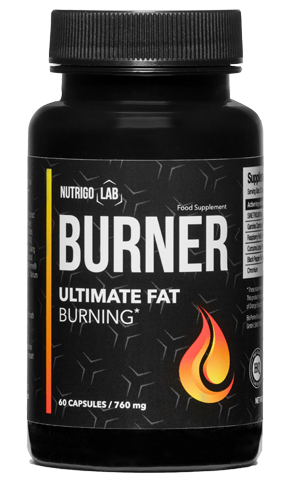
Our Recommendation — Nutrigo Lab Burner
Score: 5.0/10 · Best for: adults who want a non-stimulant-style fat-burner adjunct with named, branded ingredients — alongside diet and exercise, not instead of them. Main caution: the printed ingredient amounts sum to more than the capsule weighs — the maker's own numbers conflict — and no money-back guarantee is published. Fair trial: the three-bottle bundle at $33.33 a bottle, alongside diet and exercise — the trial the evidence describes; the six-bottle pack is the cheapest continuation, after a completed trial.
Where the Claim Came From
Raspberry ketone is the compound that gives red raspberries their smell. In the early 2010s it became, briefly, one of the most searched supplement ingredients in the world after television segments presented it as a fat burner in a bottle. The fame arrived first. The evidence was supposed to follow, and never did.
The scientific seed of the claim is a resemblance. Raspberry ketone's molecular structure looks like capsaicin's and like synephrine's — two compounds with genuine, if modest, metabolic effects. From that shape, researchers speculated the ketone might share their activity: more fat breakdown, more adiponectin, a faster metabolic rate.
Hold that logic up to the light. A molecule's shape is a hypothesis, not a result. Pharmacology is littered with lookalike molecules that do nothing alike in a body. The resemblance explains why scientists tested raspberry ketone in animals. It does not entitle anyone to sell it to humans as though the human test had been passed.
Is the raspberry ketone evidence from humans or only animals?
Animal studies: prevention, in rodents, at enormous doses
The founding study is Morimoto et al. 2005. Mice fed a high-fat diet gained less weight when raspberry ketone was mixed into the experiment — the measured outcome was prevention of weight gain in animals being fattened, not treatment of existing obesity, and not in humans.
The doses deserve their own arithmetic, supplied by the Institute of Food Technologists' critical review of this ingredient (Clemens, Food Technology).
The rat studies used roughly 0.545–2.18 g of raspberry ketone per kilogram of body weight; translated to human terms, that corresponds to something like 1,100–5,000 mg a day for a 200 lb person — at the top of the range, fifty times what a typical capsule provides, of a compound whose human pharmacology has never been mapped.
Animal work is how hypotheses earn human trials. Raspberry ketone's animal work earned exactly that opportunity — and the human trial of the compound alone was simply never run. The marketing skipped the step the science was waiting for.
The one human study: an eight-ingredient blend
The only human trial ever cited for this ingredient is Lopez et al. 2013 (Journal of the International Society of Sports Nutrition). Seventy obese adults were randomised; 45 completed eight weeks of a calorie-restricted diet and exercise programme, plus either placebo or a supplement containing raspberry ketone, caffeine, capsaicin, garlic, ginger and bitter orange.
Among the completers, the blend group lost 2.0% of body weight versus 0.5% in the placebo group over the eight weeks, with fat mass down 7.8% versus 2.8% in the same groups. A real result — for the blend.
The formula contained caffeine and bitter orange, two stimulants with their own metabolic effects, and the design offers no way to divide the outcome among six active ingredients. Attributing any of it to raspberry ketone is not interpretation; it is decoration.
The systematic-review verdict
Ulbricht et al. 2013, writing the Natural Standard evidence review of raspberry ketone in Alternative and Complementary Therapies, surveyed the whole record and concluded that "reliable research is lacking" for any health benefit in humans. The US Department of Defense's supplement database rates the weight-loss evidence "insufficient," in the IFT review's summary.
That is the complete file, thirteen years on: rodent prevention studies at gram-per-kilo doses, cell work, one unattributable blend trial, and a systematic review that found nothing reliable to review. Ingredients with thinner files exist. Few have been sold harder.
The Natural-Content Math
The word "raspberry" does quiet work on a label, implying the capsule concentrates something wholesome from fruit. The fruit's own numbers correct the impression. Raspberries contain roughly 1–4 mg of raspberry ketone per kilogram of fruit. A kilogram of raspberries — about eight cups — carries, at the generous end, 4 mg.
A single 100 mg capsule of the isolated compound therefore represents the ketone content of roughly 25–100 kg of raspberries. Nobody's diet, and no "natural" framing, survives that arithmetic. What is in the capsule is a synthesised aroma chemical — the same compound used to flavour foods and cosmetics, which is the context in which regulators have long accepted it as a flavouring at trace levels.
None of this makes the compound dangerous by itself. It makes the label's implication — concentrated fruit power — false by two orders of magnitude, and it reframes the purchase correctly: you are buying a synthetic flavour molecule on the strength of mouse studies.
Are raspberry ketones safe?
An unstudied ingredient is not the same as a safe one; it is an ingredient whose harms are also unstudied. The case literature holds one alarming entry.
Ansari et al. 2022 (Cureus) reported a 32-year-old woman with no cardiac risk factors who developed resistant polymorphic ventricular tachycardia — a life-threatening heart rhythm — in hospital, requiring 33 defibrillation shocks before overdrive pacing stopped it. She had recently started an over-the-counter weight-loss supplement containing raspberry ketones, and no other cause was identified.
Present that exactly as it is: a single case report, of a multi-ingredient product, proving association in one patient and causation in none. It does not show raspberry ketone stops hearts. It shows that the ingredient's safety file is thin enough that a case like this sits in it unanswered — and that the structural resemblance to synephrine, offered as the efficacy argument, cuts in the safety direction too.
The pharmacist monograph record treats the compound with the same caution, flagging stimulant-type effects as the theoretical concern. Our summary is the one the evidence supports: unproven is not a synonym for harmless, and "insufficient evidence" applies to both columns of the ledger.
Why It Is on This Label
Which brings us to the product we review, Nutrigo Lab Burner. Its panel prints "Raspberry Extract 100 mg" — and one distinction deserves credit for precision: the product lists raspberry extract, not isolated raspberry ketone, and it publishes no standardisation for it.
That distinction does not rescue the line. The ketone debate above concerns the isolated compound, and even that compound has no human weight trial to borrow. A fruit extract of unstated composition stands one step further from the evidence — which is to say, at a distance where "evidence" is no longer the right word at all.
Why is it there? Because it costs little, reads well, and completes a label. The formula's defensible content is its two branded ingredients; the raspberry line is the filler tier doing what the filler tier does, in the stimulant-free hub article's phrase — inflating the label's apparent sophistication at no evidentiary value. We scored the product on SINETROL and Citrin. This line contributed nothing but length.
Our Recommendation — Nutrigo Lab Burner
Score: 5.0/10 · Best for: adults who want a non-stimulant-style fat-burner adjunct with named, branded ingredients — alongside diet and exercise, not instead of them. Main caution: the printed ingredient amounts sum to more than the capsule weighs — the maker's own numbers conflict — and no money-back guarantee is published. Fair trial: the three-bottle bundle at $33.33 a bottle, alongside diet and exercise — the trial the evidence describes; the six-bottle pack is the cheapest continuation, after a completed trial.
Frequently Asked Questions
Are raspberry ketones natural?
The compound occurs naturally in raspberries at 1–4 mg per kilogram of fruit. The ketone in supplements is synthesised — at capsule doses it could not be otherwise, since 100 mg equals the ketone content of roughly 25–100 kg of fruit. "Natural" describes the molecule's origin story, not the capsule's contents.
Can eating raspberries do the same thing?
No, by arithmetic. Even the rodent studies' human-equivalent doses — 1,100–5,000 mg a day — would require hundreds of kilograms of fruit daily. Eating raspberries is a good idea for the usual nutritional reasons. Weight loss via their ketone content is not among them.
Is raspberry ketone banned?
No. It remains a permitted flavouring and supplement ingredient. Unproven and banned are different things: regulators restrict ingredients on demonstrated harm or drug-like claims, and this one's file is too thin to have triggered either. Its legal status tells you nothing about whether it works — the trial record, or its absence, tells you that.
Who Should Buy a Raspberry Ketone Product — and Who Should Skip It
Buy it if — we cannot construct the honest version of this sentence for raspberry ketone as a weight-loss purchase. There is no population, dose or outcome for which human evidence supports it. If it appears inside a formula you are buying for other, evidenced ingredients, treat its presence as neutral decoration and price it at zero.
Skip it if it is the headline, the reason for the price, or the word "ketone" is doing keto-adjacent work on the label — raspberry ketone has no relationship to ketogenic diets despite the shared syllable. Skip, especially, any product that cites the Lopez blend trial as proof for the ketone: the citation itself tells you the seller has not read it.
Our verdict: raspberry ketone is the category's clearest case of fame outrunning evidence — a flavour molecule with a rodent file, sold for a decade on a human trial that does not exist. The correct dose of confidence is none, and the correct price for the ingredient, on its own merits, is nothing.
Last reviewed: October 2026
