
- Quick Answer
- What is small-flowered willow herb, and why is it in prostate formulas?
- The Tradition
- What "Traditional Use" Legally Means
- The Laboratory Evidence, Labelled As Such
- The One RCT in the Genus — Fenced
- The Label Consequence
- Safety
- The Tea Question
- Frequently Asked Questions
- Is there any clinical trial evidence for willow herb in men?
- What does an EMA traditional-use monograph actually mean?
- Is willow herb the same as fireweed?
- Does willow herb shrink the prostate or lower PSA?
- Is willow herb tea the same as the extract in supplements?
- Who Should Buy NuProstate — and Who Should Skip It
- Read This Next
Disclosure: This article contains affiliate links. If you buy through them, we may earn a commission at no extra cost to you. It never changes our conclusions.
Quick Answer
Small-flowered willow herb (Epilobium parviflorum) is a traditional European prostate herb with an official traditional-use monograph from the European Medicines Agency — and, for this species, no human BPH trials at all.
What exists is a genuine folk tradition, laboratory work on a compound called oenothein B, and one proper randomised trial — on a different willow herb species, Epilobium angustifolium — which must not be borrowed to sell this one. Most of what ranks for "willow herb prostate" online is about that other species. This article keeps them apart from its first line to its last.
The formula in this cluster, NuProstate, includes 100 mg of the small-flowered species. It scores 5.6/10, and none of its score comes from this ingredient's evidence — because there is essentially none to score. Best for: readers who want to know what "traditional use" actually certifies, and what it does not.
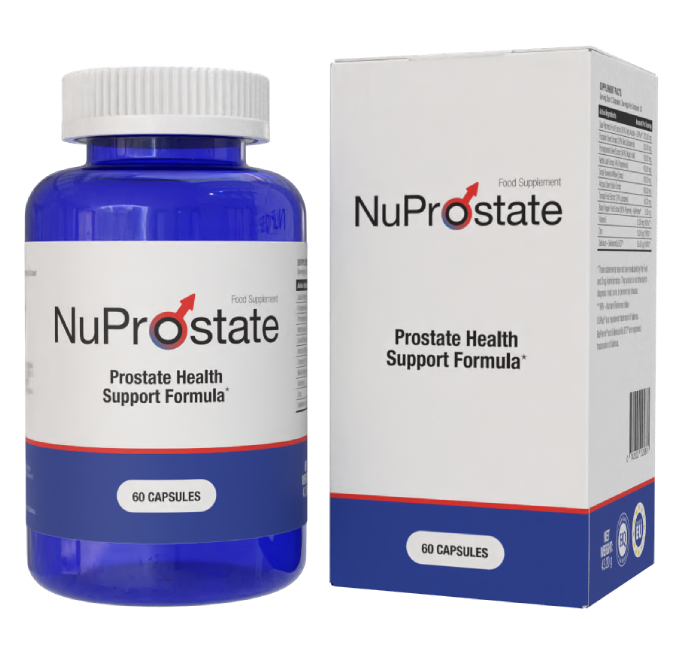
Our Recommendation — NuProstate
Score: 5.6/10 · Best for: men with mild urinary symptoms who want a fully disclosed formula — and who have had a proper prostate check first. Main caution: the milligrams match the trials but the extract strength does not: 45% fatty acids here against 85–95% in the big trials — and no money-back guarantee is published. Fair trial: the three-bottle pack at $35.99 a bottle — the shortest fair trial.
What is small-flowered willow herb, and why is it in prostate formulas?
"Willow herb" names a genus, Epilobium, with many species — and in the prostate conversation, two of them keep being treated as one.
Epilobium parviflorum — small-flowered willow herb — is the species of the Austrian folk tradition, the species named in the EMA monograph, and the species in the formula this cluster reviews.
Epilobium angustifolium — fireweed, or rosebay willow herb — is its larger, showier relative. It is the species behind most of the modern research attention, including the genus's one randomised prostate trial.
The two share a genus and some chemistry. They do not share an evidence base. Yet articles, labels, and round-ups routinely write "willow herb" findings from angustifolium studies as though they describe whatever Epilobium is in the bottle. If you remember one thing from this page, make it the habit of asking which species — of the research, and of the label.
The Tradition
Small-flowered willow herb's prostate reputation is genuinely old in European folk medicine, particularly in Austria, where the herb was used as a tea for urinary and prostate complaints long before it was sold in capsules.
Its modern popularity owes much to Maria Treben, the Austrian herbalist whose bestselling book "Health Through God's Pharmacy" championed small-flowered willow herb for prostate problems. Treben's book is a historical fact about how this herb spread — a popularisation, written from folk practice and personal testimony. Named as such, it is context. Cited as evidence, it is a category error this article will not make.
Treben's role explains a peculiar feature of this herb's market: its reputation is strongest exactly where her book sold most — the German-speaking world and the European herbal trade it influenced — rather than where any research programme ran. Reputations built by trials travel through journals. Reputations built by beloved books travel through kitchens and pharmacies. Willow herb's geography is the second kind, and its evidence file matches its route of arrival.
From that tradition, the herb passed into European prostate formulas as a standard supporting ingredient — usually, as in the label audited below, at modest doses alongside saw palmetto, nettle, and pumpkin seed. Tradition explains its presence on labels fully. It says nothing about whether it works.
What "Traditional Use" Legally Means
The EMA's herbal monograph on Epilobii herba covers E. angustifolium and/or E. parviflorum, and gives the traditional-use indication in careful words: relief of lower urinary tract symptoms related to benign prostatic hyperplasia, after serious conditions have been excluded by a medical doctor.
Understand what that monograph certifies. Under the EU's traditional-use framework, a product can be registered on the basis of at least 30 years of medicinal use (including at least 15 within the EU) plus a plausible rationale — explicitly without randomised trial proof of efficacy. The monograph for willow herb records traditional use only; there is no "well-established use" finding behind it.
"Traditional use" is therefore the most misunderstood phrase in herbal marketing. It means: people have used this for a long time, it appears acceptably safe at traditional doses, and its use is plausible enough to permit sale with honest labelling.
It does not mean: tested and found effective. A label that lets "traditional use" blur into "clinically recognised" is trading on that misunderstanding — and the regulator's own wording, including its "see a doctor first" condition, is more honest than most of the marketing built on top of it.
Contrast the monograph's other tier. "Well-established use" — the category above traditional use — requires a proper efficacy literature: clinical trials, systematic study, a decade of scrutinised medical use. Several famous herbs hold it for some indications. Willow herb does not, for any. When a marketer's phrase sounds like the higher tier, check which tier the monograph actually grants. For this herb, the document is short and the answer is unambiguous.
The Laboratory Evidence, Labelled As Such
The laboratory interest in willow herb centres on oenothein B, a large tannin (an ellagitannin) found across Epilobium species, which in laboratory work inhibits enzymes involved in prostate growth signalling, including 5-alpha-reductase and aromatase.
The key citation is Vitalone and colleagues (2003, Pharmacology) — an in-vitro study, a phrase that belongs in every sentence about it.
Testing extracts of several Epilobium species on cultured human cells, the researchers found the extracts inhibited proliferation of prostate cells — but also of mammary and brain-derived cell lines, indicating a non-specific effect rather than a prostate-targeted one. Extracts richer in oenothein B were more potent (one high-oenothein-B extract was about ten times more potent in the prostate cell line), which is why oenothein B gets the headlines.
One lab result does belong to the small-flowered species specifically. In 1996, Lesuisse and colleagues identified oenothein B as the active 5-alpha-reductase-inhibiting principle of Epilobium parviflorum — working, note, from the folk medicine use of that very species. It is the strongest thread connecting parviflorum itself to a plausible mechanism.
Hold it at its correct weight: an enzyme assay, in vitro, from 1996. Enzyme inhibition in a test system is where drug discovery starts — most such findings never survive contact with dosing, absorption, and human physiology. Saw palmetto's file, elsewhere in this cluster, shows a weak 5-alpha-reductase story failing exactly that journey, at far greater length and expense.
What in-vitro work can do: justify human research. What it cannot do: predict it. Compounds that slow cells in a dish routinely fail in bodies, where absorption, metabolism, and dose intervene. There is no oenothein B standardisation on the label audited below, no human pharmacology to bridge the gap, and no trial of E. parviflorum in men to cross to. The laboratory file is real, interesting — and three evidentiary floors below a clinical claim.
Vitalone's study contains one more finding that label-readers should steal. Comparing two extracts of the same species from different sources, the researchers found one contained about forty times more oenothein B than the other — and was about ten times more potent against the prostate cells. Same species, same plant part, wildly different chemistry.
That variability is the quiet argument for standardisation everywhere in this cluster. An unstandardised "100 mg willow herb extract" tells you the weight of a powder whose active-compound content could vary by an order of magnitude between batches and brands. Even a reader who credits the laboratory story in full cannot know whether the capsule in hand contains the version of the story that was measured.
The One RCT in the Genus — Fenced
There is exactly one randomised, placebo-controlled trial of a willow herb extract for BPH, and it belongs to the other species. Esposito and colleagues (2021, Biomedicine & Pharmacotherapy) tested an Epilobium angustifolium extract standardised for high oenothein B content in 128 men over six months.
As summarised in a 2023 review of phytotherapy for BPH, the trial found fewer men in the extract group reporting night-time urination, and fewer men with post-void residual volumes over 100 mL, compared with placebo. Prostate volume, notably, did not change. No adverse events were reported in the trial.
Why include a trial we then refuse to use? Because it shows what evidence for this genus would actually look like — a defined extract, a named species, a placebo arm, measured outcomes — and because its absence for E. parviflorum is the point.
Every claim for the small-flowered species that cites Esposito 2021 without naming the species switch has borrowed evidence it has not earned. In this article, the trial is a benchmark, not a transfer.
The Label Consequence
NuProstate's panel lists small-flowered willow extract at 100 mg per daily serving — species named correctly (Epilobium parviflorum), no oenothein B standardisation stated.
Score the inclusion for exactly what it is. Including a traditional herb in a traditional formula is legitimate; European phytotherapy has done it for decades, and the EMA monograph permits the traditional claim with its doctor-first condition attached. What is not legitimate — on any label, including ones this site profits from — is implying a trial record that belongs to another species, or letting "traditional use" sit on the page dressed as clinical recognition.
NuProstate's own copy, to be fair, does not make a willow-herb efficacy claim we could find. The ingredient functions in this formula as tradition made visible: it tells a European buyer "this is a proper prostate formula" the way a familiar herb on a grandmother's shelf did. Tradition can justify presence. It cannot justify expectation, and our review scores it accordingly — as neither a plus for efficacy nor a minus for honesty.
There is a test readers can apply to any tradition-based ingredient, on any label, in ten seconds: would the formula's evidence story change if this line were deleted? For willow herb here, nothing changes — no trial is lost, no dose audit shifts, no score moves. An ingredient whose deletion costs the evidence nothing is present for the label's sake. Sometimes that is harmless. It should never be mistaken for a reason to buy.
Safety
The safety file is thin in the same direction as the efficacy file: thin data, stated as thin data. Willow herb has a long history of use as a tea without a pattern of serious harm, the EMA's traditional-use framework presumes acceptable safety at traditional doses, and the one RCT in the genus reported no adverse events over six months.
That is reassurance of a limited kind — absence of a signal in small exposures is not proof of safety in all men, at all doses, alongside all medications. There is no meaningful interaction literature to consult.
The standing rules of this cluster therefore apply undiluted: symptoms assessed by a clinician first (the EMA monograph's own condition), new medication combinations checked with a pharmacist, and any red-flag symptom taken to a doctor rather than to a tea.
The Tea Question
A reader following the tradition faithfully would not buy a capsule at all. The folk preparation is an infusion — the dried herb steeped as a tea, taken over weeks. That is the form Maria Treben described, the form the Austrian tradition used, and the form the monograph's history rests on.
The capsule inverts the tradition's logic while borrowing its authority. A 100 mg extract is not standardised to oenothein B, not equivalent to any studied quantity of herb, and not the preparation anyone's grandmother made. None of that makes it harmful; it makes it a modern commercial object wearing traditional dress.
If the tradition itself is what appeals to you, the honest version of it costs the price of dried herb and comes with the tradition's actual epistemic status: untested, long-used, and — per the monograph — to be used only after serious conditions have been excluded by a doctor. Even the folk route runs through the clinic first.
Our Recommendation — NuProstate
Score: 5.6/10 · Best for: men with mild urinary symptoms who want a fully disclosed formula — and who have had a proper prostate check first. Main caution: the milligrams match the trials but the extract strength does not: 45% fatty acids here against 85–95% in the big trials — and no money-back guarantee is published. Fair trial: the three-bottle pack at $35.99 a bottle — the shortest fair trial.
Frequently Asked Questions
Is there any clinical trial evidence for willow herb in men?
For the genus, one trial: Esposito 2021 randomised 128 men to an Epilobium angustifolium extract or placebo for six months, with fewer men reporting night-time urination and fewer high residual volumes on the extract. For Epilobium parviflorum — the species in most formulas and in NuProstate — there are no human prostate trials.
What does an EMA traditional-use monograph actually mean?
That the herb has at least 30 years of medicinal use, a plausible rationale, and acceptable safety at traditional doses — enough for regulated sale with honest labelling. It is explicitly not a finding of proven efficacy; no randomised trials are required for the designation.
Is willow herb the same as fireweed?
Fireweed is Epilobium angustifolium — the relative, not the small-flowered species (E. parviflorum) of the folk tradition and of NuProstate's label. They share a genus and some chemistry. The one randomised trial in the genus used the fireweed species; the traditional prostate reputation belongs mainly to the small-flowered one. Any page that merges them is merging two different evidence files.
Does willow herb shrink the prostate or lower PSA?
There are no human data for either claim, for either species — and in the one trial that measured it (Esposito 2021, on E. angustifolium), prostate volume did not change. Size and PSA claims for willow herb have no source to stand on at all.
Is willow herb tea the same as the extract in supplements?
Both come from the tradition — the tea is the traditional preparation. Neither has trial evidence for the small-flowered species. A tea is at least the form the tradition actually used; a 100 mg capsule extract is the tradition at one remove, standardised to nothing in particular.
Who Should Buy NuProstate — and Who Should Skip It
Buy it if: you are choosing the formula for its disclosed label and its correctly dosed, honestly scored flagship ingredients — and you file willow herb where it belongs, as a traditional supporting ingredient that adds familiarity, not evidence.
Skip it if: willow herb's reputation is doing real work in your decision. That reputation is a folk tradition for one species plus a single trial of another, and no honest arithmetic turns it into a reason to buy. And skip it if you want a money-back guarantee — none is published.
Last reviewed: October 2026. This article is educational and is not medical advice.
