
- Quick Answer
- What Saw Palmetto Is Supposed to Do
- The Trial Record, Trial by Trial
- STEP (Bent et al. 2006, New England Journal of Medicine)
- CAMUS (Barry et al. 2011, JAMA)
- Cochrane 2023: the pooled verdict
- The Permixon caveat, handled fairly
- Why the earlier studies looked positive
- Why men on placebo improved so much
- The Extract Problem: What "85–95%" Means on a Label
- Dose, Duration and the "Give It Time" Question
- Safety and PSA
- What Would Change This Verdict
- Frequently Asked Questions
- What is the right dose of saw palmetto for the prostate?
- How long does saw palmetto take to work?
- Does saw palmetto have side effects?
- Does saw palmetto interfere with PSA testing?
- Can I take saw palmetto with blood thinners?
- Does saw palmetto lower DHT like finasteride does?
- Can I take saw palmetto alongside finasteride or tamsulosin?
- Is saw palmetto safe to take long-term?
- Who Should Buy NuProstate — and Who Should Skip It
- Read This Next
Disclosure: This article contains affiliate links. If you buy through them, we may earn a commission at no extra cost to you. It never changes our conclusions.
Quick Answer
Saw palmetto is the best-tested supplement ingredient in the prostate category — and its best trials are negative. In the rigorous studies, men with BPH urinary symptoms who took saw palmetto improved no more than men who took placebo.
The 2023 Cochrane review pooled 27 trials and 4,656 men and found a mean symptom-score difference of −0.90 IPSS points versus placebo (95% CI −1.74 to −0.07) — a difference the reviewers, with high certainty, describe as little to no benefit.
There is a second problem almost nobody prints: those trials used concentrated liposterolic extracts standardised to 85–95% fatty acids. Many products on sale today — including the one this cluster reviews — standardise far lower.
The null verdict was generated with a stronger extract than the one in most bottles. Best for: readers who want the trial record before the marketing. The product in this cluster, NuProstate, scores 5.6/10 — a well-disclosed label around an ingredient the evidence does not support.
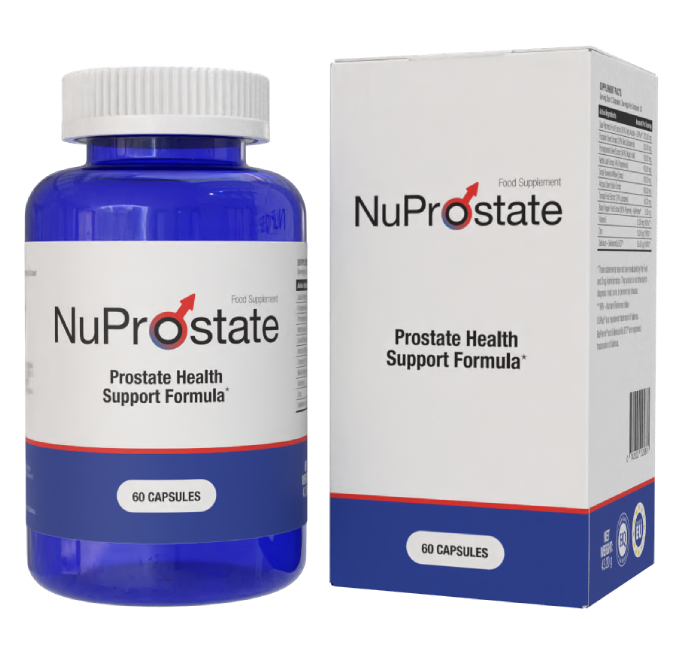
Our Recommendation — NuProstate
Score: 5.6/10 · Best for: men with mild urinary symptoms who want a fully disclosed formula — and who have had a proper prostate check first. Main caution: the milligrams match the trials but the extract strength does not: 45% fatty acids here against 85–95% in the big trials — and no money-back guarantee is published. Fair trial: the three-bottle pack at $35.99 a bottle — the shortest fair trial.
What Saw Palmetto Is Supposed to Do
Saw palmetto (Serenoa repens) is a dwarf palm native to the south-eastern United States. Its berries yield a fatty extract that has been used for urinary symptoms since the nineteenth century and is now one of the best-selling prostate ingredients in the world.
The rationale offered for it is hormonal. Laboratory work shows the extract can weakly inhibit 5-alpha-reductase, the enzyme that converts testosterone to dihydrotestosterone (DHT) — the same enzyme the prescription drugs finasteride and dutasteride block. Anti-inflammatory effects are also proposed.
Hold that rationale at arm's length. It is a mechanism story, and mechanism stories are where supplement claims live before trials test them. Finasteride's version of this mechanism is strong, dosed, and measurable in blood. Saw palmetto's is weak in vitro, and the question that matters — do men's symptoms improve? — is answered by trials, not by enzyme diagrams.
The Trial Record, Trial by Trial
STEP (Bent et al. 2006, New England Journal of Medicine)
The trial that reset the field. In the STEP trial, 225 men older than 49 with moderate-to-severe BPH symptoms took either saw palmetto extract (160 mg twice daily — the standard 320 mg a day) or placebo for one year.
The result was flat. The between-group difference in symptom scores (AUASI) over the year was 0.04 points (95% CI −0.93 to 1.01) — statistically indistinguishable from zero. The trial also measured the things men assume must be moving: prostate size, urinary flow rate, residual urine volume, PSA, and quality of life. None differed between the groups.
STEP mattered because of its rigour: proper randomisation, blinding protected by a taste-masked placebo, and a full year of follow-up. Earlier, smaller, looser studies had reported modest benefits. STEP's design removed the usual escape routes — and the benefit disappeared with them.
CAMUS (Barry et al. 2011, JAMA)
The obvious rejoinder to STEP was dose: perhaps 320 mg simply was not enough. The CAMUS trial tested exactly that. In 369 men aged 45 and older, the saw palmetto dose was escalated over 72 weeks from 320 mg a day to 640 mg, then to 960 mg — triple the standard dose.
Symptoms improved in both groups, as they usually do. But the placebo group improved more: symptom scores fell by 2.99 points on placebo versus 2.20 points on saw palmetto, a difference of 0.79 points favouring placebo. No dose level separated from placebo on any secondary measure either — not flow, not prostate size, not PSA, not quality of life.
CAMUS is the trial that closes the "wrong dose" argument. If tripling the dose of an 85%-standardised extract for 18 months cannot beat a dummy capsule, the ingredient's problem is not the dose.
The design deserves a sentence of respect, because it is the design this category usually avoids. CAMUS was publicly funded, run across multiple centres, used a standardised extract from a defined source, escalated the dose on a schedule decided in advance, and published its null result in one of the world's most visible journals.
Every element of that is a choice a manufacturer-funded pilot does not have to make. When people ask why we weight CAMUS over a shelf of smaller positive studies, the answer is not the journal's name — it is that CAMUS removed, one by one, the excuses (dose, duration, extract quality, sample size) that null results are usually buried under.
Cochrane 2023: the pooled verdict
Individual trials can be argued with; pooled analyses are harder to wave away. The 2023 Cochrane review of saw palmetto for BPH gathered 27 studies and 4,656 participants. Its headline: saw palmetto produced little to no difference in urinary symptom scores compared with placebo, a high-certainty conclusion, with a pooled difference under one IPSS point.
The same review found little to no difference in quality of life, and no meaningful difference in adverse events — saw palmetto was about as well tolerated as placebo, which is the one genuinely reassuring line in its record.
On prostate size, the single long trial that measured it found a mean difference of −1.22 cc versus placebo, with a confidence interval (−3.91 to 1.47) that comfortably includes no change at all. Our companion article reads the size question in full.
The US National Center for Complementary and Integrative Health summarises the position in plainer language: the evidence indicates saw palmetto is probably not helpful for BPH symptoms, though it appears well tolerated and does not interfere with PSA readings. When the trialists, the reviewers, and the regulator-adjacent summary all land in the same place, that place is the answer.
The Permixon caveat, handled fairly
One branded extract deserves separate mention, because its literature is the one most often quoted at us. Permixon is a specific hexanic extract, standardised like the trial extracts, with its own body of European studies — including a large 1996 comparison against finasteride in 1,098 men.
That comparison had no placebo group. Two treatments can look similar in a head-to-head trial while both are riding the substantial placebo response BPH trials always show; without a dummy arm, the study cannot demonstrate that either treatment beat doing nothing. Its authors were also industry-linked. None of this proves Permixon is inert — it proves the study cannot carry the weight marketers load onto it.
And even taken at face value, Permixon's literature belongs to Permixon: a defined hexanic extract at trial standardisation. It says nothing about a generic berry extract, a different solvent, or a lower fatty-acid percentage — which is what most of the shelf actually sells.
One more status worth decoding, because it appears in marketing constantly: in parts of Europe, standardised extracts like Permixon are registered — sold through pharmacies under herbal-medicine rules rather than as food supplements.
Registration sounds like a verdict on efficacy. It is better understood as a verdict on definition and dossier: the product is standardised, its quality is controlled, and its file has been reviewed. The trials inside that file are the same trials this article has just read — including the ones without placebo arms. A pharmacy shelf is a distribution channel, not a result.
This page is re-checked when the literature moves — that is what the "Last reviewed" line at its foot commits us to. A Cochrane update, a new large trial, or a regulator's revised summary would each trigger a fresh read of the verdict above, in whichever direction the evidence points.
Why the earlier studies looked positive
If the rigorous trials are this flat, why does saw palmetto have a decades-long reputation? Because the earlier literature was built differently, and its weaknesses all point the same way.
The pre-2006 studies were typically small — dozens of men, not hundreds — short (weeks rather than a year), and often lacked either a placebo group or adequate blinding. In a condition whose symptoms fluctuate and respond strongly to expectation, each of those weaknesses manufactures apparent benefit. Small samples also publish unevenly: a small positive trial is a paper; a small null trial is a drawer.
There is a subtler distortion as well. Many early studies used symptom instruments and reporting standards that would not pass a modern methods review, and several were linked to extract manufacturers. None of this makes the early researchers dishonest; it makes their literature a product of its era's standards.
STEP and CAMUS were designed, in effect, as re-tests under modern standards — funded publicly, powered properly, blinded carefully. When the same ingredient was re-examined with the weaknesses removed, the effect went with them. That pattern — early promise dissolving under rigour — is the single most common story in supplement science, and saw palmetto is one of its clearest tellings.
Why men on placebo improved so much
Across these trials, placebo groups improved by 2–3 symptom points. That is not fakery; it is the normal behaviour of this condition in a trial. Symptoms fluctuate, men enrol when symptoms are at their worst (so some improvement is regression to the mean), and being monitored, keeping diaries, and expecting benefit all move subjective scores.
Put a human scale on it: a 3-point IPSS change is roughly the difference between waking twice a night and waking once, or between "less than half the time" and "less than once in five" on a couple of questions. That is a change a man genuinely feels — which is precisely why uncontrolled testimonials in this category are worthless. The placebo men felt better too.
This is also the honest way to run a personal trial, if you run one. Score your symptoms before you start (the self-check in our symptom guide takes two minutes), keep a simple diary of night-time trips, and re-score at three months. Compare the diary with your starting point — not with your worst week, which is the comparison memory will try to sell you.
Even then, treat your own result as information about your symptoms, not proof about the capsule: without a placebo twin of yourself, you cannot separate the ingredient from the fluctuation. What the diary does protect you from is the opposite error — continuing to pay for something while your recorded symptoms quietly worsen.
The Extract Problem: What "85–95%" Means on a Label
Here is the layer most coverage omits entirely. Saw palmetto extracts are not interchangeable. The trials above used liposterolic extracts standardised to 85–95% fatty acids — concentrated preparations in which the fatty-acid fraction, the presumed active component, makes up nearly the whole capsule.
"Standardised to X% fatty acids" is therefore not decoration; it is the extract's strength, directly comparable across labels the way alcohol percentage is comparable across drinks. A 45% extract delivers, milligram for milligram, roughly half the fatty acids of the trial material.
Now apply that to the product this cluster reviews. NuProstate's label prints USPlus® saw palmetto at 320 mg — the full trial dose, which is to its credit, and rarer in this category than it should be. But its standardisation is 45% fatty acids, against the 85–95% used in STEP, CAMUS, and the Cochrane pool.
Do the delivery maths, because labels hope you won't. At 90% standardisation, a 320 mg daily dose delivers roughly 288 mg of fatty acids. At 45% standardisation, the same 320 mg delivers roughly 144 mg — half the presumed active fraction, from the same headline milligram number.
Extraction method sits underneath the percentage. Liposterolic extracts are made with different solvents — hexane, ethanol, supercritical carbon dioxide among them — and the solvent changes the extract's composition beyond the fatty-acid headline. The trial literature's extracts were defined preparations from defined processes; a shelf product's percentage is one number from a process you cannot see.
State the consequence exactly: the best trials found no benefit over placebo using extracts roughly twice as concentrated as this one. A weaker version of an ingredient that failed at full strength does not have an evidence problem that better marketing can fix. NuProstate's score reflects the label's honesty about all of this — the figures are printed for anyone to check — but honesty about a weak position does not strengthen the position.
The shopper's rule generalises: on any saw palmetto label, find the fatty-acid percentage before you find the milligram count. Milligrams without standardisation are a number about weight, not strength.
Dose, Duration and the "Give It Time" Question
The standard studied dose is 320 mg a day, usually split as 160 mg twice daily, of an 85–95% liposterolic extract. That is the dose STEP used, and the dose CAMUS started from before doubling and tripling it.
Does more work better? CAMUS is the direct test, and the answer is no — 640 mg and 960 mg a day performed no better than 320 mg, and none of them beat placebo. There is no dose-response curve here to climb.
A smaller dosing detail, for completeness: the trials generally split the dose — 160 mg twice daily — while many shelf products offer 320 mg once daily for convenience. Whether the pattern matters pharmacologically is untested, and in an ingredient whose triple dose failed, it is not where the explanation hides. We note it because a label audit should be complete, not because it changes the verdict.
How long should a trial run before judging? The honest answer has two halves. Symptoms in the big trials were tracked for a full year (STEP) and 72 weeks (CAMUS), and no benefit emerged at any point — so "give it more time" is not a gap in the evidence.
If a man nonetheless chooses a personal trial of a product like NuProstate, three months with a symptom diary (night-time trips, urgency, flow) is a fair, bounded experiment — with a prior prostate check, and a hard stop if symptoms worsen.
Safety and PSA
Saw palmetto's safety record is the strongest part of its file. In the dedicated safety analysis of the STEP trial, serious adverse events occurred in 5.4% of men taking saw palmetto versus 9.7% of men taking placebo over one year, and the investigators found no evidence of serious toxicity at the studied dose.
CAMUS reached the same destination at up to triple the dose: no attributable side effects emerged across 72 weeks of escalation. The usual reported effects in the wider literature are mild — digestive upset and headache — at rates close to placebo.
On PSA, saw palmetto has a genuinely useful property: it does not lower it. CAMUS found no PSA effect even at 960 mg a day. That matters because finasteride roughly halves PSA readings, which has to be corrected for in cancer screening; a man on saw palmetto needs no such correction, and his PSA remains interpretable.
The standing cautions are about context, not toxicity. Saw palmetto is usually advised to be disclosed before surgery and alongside blood-thinning medication, as a precaution. And its real-world risk is indirect: a year spent self-treating symptoms that were never assessed is a year in which a different, treatable cause can progress. That risk belongs to the self-treatment decision, not the capsule — but it is the risk that matters most.
What Would Change This Verdict
Verdicts on this site are revisable, and it is worth stating in advance what a revision would take — because the standard is the same one tamsulosin and finasteride already met.
A large, pre-registered, placebo-controlled trial of a defined saw palmetto extract, at a stated standardisation, showing a symptom improvement of at least 3 IPSS points beyond placebo — the threshold men can feel — sustained over a year, would reopen this article's conclusion. A positive trial of a finished formula would do even more, since no such trial exists for any product in this category.
What would not change it: another small pilot, another open-label series, another testimonial harvest, or another head-to-head study with no placebo arm. The literature already contains all of those, in quantity. The gap in saw palmetto's file is not a shortage of publications; it is the absence of one rigorous positive result among many rigorous attempts.
Until that result exists, the honest consumer summary remains the one this page opened with: a well-tolerated ingredient, a null trial record at full strength, and a shelf that mostly sells it weaker than the trials did.
Our Recommendation — NuProstate
Score: 5.6/10 · Best for: men with mild urinary symptoms who want a fully disclosed formula — and who have had a proper prostate check first. Main caution: the milligrams match the trials but the extract strength does not: 45% fatty acids here against 85–95% in the big trials — and no money-back guarantee is published. Fair trial: the three-bottle pack at $35.99 a bottle — the shortest fair trial.
Frequently Asked Questions
What is the right dose of saw palmetto for the prostate?
The studied dose is 320 mg a day of an extract standardised to 85–95% fatty acids. CAMUS tested 640 mg and 960 mg a day as well; more did not work better. Dose only matters alongside standardisation — 320 mg of a 45% extract is not the trial dose in any meaningful sense.
How long does saw palmetto take to work?
In the trials, it did not work at any measured point — not at weeks, not at 12 months (STEP), not across 72 weeks at triple dose (CAMUS). A fair personal trial is about three months with a symptom diary, but no duration has trial support behind it.
Does saw palmetto have side effects?
Few, on the trial record. Serious adverse events were less common on saw palmetto than on placebo in STEP's safety analysis (5.4% versus 9.7% of men over one year), and CAMUS found no attributable effects at up to 960 mg a day. Mild digestive upset and headache are the usual reports.
Does saw palmetto interfere with PSA testing?
No — and this is a real point in its favour. Even triple-dose saw palmetto did not move PSA in CAMUS, so screening readings stay interpretable. Finasteride, by contrast, roughly halves PSA and the reading must be adjusted.
Can I take saw palmetto with blood thinners?
The trial record is reassuring on direct harm, but the standard advice is caution: tell your doctor or pharmacist, and disclose saw palmetto before any surgery. The evidence base for interactions is thin rather than clean, which is a reason for disclosure, not alarm.
Does saw palmetto lower DHT like finasteride does?
Not measurably, at supplement doses. The enzyme inhibition is real in laboratory work, but the clinical trials found no finasteride-like signature in men — no prostate size change and no PSA suppression (finasteride roughly halves PSA). If saw palmetto blocked the enzyme to a clinically meaningful degree, those fingerprints would appear. They do not.
Can I take saw palmetto alongside finasteride or tamsulosin?
That combination has not been studied in trials, so there is no evidence-based all-clear to give. It is a question for your prescriber or pharmacist, with your full medication list in view — the same answer our supplements-versus-tamsulosin article gives in detail. Do not layer an untested combination on the assumption that "natural" means interaction-free.
Is saw palmetto safe to take long-term?
Within the studied windows — a year in STEP, 72 weeks at up to triple dose in CAMUS — no safety signal appeared. Beyond a few years there is simply little controlled data. The larger long-term question is not the herb's toxicity but whether self-treating unassessed symptoms is safe; that depends on the assessment, not the extract.
Who Should Buy NuProstate — and Who Should Skip It
Buy it if: your symptoms are mild, a clinician has already assessed them, and you still want to run a bounded personal trial of the category's standard ingredients in one fully disclosed formula — with your expectations set by STEP, CAMUS and Cochrane, not by the shelf's promises. NuProstate at least prints the standardisation that lets you run this audit yourself.
Skip it if: you have not had urinary symptoms checked; your symptoms are moderate-to-severe or worsening; you are hoping the extract will shrink your prostate (the companion article covers what the measuring trials found); or you want a money-back guarantee — the maker publishes none, and the terms allow only a 10-day withdrawal of unused goods.
Last reviewed: October 2026. This article is educational and is not medical advice.
