
- Quick Answer
- Three Outcomes That Get Confused
- How Prostate Size Is Measured
- Where the Shrink Claim Came From
- What the Measuring Trials Found
- What Actually Shrinks the Prostate
- Does the extract type matter — why do labels quote fatty-acid percentages?
- Frequently Asked Questions
- Does the type of saw palmetto extract matter?
- Why do labels quote fatty-acid percentages at all?
- If saw palmetto doesn't shrink the prostate, why do some men swear it helps?
- How big is a normal prostate, and how big is "enlarged"?
- Can weight loss or exercise shrink the prostate?
- Do any supplements shrink the prostate?
- What about combining saw palmetto with other ingredients?
- Who Should Buy NuProstate — and Who Should Skip It
- Read This Next
Disclosure: This article contains affiliate links. If you buy through them, we may earn a commission at no extra cost to you. It never changes our conclusions.
Quick Answer
No. In the trials that measured prostate volume directly, saw palmetto produced no size change — not at the standard 320 mg dose over a year, and not at triple that dose over 72 weeks.
Actual shrinkage is a drug-class effect. The 5-alpha-reductase inhibitors (finasteride, dutasteride) reduce prostate volume by roughly a fifth over several years, and they are the only oral treatments that do. Symptom relief, gland shrinkage, and protection against progression are three different outcomes, and this article keeps them separate — because nearly every misleading claim in this category works by blurring them.
The product in this cluster, NuProstate, makes no size claim, to its credit; its label still sits in a category whose marketing implies one. It scores 5.6/10. Best for: men who have been told — by an ad, a label, or a well-meaning friend — that a berry extract can do what only a prescription drug class has ever been shown to do.
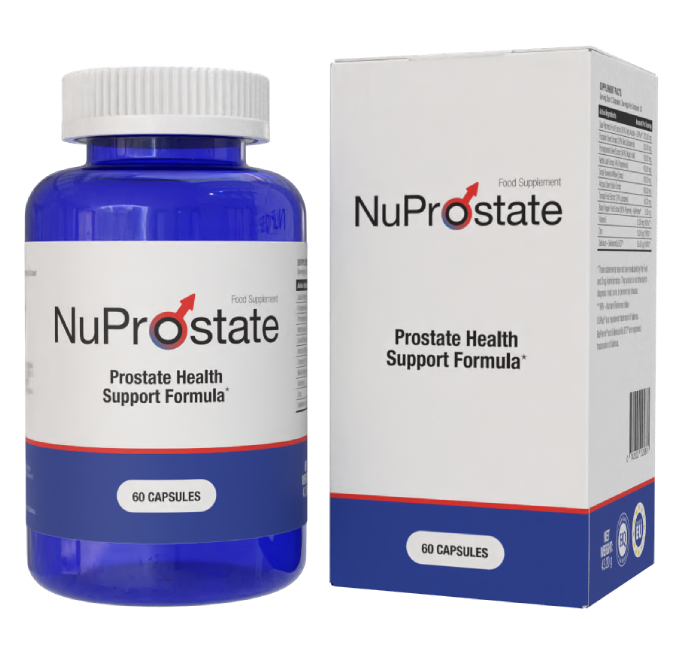
Our Recommendation — NuProstate
Score: 5.6/10 · Best for: men with mild urinary symptoms who want a fully disclosed formula — and who have had a proper prostate check first. Main caution: the milligrams match the trials but the extract strength does not: 45% fatty acids here against 85–95% in the big trials — and no money-back guarantee is published. Fair trial: the three-bottle pack at $35.99 a bottle — the shortest fair trial.
Three Outcomes That Get Confused
Every section after this one hangs on a simple taxonomy, so it is worth stating plainly.
Outcome one: symptom scores. How often you get up at night, how weak the stream feels, how urgent the need — measured on the IPSS questionnaire. This is the outcome supplements are sold on, and the only one ever seriously claimed for saw palmetto.
Outcome two: gland volume. The physical size of the prostate, measured by ultrasound or MRI in cubic centimetres. This is an anatomical claim. It is either measured or it is invented.
Outcome three: progression. Whether the condition worsens over years — acute urinary retention, the need for surgery, kidney damage from back-pressure. This is the outcome that matters most medically, and the one only long drug trials have addressed.
A treatment can move any one of these without moving the others. Alpha-blockers improve symptoms while changing size not at all. Finasteride shrinks the gland and cuts progression risk, with symptom gains that arrive slowly. And a supplement can, in principle, do none of the three — which is what the measuring trials found for saw palmetto on all counts.
The dissociation between size and symptoms deserves one more beat, because it confuses buyers in both directions. The bladder compensates for a narrowing outlet for years, so a man with an 80 cc gland may report mild symptoms — while another, with a 35 cc gland whose growth happens to pinch the urethra's course, is up four times a night.
Growth pattern matters as much as growth amount: tissue expanding toward the urethra obstructs; tissue expanding outward may not. This is why "my prostate is enlarged" is not a treatment plan, and why a product promising to reverse the enlargement is answering a question your symptoms may not even be asking.
How Prostate Size Is Measured
Size claims can only be judged if you know what a measurement looks like. A healthy young adult prostate is roughly 20–30 cubic centimetres — walnut-sized, as the cliché goes. In BPH, glands of 40–80 cc are common, and glands over 100 cc are not rare.
Clinicians estimate size three ways. A digital rectal examination gives an experienced finger a rough sense of enlargement — useful, imprecise. Transrectal or abdominal ultrasound measures the gland's dimensions and calculates a volume. MRI measures most precisely and is used when the number will change a decision, such as planning a procedure.
Trials that claim a size effect must use imaging, repeat it on a schedule, and compare against a control group — because glands grow measurably with time even untreated (in PLESS, the placebo group's volume rose about 14% over four years). A supplement study without imaging, or without a placebo arm, has not measured shrinkage at all. It has, at best, measured how men felt — outcome one, wearing outcome two's clothes.
Where the Shrink Claim Came From
The claim has a traceable fossil record, and understanding it explains why it refuses to die.
The starting point is a real mechanism. Finasteride shrinks the prostate by blocking 5-alpha-reductase and cutting DHT, the hormone that drives prostate growth. Saw palmetto extract weakly inhibits the same enzyme in laboratory work. The inferential leap — same enzyme, gentler version, therefore some shrinkage — was made by marketers long before it was tested in men.
The second ingredient was the pre-2006 literature: smaller, shorter, often uncontrolled studies that reported improvements in symptoms and occasionally in flow, and were summarised in reference works as evidence of a finasteride-like effect. The most quoted of them compared a branded saw palmetto extract (Permixon) against finasteride itself in 1,098 men over 26 weeks — and reported the two as broadly similar.
Read that study the way a trialist reads it. It had no placebo group.
Two treatments can track each other closely while both are riding the large placebo response every BPH trial produces; similarity to finasteride over 26 weeks — a period in which finasteride's own shrinkage is barely under way — cannot establish a structural effect for either arm. Yet "comparable to finasteride" detached from those caveats and travelled, through decades of secondary sources, into the shrink claim you still meet today.
There is a timing subtlety buried in that comparison, and it flatters the herb. Finasteride's benefits are back-loaded: its size effect builds over six to twelve months and its progression benefits over years. A 26-week head-to-head therefore catches the drug before its signature effect has arrived, while catching the extract at the peak of the early placebo response both arms share.
Judged at four years — PLESS's horizon — the comparison would look entirely different. Judged at 26 weeks without a placebo, it looked like equivalence. Study design is not a technicality; in this case, it is the entire origin of the claim.
What changed in 2006 is that the question was finally asked directly, with volume measured as an endpoint. The next section is what the measuring found.
What the Measuring Trials Found
The STEP trial (Bent et al. 2006, New England Journal of Medicine) randomised 225 men over 49 to saw palmetto 320 mg a day or placebo for one year, and measured prostate size among its secondary outcomes. There was no difference between the groups — in size, in flow rate, in residual urine, or in symptom scores (between-group difference 0.04 points).
The CAMUS trial (Barry et al. 2011, JAMA) then removed the dose excuse. In 369 men, the dose escalated from 320 mg to 640 mg to 960 mg a day across 72 weeks. Prostate volume again did not change relative to placebo — and symptoms did not separate either: scores fell 2.20 points on saw palmetto and 2.99 points on placebo.
The 2023 Cochrane review pooled the whole literature — 27 trials, 4,656 men — and concluded, with high certainty, that saw palmetto gives little to no benefit for urinary symptoms. For size specifically, the one long trial in the pool that reported volume found a mean difference of −1.22 cc versus placebo, with a 95% confidence interval from −3.91 to +1.47 cc: a range that includes zero and excludes any shrinkage worth the name.
So the direct answer to this article's title is not "unproven". It is "measured, repeatedly, and not found". There is a difference between those two verdicts, and saw palmetto's size claim has earned the second one.
There is an indirect witness worth calling, because it corroborates the imaging. PSA is produced by prostate tissue, and across populations it tracks gland volume — which is why a drug that shrinks the gland (finasteride) roughly halves PSA, a fingerprint no one disputes. In STEP and CAMUS, saw palmetto moved PSA by nothing at all, even at triple dose.
A treatment quietly shrinking prostates while leaving the volume-correlated blood marker untouched would be a physiological oddity. The PSA record and the imaging record tell the same story from opposite ends: the gland did not change.
What Actually Shrinks the Prostate
Only one oral drug class has demonstrated shrinkage: the 5-alpha-reductase inhibitors, finasteride and dutasteride. They block the conversion of testosterone to DHT inside the gland, and the gland — deprived of its growth signal — slowly loses volume.
The benchmark trial is PLESS (McConnell et al. 1998, New England Journal of Medicine): 3,040 men with enlarged prostates took finasteride 5 mg or placebo for four years. Among men who completed the study, prostate volume fell by about 18% on finasteride while rising by about 14% on placebo.
The progression numbers from the same trial show why shrinkage matters medically. Over four years, acute urinary retention occurred in 3% of men on finasteride versus 7% of men on placebo, and prostate surgery in 5% versus 10% — roughly halving both risks. Symptom scores also improved more on finasteride (−3.3 versus −1.3 points), though slowly.
Those results carry the class's trade-offs: months before the size effect builds, sexual side effects in a minority of men, and PSA readings roughly halved (which must be corrected for in screening). None of that is a sales pitch — it is what a real shrinkage claim looks like when it is earned: a mechanism dosed hard enough to measure, volume endpoints, four-year follow-up, and honest costs.
Timelines matter when you evaluate any rival claim. On a 5-alpha-reductase inhibitor, measurable shrinkage takes about six months to begin showing and continues building beyond a year. Symptom relief from the class is correspondingly gradual — which is why guidelines pair these drugs with larger glands and longer horizons, not with men who need relief this week.
For larger glands at higher progression risk, guidelines also use the two classes together: an alpha-blocker for prompt symptom relief plus a 5-alpha-reductase inhibitor for size and progression over years. The combination exists precisely because the two effects are different jobs. No single agent — drug or supplement — does both quickly, and claims that one capsule can should be read against that pharmacology.
Alpha-blockers, the other main drug class, sit in a different row of the taxonomy entirely. Tamsulosin and its relatives relax the smooth muscle at the bladder neck and prostate. They improve symptoms and flow within days — and change gland volume by exactly nothing. Even within prescription medicine, "relieves symptoms" and "shrinks the prostate" are separate promises made by separate drugs.
Procedures and surgery (such as TURP and laser therapies) remove or ablate tissue directly and are reserved for cases where drugs are insufficient. They belong in a urologist's conversation, not a supplement comparison — they are mentioned here only to complete the map of what "shrink" can actually mean.
The situations that push a man toward that conversation are concrete: repeated retention episodes, recurrent infections, bladder stones, kidney involvement, or symptoms that drugs no longer control. Notice that every one of them is a progression event — outcome three — which is why the progression data in PLESS matter more, medically, than any symptom score in this article.
It is also why the supplement detour carries an opportunity cost that never appears on a label. A year spent expecting shrinkage from an extract is a year in which progression, if it is happening, is unmonitored. The capsule's own risks are minimal; the detour's are not.
Does the extract type matter — why do labels quote fatty-acid percentages?
Now turn the taxonomy on the shelf. A supplement label may not legally claim to shrink your prostate — that is a disease-treatment claim. So the category works by implication: "supports prostate health", photographs of relieved-looking older men, copy that borrows the finasteride story's vocabulary (DHT, growth, size) while stopping one word short of the claim itself.
The audit question is whether an ingredient with a measured null on volume can carry that implication honestly. It cannot — and this is where extract strength compounds the problem, because the null was recorded with 85–95% fatty-acid extracts, stronger than most labels sell.
NuProstate's own label is comparatively clean: it lists USPlus® saw palmetto at 320 mg standardised to 45% fatty acids, and it makes no size claim we could find. What it cannot escape is arithmetic — a half-strength version of an extract that did not shrink prostates at full strength, in trials that measured size directly.
The language boundary is worth knowing as a shopper. In the US, supplements may make "structure/function" claims — "supports prostate health" — with a disclaimer, but may not claim to treat a condition or shrink an organ. In the EU, herbal products work under traditional-use rules of the kind our willow herb article explains. In both systems, the implication you are meant to take home is legally cheaper than the claim itself.
If shrinking the gland is your actual goal, the honest routes are a conversation about 5-alpha-reductase inhibitors with their real trade-offs, or a urologist's discussion of procedures. A capsule of berry extract is not a gentler version of either; on the volume endpoint, it is not a version of them at all.
One sentence to carry away, because it generalises to every claim in this category: a shrinkage claim is an imaging claim. If the page making it cannot point to a trial that put prostates in a scanner before and after, against placebo, it is not describing a finding. It is describing a hope — and charging accordingly.
Our Recommendation — NuProstate
Score: 5.6/10 · Best for: men with mild urinary symptoms who want a fully disclosed formula — and who have had a proper prostate check first. Main caution: the milligrams match the trials but the extract strength does not: 45% fatty acids here against 85–95% in the big trials — and no money-back guarantee is published. Fair trial: the three-bottle pack at $35.99 a bottle — the shortest fair trial.
Frequently Asked Questions
Does the type of saw palmetto extract matter?
Yes — it is the first thing to check on a label. The trials that measured size and symptoms used liposterolic extracts standardised to 85–95% fatty acids. A label that prints only milligrams, or standardises to 45% like NuProstate's, is describing a materially weaker preparation than the one that produced the (null) trial results.
Why do labels quote fatty-acid percentages at all?
Because fatty acids are the extract's presumed active fraction, so the percentage is its strength — the closest thing this ingredient has to a dose. Quoting it is good practice; it also lets a careful reader compare a label against the 85–95% trial standard, which is exactly the comparison this category would rather you skip.
If saw palmetto doesn't shrink the prostate, why do some men swear it helps?
Because symptoms genuinely fluctuate, and placebo groups in the big trials improved by 2–3 symptom points without any active treatment. Feeling better on a supplement is a real experience; attributing it to gland shrinkage is a separate claim, and the trials that measured the gland found no change to attribute it to.
How big is a normal prostate, and how big is "enlarged"?
A young adult prostate measures roughly 20–30 cc. "Enlarged" in BPH commonly means 40 cc and upward, with many glands in the 40–80 cc range. Size alone does not dictate treatment — symptoms, bother, and progression risk do — which is why a scan result without a symptom score is only half a picture.
Can weight loss or exercise shrink the prostate?
No lifestyle intervention has been shown to reduce prostate volume. Physical activity and weight management are associated with milder symptoms in observational research, and they are worth doing for many reasons — but the association is with how men feel and function, not with gland size on imaging. Lifestyle manages outcome one; it does not deliver outcome two.
Do any supplements shrink the prostate?
None has been shown to. Beta-sitosterol improved symptoms and flow in its trials with prostate size explicitly unchanged. Lycopene's one small BPH trial reported enlargement detected in the placebo group but not the lycopene group over six months — a possible progression signal in 40 men, not a demonstration of shrinkage, and not replicated. The shrinkage column of the evidence table belongs entirely to the 5-alpha-reductase inhibitor drug class.
What about combining saw palmetto with other ingredients?
Combinations inherit the same burden of proof. No prostate formula — including NuProstate — has been shown in a trial to reduce prostate volume. The shrinkage evidence belongs to a drug class, not to any blend on the supplement shelf.
Who Should Buy NuProstate — and Who Should Skip It
Buy it if: your goal is a bounded, eyes-open trial of the standard prostate ingredients for mild, clinician-assessed symptoms — and you understand from this article that smaller-prostate hopes are not part of what you are buying. The label's full disclosure is the product's genuine strength.
Skip it if: shrinking the gland is the point. That outcome belongs to finasteride-class drugs (with their timelines and trade-offs) or to procedures, and every month spent expecting it from a supplement is a month the drug pathway is not being discussed. Also skip it if you want a money-back guarantee — none is published.
Last reviewed: October 2026. This article is educational and is not medical advice.
