
- Quick Answer
- What's in Pumpkin Seed That Anyone Cares About
- The Evidence, Form by Form
- Whole seeds: GRANU, read carefully
- Pumpkin seed oil: smaller trials, shorter horizons
- Extracts: GRANU's failed arm is the precedent
- What is beta-sitosterol, and does it help urinary symptoms?
- The Label Audit: Where NuProstate's Pumpkin Actually Sits
- How Much Would You Have to Eat?
- Safety
- Frequently Asked Questions
- Is pumpkin seed extract the same as eating the seeds?
- How much pumpkin seed did the studies use?
- What is beta-sitosterol?
- Can I take pumpkin seed oil instead of eating the seeds?
- Are pumpkin seeds safe to eat every day?
- Does pumpkin seed shrink the prostate?
- Who Should Buy NuProstate — and Who Should Skip It
- Read This Next
Disclosure: This article contains affiliate links. If you buy through them, we may earn a commission at no extra cost to you. It never changes our conclusions.
Quick Answer
With pumpkin seed, the form is the finding. In the one large, long trial — GRANU, 1,431 men followed for 12 months — men who ate 5 g of whole pumpkin seeds twice a day responded better than men on placebo: 58.5% of the seed group versus 47.3% of the placebo group met the trial's responder definition.
The same trial included a pumpkin seed extract arm — the form supplements actually sell — and that arm did not beat placebo. The researchers themselves described the seed result as descriptively significant and said a confirmatory trial is still needed.
So the honest summary is: a food showed a modest signal; the capsule form of the same plant failed its test; and a third material — purified beta-sitosterol — has its own separate, shorter trial record that should not be merged into either.
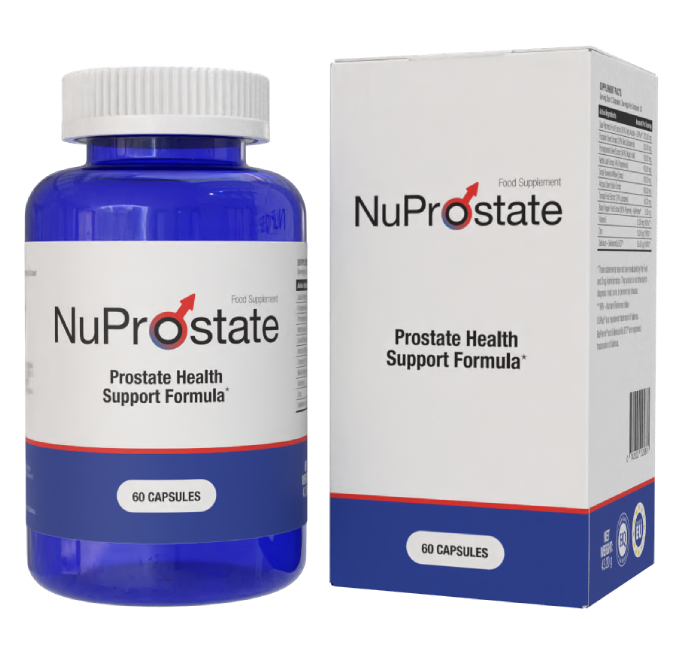
The product in this cluster, NuProstate, uses the extract form. It scores 5.6/10. Best for: men deciding between eating the seeds, buying an oil, or trusting an extract label — three genuinely different decisions.
Our Recommendation — NuProstate
Score: 5.6/10 · Best for: men with mild urinary symptoms who want a fully disclosed formula — and who have had a proper prostate check first. Main caution: the milligrams match the trials but the extract strength does not: 45% fatty acids here against 85–95% in the big trials — and no money-back guarantee is published. Fair trial: the three-bottle pack at $35.99 a bottle — the shortest fair trial.
What's in Pumpkin Seed That Anyone Cares About
Pumpkin seeds (Cucurbita pepo) carry three things the prostate literature cares about, in very different quantities.
First, phytosterols — plant sterols, of which beta-sitosterol is the best known. Beta-sitosterol is the component with an actual trial history in BPH, covered in its own section below. In whole seeds it is present, but as a small fraction of the seed's total mass, alongside other sterols.
Second, zinc. Pumpkin seeds are a genuinely rich food source, and zinc is concentrated in healthy prostate tissue. That association is real and routinely overstretched: correcting a poor diet is not the same intervention as treating urinary symptoms, and no trial shows seed zinc relieving BPH symptoms.
Third, the seed as a whole food — its fatty acids, fibre, and minor compounds arrive together in the form GRANU actually tested. This matters because the trial that supports pumpkin seed tested exactly this: the food, not a fraction of it. Any claim that isolates one component as "the active" is going beyond the evidence.
So what is beta-sitosterol, in one paragraph? It is a plant sterol, structurally similar to cholesterol, found across seeds, grains and vegetables. It is sold purified as a supplement in its own right, and — importantly for this article — it was trialled in purified preparations, which makes its evidence base a different dataset from either whole seeds or seed extracts.
The Evidence, Form by Form
Whole seeds: GRANU, read carefully
The GRANU trial (Vahlensieck et al. 2015, Urologia Internationalis) is the strongest study pumpkin seed has, and it deserves a careful read rather than a headline.
Design: 1,431 men aged 50 to 80 with BPH symptoms were randomised for 12 months to whole pumpkin seeds (5 g twice daily — 10 g a day, about a tablespoon), a pumpkin seed extract, or placebo. The responder definition was a drop of at least 5 points on the IPSS symptom score.
Result: 58.5% of the men eating whole seeds met the responder definition, versus 47.3% of the men on placebo. That 11-point gap is a real but modest edge — and the authors themselves labelled it "descriptively significant" and stated that a further confirmatory study is needed. Honest reporting of this trial keeps that caution attached.
Two more things GRANU teaches. The placebo response was large — nearly half the placebo men "responded" — which is the normal weather of BPH trials and the reason testimonials prove nothing here. And the extract arm's failure, described next, is the trial's most commercially inconvenient finding.
GRANU also has design limits a careful reader should hold alongside its size. Blinding a food intervention is genuinely hard — men eating recognisable seeds twice a day for a year are not blinded the way capsule-takers are, and expectation effects can leak into symptom diaries. The trial ran inside one country's primary-care system, and its responder definition (a 5-point IPSS drop) is a threshold, not a cure measure.
None of that erases the result; the placebo group laboured under the same conditions, and the seed arm still separated from it. It does mean GRANU is best read as a well-run trial with a modest, honestly hedged finding — which is exactly how its own authors presented it, and how this article insists on quoting it.
Pumpkin seed oil: smaller trials, shorter horizons
The oil has its own small literature. The most cited recent study is a 2021 single-blind randomised trial (BMC Urology) comparing pumpkin seed oil at 320 mg a day against tamsulosin over 12 weeks in men with BPH; symptom scores improved significantly in the oil group over that period.
Read it at its correct weight: single-blind (the men knew or could guess their treatment), 12 weeks long, and a comparison against a drug rather than a placebo. It is a reason the oil is not dismissible — and nowhere near the standard GRANU sets for the seeds. Older, smaller oil studies point in a similar, modest direction.
Extracts: GRANU's failed arm is the precedent
Return to GRANU's third arm. The extract group — men taking a concentrated pumpkin seed preparation in capsule form, the exact format the supplement industry sells — did not differ from placebo on the responder measure.
One trial arm does not settle a question forever, and a different extract at a different dose might fare differently. But the burden of proof sits where it sits: the only large, long, placebo-controlled test of a pumpkin seed extract in BPH failed. Every extract product since then is asking to be believed ahead of that result, not because of new evidence of its own.
What is beta-sitosterol, and does it help urinary symptoms?
Purified beta-sitosterol has the most positive trial record of anything in this article — and it must not be merged with "pumpkin". The Cochrane review by Wilt and colleagues pooled 4 trials and 519 men: compared with placebo, beta-sitosterol improved symptom scores by a weighted mean of 4.9 IPSS points and peak urinary flow by 3.91 mL/s, and reduced residual urine volume by about 28.6 mL.
The caveats are structural. The trials were short — 4 to 26 weeks. Beta-sitosterol did not reduce prostate size. And the preparations were purified sterol at defined doses, in the range of roughly 60–130 mg a day — a pharmaceutical-style material, not a seed and not a general seed extract.
So the category contains a genuine oddity: the purified component outperformed the whole food's trial results, while the marketed middle form — the standardised extract — is the one with a failed arm. Form is not a detail in this category. Form is the finding.
Translate the sterol numbers into felt experience, since flow rates are abstract. A peak-flow gain of about 3.9 mL/s is the difference between a hesitant, drawn-out stream and a noticeably brisker one — the kind of change men in these trials could actually perceive, which is part of why the symptom-score gains (−4.9 IPSS points) travelled with it.
Why the purified sterol might work, mechanistically, is still not settled — proposed actions involve inflammation and growth signalling in prostate tissue, and they are labelled "proposed" in the literature for a reason. What the Wilt record establishes is narrower and more useful: a defined material, at defined doses, improved symptoms and flow over weeks. Everything beyond that sentence is hypothesis.
And a duration warning that applies to the whole article: the sterol trials ran at most 26 weeks. BPH is a decades-long condition. A material that performs over six months has not been shown to perform over six years, and no sterol trial tracked progression — retention, surgery, kidney outcomes — at all.
The Label Audit: Where NuProstate's Pumpkin Actually Sits
NuProstate's panel lists pumpkin seed extract at 300 mg per daily serving, standardised to 20% beta-sitosterols. The arithmetic is simple and worth doing out loud: 20% of 300 mg is about 60 mg of mixed sterols a day.
Here is the honest surprise in this audit. In raw milligrams, ~60 mg a day sits in the same neighbourhood as the purified beta-sitosterol doses in the Wilt-era trials. The milligram gap that sinks so many labels in this cluster is not the problem here.
The problems are the two that remain. First, material: the trials used purified beta-sitosterol preparations; NuProstate delivers a mixture of sterols inside a seed extract standardised to a total-sterol percentage, which is not the same material and has never been trialled as such. Second, form: the delivery vehicle is an extract — the one form in GRANU that failed to beat placebo.
Neither point makes the ingredient dishonest; the label discloses exactly what it is, which is why this product's Ingredients scoring is comparatively strong. But a reader weighing the pumpkin line of this label should know which column of the evidence table it belongs to: not the food that showed a signal, and not the purified sterol that was trialled. It is the middle form, with the middle form's record.
For contrast, here is what the two better-evidenced routes look like as purchases. The food route is a bag of seeds and a tablespoon a day — the GRANU intervention, at grocery prices. The purified route is a standalone beta-sitosterol product whose label states a sterol dose in the trialled range — a single-ingredient purchase you can audit against the Wilt review in one line.
A multi-ingredient formula's pumpkin line competes with neither on evidence; it competes on convenience — everything in one bottle. Convenience is a real value, and men are entitled to pay for it. They are entitled to know that is what they are paying for.
How Much Would You Have to Eat?
The practical translation of GRANU is unusually simple, because the trial used a kitchen quantity: 10 g of pumpkin seeds a day — roughly a tablespoon, or a small handful, of the seeds sold in any grocery store.
That is the entire intervention that produced the 58.5% responder rate: no extraction, no standardisation, no capsule. Eaten as a snack or scattered on food, it costs little, carries a modest calorie load, and delivers the seed as the whole food the trial tested.
Run the cost comparison the category hopes you skip. A month of the GRANU intervention is about 300 g of seeds — a few dollars at grocery prices, with food value thrown in.
A month of the formula audited in this cluster is $53.99, for a bottle in which pumpkin is one of eleven ingredients, in the form the trial's own extract arm failed on. Men are free to prefer the bottle. They should know the trial-supported option is also the cheap one — a rare alignment in this category, and a useful calibration for every "proprietary extract" premium built on food ingredients.
The same calibration applies beyond pumpkin. Whenever a supplement's hero ingredient is a food with a food-level trial behind it — a seed, a fruit, a tea — the first audit question is what the food itself costs and delivers. Extraction has to add something: concentration, convenience, standardisation. In this case it demonstrably subtracted the effect.
Practical notes, stated as practical notes rather than evidence. GRANU gave the seeds as seeds — whole, as a food — so the faithful replication is a daily tablespoon eaten as-is, in a salad, or on yoghurt, at whatever time of day you will actually sustain for months. A trial habit that survives is worth more than a theoretically perfect one abandoned in week three.
Whether grinding, roasting, or shelling changes the effect is simply unknown; no trial arm tested preparations against each other. The honest instruction is to copy the tested form as closely as convenience allows, and to keep expectations at the trial's own level: a modestly better chance of a meaningful symptom response over a year, not a transformation.
Against that baseline, the supplement shortcut has to justify itself — and on current evidence it cannot. The capsule forms are either oils with small, short trials or extracts with a failed large one. A man who likes pumpkin seeds already owns the best-tested version of this ingredient; a man who does not is not obviously served by paying to concentrate it.
Safety
Whole pumpkin seeds are a food, with a food's safety profile; the sensible cautions are allergy (seed allergies exist, though they are uncommon) and calories if handfuls multiply. In the Wilt review, withdrawal rates were nearly identical between beta-sitosterol and placebo groups (7.8% of sterol men versus 8.0% of placebo men), which reflects how uneventful the purified sterol's short-trial record was.
The standing prostate cautions apply unchanged: new or worsening urinary symptoms need assessment before self-treatment, and no form of pumpkin seed changes that. Our symptom guide in this cluster sets out which signs should never wait.
Our Recommendation — NuProstate
Score: 5.6/10 · Best for: men with mild urinary symptoms who want a fully disclosed formula — and who have had a proper prostate check first. Main caution: the milligrams match the trials but the extract strength does not: 45% fatty acids here against 85–95% in the big trials — and no money-back guarantee is published. Fair trial: the three-bottle pack at $35.99 a bottle — the shortest fair trial.
Frequently Asked Questions
Is pumpkin seed extract the same as eating the seeds?
No — and GRANU is the proof. In that 1,431-man, 12-month trial, whole seeds beat placebo on the responder measure (58.5% versus 47.3% of men); the extract arm did not differ from placebo. Extraction changes the material, and in this case it changed the result.
How much pumpkin seed did the studies use?
GRANU used 10 g a day of whole seeds — about a tablespoon. The oil trial used 320 mg a day of pumpkin seed oil for 12 weeks. The purified beta-sitosterol trials used roughly 60–130 mg a day of the purified sterol. Three forms, three different doses, three different records.
What is beta-sitosterol?
A plant sterol found in seeds, grains and vegetables, sold purified as a supplement. Its own Cochrane-pooled record is genuinely positive for symptoms and flow over short trials (4–26 weeks) — but it did not shrink prostates, and its evidence belongs to the purified material, not to pumpkin products generally.
Can I take pumpkin seed oil instead of eating the seeds?
You can, but know which record you are standing on. The oil's evidence is a small, short, single-blind comparison against tamsulosin (320 mg a day, 12 weeks) — encouraging, not confirmatory. The seeds' evidence is a 1,431-man, 12-month placebo-controlled trial. If the point is following the evidence, the seeds are the form it points to.
Are pumpkin seeds safe to eat every day?
At food quantities — the trial used 10 g a day — yes, for most men; they are a common food with a long dietary history. The realistic cautions are seed allergy (uncommon) and calories if portions drift upward. Safety at food level does not, of course, certify any concentrated extract's safety; extracts are separate products with their own labels.
Does pumpkin seed shrink the prostate?
No form of it has been shown to. Beta-sitosterol explicitly did not reduce prostate size in its trials, and neither GRANU arm was a shrinkage story. Size claims belong to the finasteride drug class, as our shrinkage article in this cluster sets out.
Who Should Buy NuProstate — and Who Should Skip It
Buy it if: you want the full set of standard prostate ingredients in one disclosed formula for mild, assessed symptoms — and you are not buying it for the pumpkin line. On this label, pumpkin is a supporting ingredient in the weakest-evidence form the plant comes in.
Skip it if: pumpkin seed is your main interest. The trial-supported version is a tablespoon of grocery-store seeds a day, and the purified-sterol version is sold as a standalone ingredient with its own labels to audit. Also skip it if you want a money-back guarantee — the maker publishes none.
Last reviewed: October 2026. This article is educational and is not medical advice.
