
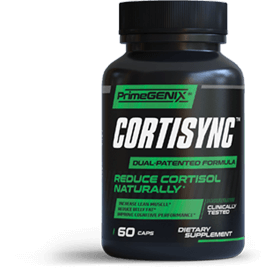
Affiliate disclosure: We sell CortiSync, whose lead ingredient is Sensoril®, through our affiliate link, and earn a commission if you buy it through our link. We do not sell any KSM-66 product and earn nothing from it. Sensoril's study figures below are the ones CortiSync's maker cites for the ingredient; the extract designs and dose ranges for both extracts come from the independent editorial and dietitian comparisons of the two. One disclosure about numbers: we print Sensoril's percentages because our product's maker publishes them where we could audit them. We deliberately do not print KSM-66 percentages, because we did not verify them on its maker's own pages for this comparison — the same convention we apply to any off-catalog rival.
Quick Verdict: Two Extracts, Two Designs, No Winner
Sensoril® and KSM-66® are both patented extracts of the same plant, ashwagandha (Withania somnifera), and they part company at the first decision: which parts of the plant to use. Sensoril extracts root and leaf, standardises to 10% withanolides, and is studied at low doses — 125–250 mg a day — with a positioning built around stress, cortisol and calm cognition. KSM-66 extracts root only — the traditionally used part — standardises to 5% withanolides, and is studied at 300–600 mg a day, appearing in a wider spread of general stress and sports formulas. Neither extract has beaten the other in a head-to-head trial that we could find in the sources for this comparison, so "which is better?" has no evidence answer — only a design answer, and then a label answer. The label answer is the one that will actually affect you: whichever extract a product names, it matters whether the label also prints the amount, because an extract name without a dose is a story you cannot check. Our own shelf's Sensoril product fails exactly that check, as this page details.
Sensoril vs KSM-66 at a Glance
| Sensoril® | KSM-66® | |
| Plant parts used | Root and leaf | Root only |
| Standardisation | 10% withanolides | 5% withanolides |
| Typical studied dose | 125–250 mg per day | 300–600 mg per day |
| Design logic | The leaf carries compounds the root lacks; a broader-spectrum extract at a higher concentration, so a smaller capsule dose | The root is the part traditional use is built on; a full-spectrum root extract at a lower concentration, so a larger dose |
| Cortisol evidence, as presented | Maker-cited double-blind, placebo-controlled ingredient studies: cortisol down 24% vs placebo, overall stress down 62.2% (no sample sizes published) | Its maker likewise cites controlled trials of the extract; percentages not printed here — not verified on its maker's own pages for this comparison |
| In our catalog | Lead ingredient of CortiSync (PrimeGENIX) | No product in our catalog is built on KSM-66 |
| The catch | CortiSync does not publish how much Sensoril a serving contains | Widely licensed — quality depends on each finished product's label, which we have not audited |
Why the Milligram Numbers Look Backwards
The first thing readers trip over is the dose gap: how can 125 mg of one extract be the studied amount when the other is studied at up to 600 mg? Standardisation does most of the explaining. Withanolides are the marker compounds both extracts are standardised to, and Sensoril carries them at 10% against KSM-66's 5%. Do the plain arithmetic on the published figures and the two ranges move closer than the capsule weights suggest: 125 mg of a 10% extract delivers about 12.5 mg of withanolides; 600 mg of a 5% extract delivers about 30 mg. The ranges still differ — Sensoril's studied doses are genuinely the lighter ones, and its root-and-leaf composition means its withanolide fraction is not identical in character to a root-only fraction — but the gap is a design difference, not a five-fold potency difference. The practical lesson generalises beyond these two brands: with standardised extracts, dose times standardisation is the number that matters, and any label that prints neither — or prints the extract's trademark and hides the amount behind a proprietary blend — has withheld the only figures that let you compare it to the studies it quotes.
Timing, and How Long It Takes
"How long does it take to feel the effects of Ashwagandha?" is one of the real, recurring questions in this category — it sits on Quora alongside the equally common "What are some misconceptions about ashwagandha?" — and the honest answer disappoints the impatient: weeks. The data points attached to Sensoril illustrate the scale. CortiSync's maker cites a Sensoril study reporting cognitive improvement in two weeks, and a strength study that ran twelve weeks for its 60% and 90% improvements in 1-RM bench press and squat versus placebo. Those are ingredient studies quoted by a maker, with no sample sizes published — but their timelines are the category's reality: ashwagandha trials are designed in weeks because nobody credible expects a cortisol or stress effect by Friday. As for time of day, the pattern in the product directions we audit is unglamorous: daily, with food. CortiSync's label direction is two capsules daily with a meal. Judge any ashwagandha product the way its studies were run — a fixed daily dose, taken for at least four to eight weeks — and inside a guarantee window that covers that span. Sixty-seven days, the window on our shelf's product, is roughly nine weeks. A two-week trial of any extract in this comparison is not a trial; it is a tasting.
These statements have not been evaluated by the Food and Drug Administration. This product is not intended to diagnose, treat, cure, or prevent any disease. This article is educational and is not medical advice.
The CortiSync Problem: A Sensoril Product You Can't Dose-Check
This comparison exists because our store sells a Sensoril product, so its file gets the closest reading — and the file has a hole in the middle. CortiSync leads its formula with Sensoril®, surrounds it with six more adaptogens (holy basil, L-theanine, lemon balm, lychee, magnolia, rhodiola), and quotes the ingredient's study results on its pages. What it does not publish, in text, on its brand site, its maker's store page or its retail page, is a single ingredient amount — the Supplement Facts exist only as images. So the central question of this entire comparison — does a serving deliver Sensoril® inside the studied 125–250 mg range? — cannot be answered from the maker's own material. Around that hole sit smaller credibility dents we record in our full CortiSync review (our score: 6.0/10): the maker's own pages disagree on whether Sensoril® has been tested in 12 or 14 human clinical studies, and quote its sleep improvement as both 67% and 70%. The price, at least, is published plainly — $59 a bottle, $165 for three, $294 for six, $49 a month on subscription — and the 67-day guarantee's wording allows returning bottles "even if they're empty." A buyer choosing CortiSync is choosing the Sensoril design plus a six-adaptogen supporting cast, on trust, because the dose arithmetic this article just taught you is the one thing its maker will not let you perform.
Frequently Asked Questions
Is KSM-66 better than Sensoril?
This question appears verbatim as an FAQ on an independent dietitian's site, and the honest answer is that "better" has no trial behind it: no head-to-head study of the two extracts appears in the sources we checked. What differs is design — root-and-leaf at 10% standardisation and 125–250 mg doses, versus root-only at 5% and 300–600 mg. Choose by which design and which label you can verify, not by a superiority claim neither side has earned.
How long does it take to feel the effects of ashwagandha?
Weeks, on the evidence available. The maker-cited Sensoril findings include a cognitive result at two weeks and a strength study at twelve; the category's trials are built on that timescale. Expect to judge an extract at four to eight weeks of daily use — and treat any product promising an overnight change as marketing, whichever extract it names.
What dose of Sensoril was used in the studies?
The editorial comparisons of the two extracts put Sensoril's studied range at 125–250 mg a day (against KSM-66's 300–600 mg). CortiSync's maker cites Sensoril studies for its cortisol and stress figures — cortisol down 24% versus placebo, stress down 62.2% — without publishing the studies' sample sizes or, critically, the amount of Sensoril in its own capsules, so its serving cannot be matched against that studied range from the maker's text.
What are the common misconceptions about ashwagandha?
That it is a sedative (the studied aim is stress-response modulation, not knock-out sleep); that more is better (the extracts are studied in defined ranges, and the ranges differ by design); that one extract's results transfer to all ashwagandha (results belong to the extract and dose studied — generic root powder is not Sensoril or KSM-66); and that it works overnight (see the timing question above). Each misconception survives because it sells.
Does every ashwagandha product contain one of these extracts?
No. Plenty of products use generic ashwagandha root powder or unbranded extracts, to which neither extract's study file applies. The label check takes ten seconds: look for the trademarked extract name, then look for the amount. If the amount is missing — hidden in a blend or behind an image-only facts panel, as with our own shelf's CortiSync — you are being asked to buy the studies on faith.
Final Verdict
Choose a Sensoril product if you prefer the root-and-leaf design and the lower studied doses — and you can find one whose label prints the amount, because that is where this extract's file is strongest and its most famous current product is weakest. Choose a KSM-66 product if you prefer the traditional root-only extract and the larger, more common 300–600 mg format, accepting that its finished products sit outside our audit and their labels vary maker by maker. Choose CortiSync — our shelf's entry, and the reason this page exists — if you want Sensoril plus six supporting adaptogens in one capsule, at $59 under a 67-day even-if-empty guarantee, with the limitation printed rather than buried: its maker quotes the studies and withholds the dose. On the evidence standard this site applies everywhere, a verifiable label beats a famous extract. Whichever of the two designs you pick, pick the product that lets you check its arithmetic.
Disclaimer: This article is for general information only and is not medical advice. Always consult a qualified healthcare professional before starting any supplement, especially if you have a medical condition or take prescription medication.
Last reviewed: October 2026
