
- Quick Answer
- The Decline, Measured: Cross-Section vs Longitudinal Truth
- Decade by Decade
- Total vs Free Testosterone: Why Age Splits the Two Numbers
- Symptoms Climb With Age; Verified Low T Mostly Doesn't
- Fertility: the Decade Question Nobody Asks at the Till
- Why the Trials Cluster at 40–70 (and What That Tells You)
- "Low for Your Age" vs Actually Low
- When the Answer Is a Doctor, at Any Age
- Frequently Asked Questions
- At what age does testosterone start to decline?
- Do testosterone boosters work better for older men?
- What is a normal testosterone level for my age?
- Should a 60-year-old take a booster or consider TRT?
- Can lifestyle really offset age-related decline?
- Read This Next
Disclosure: This article contains affiliate links. If you buy through them, we may earn a commission at no extra cost to you. It never changes our conclusions.
Quick Answer
Testosterone declines with age — but much less, and much less inevitably, than the booster industry needs you to believe.
Population studies put the average decline at roughly 1% per year from the forties, and longitudinal research shows a large share of that "ageing" is actually accumulated weight gain, illness, medication and sleep loss: healthy older men in long-running cohorts decline far more slowly.
The booster trials mirror this — their positive results live almost entirely in men 40–70 with lower starting levels, and their nulls live in men under 35 with normal ones. So the age answer is symmetrical: the younger you are, the less a booster can do for you.
The older you are, the more the first move is a blood test, because genuine hypogonadism — a diagnosis, not a birthday — is treated medically, not with fenugreek.
The Decline, Measured: Cross-Section vs Longitudinal Truth
Two kinds of studies tell two different stories, and the gap between them is this article's foundation. Cross-sectional snapshots (older men have lower levels than younger men today) mix ageing with cohort: today's 70-year-olds carry more obesity, more medication and more chronic illness than today's 30-year-olds, so the snapshot attributes to birthdays what belongs to health.
Longitudinal studies — following the same men across decades, like the Massachusetts Male Aging Study — find the pure age effect is real but modest (on the order of ~1% per year for total testosterone, somewhat more for free testosterone as binding proteins rise), and that men who stayed healthy and lean declined markedly less, with some maintaining youthful levels into old age.
The clinical translation is bracing: a 55-year-old with low testosterone is more likely looking at the sum of his sleep, weight, alcohol and medications than at an expiration date — which is why the workup in our natural-methods guide outperforms resignation, and why "it's just your age" is a diagnosis of exclusion, not a first impression.
Decade by Decade
| Decade | What the data says | Booster relevance | The right first move |
|---|---|---|---|
| 20s | Peak levels; low T at this age is uncommon and usually has a findable cause (illness, medication, severe energy deficit, pituitary issues) | Essentially none — the trained-men trials in this decade are the null ones | If symptomatic: a real workup, not a product |
| 30s | Levels high-normal in healthy men; the decade of sleep debt, weight creep and young children — suppression is lifestyle-shaped | Minimal; no positive trial population looks like this decade | Sleep and composition; test before treating |
| 40s | The measured decline (~1%/yr) begins to register; visceral fat and apnoea arrive | The edge of the studied zone — fenugreek's positive trial was men 43–70 | Bloods + the lifestyle levers; booster experiment defensible only after both |
| 50s | Free T falls faster (SHBG rises); symptoms and levels correlate a bit better, still imperfectly | Ashwagandha's best trial: men 40–70, overweight, fatigued — this reader | Full workup incl. PSA context; treat causes; monitored experiments only |
| 60s+ | True hypogonadism becomes more prevalent; so do medications and illnesses that mimic or cause it | Unstudied at the top end; interaction surface grows with medication lists | Clinician-led: diagnosis first, TRT conversation where criteria are met |
Total vs Free Testosterone: Why Age Splits the Two Numbers
Age complicates the blood test itself, and understanding why prevents a common misreading. Most testosterone circulates bound to a protein, SHBG, which rises with age — so with each decade, a larger share of a man's total testosterone is bound and unavailable, and free testosterone falls faster than total testosterone.
Two men with identical totals at 30 and 60 do not have identical free levels. The older man's tissues see less.
This is why proper workups in older men include SHBG and a calculated free testosterone rather than a total alone, and why a "normal total" can coexist with genuinely low free T (and, in fairness, the reverse confusion exists in obesity, where SHBG falls and totals look worse than free levels justify).
Booster marketing never mentions any of this — partly because it is unglamorous, partly because no botanical trial has shown it can move SHBG in a useful direction.
If your report confuses you, the confusion is legitimate: ask for the free number and the SHBG alongside the total, at every age, before letting anyone — clinician or copywriter — interpret your decade for you.
Symptoms Climb With Age; Verified Low T Mostly Doesn't
The European Male Ageing Study (EMAS), the largest careful look at this question, applied strict criteria — a cluster of sexual symptoms plus repeatedly low measured levels — to men aged 40–79 and found true syndromic hypogonadism in only about 2% of them.
Meanwhile, the individual symptoms (fatigue, low mood, reduced libido, weaker erections) are each reported by large minorities of older men, the overwhelming majority of whom have normal testosterone and other explanations: vascular disease for erections, sleep and mood disorders for fatigue, medication and relationship context for libido.
This is the statistical landscape the booster industry farms: an ocean of age-typical symptoms, a puddle of hormonal disease, and a product positioned as the bridge. The bridge mostly leads to the supplement aisle.
None of this trivialises the symptoms — they deserve real workups, because their real causes (cardiovascular risk announces itself as erectile dysfunction years early) matter more than testosterone does. It merely relocates the first step from the checkout to the clinic, in every decade. Our safety guide's diagnostic-delay section is the same point from the risk side.
Fertility: the Decade Question Nobody Asks at the Till
Age reframes one more variable: in the 20s and 30s, many men in this aisle are also trying to become fathers, and the testosterone conversation has a fertility edge that marketing ignores. Exogenous testosterone — TRT and, critically, the anabolic adulterants that contaminate parts of this category (see the safety guide) — suppresses sperm production, sometimes severely.
It is functionally a male contraceptive at drug doses. Botanical boosters at label doses have no documented sperm effects in either direction, positive or negative: the studies simply did not look, which is itself information about the category's maturity.
The practical rule is asymmetrical: a man actively trying to conceive should treat any hormone-marketed product as a fertility-clinic conversation first, because the cost of the adulteration lottery is not a wasted month — it is a suppressed semen analysis discovered a year into trying.
Older readers past that stage trade the concern for the prostate and medication interactions covered elsewhere in this set. Every decade has its own fine print, and the label prints none of it.
Why the Trials Cluster at 40–70 (and What That Tells You)
Notice where the positive booster evidence lives: Testofen's flagship trial enrolled men 43–70. Ashwagandha's best, men 40–70, overweight with fatigue. The DAA and tribulus nulls enrolled men in their 20s and early 30s.
Sponsors are not stupid — they recruit where an effect is findable, and an effect is findable where testosterone is suppressible and lower: older, heavier, more stressed axes with room to move. The inference for a buyer is direct. If you are inside the studied demographic, the literature speaks to you — softly, with small numbers, as our ingredient grading shows.
If you are outside it — under 35, lean, training — the literature does not say boosters failed to be tested on you. It says they were tested on you and failed.
Marketing that shows a 28-year-old physique under a claim generated in 60-year-olds is committing the demographic version of the animal-data substitution, and it is the most common visual lie in the category.
"Low for Your Age" vs Actually Low
Reference ranges add a subtlety the industry exploits. Laboratories report ranges derived from young healthy men or from the tested population. A 60-year-old at the 20th percentile of the young range may be unremarkable for his decade and — more importantly — asymptomatic. Diagnosis, per the guidelines, requires both repeatedly low morning levels and compatible symptoms.
Age-adjusted expectations inform but do not replace that pairing. The reverse error also exists: a 35-year-old at "low-normal" with crushing symptoms deserves the full differential (apnoea, thyroid, prolactin, depression, medication review), not a percentile shrug.
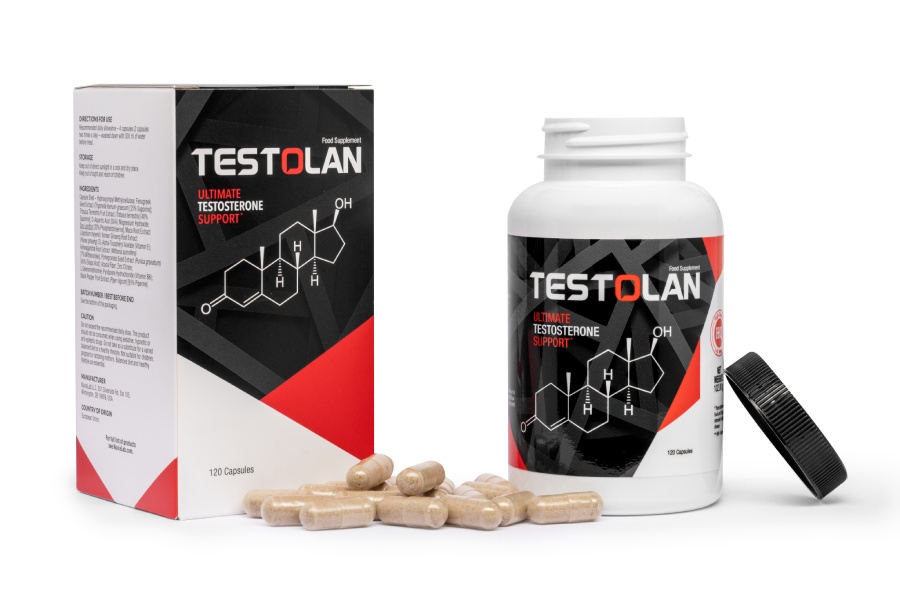
Either way, the number that matters is not your percentile in a marketing chart — it is the pair of morning bloods, read with your history, by someone who does not sell the remedy. Products like the one we review (Testolan, 6.0/10) are marketed across all five decades of the table above with the same label.
The evidence supports a conversation in at most two of them.
When the Answer Is a Doctor, at Any Age
Some presentations skip the supplement question entirely: loss of libido with erectile dysfunction plus small testes, infertility, breast enlargement, visual-field symptoms (a pituitary flag), or a testosterone level that comes back frankly low twice. Young men with low T warrant a cause hunt (pituitary, testicular, genetic, medication) — treating the number without the cause misses diagnoses that matter beyond hormones.
Older men meeting criteria enter the TRT conversation, which is a monitored medical therapy with its own evidence (including the TRAVERSE cardiovascular data) and its own trade-offs — a different universe from boosters, as our category verdict sets out.
The age framing that serves a man best across all decades is therefore: symptoms → morning bloods → causes → the mildest effective lever — with boosters, if they appear at all, in the last step, in the two middle decades, at trial doses, with a re-test scheduled.
Frequently Asked Questions
At what age does testosterone start to decline?
On average from the forties, at roughly 1% per year for total testosterone in longitudinal data — with wide individual variation, and much of the population-level decline explained by health and weight rather than age itself.
Do testosterone boosters work better for older men?
The positive trials are concentrated in men 40–70 with lower starting levels, so if they work anywhere, it is there. Under-35 trial results are null. "Better" still means small.
What is a normal testosterone level for my age?
Diagnosis does not run on age-banded targets: persistently low morning levels (commonly ~<300 ng/dL) plus symptoms define low T, at any age. A percentile without symptoms is not a diagnosis.
Should a 60-year-old take a booster or consider TRT?
Neither, first: bloods and a cause review. If criteria for hypogonadism are met, TRT is the evidence-based conversation, with monitoring. A booster is not a gentler TRT. It is a different, weaker, unmonitored thing.
Can lifestyle really offset age-related decline?
Substantially: healthy, lean older men in longitudinal cohorts declined far more slowly, and the quantified levers (sleep, fat loss, deficiency correction) are age-independent — see the natural guide.
Last reviewed: October 2026. This article is educational and is not medical advice.
