
- Quick Answer
- Every Timeline in the Literature, in One Table
- Why Testosterone Is Slow: the Axis, in Plain Terms
- The First Two Weeks: What You Feel, and What It Actually Is
- The DAA Correction Every Timeline Page Owes You
- Hormones First, Symptoms Later (or Never)
- What About TRT Timelines? (A Different Drug, a Different Clock)
- How to Run Your Own 12-Week Test (If You Insist)
- Timelines by Goal: What Buyers Actually Ask
- Cycling, Breaks and "Loading": Borrowed Rituals
- Frequently Asked Questions
- How long does a testosterone booster take to work?
- How quickly will I feel a difference?
- When should I stop if nothing happens?
- Do boosters work faster if I take more?
- Read This Next
Disclosure: This article contains affiliate links. If you buy through them, we may earn a commission at no extra cost to you. It never changes our conclusions.
Quick Answer
The trials that found anything measured it over 6–12 weeks — fenugreek's programme ran 6–12 weeks, ashwagandha's positive trials 8 weeks, maca's libido effect appeared from week 8.
The one famous exception, D-aspartic acid's "+42% in 12 days", is a 12-day study in sedentary men that no longer-duration or trained-men trial ever reproduced — citing it as a timeline is the category's favourite error.
Practical answer: if a booster is going to move your testosterone measurably, the evidence window is 8–12 weeks at a trial dose, judged by a repeat morning blood test — and if symptoms are your goal, know that in the best ashwagandha trial the hormone rose while the symptoms did not significantly improve.
Anything promising results in days is selling the DAA abstract, not the literature.
Every Timeline in the Literature, in One Table
| Ingredient / trial | Duration | When the effect was measured | What happened |
|---|---|---|---|
| DAA — Topo 2009 | 12 days | Day 12 | +42% in 23 sedentary men — the outlier |
| DAA — Willoughby 2013 / Melville 2015–17 | 14 days – 12 weeks | Throughout | Nothing at 3 g; a DECREASE at 6 g by day 14; nothing at 12 weeks |
| Fenugreek (Testofen) — Steels 2011 | 6 weeks | Week 6 | Libido scores improved; hormones inconsistent |
| Fenugreek — Rao 2016 | 12 weeks | Week 12 | Total T +12.4%, free T +9.5% vs placebo (men 43–70) |
| Fenugreek — Rao 2020 | 8 weeks | Week 8 | +7.6% total T at 600 mg; free T unmoved |
| Ashwagandha — Lopresti 2019 | 8 weeks (crossover) | Week 8 | Salivary T +14.7% vs placebo; symptoms NOT significantly improved |
| Ashwagandha — Wankhede 2015 | 8 weeks | Week 8 | ≈+96 ng/dL vs +18 with new training |
| Maca — Gonzales 2002 | 12 weeks | From week 8 | Desire improved; testosterone never moved at any point |
| Tribulus — Neychev 2005 / Rogerson 2007 | 4–5 weeks | Throughout | No effect at any measurement |
Two patterns matter. First, nobody credible measured a meaningful rise before six weeks — the endocrine system does not renegotiate its set point over a weekend. Second, the trials' durations are also their endpoints: almost nothing in this literature runs past 12 weeks, so "long-term results" for boosters are not slow — they are nonexistent.
A seller projecting your six-month transformation is extrapolating past the edge of the map.
Why Testosterone Is Slow: the Axis, in Plain Terms
The timeline makes sense once the machinery is visible. Testosterone production is governed by a feedback loop — the hypothalamus signals the pituitary (LH), the pituitary signals the testes, and the resulting testosterone signals back to turn the volume down.
A system built like a thermostat does not respond to a nudge the way a campfire responds to petrol: it responds by re-negotiating — adjusting LH, conversion to DHT and oestrogen, and binding proteins over days to weeks, usually in the direction of restoring its previous set point.
That is why every credible positive trial in this field runs 6–12 weeks before it dares to measure: the investigators know the axis needs a full negotiation cycle, and that a day-3 blood draw measures noise.
It is also why the claimed fast effects should be read as a confession: a product that genuinely raised testosterone in 48 hours would be overriding a feedback system — which is what anabolic drugs do, with the suppression consequences documented in our safety guide — not what a fenugreek capsule at a third of its trial dose is doing.
Slow is not the marketing's failure here. Slow is the physiology's signature, and the timelines in the table are what real endocrine change looks like when it happens at all.
The First Two Weeks: What You Feel, and What It Actually Is
Most men who start a booster report something in the first fortnight — better workouts, brighter mood, stronger libido. The trials give us the tools to price those reports honestly.
In the placebo arms of this literature, symptom scores routinely improve too: expectancy is a pharmacologically real event for subjective outcomes, and libido and energy are the most expectancy-sensitive outcomes in medicine.
Layer on the confounders that arrive with any purchase — the new training consistency, the earlier nights, the reduced drinking that accompany "taking my health seriously" — and the first two weeks are fully explained without the capsule doing anything. This is not an argument that your experience is fake. It is an argument that it is unattributed.
The 12-week protocol above exists precisely to separate the capsule's contribution from the ritual's, and the separation is unflattering often enough that the industry prefers you never run it. If a brand's marketing leans on day-10 testimonials, it is leaning on the fortnight the trials taught us to ignore.
The DAA Correction Every Timeline Page Owes You
Search this question and the top results will tell you boosters can work "in as little as 12 days", citing D-aspartic acid. Here is the whole story in one paragraph. Topo (2009) gave 3.12 g/day to 23 sedentary men and measured +42% testosterone at day 12. Willoughby (2013) gave 3 g/day to trained men for 28 days: nothing.
Melville (2015) found nothing at 3 g and a 12.5% drop at 6 g within 14 days. Melville (2017) ran the full 12 weeks with training: nothing.
So the "12-day" timeline belongs to the single shortest, smallest, least representative study in the ingredient's file — and the same ingredient at higher doses moved the marker the wrong way inside the same fortnight. A timeline built on Topo alone is not optimism. It is selection.
We include the correction here because almost no competing page makes it, and because it generalises: in this category, the shorter the famous timeline, the weaker the study underneath it. The full ingredient record is in our ingredients grading.
Hormones First, Symptoms Later (or Never)
Even where a trial succeeds, two clocks run at different speeds. The hormone clock: levels, if they move, move over the trial's 6–12 weeks — that is when the blood test can see it.
The symptom clock — energy, libido, drive, gym performance — is slower, noisier, and in the best ashwagandha trial did not significantly move at all within the study window despite the hormone rising. Three implications. Do not judge a booster by week-two feelings: early "effects" are expectancy and routine change.
Do not assume a risen number will convert into felt benefits on any schedule the literature can promise: the one trial that measured both found them uncoupled.
And if your actual goal is a symptom (it usually is), the honest trial design is to track the symptom itself across the full 8–12 weeks — ideally with the blood test as a parallel check — rather than treating a lab value as a proxy for your life.
Our category verdict explains why the symptom/hormone gap is the category's central disappointment.
What About TRT Timelines? (A Different Drug, a Different Clock)
Some pages answer this question with prescription-therapy timelines — libido improving in 3–6 weeks on TRT, muscle over months — because those numbers exist and sound authoritative. They describe a drug raising deficient men into the mid-normal range under supervision. They transfer to supplements in no particular.
A booster that "worked" like TRT would be an unlicensed drug with TRT's risk file (the TRAVERSE trial's atrial-fibrillation and kidney signals among them) and is not what any capsule on this page is.
If your levels are genuinely deficient, the TRT timeline conversation belongs with the clinician who ran your two morning tests — the diagnostic standard in our age guide. If your levels are normal, TRT timelines are trivia, not expectations.
How to Run Your Own 12-Week Test (If You Insist)
The only self-experiment in this category that produces knowledge: Week 0 — a morning total-T blood test (fasted, before 10 a.m., not during illness or a sleep catastrophe), and a written note of the one or two symptoms you actually care about, scored 1–10. Weeks 1–12 — one product, at its trial dose (a defined extract, not a blend.
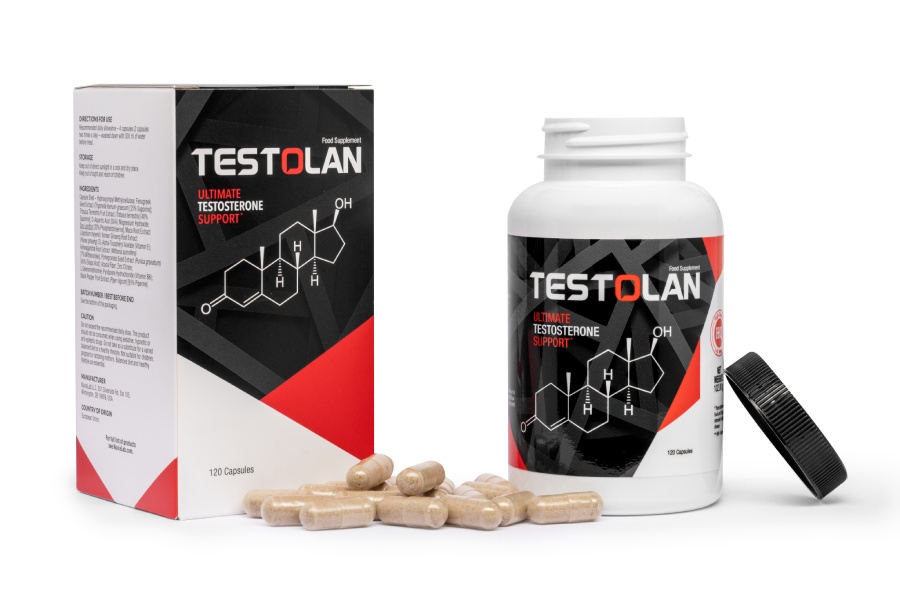
The label-dose audit in our Testolan review shows why most products fail this step), with sleep, training and alcohol held as steady as life allows. Week 12 — repeat the morning test under the same conditions. Re-score the symptoms before looking at the result.
Then decide with both numbers: a rise within the lab's noise (testosterone assays and biology together swing ±10–15% easily) is not a rise. A symptom change with no hormone change is still a change worth understanding on its own terms (maca's entire story).
And set the stop rule in advance: flat bloods and flat symptoms at week 12 means the experiment answered — renewal after that is hope billed monthly.
Timelines by Goal: What Buyers Actually Ask
| Goal | Evidence-based timeline | Note |
|---|---|---|
| A measurable rise in blood testosterone | 6–12 weeks, if at all | Only in responsive populations, at trial doses; verify with a morning test |
| Libido improvement | Maca: from ~8 weeks; fenugreek trials: ~6 weeks for score changes | Libido effects in this literature are largely independent of testosterone |
| Energy / fatigue | No reliable timeline — the best trial's fatigue scores did not significantly improve | Sleep debt repays in days and dwarfs any capsule effect |
| Gym performance / muscle | No booster timeline exists — trained-men trials are null | Training age, protein and creatine own this outcome |
| "Feeling like myself again" | Not a supplement timeline | Persistent symptoms deserve the diagnostic workup, not a longer subscription |
Cycling, Breaks and "Loading": Borrowed Rituals
Booster culture imports three practices from the anabolic-steroid world, where they have rationales, into a category where they do not. Cycling (on/off periods) exists for drugs that suppress the axis — to let it recover. Nothing in the booster literature shows suppression at label doses, so there is nothing to cycle from.
The practice survives as ritual and as a subscription-management device. Loading (double doses early) borrows from creatine, a storage-based nutrient. Testosterone-active botanicals have no storage compartment to load. Stacking with a "PCT" is the purest tell — post-cycle therapy treats drug-induced suppression that a capsule never caused.
If a booster's sales page prescribes any of the three, it is telling you the product is being marketed as a drug while being regulated as a food — the exact ambiguity the safety guide warns about when the same category turns out to contain actual drugs. The evidence-based schedule is duller: one defined product, trial dose, twelve weeks, measure, decide.
Frequently Asked Questions
How long does a testosterone booster take to work?
On the trial record: 6–12 weeks for any measurable hormone change, at trial doses, in responsive populations. The 12-day DAA claim is an unreplicated outlier. Day-scale promises are marketing.
How quickly will I feel a difference?
Symptoms lag hormones and may not follow them at all — the best ashwagandha trial raised testosterone without significantly improving fatigue or vigour. Judge symptoms across the full 8–12 weeks, not the first fortnight.
When should I stop if nothing happens?
At 12 weeks, with a repeat morning blood test and an honest symptom score. No trial supports waiting longer, and none studied chronic use.
Do boosters work faster if I take more?
No evidence supports dose escalation — and the one dose-response signal in the literature (DAA at 6 g/day) went the wrong way within two weeks.
Last reviewed: November 2026. This article is educational and is not medical advice.
