
- Quick Answer
- How does HCA work — what is citrate lyase inhibition?
- How much weight do people actually lose on garcinia?
- What dose of garcinia/HCA did the studies use?
- Read the Label in HCA Milligrams
- Why Products Still Lead With It
- Who Should Not Take It
- Frequently Asked Questions
- How long did the garcinia trials run?
- Is whole garcinia fruit the same as the extract?
- Does the dose on a typical label match the trials?
- Does garcinia stop you absorbing fat from food?
- Why did the biggest trial find nothing?
- Who Should Buy a Garcinia Product — and Who Should Skip It
- Read This Next
Disclosure: This article contains affiliate links. If you buy through them, we may earn a commission at no extra cost to you. It never changes our scores or conclusions.
Quick Answer
Pooled across its trials, garcinia cambogia produces about a kilo of extra weight loss over placebo — 1.34 kg in the most favourable modern pooling, 0.88 kg in the earlier one — in short trials, at hydroxycitric acid doses of 1,000–2,800 mg a day. The largest single trial found nothing at all.
That is the whole efficacy story: small, inconsistent, and dose-dependent in a way that matters, because most products do not deliver gram-level doses. A label printing 150 mg of garcinia extract per capsule is not selling the pooled effect. It is selling the pooled effect's reputation.
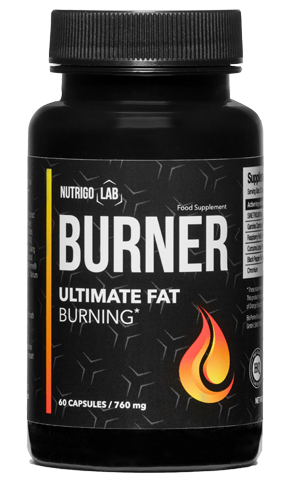
Best for: readers deciding whether a garcinia line on a label means anything. In the product we review, Nutrigo Lab Burner (5.0/10), garcinia is the branded Citrin form — at 150 mg per capsule, far under the doses in the trials pooled above.
Our Recommendation — Nutrigo Lab Burner
Score: 5.0/10 · Best for: adults who want a non-stimulant-style fat-burner adjunct with named, branded ingredients — alongside diet and exercise, not instead of them. Main caution: the printed ingredient amounts sum to more than the capsule weighs — the maker's own numbers conflict — and no money-back guarantee is published. Fair trial: the three-bottle bundle at $33.33 a bottle, alongside diet and exercise — the trial the evidence describes; the six-bottle pack is the cheapest continuation, after a completed trial.
How does HCA work — what is citrate lyase inhibition?
Garcinia's active compound is hydroxycitric acid — HCA — extracted from the rind of the fruit. Its proposed mechanism is genuine biochemistry. HCA competitively inhibits ATP-citrate lyase, the enzyme that converts citrate into the building blocks of new fatty acids. Block that enzyme, the theory runs, and the body makes less fat from carbohydrate.
That mechanism is stated in the primary literature itself — it is the opening context of the 1998 JAMA trial we will meet shortly. An enzyme inhibited in principle, however, is not weight lost in practice. Between the two sit absorption, dose, compensation and time, and garcinia's trial record is the story of a plausible mechanism shrinking at every step.
The second claim — appetite — has a weaker pedigree. The idea that HCA raises brain serotonin and thereby reduces food intake rests on animal data and theoretical reasoning. No human trial has demonstrated an appetite effect for garcinia. Where serotonin appears in garcinia's human record is the safety literature, including a case of serotonin syndrome in a patient combining garcinia with an SSRI antidepressant — a point our companion safety article covers in detail.
So hold the two claims at different prices. Fat-synthesis inhibition: a real mechanism with small human effects, examined next. Appetite suppression: an animal-derived story that no human efficacy trial has ever cashed out.
How much weight do people actually lose on garcinia?
Three analyses, read in the order a sceptic would choose, give the fairest picture.
The 2020 dose–response meta-analysis (Golzarand et al., Complementary Therapies in Medicine) is the most favourable. Pooling eight randomised trials with 530 participants, it found garcinia supplementation reduced body weight by 1.34 kg versus placebo (95% CI: −2.62 to −0.07), with BMI down about 0.99 kg/m² and waist circumference down 4.16 cm versus placebo in the same pooled trials.
Credit it, and caveat it. The confidence interval for weight nearly touches zero. The trials were small and varied substantially from one another. And the waist figure leans heavily on one Japanese visceral-fat trial in high-visceral-fat subjects — remove it and the pooled waist effect thins considerably. This is the ceiling of the evidence, presented by its most sympathetic pooling.
The 2011 systematic review (Onakpoya et al., Journal of Obesity) pooled nine trials and found a mean difference of −0.88 kg favouring HCA over placebo. Then it did the thing garcinia marketing never quotes: a sensitivity analysis restricted to the most rigorous trials, in which the effect was no longer statistically significant. The authors' own conclusion was that the magnitude is small and the clinical relevance uncertain.
The biggest single trial is null. Heymsfield et al. 1998 randomised 135 overweight adults to 1,500 mg of HCA a day or placebo for 12 weeks, both on a high-fibre, low-energy diet. The garcinia group lost 3.2 kg; the placebo group lost 4.1 kg. The between-group difference was not statistically significant, and neither was fat-mass loss.
The JAMA paper's conclusion is one sentence long in spirit: garcinia failed to produce significant weight or fat loss beyond placebo.
Assemble the three. When small trials are pooled sympathetically, garcinia is worth roughly a kilo. When the analysis tightens, the effect fades toward zero. When one large, careful trial stands alone, it finds nothing. That pattern — significance that evaporates as rigour rises — is the signature of an effect that is, at best, very small, and possibly an artefact of weak trials.
Duration completes the picture. The pooled trials were short: the 2011 review's trials ran between 2 and 12 weeks. Nothing in the record speaks to a year of use, to weight maintenance, or to what happens after stopping. Even the ceiling estimate is a short-term estimate.
What dose of garcinia/HCA did the studies use?
Every figure above was produced at HCA doses between 1,000 and 2,800 mg a day — the range across the trials in the 2011 review. The JAMA trial used 1,500 mg. These are gram-level interventions of a standardised extract, taken for weeks.
Now read a real label. In Nutrigo Lab Burner, the garcinia is Citrin, a branded extract — and the panel prints 150 mg of it per capsule.
At the directed 2 capsules a day, that is 300 mg of extract daily, before standardisation is even considered: the panel does not state what fraction of that extract is HCA, so the delivered HCA dose is some fraction of 300 mg, against a studied range that starts at 1,000 mg of HCA itself.
The arithmetic is not close. The label dose is roughly a tenth or less of the lowest studied dose, measured generously, and the true gap is wider once extract standardisation enters. There is no dose–response evidence suggesting the pooled 1.34 kg survives a tenfold reduction; the 2020 analysis found the dose relationship non-linear, which is a statistician's way of saying more was doing the work in the trials that found anything.
This is the transfer problem in its purest form, and it is the single most common move in supplement marketing: run trials at one dose, sell at another, and let the ingredient's name carry the result across the gap. The name transfers. The evidence does not.
A garcinia product at gram-level HCA doses could legitimately cite the pooled trials — and would still be citing about a kilo. A product at 150 mg per capsule can cite only the spelling.
Read the Label in HCA Milligrams
Start with one distinction most labels blur. A garcinia extract is standardised to a stated percentage of HCA, so the milligrams of extract on a panel are not milligrams of HCA.
The conversion is simple arithmetic. A 500 mg capsule of an extract standardised to 60% HCA delivers 300 mg of HCA, because only that fraction of the powder is the active compound.
Many labels never let you do that sum. They print the extract weight alone, with no standardisation stated, so you cannot tell whether 500 mg means 300 mg of HCA or far less.
Others hide garcinia inside a proprietary blend, listing only the blend's total weight for several ingredients combined. In that case even the extract amount is unknown, let alone the HCA it contains.
Without a stated HCA amount, comparison against the studied range of 1,000 to 2,800 mg of HCA a day is impossible. That impossibility is itself the finding: the label cannot support the trial claim.
Salt forms add another layer of marketing. HCA is often sold bound to calcium, potassium, or both, sometimes with enhanced-absorption language, but the supporting evidence is thin and largely non-human, so treat absorption claims cautiously.
Apply that test to Burner. Its panel prints 150 mg of Citrin garcinia extract per capsule, or 300 mg a day at two capsules, with no HCA fraction stated on the panel we reviewed.
Even the most generous reading fails. If that extract were pure HCA — which a standardised extract cannot be — 300 mg a day would still be under a third of the lowest studied dose of 1,000 mg.
Why Products Still Lead With It
If the effect is a kilo at doses nobody sells, why is garcinia on every third label? Three commercial reasons, none of them evidentiary.
First, recognition. Garcinia had a television moment in the early 2010s that made it one of the few supplement ingredients the general public can name. Recognition sells the first bottle; evidence is only needed for the second.
Second, cost. Garcinia extract is cheap and stable, and 150 mg of it costs a maker almost nothing per capsule. It is the most economical famous name in the category.
Third, borrowed rigour. A branded form — Citrin, in Burner's case — lets a label display a trademark, and trademarks read as science. The branding is real; Citrin is a genuine, standardised commercial extract. But a trademark certifies whose extract it is, not that the dose in the capsule matches the doses in the trials. In this panel it certifies a well-made ingredient at a tenth of the studied amount.
Who Should Not Take It
The efficacy answer and the safety answer are different articles, but three groups should read the safety record before the efficacy one, so we flag them here in one line each.
Anyone with a liver history: garcinia carries a documented, rare liver-injury record serious enough that regulators in France, Canada, Australia and Malaysia acted in 2025–26. Anyone on an SSRI or other serotonergic antidepressant: a serotonin-syndrome case is documented. Anyone pregnant or breastfeeding: there is no trial record at all.
Our safety article — "Is Garcinia Cambogia Safe?" in the rail below — covers the regulator timeline, the symptoms that mean stop and seek care, and the interaction list in full. The short version for this page: the risk is rare and unpredictable rather than common and dose-dependent, which is precisely why a low label dose is not a safety argument.
Our Recommendation — Nutrigo Lab Burner
Score: 5.0/10 · Best for: adults who want a non-stimulant-style fat-burner adjunct with named, branded ingredients — alongside diet and exercise, not instead of them. Main caution: the printed ingredient amounts sum to more than the capsule weighs — the maker's own numbers conflict — and no money-back guarantee is published. Fair trial: the three-bottle bundle at $33.33 a bottle, alongside diet and exercise — the trial the evidence describes; the six-bottle pack is the cheapest continuation, after a completed trial.
Frequently Asked Questions
How long did the garcinia trials run?
Weeks, not months. The trials in the 2011 systematic review ran between 2 and 12 weeks, and the 2020 pooling was built from similarly short studies. There is no controlled evidence for garcinia beyond about three months, and none for keeping weight off after stopping.
Is whole garcinia fruit the same as the extract?
No. The trials used concentrated rind extracts standardised for HCA, at 1,000–2,800 mg of HCA a day. The fruit as a food delivers a small fraction of that exposure. Results from extract trials cannot be transferred to eating the fruit — or, in the other direction, to low-dose extract labels.
Does the dose on a typical label match the trials?
Usually not. The product we review prints 150 mg of garcinia extract per capsule — 300 mg a day — against a studied HCA range starting at 1,000 mg a day. Before buying any garcinia product, compare its daily HCA amount, if the label even states it, against that range.
Does garcinia stop you absorbing fat from food?
No — that is a different drug's mechanism. Garcinia's proposed action is inhibiting ATP-citrate lyase, an enzyme in fat synthesis from carbohydrate. It does nothing to fat already eaten.
Blocking dietary-fat absorption is orlistat's mechanism: pooled across 16 trials and more than 10,000 participants, orlistat produced about 2.9 kg more weight loss than placebo — a ceiling garcinia's pooled 1.34 kg sits well below.
Stated with its population and endpoint: that orlistat figure comes from adults with overweight or obesity, measured as change in body weight against placebo — the same yardstick garcinia's pooled trials were measured against.
That distinction matters when shopping: a product claiming to block fat while listing garcinia is borrowing orlistat's mechanism for an ingredient that has never been shown to do it in humans.
Why did the biggest trial find nothing?
Heymsfield 1998 was larger (135 adults), longer (12 weeks) and more rigorous than most of the pooled trials — and its placebo group lost slightly more weight than its garcinia group. One trial does not settle a question, but when effect size shrinks as trial quality rises across a whole literature, the pattern itself is the finding.
Who Should Buy a Garcinia Product — and Who Should Skip It
Buy it if — narrowly — the product states a gram-level daily HCA dose comparable to the trials, you understand the expected return is around a kilo over placebo across a few months of dieting, and you have read the safety record and cleared the interaction questions.
Skip it if the label's garcinia amount is in the low hundreds of milligrams, unstated, or hidden in a blend: the trial evidence cannot be transferred to that dose, and what remains is a famous name at a decorative amount. Skip it also if you came for appetite suppression — no human trial supports that claim for this ingredient.
Our verdict: garcinia is a real ingredient with a real, small, dose-dependent effect that the market almost never sells at the studied dose. Judge it the way the pooled trials force you to — by the milligrams of HCA per day, not by the name on the front of the bottle.
Last reviewed: October 2026
