
- Quick Answer
- Prostatitis vs BPH — what's the difference?
- The Shoskes Trial, Read Closely
- Where Quercetin Sits in Real CP/CPPS Care
- How much quercetin did the prostatitis trial use — and how does a supplement label compare?
- Signposting: Pelvic Pain That Needs a Doctor, Not a Supplement
- Frequently Asked Questions
- What dose of quercetin was used in the prostatitis trial?
- Is prostatitis the same as an enlarged prostate?
- Does quercetin help BPH symptoms?
- How long would quercetin take to show an effect?
- Can quercetin cure prostatitis?
- Should I take quercetin for pelvic pain?
- Who Should Buy NuProstate — and Who Should Skip It
- Read This Next
Disclosure: This article contains affiliate links. If you buy through them, we may earn a commission at no extra cost to you. It never changes our conclusions.
Quick Answer
Quercetin holds an unusual distinction in this cluster: it is the one prostate-area supplement ingredient with a positive placebo-controlled trial — for prostatitis / chronic pelvic pain syndrome (CP/CPPS), not for BPH.
In that trial (Shoskes et al. 1999, Urology), men taking quercetin 500 mg twice daily for one month improved their NIH-CPSI symptom score from 21.0 to 13.1, while the placebo group moved only from 20.2 to 18.8 (P = 0.003). Sixty-seven percent of the men on quercetin achieved at least a 25% symptom improvement, versus 20% of the men on placebo.
Hold both halves of that. The trial was small (30 men randomised) and short (four weeks) — preliminary by any standard. And its dose, 1,000 mg of quercetin a day, is about eleven times what the formula reviewed in this cluster delivers. Best for: men with pelvic pain who keep meeting quercetin on BPH labels, where its one good trial does not apply. NuProstate scores 5.6/10.
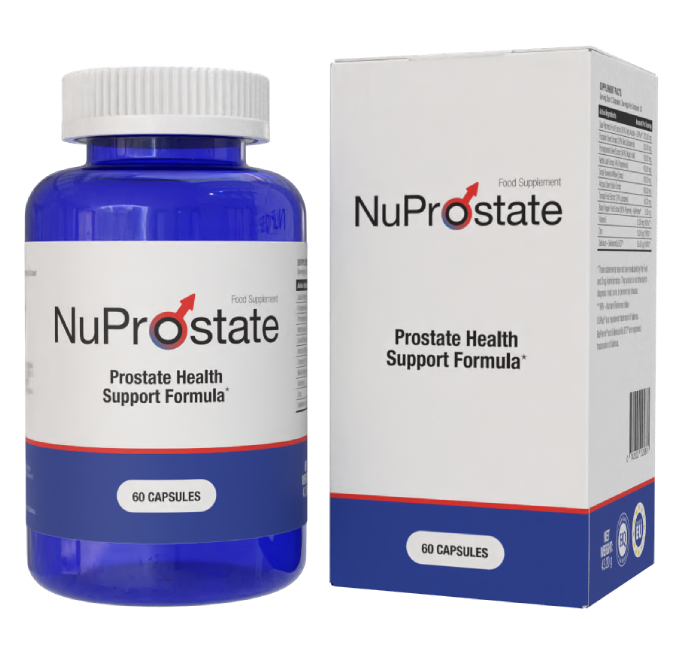
Our Recommendation — NuProstate
Score: 5.6/10 · Best for: men with mild urinary symptoms who want a fully disclosed formula — and who have had a proper prostate check first. Main caution: the milligrams match the trials but the extract strength does not: 45% fatty acids here against 85–95% in the big trials — and no money-back guarantee is published. Fair trial: the three-bottle pack at $35.99 a bottle — the shortest fair trial.
Prostatitis vs BPH — what's the difference?
This article exists because two different conditions share a gland, a sex, and a shelf at the pharmacy — and supplement marketing profits from the confusion.
BPH is non-cancerous enlargement of the prostate, mostly a condition of men over 50, dominated by urinary symptoms: weak stream, hesitancy, night-time trips. It is the condition the rest of this cluster covers.
Prostatitis is a different family. Clinicians use the NIH classification: category I (acute bacterial prostatitis — a serious, febrile illness), category II (chronic bacterial), category III (chronic prostatitis / chronic pelvic pain syndrome, CP/CPPS — pelvic pain lasting three months or more, usually with no infection found), and category IV (inflammatory, found incidentally, without symptoms).
CP/CPPS — category III — is the commonest form and the one quercetin was trialled in. Its signature is pain: in the perineum, the testicles, the tip of the penis, the lower back — often with urinary discomfort and sexual symptoms alongside, and frequently in men far younger than the typical BPH patient.
The distinction decides what evidence applies. A trial in CP/CPPS pain says nothing about shrinking an enlarged gland or improving an older man's stream. Any BPH formula that borrows quercetin's prostatitis trial to sell itself to BPH buyers is committing a category error. This cluster refuses to make it — and scores labels accordingly.
One more framing fact about CP/CPPS, because it explains the trial's importance and its limits. This is a condition with no single established cure and a long list of treatments that help some men and not others — antibiotics tried and often unhelpful where no infection exists, alpha-blockers, pain medicines, pelvic-floor physiotherapy, psychological support.
Its burden is measured in years of pain and in quality of life, and it is chronically under-researched relative to that burden.
Against that background, a cheap, well-tolerated flavonoid with one positive placebo-controlled trial is genuinely interesting to specialists. Interesting enough to keep in the toolkit for the right phenotype — and nowhere near established enough to anchor a marketing claim. Both halves of that sentence are the specialist consensus this article is reporting.
The Shoskes Trial, Read Closely
Daniel Shoskes and colleagues randomised 30 men with CP/CPPS to quercetin 500 mg twice daily or placebo for one month; 28 men were evaluated at the end — 15 on quercetin, 13 on placebo.
The outcome measure was the NIH Chronic Prostatitis Symptom Index (NIH-CPSI), a 0–43 scale covering pain, urinary symptoms, and quality of life. A fall of about 6 points, or 25%, is generally treated as the threshold a patient can feel.
The scale's anatomy matters for reading the result. Pain is the largest component (up to 21 of the 43 points) — appropriate, since pain is what brings CP/CPPS patients to clinics — with urinary symptoms contributing up to 10 and quality of life up to 12.
A fall from 21.0 to 13.1, as in the quercetin arm, is not a statistical wiggle: it represents a man whose pain and its daily interference have measurably receded over a month.
It is equally important that the placebo arm barely moved (20.2 to 18.8). CP/CPPS trials often show substantial placebo responses; here, over four weeks, the control group's improvement was small, which makes the between-group gap cleaner than in many pain trials — while the tiny sample makes its precision poor. Both things are true, and the trial should be quoted with both attached.
On that scale, the quercetin group improved from 21.0 to 13.1 — a fall of nearly 8 points. The placebo group improved from 20.2 to 18.8. The difference between groups was statistically significant (P = 0.003). Counted by responders: 67% of men on quercetin reached at least a 25% symptom improvement, versus 20% of men on placebo.
There was also an open-label follow-on: 17 men took quercetin together with bromelain and papain (enzymes added to improve absorption), and 82% of those men reached the 25% improvement threshold. Open-label means everyone knew what they were taking — expectation is uncontrolled — so that figure is a suggestion, not a result. We print it labelled as such, the way the trialists framed it.
And the authors' own framing was preliminary: a small, single-centre, one-month trial is a reason to study quercetin further, not a settled therapy. It remains, more than two decades later, essentially the whole of the direct trial evidence — one small positive trial, never replicated at scale. That is more than saw palmetto's larger record amounts to, and far less than a proven treatment.
Where Quercetin Sits in Real CP/CPPS Care
CP/CPPS is managed by phenotype, not by a single prescription. The framework associated with Shoskes' group is UPOINT (Shoskes et al. 2010, Urology), which sorts patients across six domains — urinary, psychosocial, organ-specific, infection, neurological/systemic, and muscle tenderness — and matches treatment to the domains each man actually has.
The six domains, in plain terms: Urinary (storage and voiding symptoms dominate), Psychosocial (depression, catastrophising, poor coping amplify the pain), Organ-specific (the prostate itself seems the pain source — tenderness, inflammation markers), Infection (documented organisms), Neurological/systemic (pain spreading beyond the pelvis, overlapping pain conditions), and Tenderness (pelvic-floor muscle spasm and trigger points).
Each domain carries its own treatment menu — which is the entire point. A man whose pain is driven by pelvic-floor tenderness needs physiotherapy, not a flavonoid; a man in the psychosocial domain needs support that no capsule provides.
In a study of 100 CP/CPPS patients run on that framework, the organ-specific domain was positive in 70% of patients — and quercetin is one of the agents assigned to that domain, alongside prostate-directed measures. Overall, 84% of the patients achieved at least a 6-point fall in their symptom score under phenotype-directed, multimodal care.
Read that 84% correctly: it is the yield of a system — assessment first, then matched combinations of treatments — not the yield of any single agent inside it. It argues for the workup, not for self-prescribing one item from its menu.
Two lessons follow. First, quercetin has a legitimate, named place in specialist CP/CPPS practice — as one tool, for one phenotype. Second, that place is inside a diagnostic process: a clinician works out which domains drive a given man's pain before choosing tools. A capsule bought off a webpage skips the step that makes the tool appropriate.
The proposed mechanisms — antioxidant and anti-inflammatory action, including effects on inflammatory signalling and mast-cell activity — are review-level rationale. They explain why the trial was worth running; they are not themselves evidence it works.
How much quercetin did the prostatitis trial use — and how does a supplement label compare?
Now the arithmetic this cluster exists to do. The trial dose was quercetin 500 mg twice daily — 1,000 mg of quercetin a day, as a defined supplement ingredient.
NuProstate's panel lists Japanese pagoda tree flower extract at 100 mg per daily serving, standardised to 89% quercetin. The multiplication: 100 mg × 0.89 = approximately 89 mg of quercetin a day.
Set side by side: 1,000 mg trialled, ~89 mg delivered. The label supplies roughly one-eleventh of the only dose with a positive trial behind it — an ~11× gap. There is no dose-response evidence suggesting a ninth of the trial dose retains the effect; for a dose-dependent anti-inflammatory, the default assumption is the opposite.
One more layer of honesty: quercetin is poorly absorbed as eaten, which is precisely why the Shoskes follow-on formulation added bromelain and papain. A BPH formula's 89 mg, delivered without any absorption strategy, is further from the trial intervention than the milligram gap alone suggests.
The wider supplement shelf illustrates the point. Standalone quercetin products are sold at 500 mg per capsule and up — some in absorption-enhanced forms — because the ingredient's own literature, such as it is, lives at that scale. A prostate blend delivering 89 mg is not participating in that literature at all; it is citing it.
Notice what this means about access. If a specialist decides quercetin belongs in a man's CP/CPPS plan, the trialled dose is neither exotic nor expensive — it is two ordinary capsules of a commodity flavonoid.
The barrier to using quercetin properly was never supply. It is that the indication is narrow, the evidence is one small trial, and the decision belongs inside a phenotyped workup. A BPH blend fails on all three counts while wearing the ingredient's name.
And the final fence, again: even at the full trial dose, the evidence is for CP/CPPS pain — a condition NuProstate is not for. The quercetin line of this label fails on dose and on indication. It is a supporting-cast ingredient wearing a headline ingredient's one good review.
Signposting: Pelvic Pain That Needs a Doctor, Not a Supplement
Pelvic pain has causes beyond CP/CPPS, and some of them are urgent. Fever with pelvic or urinary symptoms can be acute bacterial prostatitis — a medical emergency, not a supplement trial. Urinary retention, blood in the urine, and unexplained weight loss all need prompt assessment.
Pain persisting beyond three months is itself the threshold for a proper workup — that duration is part of the CP/CPPS definition, and the workup exists to exclude infection, stones, and other treatable causes before the CP/CPPS label is applied.
If that description fits you and no clinician has yet been involved, the appointment is the intervention; everything on this page is secondary to it — including the one genuinely promising supplement trial this article exists to explain.
One boundary deserves its own sentence, because the shared word "prostatitis" blurs it. Acute bacterial prostatitis — sudden fever, rigors, severe perineal pain, inability to urinate — is an emergency requiring antibiotics and often hospital care. Nothing in this article, and nothing in any supplement, applies to it. The quercetin trial enrolled men with the chronic, non-bacterial pain syndrome only.
Our Recommendation — NuProstate
Score: 5.6/10 · Best for: men with mild urinary symptoms who want a fully disclosed formula — and who have had a proper prostate check first. Main caution: the milligrams match the trials but the extract strength does not: 45% fatty acids here against 85–95% in the big trials — and no money-back guarantee is published. Fair trial: the three-bottle pack at $35.99 a bottle — the shortest fair trial.
Frequently Asked Questions
What dose of quercetin was used in the prostatitis trial?
500 mg twice daily — 1,000 mg a day — for one month (Shoskes et al. 1999). Typical prostate formulas deliver a small fraction of that; NuProstate's pagoda-tree extract provides about 89 mg a day, roughly one-eleventh of the trialled dose.
Is prostatitis the same as an enlarged prostate?
No. BPH is non-cancerous enlargement, mostly in older men, dominated by urinary symptoms. Prostatitis — especially CP/CPPS, category III — is a pain syndrome, often without infection and often in younger men. Evidence does not transfer between them, whatever a label implies.
Does quercetin help BPH symptoms?
There is no trial of quercetin for BPH symptoms. Its one positive placebo-controlled trial is in CP/CPPS pain. Any benefit for an enlarged prostate is extrapolation, not evidence.
How long would quercetin take to show an effect?
The trial measured its effect at one month — the full length of the study. There is no longer trial to say whether benefits build, plateau, or fade. Anyone selling you a multi-month quercetin timeline for prostatitis is extrapolating past the only controlled data that exist.
Can quercetin cure prostatitis?
No — and the word "cure" does not belong anywhere near CP/CPPS, a chronic pain condition managed rather than cured. Bacterial prostatitis is a different matter: it needs antibiotics, and acute bacterial prostatitis needs urgent medical care. Quercetin's trial was in the non-bacterial, pain-dominant category, as an adjunct inside specialist care.
Should I take quercetin for pelvic pain?
It has a legitimate place inside specialist, phenotype-directed CP/CPPS care (the UPOINT framework assigns it to the organ-specific domain). That is a clinician's decision after a workup — both because other causes must be excluded first, and because the trialled dose is far above what general prostate formulas contain.
Who Should Buy NuProstate — and Who Should Skip It
Buy it if: you are buying it as a BPH-category formula for mild, assessed urinary symptoms, on the strength of its disclosed label — and you understand its quercetin content is a minor supporting line, dosed at a fraction of the prostatitis trial and aimed at a different condition.
Skip it if: pelvic pain is your problem. That path runs through a CP/CPPS workup; if quercetin belongs in your treatment at all, it belongs there at the trialled dose and under a clinician's direction — not at 89 mg a day inside an enlargement formula. And skip it, as with every product in this cluster, if you want a money-back guarantee: none is published.
Last reviewed: October 2026. This article is educational and is not medical advice.
