
- Quick Answer
- Lycopene and the Prostate, Biologically
- The Food Evidence
- The Supplement Trials — Including the Null
- The Prostate Cancer Prevention Trial's flat result
- The small pre-prostatectomy trials
- The BPH trial: Schwarz 2008
- The Whole Record on One Table
- Why the Food Studies and the Blood Studies Disagree
- Can foods or supplements lower your PSA?
- The Dose Audit: 15 mg Trialled, 5 mg Delivered
- Frequently Asked Questions
- Can foods or supplements lower PSA?
- Is eating tomatoes the same as taking a lycopene supplement?
- Does lycopene prevent prostate cancer?
- Can lycopene replace PSA screening?
- Is lycopene safe?
- What about pomegranate for the prostate?
- Who Should Buy NuProstate — and Who Should Skip It
- Read This Next
Disclosure: This article contains affiliate links. If you buy through them, we may earn a commission at no extra cost to you. It never changes our conclusions.
Quick Answer
Lycopene's evidence splits cleanly in two, and the split is the story. In cohort studies, men who eat the most tomato-rich diets have somewhat lower prostate cancer rates than men who eat the least. In supplement trials — the form a capsule actually delivers — the results are small, short, and mixed, including a flat null from the largest prevention-trial analysis.
For BPH symptoms, there is exactly one small trial worth naming: 15 mg of lycopene a day for six months, in 40 men. The formula reviewed in this cluster delivers 5 mg — a third of that dose.
Nothing in this article supports using lycopene to prevent or treat prostate cancer, and nothing in it should delay a PSA conversation with your doctor. Best for: men who have seen "lycopene for prostate health" on a label and want to know which dataset — food or capsules — that claim is standing on. NuProstate scores 5.6/10.
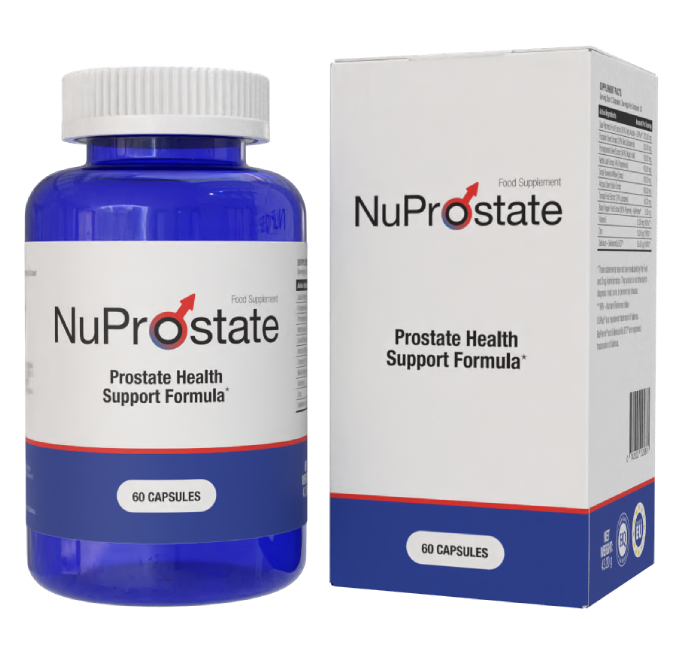
Our Recommendation — NuProstate
Score: 5.6/10 · Best for: men with mild urinary symptoms who want a fully disclosed formula — and who have had a proper prostate check first. Main caution: the milligrams match the trials but the extract strength does not: 45% fatty acids here against 85–95% in the big trials — and no money-back guarantee is published. Fair trial: the three-bottle pack at $35.99 a bottle — the shortest fair trial.
Lycopene and the Prostate, Biologically
Lycopene is the red carotenoid pigment in tomatoes, watermelon, and pink grapefruit. Two facts explain its prostate reputation. It accumulates in prostate tissue at relatively high concentrations, and cooking tomatoes in oil converts it to forms the body absorbs better — which is why the food signal, where it exists, centres on cooked tomato products like sauces rather than raw salad.
One more biological detail does real work later in this article. Lycopene from raw tomato is absorbed poorly; heat and fat change that substantially, breaking down cell walls and converting the molecule toward better-absorbed forms. A serving of tomato sauce in oil is therefore not nutritionally equivalent to a raw tomato, let alone to a capsule of extract.
Keep this section in its place. Tissue accumulation and antioxidant chemistry are a rationale for running studies. They are not outcomes. The studies are the next two sections, and they disagree with each other in an instructive way.
The Food Evidence
The anchor dataset is the Health Professionals Follow-up Study, a large US cohort of male health professionals whose diets were tracked for years.
In the analysis by Giovannucci and colleagues (2002), covering 47,365 men and 2,481 prostate cancer cases between 1986 and 1998, men in the highest fifth of lycopene intake had a lower risk of prostate cancer than men in the lowest fifth (relative risk 0.84 — that is, about 16% lower in relative terms).
The food-level finding was stronger than the nutrient-level one: men eating tomato sauce two or more times a week had a lower prostate cancer risk than men eating it less than once a month (relative risk 0.77). Tomato sauce — cooked, oily, lycopene-rich — kept appearing as the food most consistently associated with lower rates.
What an association like this can say: in a real population, a dietary pattern rich in cooked tomato tracked with fewer diagnoses. What it cannot say: that lycopene caused the difference (tomato eaters differ from non-tomato eaters in many ways a questionnaire cannot fully adjust away), or that a 5 mg capsule reproduces a diet. An association measured on a food matrix is evidence about the food matrix.
The Supplement Trials — Including the Null
The Prostate Cancer Prevention Trial's flat result
The supplement-era counterweight is the analysis by Kristal and colleagues (2011), nested inside the Prostate Cancer Prevention Trial. Instead of asking men what they ate, the researchers measured lycopene in stored blood — a biomarker of actual intake — in 1,683 men who developed prostate cancer and 1,751 who did not.
The result was flat: for each 10 µg/dL increase in serum lycopene, the odds ratios for prostate cancer were 0.99, 1.01, and 1.02 across the tumour-grade bands — statistically indistinguishable from no effect at every grade. The authors' conclusion is worth quoting in spirit: the study does not support a role for lycopene in prostate cancer prevention, and the earlier dietary associations had not been replicated with biomarker measurement.
Equal weight is the discipline here. The cohort signal and the biomarker null are both real publications; a page that quotes only the first is marketing, and a page that quotes only the second is overcorrecting. The fair read: dietary lycopene is associated with lower rates in some populations; measured lycopene exposure, and lycopene supplementation, have not been shown to prevent prostate cancer.
The small pre-prostatectomy trials
A handful of tiny trials gave lycopene to men already diagnosed with localised prostate cancer in the weeks before surgery. In the best known (Kucuk and colleagues), 26 men took either a tomato oleoresin extract providing 30 mg of lycopene a day or no supplement for three weeks before prostatectomy; mean PSA fell by 18% in the lycopene group while rising by 14% in the control group.
That sentence must carry its caveats to be honest: the difference was not statistically significant (P = 0.25), the trial lasted three weeks, and the authors themselves framed it as preliminary. It is hypothesis-generating research in a cancer-treatment context — not evidence that lycopene treats cancer, and emphatically not a reason for any man to take a supplement instead of, or ahead of, medical care.
The BPH trial: Schwarz 2008
For the condition this cluster is actually about — BPH — the lycopene trial record is a single small study: Schwarz and colleagues (2008, Journal of Nutrition) randomised 40 men with histologically proven BPH to lycopene 15 mg a day or placebo for six months.
In the lycopene group, PSA decreased significantly over the six months, while it did not change on placebo; prostate enlargement over the period was detected in the placebo group but not the lycopene group; and symptoms improved in both groups, more so with lycopene.
The trial was small and short, and it was funded by the maker of the lycopene preparation used (BASF's LycoVit) — a funding note we attach to industry-linked trials on every side of every question.
Read fairly, Schwarz 2008 is a pilot that justifies a bigger trial. That bigger trial has not arrived in the years since. A claim of "clinically studied for prostate enlargement" standing on 40 men and six months is technically true and practically thin.
A class-level caution belongs here, clearly fenced. Lycopene is a carotenoid, and carotenoid supplementation has burned medicine before: in the 1990s, large trials of beta-carotene — a different carotenoid — found increased lung cancer rates in smokers, reversing the protection that food studies had suggested. That is not evidence about lycopene, and this article does not present it as such.
Its lesson is methodological, and it applies with full force: for this family of compounds, the food association and the supplement outcome have already diverged once, in the harmful direction. "It is only an antioxidant vitamin-like compound" is not a safety argument. It is the exact assumption those trials retired.
The Whole Record on One Table
| Dataset | What was actually studied | What was found |
|---|---|---|
| Health Professionals Follow-up Study (Giovannucci 2002) | Diets of 47,365 men over 12 years; 2,481 prostate cancer cases | Highest lycopene intake fifth vs lowest: relative risk 0.84; tomato sauce ≥2 servings/week vs <1/month: relative risk 0.77 — an association, in food |
| Prostate Cancer Prevention Trial analysis (Kristal 2011) | Measured blood lycopene in 1,683 cases and 1,751 controls | No association at any tumour grade (odds ratios 0.99–1.02 per 10 µg/dL) |
| Schwarz 2008 | 15 mg/day lycopene vs placebo, 40 men with BPH, 6 months | PSA fell on lycopene, not placebo; enlargement seen on placebo, not lycopene; symptoms improved in both — small, short, industry-funded |
| Kucuk pre-surgery study | 30 mg/day for 3 weeks, 26 men with localised prostate cancer | PSA −18% on lycopene vs +14% on control — not statistically significant (P = 0.25); hypothesis-generating only |
Read down the right-hand column and the pattern is unmistakable: the larger and more rigorous the dataset, the weaker the finding. The association lives in the food cohort; the null lives in the biomarker analysis; the positive supplement results live in the two smallest, shortest rows. That gradient — effect shrinking as rigour grows — is the most reliable signal in the whole lycopene literature.
Why the Food Studies and the Blood Studies Disagree
Two respectable datasets point in different directions, and a reader is owed an explanation rather than a shrug. Three mechanisms can produce exactly this pattern.
Measurement error, in opposite directions. Diet questionnaires are blunt instruments — men misremember portions and frequencies, and the errors blur real associations toward nothing. That cuts against the cohort finding, which makes its survival interesting. But blood lycopene is a snapshot: one draw, reflecting recent intake, standing in for decades of exposure. That bluntness cuts against the biomarker study in the same way.
Confounding by lifestyle. Men who eat tomato-rich, Mediterranean-style diets differ from men who do not — in exercise, smoking, weight, screening behaviour, and overall diet quality. Cohort analyses adjust for the confounders they can measure; the ones they cannot measure ride along silently. This is the strongest standard explanation for food associations that biomarkers fail to confirm.
The matrix itself. It remains possible that something about cooked tomato as a food — its full carotenoid mixture, its place in a dietary pattern — matters in a way isolated lycopene does not. That possibility is genuinely open. What it would support, if true, is eating tomatoes — not swallowing their most famous molecule at a third of a pilot trial's dose.
None of the three explanations rescues a supplement claim. Two of them dissolve the association; the third relocates it to the dinner plate. This is the analytical ground on which this article's Quick Answer stands.
Can foods or supplements lower your PSA?
Can foods or supplements lower PSA? The evidence-based answer is narrow: in one small, industry-funded BPH trial, 15 mg of lycopene a day was followed by a significant PSA fall over six months — in 40 men, against no change on placebo. Nothing else in the lycopene literature licenses a PSA promise, and no product may honestly make one.
More important is what a lower PSA would even mean. PSA is a screening and monitoring signal, interpreted by clinicians in context — age, prostate size, trend over time. A supplement-driven dip, if it occurred, could mask exactly the rise a screening programme exists to catch. That is why this site's rule is absolute: a falling PSA on any supplement is a reason to tell your doctor, never a reason to skip testing.
For completeness, the cluster's flagship behaves differently: saw palmetto does not distort PSA — the CAMUS trial found no PSA effect even at triple dose — so readings stay interpretable for men taking it. That contrast is about measurement honesty, not efficacy; neither ingredient's PSA profile is a benefit claim.
The Dose Audit: 15 mg Trialled, 5 mg Delivered
NuProstate's panel lists tomato fruit extract at 50 mg per daily serving, standardised to 10% lycopene. The arithmetic: 50 mg × 10% = 5 mg of lycopene a day.
Against the one BPH trial's 15 mg a day, the label delivers a third of the studied dose — of a small, short, industry-funded pilot study, for an ingredient whose prevention-trial analysis came back null. Lycopene on this label is a supporting ingredient; its placement in the formula's story is larger than its evidence.
For scale, consider how the cohort's high-intake men reached their lycopene levels: not with capsules, but with cooked tomato products eaten several times a week, year after year — intakes broadly in the territory the pilot trial dosed.
The food route can plausibly reach trial-level exposure; a 5 mg line in a blend cannot. If lycopene interests you after reading this article's evidence sections, the intervention the data actually describe is a dietary pattern, and its first ingredient is a saucepan, not a supplement.
A closing arithmetic note for label-readers generally: whenever a blend lists an extract amount and a standardisation percentage as separate numbers — "50 mg extract, 10% lycopene" — the second number operates on the first.
The ingredient you are buying is the product of the multiplication, and it is frequently a tenth or a twentieth of the figure your eye landed on. NuProstate's label, to its credit, prints both numbers and lets you do this sum. Most of the auditing in this cluster is exactly this: arithmetic the label permits and the marketing hopes you skip.
One fenced passage, because the panel invites the question: the pomegranate seed extract elsewhere on this label (100 mg) belongs to a different literature again — pomegranate juice studies in men whose PSA was rising after prostate cancer treatment.
That is a post-treatment, PSA-kinetics context, with juice rather than seed extract, and it says nothing about BPH symptoms or enlargement. We note it so the label's two red-fruit ingredients are not silently merged into one "prostate antioxidant" impression. Neither has BPH symptom evidence; the pomegranate's prostate data are not about BPH at all.
Our Recommendation — NuProstate
Score: 5.6/10 · Best for: men with mild urinary symptoms who want a fully disclosed formula — and who have had a proper prostate check first. Main caution: the milligrams match the trials but the extract strength does not: 45% fatty acids here against 85–95% in the big trials — and no money-back guarantee is published. Fair trial: the three-bottle pack at $35.99 a bottle — the shortest fair trial.
Frequently Asked Questions
Can foods or supplements lower PSA?
Only one small trial (40 men, six months, 15 mg of lycopene a day) showed a significant PSA fall — and a supplement-related PSA change is a reason to inform your doctor, not to celebrate or to skip screening. No product can honestly promise to lower PSA.
Is eating tomatoes the same as taking a lycopene supplement?
No. The cohort associations belong to tomato-rich diets — cooked tomato products especially — measured over years. Supplement trials are smaller, shorter, and mixed, and the largest biomarker analysis found no association between measured lycopene and prostate cancer risk. Food evidence does not transfer to capsules.
Does lycopene prevent prostate cancer?
It has not been shown to. Dietary lycopene is associated with lower rates in some cohorts; measured serum lycopene showed no association in the Prostate Cancer Prevention Trial analysis (odds ratios of 0.99–1.02 per 10 µg/dL across grades). Prevention claims for lycopene supplements are not supported.
Can lycopene replace PSA screening?
No — nothing in this article can be read that way. Screening decisions belong to you and your doctor, based on your age, risk factors, and PSA trend. A nutrient with a null prevention-trial analysis has no role in that decision, and a supplement-related PSA dip would be a reason to inform your doctor, not to skip a test.
Is lycopene safe?
At food levels, it is a normal dietary component with no safety concern attached. At supplement doses, the long-term data are thin rather than alarming — there is no large, long safety trial of lycopene capsules to point to in either direction. Thin data is the honest description; it is also a reason the burden of proof sits on benefit claims, which remain unproven.
What about pomegranate for the prostate?
The pomegranate prostate literature is mostly juice studies in men with rising PSA after cancer treatment — a different context, material, and question from BPH. Pomegranate seed extract in a BPH formula has no BPH symptom evidence behind it.
Who Should Buy NuProstate — and Who Should Skip It
Buy it if: you want the disclosed, standard-ingredient formula for mild, assessed BPH-pattern symptoms, and lycopene's role in your decision is proportionate — a minor supporting line with food-level associations behind the ingredient and a thin supplement record.
Skip it if: cancer prevention is anywhere in your reasoning. No supplement in this cluster — and no lycopene product anywhere — has been shown to prevent prostate cancer, and buying one with that hope substitutes a capsule for screening. Also skip it if a guarantee matters to you: the maker publishes none.
Last reviewed: October 2026. This article is educational and is not medical advice.
