
- Quick Answer: Why Do Fertility Results Take About Three Months?
- What Is Spermatogenesis, in Plain Language?
- What Happens After Production? The Maturation Stage Most People Miss
- Why Does Testing Too Early Measure the Old Batch?
- How Should You Time a Semen Analysis?
- What Can Affect Sperm During the Production Window?
- What Does the Cycle Not Tell You?
- How Does This Apply to a Fertility Supplement Trial?
Affiliate disclosure: This article contains affiliate links. If you buy through a link on this page, we may earn a commission paid by the manufacturer, at no extra cost to you. That never changes what we publish — and here it means explaining the one piece of biology that governs every fertility timeline on this site, including for the fertility supplement we sell: sperm are made on a cycle of roughly three months, so nothing — food, lifestyle, or a formula — can honestly be judged faster than that.
Why does every serious fertility timeline say "give it three months"? It can sound like a convenient delay — a way for a diet plan, a habit change, or a supplement maker to postpone the moment you are allowed to ask whether it worked. In this case, the delay is not marketing. It is plumbing. The sperm in a semen sample today did not start life today, or last week. They began as stem cells roughly a season ago, and everything that happened to you in between — heat, illness, drinking, smoking, nutrition, and yes, any supplement you started — is written into some batches and not others. Understand the production cycle, and the three-month rule stops looking arbitrary. Ignore it, and you will judge every fertility decision you make against the wrong batch of sperm.
Quick Answer: Why Do Fertility Results Take About Three Months?
Because sperm production — spermatogenesis — takes roughly 74 days from stem cell to mature sperm, and the sperm then still have to mature further and travel through the epididymis before they appear in an ejaculate. Production plus transit lands at roughly three months in total. That means the sample you produce this week mostly reflects conditions from about three months ago. Any change you make today — stopping smoking, cutting heavy drinking, changing your diet, starting a fertility formula — can only show up in a semen analysis once a full new cycle has worked through. Test at two or three weeks and you are measuring the old batch. Test after a full cycle, against a baseline taken before you started, and you are finally measuring the change itself.
What Is Spermatogenesis, in Plain Language?
Spermatogenesis is simply the name for how the testes make sperm. It runs continuously, not in occasional batches: at any given moment, sperm are in production at every stage at once, like items at different points on a factory line. That is why men produce sperm every day while still needing months for a change to show — the line never stops, but each individual sperm takes the full journey.
The journey, simplified, has three broad stages. First, stem cells in the testes divide, copying themselves and producing the early cells that will become sperm. Second, those cells go through a special kind of division that halves their genetic material — this is the step that makes fertilisation possible, because the sperm will contribute half the DNA and the egg the other half. Third, the resulting immature cells are reshaped: they grow the tail they will swim with, streamline their structure, and shed most of their excess material. Only at the end of that reshaping are they recognisable as sperm — and even then, they are not finished.
That whole sequence, from stem cell to recognisable sperm, is the roughly 74-day figure. It is an established textbook framing for the production cycle, and it is the same figure behind the timelines used across this site's fertility cluster. Treat "roughly" as part of the fact: individual timing varies, and no one can tell you that your cycle is exactly 74 days rather than a little shorter or longer. What does not vary is the order of magnitude. Production is measured in months, not days.
What Happens After Production? The Maturation Stage Most People Miss
Finishing production in the testes is not the same as being ready. Newly made sperm move on into the epididymis — a tightly coiled tube sitting behind each testis — where they spend additional time maturing and are stored until ejaculation. It is during this stage that they gain much of their practical ability to move progressively. Sperm taken straight from the end of production and sperm that have completed maturation and transit are not equivalent, even though both are "made."
This is why the honest total is "74 days, plus transit" rather than just 74 days. Add the maturation and travel time to the production time and the full path from stem cell to ejaculate lands at roughly three months. Our companion article on foods that support sperm count makes the same point from the nutrition side: sperm you produce today started developing roughly two to three months ago, so a new eating pattern needs about three months before it can show up in a semen analysis.
Why Does Testing Too Early Measure the Old Batch?
Picture the factory line again. On the day you make a change — say you stop smoking, or start a supplement — the line is full of sperm at every stage. The sperm ejaculated tomorrow were nearly finished yesterday; the ones ejaculated next month began production weeks before your change. Only stem cells starting today will spend their entire development under the new conditions.
So an early retest does not answer the question you think you are asking. A semen analysis at week three mostly describes sperm produced before, or in the earliest days of, your intervention. If the result is unchanged, that tells you almost nothing — the new batch has not arrived. If it has improved, that is also hard to credit to the change, for the same reason. Early testing manufactures false verdicts in both directions, and semen parameters vary naturally from sample to sample — another reason a single early number settles very little.
How Should You Time a Semen Analysis?
The cycle suggests a simple, defensible protocol — and it is the same logic the maker of the fertility formula on our shelf uses in its own guidance:
- Baseline first. Get a semen analysis before you start the change you want to judge, wherever possible. Without a "before" number for count, motility, and morphology, a later number has nothing to be compared with.
- Run the full window. Keep the change consistent for a full production cycle plus transit — in practice, at least three months.
- Retest after the cycle, not during it. Have the repeat analysis after that three-month mark, and compare like with like: same three measures, ideally read with the same seriousness as the baseline.
- Read the result as a comparison, not a verdict from one number. Movement across the full window, against your own baseline, is the meaningful signal. One sample, on one day, is a snapshot of a variable system.
If the numbers are poor at baseline, or remain poor after a fair window, that is information a fertility specialist should read — not a prompt to simply try a second supplement for another three months. Which brings up the limit that matters most, below.
These statements have not been evaluated by the Food and Drug Administration. Dietary supplements are not intended to diagnose, treat, cure, or prevent any disease. This article is educational and is not medical advice.
What Can Affect Sperm During the Production Window?
Because production runs for months, the window is exposed to months of inputs. The mainstream list is unglamorous, and it is the same list that appears across our fertility articles:
- Heat. Sperm production runs best slightly below core body temperature — that is basic physiology, and it is why the testes sit outside the body. Frequent saunas and hot tubs, and a laptop resting on the lap for hours, can temporarily suppress production. "Temporarily" is the key word: heat acting on sperm in production affects the batches then in the line, which is exactly why its effects, good or bad, appear and fade on the cycle's timetable.
- Alcohol. Regular heavy drinking is associated with lower testosterone, lower counts, and poorer morphology. Moderate intake shows murkier results; heavy intake is consistently bad news.
- Smoking. Tobacco use is linked to reduced count and motility, and to higher DNA damage in sperm. This is one of the clearest findings in the whole field — and quitting only shows its full effect in the sample once sperm produced after the quit date reach the end of the line.
- Nutrition. Sperm are built from what you eat, and nutrient status — zinc and folate are the examples with the most consistent support — is the input you control most directly. Our foods that support sperm count guide goes nutrient by nutrient through what the evidence supports and where it stops.
- Illness and disruption during the window. Because the line is continuous, a significant illness or disruption partway through a cycle can affect the batches then in production. This is one more reason to read a single result cautiously and to prefer the baseline-versus-after-a-full-cycle comparison over any one snapshot.
Notice what this list does not contain: any fast lever. There is no input on it that rebuilds sperm this week, because there is no such input. The cycle is the speed limit for all of them.
What Does the Cycle Not Tell You?
Here is the honest limit, and it is the most important section on this page: the cycle explains timing, not effectiveness. Knowing that a fair test takes three months tells you when to judge an intervention. It says nothing at all about whether that intervention works. A useless product given a full three months is still useless — the cycle merely ensures you find out properly rather than guessing early. Conversely, a product with genuine ingredient-level support still has to be judged on evidence about the product and its ingredients, not on the fact that its maker quoted the right timeline.
The cycle also cannot explain away a medical cause. A large share of low sperm counts have causes no timeline touches: a varicocele, a hormonal disorder, a genetic condition, a blocked duct, an infection, or certain medications. Waiting out a production cycle is the right way to judge a lifestyle change or a supplement trial. It is the wrong response to a persistently poor analysis with no workup behind it. If you and a partner have been trying to conceive for 12 months without success — or 6 months if she is over 35 — the standard medical advice is that both partners get evaluated, and a semen analysis is the cheapest, simplest place to start. Our FAQ on whether a semen volume supplement can improve fertility covers the related confusion between volume and fertility, and why treating one as the other costs a trying couple the one thing they cannot spare: time.
How Does This Apply to a Fertility Supplement Trial?
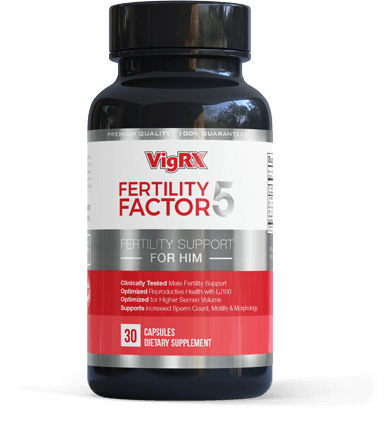
Apply the cycle to the formula this cluster is built around, and its maker's own instructions suddenly read as biology rather than sales copy. Fertility Factor 5 (Our Score: 8.0/10 ) is a once-daily male fertility formula from Leading Edge Health, priced at $69 for a one-month supply, built around LJ100 — a patented Tongkat Ali extract — at 200 mg per day, the same dose used in the fertility study the maker cites : a study of 75 men given 200 mg of LJ100 daily, with semen parameters measured at the 3-month mark. The maker recommends starting with at least a 3-month supply and having a semen analysis after at least 3 months of use. That is the production cycle, stated as buying advice.
Two cautions from our audit belong next to that timeline. First, there is no clinical trial of the finished five-ingredient formula itself — the evidence is ingredient-level, and the maker does not claim otherwise. Second, the guarantee and the biology are misaligned: the maker's money-back guarantee is 67 days, which closes before the 3-month judging point the maker itself recommends. Our full Fertility Factor 5, Answered page works through that trap, the ingredient evidence, and the maker's conflicting accounts of its own LJ100 trial in detail. Our Male Fertility Supplement Buying Guide turns the same label, dose and guarantee checks into a pre-purchase list. Go in knowing both things: the three months are real, and they are a commitment the guarantee does not fully cover.
The bottom line: sperm are produced on a roughly 74-day cycle, plus maturation and transit — about three months from stem cell to sample. Take a baseline before you change anything, run the change for the full window, and retest after it. Judge every fertility intervention — diet, habits, or a formula like Fertility Factor 5 — on that timetable and on its own evidence, in that order. The cycle tells you when an answer is possible. It never promises what the answer will be.
Disclaimer: This article is for general information only and is not medical advice. Always consult a qualified healthcare professional before starting any supplement, especially if you have a medical condition or take prescription medication. Individual results vary, and no result is guaranteed.
Last reviewed: October 2026
